Nicaragua in Latin America, Its Role, Weight and Alliances

GUIDES · NICARAGUA
Key Facts
- —Country in context Nicaragua is the largest country in Central America by area, at 130,370 square kilometres, and had 7.0 million residents in 2025. It is one of 33 members of CELAC, the regional club of Latin American and Caribbean states.
- —Weight The economy produced US$22.2 billion in 2025, about 0.3 percent of Latin America and the Caribbean. Output per person of US$3,173 is the lowest of the six Spanish-speaking Central American republics.
- —Rulers Daniel Ortega and Rosario Murillo govern as co-presidents under a 2025 constitutional reform. A further reform approved in September 2026 reportedly stretches the presidential term to seven years.
- —Regional ties Nicaragua left the Organization of American States on 19 November 2023. On 3 October 2026 it announced it was leaving the Central American Parliament, a step whose legal basis is unclear because the treaty has no withdrawal clause.
- —Biggest partner The United States bought US$4.96 billion of Nicaraguan goods in 2025. A US tariff on goods outside the CAFTA-DR trade deal rises from 0% to 10% on 1 January 2027.
Nicaragua’s place in Latin America as of October 2026: its size, its memberships, its allies and the regional doors that are closing. Every figure carries its date.
Nicaragua continent-wide is a small economy with an outsized diplomatic profile, and in 2026 its regional ties are fraying. For US readers it matters because Washington is both a major buyer and a sharp critic, with a tariff step due on 1 January 2027.
Nicaragua’s Weight in Latin America
Nicaragua is the largest country in Central America by land area, at 130,370 square kilometres. It is far smaller in people and money, with 7.0 million residents in 2025, just over 1 percent of the region’s 667 million.
The World Bank’s 2025 estimates put the economy at US$22.2 billion, about 0.3 percent of the US$7.4 trillion produced across the region. Output per person was US$3,173, the lowest of the six Spanish-speaking republics between Guatemala and Panama.
Growth is the bright spot, with the economy expanding 4.9 percent in 2025, ahead of Honduras at 3.8 percent, Guatemala at 4.3 percent and El Salvador at 3.9 percent. Fast growth from a low base has not changed the size ranking.
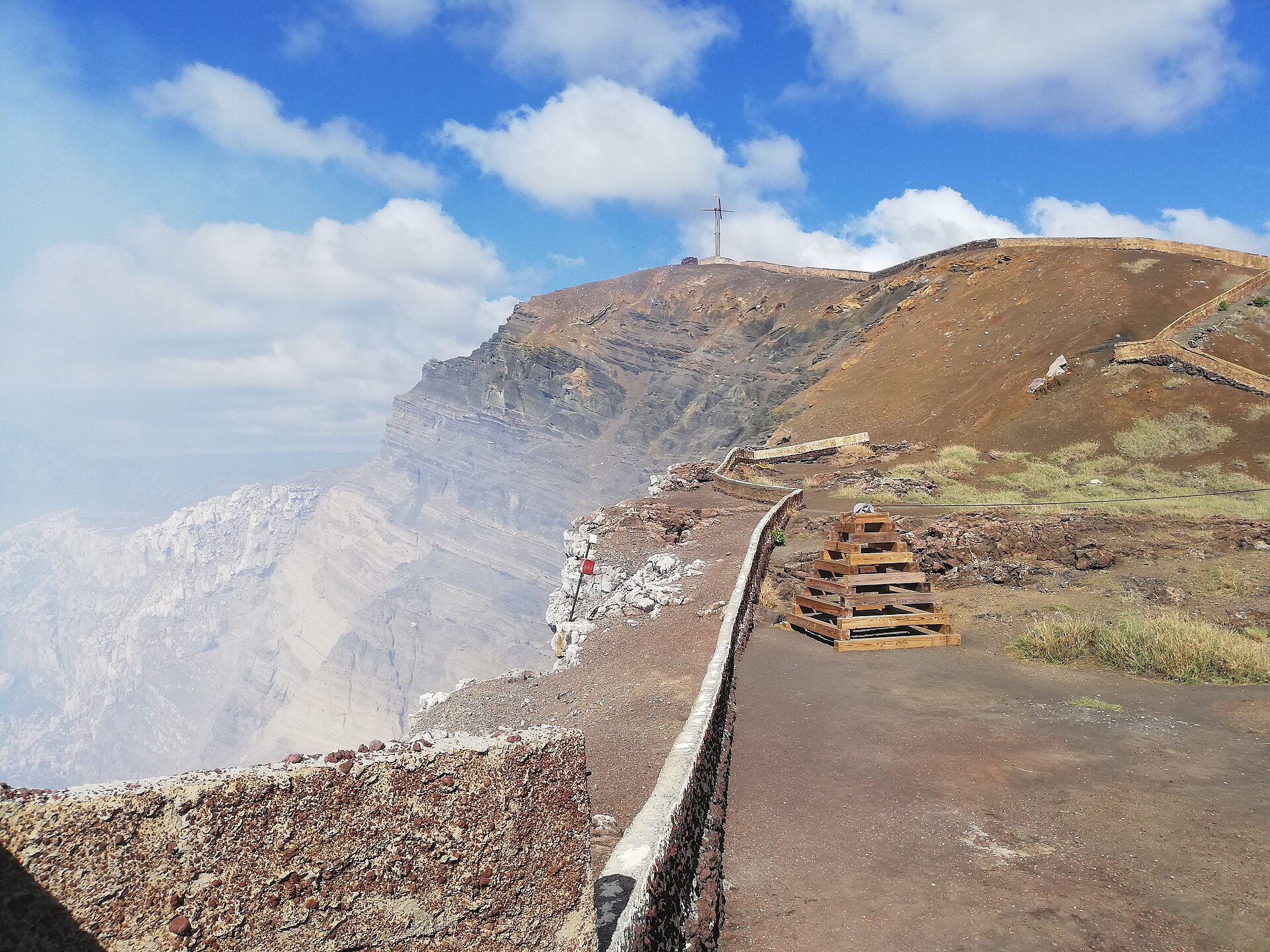
How Nicaragua Compares With Its Central American Peers
The World Bank’s 2025 figures set Nicaragua beside the five other Spanish-speaking republics of the isthmus. It has more people than El Salvador, Costa Rica and Panama, but the smallest economy of the six.
- Guatemala: 18.7 million people, an economy of US$123.3 billion and US$6,598 per person.
- Honduras: 11.0 million people, US$39.6 billion and US$3,598 per person.
- Nicaragua: 7.0 million people, US$22.2 billion and US$3,173 per person.
- El Salvador: 6.4 million people, US$36.7 billion and US$5,767 per person.
- Costa Rica: 5.2 million people, US$102.9 billion and US$19,970 per person.
- Panama: 4.6 million people, US$90.5 billion and US$19,790 per person.
The gap with Costa Rica, its southern neighbour, is the sharpest, since output per person there is more than six times higher. UNHCR data for 2025 count more than 178,000 Nicaraguan refugees and asylum seekers in Costa Rica.
For the border, trade and migration detail, see the companion guide to Nicaragua and its neighbours in Central America. This guide looks outward, to the continent.
Which Regional Bodies Nicaragua Still Belongs To
Nicaragua remains a member of SICA, the Central American Integration System, the region’s main integration body. It is headquartered in San Salvador.
It also sits in CELAC, the 33-nation Community of Latin American and Caribbean States, which Uruguay chairs for 2026 to 2027. At the CELAC-EU summit in Santa Marta, Colombia, in November 2025, Nicaragua and Venezuela were the two delegations that did not sign the final declaration.
Nicaragua is neither a state party nor an associated state of Mercosur, the South American trade bloc. It is also outside the Andean Community of Bolivia, Colombia, Ecuador and Peru, and outside CARICOM, the 15-member Caribbean bloc.
Its main trade rulebook is CAFTA-DR, the free trade agreement that also covers the United States, Costa Rica, El Salvador, Guatemala, Honduras and the Dominican Republic. Since 1 January 2024 it has had a second one, a free trade agreement with China.
Why Nicaragua Left the OAS and What Followed
Nicaragua gave notice in 2021 that it would leave the Organization of American States, and the exit took effect on 19 November 2023. The OAS Charter keeps its provisions in force for two years after a notice of denunciation, which explains the gap.
On 2 October 2026 the OAS foreign ministers, meeting in Washington, adopted a resolution on Nicaragua by unanimous vote. It urges free elections, the release of political prisoners, the return of nationality to those stripped of it and the restoration of the separation of powers.
The text creates a task force to engage the authorities and Nicaraguans in exile and to recommend further action. It imposes no sanctions of its own, so its force depends on what member states do next.
In 2025 a constitutional reform made Rosario Murillo co-president alongside Daniel Ortega and moved the next election to 2027. In September 2026 Congress reportedly approved a further reform to stretch the term to seven years and bar figures branded traitors, which we have not seen.
A Neighbourhood That Is Closing Its Doors
Nicaragua’s isolation now runs through Central American bodies as well. On 3 October 2026 its foreign ministry told the board of the Central American Parliament, known as Parlacen, that Nicaragua was leaving with immediate effect.
The founding treaty has no explicit withdrawal clause, and the Parlacen president called an extraordinary board meeting to set the body’s position. El Salvador’s legislature approved a constitutional reform in July 2025 to leave the same body.
The Central American Court of Justice, which sat in Managua, has also stopped functioning. Nicaragua notified its withdrawal in March 2025, and Honduras, El Salvador and Guatemala followed between April and August 2026.
The SICA secretary general’s post, assigned to Nicaragua for 2022 to 2026, had been vacant since November 2023. In June 2026 the region’s presidents elected the Costa Rican diplomat Lina Ajoy, who took office on 11 August 2026.
Beyond the Americas, the Nicaraguan outlet Confidencial counts exits announced in 2025 from FAO, the ILO, the IOM, UNESCO and the UN refugee agency. The ILO and IOM withdrawals take effect in 2027.
Alliances With China, Russia and the United States
Nicaragua broke ties with Taiwan and recognised Beijing in December 2021. The free trade agreement with China, adopted on 31 August 2023, entered into force on 1 January 2024.
On 15 September 2026 the House Foreign Affairs Subcommittee on the Western Hemisphere held a hearing titled “Confronting the Totalitarian Ortega-Murillo Regime”. Chair María Elvira Salazar raised concerns about a US$500 million Punta Huete airfield expansion, the port of Corinto and Chinese mining concessions.
Those are the chair’s claims, and her office’s press release carries no response from Managua. It also raised concern about Moscow’s expanding presence and freedom of movement in Nicaragua, without giving figures.
Russia’s foreign ministry said Foreign Minister Sergey Lavrov met Laureano Ortega, the co-presidents’ special representative, on 5 June 2026. Claims about a Russian military footprint in Nicaragua remain allegations in the sources reviewed.
The United States remains a major buyer, with US imports of Nicaraguan goods at US$4.96 billion in 2025. US exports to Nicaragua were US$2.43 billion that year.
In December 2025 the US Trade Representative set a Section 301 tariff on Nicaraguan goods not originating under CAFTA-DR. It is 0% from 1 January 2026, 10% from 1 January 2027 and 15% from 1 January 2028.
Border and Sea Disputes in the Region
On 19 November 2012 the International Court of Justice held that Colombia has sovereignty over the disputed cays, including Quitasueño, Serrana and Serranilla. The court also drew a single maritime boundary within 200 nautical miles of Nicaragua’s coast, shifted eastward in Nicaragua’s favour.
On 21 April 2022 the court found that Colombia had violated Nicaragua’s sovereign rights and jurisdiction in its exclusive economic zone. Colombian media reported on 19 October 2026 that a decree on the San Andrés archipelago’s sea baselines is planned for November, which we have not seen.
Costa Rica and Nicaragua have also been before the court over the San Juan River border area. The ICJ ruled on the merits on 16 December 2015 and set compensation in a judgment of 2 February 2018.
Nicaragua is also the applicant in a separate case against Germany over obligations in respect of the Occupied Palestinian Territory, filed on 1 March 2024. Hearings on Germany’s preliminary objections took place from 7 to 10 September 2026.
People on the Move Across the Continent
UNHCR counted 35,341 Nicaraguan refugees and 269,315 asylum seekers worldwide in 2025, more than 300,000 people in all. Costa Rica and the United States together host more than nine in ten of them.
Costa Rica hosts 178,871 refugees and asylum seekers, the United States 99,922, Mexico 9,199 and Spain 8,618. Panama, Guatemala and Canada host far smaller numbers.
What It Means for US Readers
For investors and importers, the Section 301 tariff is the date to watch, because goods outside CAFTA-DR rules of origin face 10% from 1 January 2027. The notice chose a tariff over suspending the trade agreement’s benefits, which limits the impact on CAFTA-DR partners.
Nicaragua sells the United States gold, coffee and free-zone goods, so exporters should confirm origin rules well before 2027. US companies with Nicaraguan suppliers should also expect more congressional scrutiny after the 15 September 2026 hearing.
Travellers and expats should read the State Department’s current advisory for Nicaragua before booking. Rules on entry and residence can change at short notice, so confirm them with the Nicaraguan consulate.
Connected Coverage
- Nicaragua and Its Neighbours in Central America
- Nicaragua Explained: The Ortega System, the Economy and What to Watch
- Nicaragua Moves to Quit Central American Parliament
- Rights Experts Urge Firm OAS Action on Nicaragua
- San Andrés Crisis Tests Colombia on 4 Fronts
- Honduras and Its Neighbours in Central America
- Panama in Latin America, Its Role, Weight and Alliances
- More Nicaragua coverage from The Rio Times
What Is Not Known
It is not settled whether Nicaragua’s Parlacen exit is valid in law, because the treaty has no withdrawal clause and Guatemala, as depositary, was informed of the notice. Nor is it known what the OAS task force will recommend, or whether any member state will act on it.
The date of the next election under the seven-year term is not stated in the sources reviewed. Remittance figures are also not public in a form this guide could verify.
Claims about Chinese and Russian military or infrastructure roles in Nicaragua cannot be tested, because no contracts have been published. The only figure for the Punta Huete project in the sources reviewed comes from a House subcommittee press release.
Frequently Asked Questions
Is Nicaragua still in the OAS?
No, Nicaragua left the Organization of American States on 19 November 2023, two years after giving notice in 2021. On 2 October 2026 the OAS foreign ministers nonetheless adopted a resolution on Nicaragua by unanimous vote.
Which regional groups does Nicaragua belong to?
Nicaragua is in SICA, CELAC and the CAFTA-DR trade agreement. It is not a member or associated state of Mercosur, a member of the Andean Community or a member of CARICOM.
How big is Nicaragua compared with Latin America?
Nicaragua had 7.0 million people and an economy of US$22.2 billion in 2025, about 0.3 percent of regional output. It is the largest Central American country by area, at 130,370 square kilometres.
Why is Nicaragua leaving Central American bodies?
Nicaragua gave no reason when it announced on 3 October 2026 that it was leaving Parlacen. The move followed the OAS resolution of 2 October, and the Central American Court of Justice had already ceased to function by August 2026.
What is the US tariff on Nicaragua?
The US Trade Representative set a Section 301 tariff on Nicaraguan goods not originating under CAFTA-DR. It is 0% from 1 January 2026, 10% from 1 January 2027 and 15% from 1 January 2028.
Who are Nicaragua’s main allies?
Nicaragua has a free trade agreement with China in force since 1 January 2024 and meets Russian officials, such as Sergey Lavrov on 5 June 2026. The United States remains its biggest buyer of goods, at US$4.96 billion in 2025.
Sources: World Bank, World Development Indicators for Nicaragua, Honduras, Guatemala, El Salvador, Costa Rica and Panama and for Latin America and the Caribbean; UNHCR, population statistics for Nicaragua as country of origin, 2025; US Census Bureau, trade with Nicaragua; USTR, Section 301 Notice of Action on Nicaragua, December 2025; Leiden University, Nicaragua left the OAS on 19 November 2023; Confidencial, OAS resolution of 2 October 2026; Infobae, Parlacen exit notice; Infobae, Central American Court of Justice; Confidencial, Nicaragua’s withdrawals from international organisations; EFE via Yahoo Noticias, new SICA secretary general; SELA, Uruguay and the CELAC presidency; La Prensa Nicaragua, CELAC-EU summit; Mercosur, member and associated states; Andean Community, member countries; CARICOM, member states and associate members; WIPO Lex, China-Nicaragua free trade agreement; The Diplomat, Nicaragua and Taiwan, December 2021; House Foreign Affairs Western Hemisphere Subcommittee, hearing of 15 September 2026; ICJ, Territorial and Maritime Dispute (Nicaragua v. Colombia); ICJ, Alleged Violations of Sovereign Rights (Nicaragua v. Colombia); ICJ, Certain Activities Carried Out by Nicaragua in the Border Area; ICJ, Nicaragua v. Germany; KSL, reform proposal of 28 July 2026, sent to Congress for a vote expected in September. Russia’s foreign ministry record of 5 June 2026 (mid.ru) and Colombian media of 19 October 2026 also consulted. All accessed 19 October 2026.
This article was produced by The Rio Times’ automated newsroom system. How we use AI · Report an error · Editorial responsibility: Matthias Camenzind, Editor-in-Chief
Expat Guide to Nicaragua
What The Rio Times publishes for foreigners who live in or move to Nicaragua.
Start here
- Is Nicaragua Safe for Expats? Crime, Politics and Daily Reality
- Opening a Bank Account in Nicaragua as a Foreigner: Banks, Documents and the Limits
- Moving to Nicaragua: Visas, Costs and Daily Life Under Ortega
- Healthcare in Nicaragua for Expats: Hospitals, Insurance and the Managua Option
Understand Nicaragua
Read More from The Rio Times