NICARAGUA · POWER
Nicaragua is dominated by one married couple, Daniel Ortega and Rosario Murillo, who share the presidency and, since 2025, sit above the other branches of government. They rely on the Sandinista party (FSLN), which took power in the 1979 revolution, an army that answers to them and a security apparatus that has jailed, silenced or exiled their rivals.
For US readers, Nicaragua power matters because Washington is the country’s sharpest critic and its trade partner under CAFTA-DR, a US–Central America trade pact. Sanctions, tariffs and entry rules all follow from who holds control in Managua, the capital.
Key Facts
- Who rules Co-presidents Daniel Ortega and Rosario Murillo, a married couple, rule under a 2025 constitutional reform with six-year terms.
- The army General Julio César Avilés, the Army commander since 2010, took the oath for a fourth term in 2025.
- Next change A reform approved once on Tuesday 1 September 2026 would lengthen terms to seven years and bar opponents.
- US lever Goods qualifying under CAFTA-DR, the US–Central America trade pact, stay exempt; others face a US duty of 0% in 2026, 10% from 2027.
- Prisoners A Nicaraguan rights group counted at least 72 political prisoners on Friday 23 October 2026.
Power in Nicaragua runs through a family, a party and an army, not through independent courts or elections. This guide explains who holds which lever, region by region, and what it means for Americans.
In Plain English
- FSLN: the Sandinista National Liberation Front, the party that took power in the 1979 revolution and governs today.
- Co-presidents: two joint heads of state who replaced the old president and vice president in 2025.
- CAFTA-DR: a trade pact between the United States, the Dominican Republic and five Central American countries.
- OFAC: the US Treasury office that imposes financial sanctions.
The Co-Presidents Hold the Centre
Daniel Ortega led Nicaragua after the 1979 revolution, lost power in 1990 and has governed without a break since January 2007. His wife, Rosario Murillo, served as vice president before the constitution was rewritten.
The National Assembly, the one-chamber legislature, voted unanimously in November 2024 and gave final approval to the rewrite in January 2025. It replaced the president and vice president with two co-presidents who serve six-year terms and sit above the legislative, judicial and electoral bodies.
The change took effect in early 2025. It put the couple’s authority in the constitution instead of leaving it to habit.
Ortega said on Sunday 19 July 2026 that there would be no more elections in the country. Volker Türk, the UN human rights chief, condemned the move on Wednesday 22 July, and the Assembly then moved to rewrite the electoral rules.
A Reform Built to Last Longer
On Tuesday 1 September 2026 the Assembly approved a new reform in its first of two required votes. The vote was unanimous, and the text would stretch elected terms from six to seven years and bar opposition parties from elections.
The second vote is expected in January 2027, when a new legislative session opens. Reports on the reform say it would delay the next national election, to 2028 in most accounts.
The Army and the Police
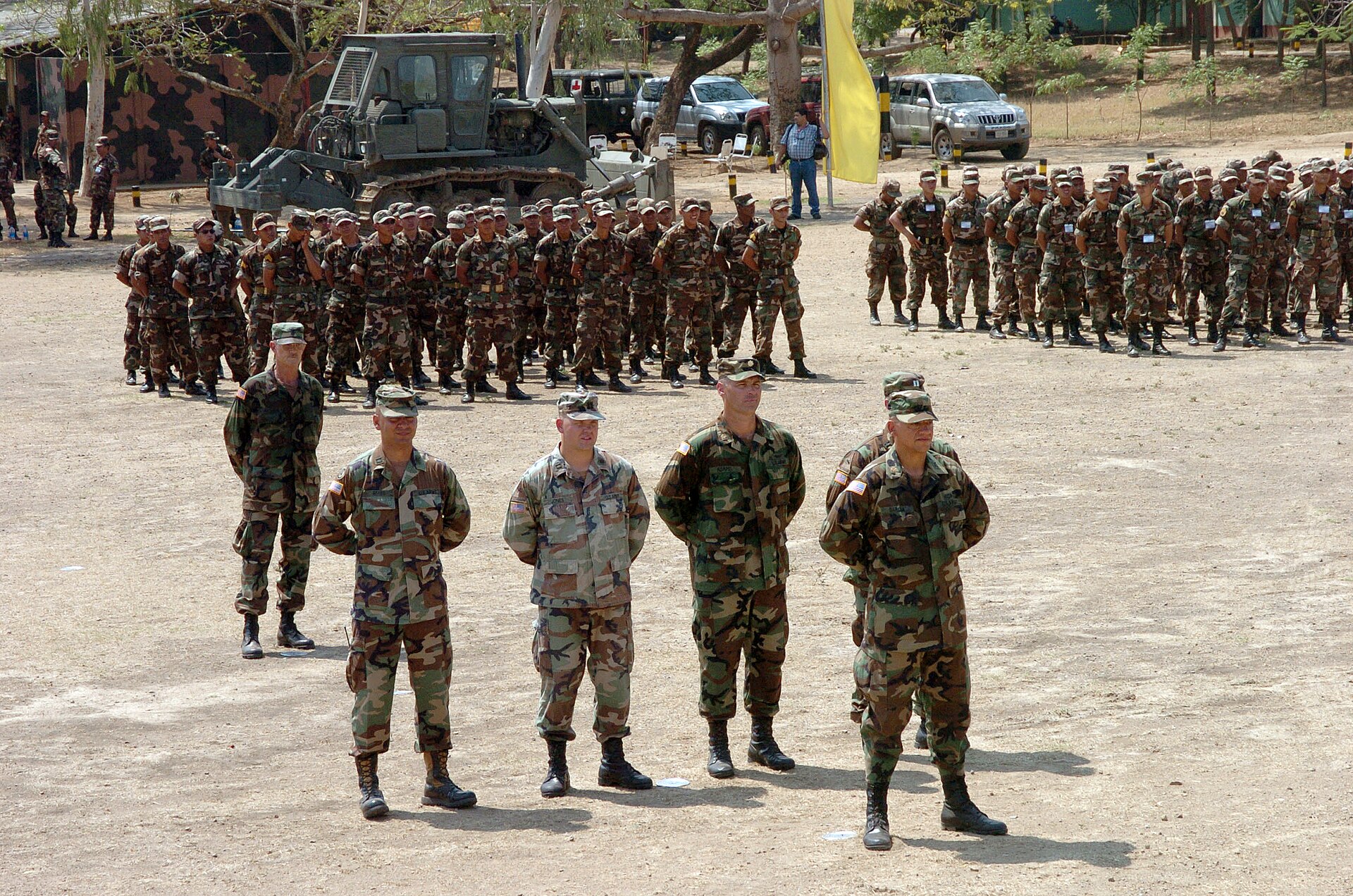
The Army is the institution that decides whether the system survives a succession. Its commander, General Julio César Avilés, has held the post since 2010, and the US government has sanctioned him.
In November 2024 the Assembly lengthened the terms of the Army and police chiefs from five to six years. Avilés took the oath for a fourth six-year term in February 2025, and the 2026 reform would extend such terms again to seven years.
The National Police is the second arm of control. It answers to the co-presidents, and it carries out the arrests of critics that the United Nations and rights groups have documented since the 2018 protests, which security forces crushed.
The Army’s role is also visible in foreign policy. A recent decree on foreign troops lets Russian, Chinese, Mexican and US forces enter Nicaragua in early 2027 for exercises, and it no longer names Cuban or Venezuelan units.
The Family, the Party and Other Elites
Power in Nicaragua is first a family business. Treasury sanctions announced on Thursday 16 April 2026 named two sons of the co-presidents, a vice minister of energy and mines, other business and legal associates and seven companies in the gold sector.
The Treasury’s sanctions office, OFAC, acted under Executive Order 13851, the US order that declares a national emergency over Nicaragua. On Thursday 26 February 2026 it had already sanctioned five senior officials from financial, communications and military bodies.
The Sandinista party is the second pillar, because party loyalty decides who staffs ministries, municipalities and state companies. The army officers, gold-sector executives and party officials around the couple form a small inner circle, and the list of sanctioned names shows who sits in it.
Business owners outside that circle operate under pressure. For the money side of the story, see our guide to who runs Nicaragua’s economy.
Regions: The Pacific Core and the Caribbean Coast
Nicaragua has about 7 million people. It is split into 15 departments and two autonomous regions on the Caribbean coast, the North and South Caribbean Coast regions.
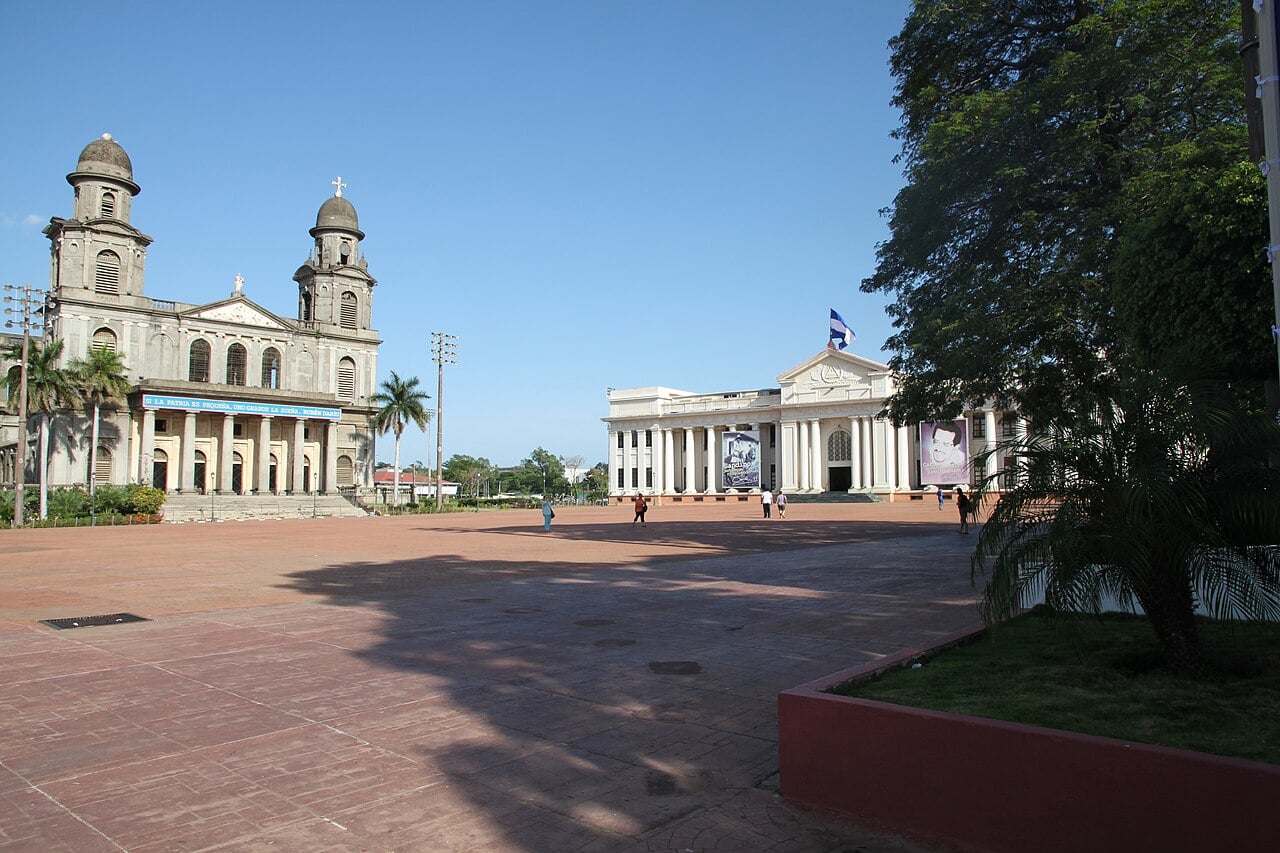
The political centre is the Pacific side, where Managua, the capital, sits beside Lake Managua. Ministries, the Assembly, the Army command and most big companies are there.
The Caribbean coast is different in language, history and ethnic make-up. Miskito, Mayangna, Creole and other communities live there, and a 1987 autonomy law gives the two regions their own councils.
Gold mining towns such as Siuna and Bonanza sit in the North Caribbean Coast region. That is why mining concessions and the gold sanctions tie the coast directly to the power struggle in Managua.
The Opposition Lives in Exile or in Prison
The government has removed most of its rivals from the country. In February 2023 it flew 222 prisoners to the United States and stripped them of Nicaraguan nationality, and the UN Group of Experts on Nicaragua, an investigative panel created by the UN Human Rights Council, counted 452 people stripped of nationality between February 2023 and September 2024.
Inside the country, the Mechanism for the Recognition of Political Prisoners, part of the exile-based rights group Association for Memory and Justice for Nicaragua, counted at least 72 political prisoners as of Friday 23 October 2026. It said 33 of them were held without any contact with family or lawyers, a practice called enforced disappearance.
The 2026 reform would bar opposition parties from elections, which leaves exiles and prisoners without a legal route back into politics. Its second vote, expected in January 2027, will show whether the ban becomes law.
US Sanctions and CAFTA-DR: Washington’s Levers
Washington has two main levers: sanctions on people and firms, and tariffs on goods. The sanctions land on the circle described above, while the tariffs touch exporters, cigar makers and the workers they employ.
The US Trade Representative, the White House trade office, set a phased duty on Nicaraguan goods that do not qualify under CAFTA-DR. It is 0% in 2026, 10% from Friday 1 January 2027 and 15% from Saturday 1 January 2028.
CAFTA-DR was signed in 2004 and entered into force for Nicaragua on 1 April 2006. Goods that qualify under the pact are exempt from the new duty, which is why the pact still shields much of the trade. Our foreign powers and investors in Nicaragua and Nicaragua geopolitics guide explain how that relationship fits the wider region.
What It Means for US Readers
If you import from Nicaragua, check whether your goods qualify under CAFTA-DR before 1 January 2027. If you invest or trade in gold, the gold-sector sanctions show how quickly Washington can freeze a counterparty.
If you plan to travel, read our travel advisory guide for US visitors and enrol in the State Department’s Smart Traveler Enrollment Program. If you send money to family, remember that remittances are a large share of the economy and that policy changes in Washington can reach households quickly.
The larger lesson is that Nicaragua’s system can look stable and still be fragile. It rests on a few ageing leaders, and the Army and the family will decide what comes next.
What Is Not Known
It is not known whether the second vote will pass in January 2027 in the form approved in September, or what election date it will set. Public information on the exact size of the Army and on the full business holdings of the ruling family is limited.
No public plan for succession exists, and the government has not explained who would lead if one co-president left office early. We also could not confirm the full list of Assembly seats held by the ruling party and its allies.
Frequently Asked Questions
Who really rules Nicaragua?
Daniel Ortega and Rosario Murillo, a married couple, rule as co-presidents with a six-year term. They control the Assembly, the courts and the electoral bodies, and they rely on the Army and police.
Who leads Nicaragua’s Army?
General Julio César Avilés has led the Army since 2010. He took the oath for a fourth six-year term in February 2025.
Is there an opposition in Nicaragua?
Opposition leaders are mostly in prison or exile. A 2026 reform approved in a first vote would bar opposition parties from elections.
How do US sanctions affect Nicaragua?
US sanctions freeze US assets of listed officials, family members and gold-sector firms and bar Americans from dealing with them. A separate US duty on goods outside CAFTA-DR is 0% in 2026 and rises to 10% on 1 January 2027.
Does CAFTA-DR still protect Nicaraguan exports?
Yes, for goods that qualify under the pact, which is in force for Nicaragua since 1 April 2006. Goods that do not qualify face the phased US duty.
Sources: Nicaraguan National Assembly votes and constitutional texts; US Treasury and Office of Foreign Assets Control sanctions notices of 26 February and 16 April 2026; Office of the US Trade Representative, action on Nicaraguan trade and CAFTA-DR pages; UN Group of Experts on Nicaragua; Association for Memory and Justice for Nicaragua.
Connected Coverage: Nicaragua hub, Nicaragua politics key players, Nicaragua economy key players, foreign powers in Nicaragua.
This article was produced by The Rio Times’ automated AI newsroom. Editorial responsibility: Matthias Camenzind, Publisher and Editor-in-Chief. The Rio Times also runs Ask Rio Times, which answers from 100,000+ of our own articles, the daily Latin America Power Map, and prediction-market odds on elections and markets.. How we use AI · Report an error
Expat Guide to Nicaragua
What The Rio Times publishes for foreigners who live in or move to Nicaragua.
Start here
- Is Nicaragua Safe for Expats? Crime, Politics and Daily Reality
- Opening a Bank Account in Nicaragua as a Foreigner: Banks, Documents and the Limits
- Moving to Nicaragua: Visas, Costs and Daily Life Under Ortega
- Healthcare in Nicaragua for Expats: Hospitals, Insurance and the Managua Option
Understand Nicaragua