
MEXICO · POLITICS
Key Facts
- —What it is The president of Mexico is Claudia Sheinbaum Pardo, head of state and government since October 1, 2024, serving a single six-year term.
- —Why it matters The president controls federal policy, proposes the budget, and appoints cabinet secretaries, shaping the rules for investors and residents.
- —The numbers Real GDP grew 2.1 percent year-on-year in Q2 2026, according to INEGI.
- —The catch Mexico’s judiciary is in transition after a 2024 constitutional reform.
- —What it means for you Foreigners and investors face a three-level system of federal, state, and municipal permits, so local politics matter as much as national leadership.
The president of Mexico is Claudia Sheinbaum Pardo, the first woman to hold the office, serving a six-year term that ends on September 30, 2030. She leads a federal republic where the president, Congress, and judiciary share power, but the executive branch drives most national policy.
Mexico is a federal representative democratic republic. This guide explains how the president of Mexico fits into that system, who holds key offices in 2026, and what the political structure means for foreigners, expats, and investors.

Who Is the President of Mexico in 2026?
Claudia Sheinbaum Pardo is the president of Mexico as of October 4, 2026. She took office on October 1, 2024, succeeding Andrés Manuel López Obrador, and is constitutionally scheduled to serve until September 30, 2030. She is Mexico’s first woman president and leads the federal government from the governing Morena movement.
Sheinbaum is a physicist and climate scientist who previously served as head of government of Mexico City. She won the June 2, 2024 presidential election as the candidate of the Sigamos Haciendo Historia coalition, led by Morena and supported by the Labor Party (PT) and the Green Ecologist Party of Mexico (PVEM).
Her administration describes itself as the “second floor” of the Fourth Transformation, the political project initiated by former president Andrés Manuel López Obrador. Its main themes include expanded social welfare programmes, public investment and infrastructure, greater state participation in energy and strategic industries, higher wages and labour protections, national sovereignty, security cooperation with the United States, and increased representation of women in government.
The Mexican government officially identifies Sheinbaum as the Constitutional President of the United Mexican States in its 2026 presidential communications. The official Presidency record from August 5, 2026 continued to refer to her as “Presidenta de México” in government events and press conferences.
How Mexico’s Political System Works
Mexico is a federal representative democratic republic. Its constitutional system has three branches: the executive, led by the president and federal ministries; the legislative, made up of the Congress of the Union; and the judicial, headed by the Supreme Court and federal courts. The president is both head of state and head of government, and Mexico has no prime minister.
The president is elected by direct popular vote for a single six-year term. The Constitution does not permit presidential re-election. Federal ministers, formally called secretaries, are appointed by the president, although some appointments require Senate approval.
The president leads the federal public administration through secretariats. Principal cabinet portfolios include Interior, Foreign Affairs, National Defense, Navy, Security and Citizen Protection, Finance and Public Credit, Welfare, Environment and Natural Resources, Energy, Economy, Agriculture and Rural Development, Infrastructure, Communications and Transport, Anticorruption and Good Government, Education, Health, Labour and Social Welfare, Agrarian, Territorial and Urban Development, Culture, Tourism, and Women.
The Secretariat of Finance and Public Credit prepares the federal budget and manages public debt. The Bank of Mexico, or Banco de México, is constitutionally autonomous and is responsible for monetary policy, price stability, and the national payment system. It is not a ministry under the president.
The Executive Branch: Key Officials in 2026
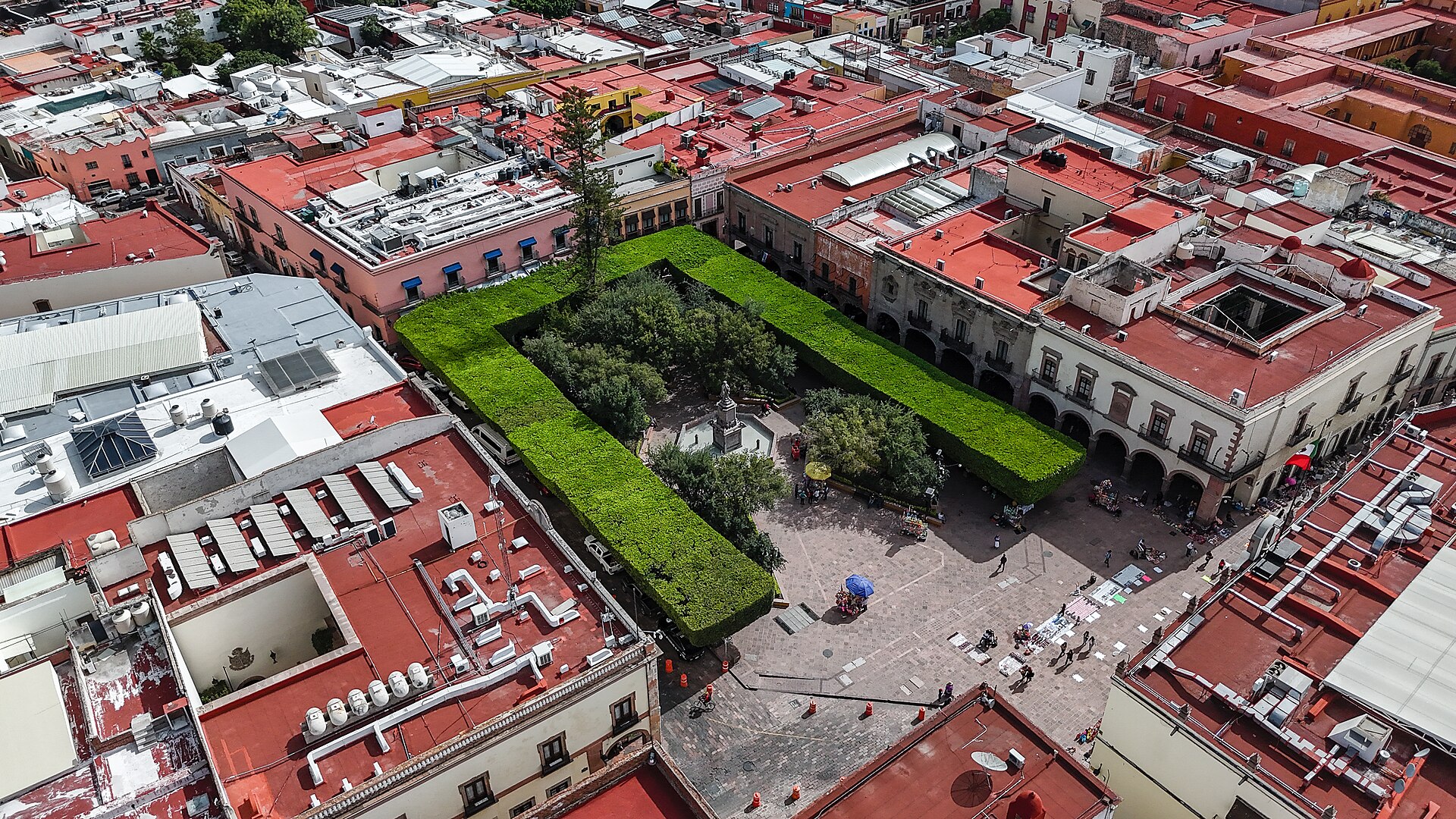
The president of Mexico works through a cabinet of secretaries who run federal ministries. As of October 2026, the key officeholders include Rosa Icela Rodríguez Velázquez as Secretary of the Interior, Juan Ramón de la Fuente Ramírez as Secretary of Foreign Affairs, and Edgar Abraham Amador Zamora as Secretary of Finance and Public Credit, who took office on March 8, 2025.
Other important cabinet members include Omar Hamid García Harfuch as Secretary of Security and Citizen Protection, Marcelo Luis Ebrard Casaubón as Secretary of Economy, Luz Elena González Escobar as Secretary of Energy, and Alicia Bárcena Ibarra as Secretary of Environment and Natural Resources.
The Bank of Mexico is led by Governor Victoria Rodríguez Ceja. Deputy governors as of August 2026 include Galia Borja Gómez, José Gabriel Cuadra García, Jonathan Ernest Heath Constable, and Omar Mejía Castelazo, according to the central bank’s August 5, 2026 governing-board minute.
Cabinet Secretaries at a Glance
| Office | Officeholder | In office since |
|---|---|---|
| President of the United Mexican States | Claudia Sheinbaum Pardo | October 1, 2024 |
| Secretary of the Interior | Rosa Icela Rodríguez Velázquez | October 1, 2024 |
| Secretary of Foreign Affairs | Juan Ramón de la Fuente Ramírez | October 1, 2024 |
| Secretary of Finance and Public Credit | Edgar Abraham Amador Zamora | February 2025 |
| Secretary of Security and Citizen Protection | Omar Hamid García Harfuch | October 1, 2024 |
| Secretary of Economy | Marcelo Luis Ebrard Casaubón | October 1, 2024 |
| Secretary of Energy | Luz Elena González Escobar | October 1, 2024 |
| Governor, Bank of Mexico | Victoria Rodríguez Ceja | January 1, 2022–December 31, 2027 |
Congress and the Main Political Parties
Mexico’s federal legislature is the Congress of the Union. The governing Morena-led coalition holds substantial legislative influence.
Congress has authority to pass federal laws, amend the Constitution, approve the federal budget, approve public borrowing, ratify certain international treaties, confirm selected appointments, and investigate public officials and government programmes.
Morena is the governing party and the principal vehicle of the Fourth Transformation, founded by López Obrador. It generally supports expanded social programmes, stronger government involvement in the economy, public-sector infrastructure, energy sovereignty, higher minimum wages, and a more limited role for some autonomous institutions.
The Labor Party (PT) and the Green Ecologist Party of Mexico (PVEM) are important governing allies. The main opposition parties are the National Action Party (PAN), a centre-right party that advocates private enterprise and institutional checks and balances; the Institutional Revolutionary Party (PRI), which governed Mexico for most of the twentieth century but is considerably weaker now; and Citizens’ Movement (Movimiento Ciudadano), which has strong bases in states including Jalisco and Nuevo León.
Proposed Electoral Changes in 2026
The proposal was politically significant but should not be described as fully enacted unless the relevant constitutional and statutory changes have been formally approved and published. Reporting in 2026 also indicated disagreement between the executive branch and the National Electoral Institute over a proposed system for assessing the integrity and security risks of political candidates.
State and Municipal Government: Why Local Politics Matter
Mexico has 32 federal entities: 31 states and Mexico City. Each has an elected governor or head of government, a local legislature, its own constitution, state-level ministries and public agencies, and responsibility for important areas of public administration. The current head of Mexico City’s government is Clara Brugada Molina.
State governors matter greatly to investors and residents because states influence industrial permits, local tax and fee policy, public security, transport and infrastructure, water services, land-use policy, relations with municipal governments, and investment promotion. Mexico’s political power is therefore not concentrated exclusively in Mexico City.
Municipal governments typically control or administer land-use permits, construction licences, local roads, public lighting, waste collection, water and drainage services in many areas, civil protection, and certain local business licences. The municipal level is particularly important for foreigners buying property, opening a business, or developing real estate. Federal or state approval does not necessarily replace municipal permits.
The Judiciary After the 2024 Reform
This has implications for constitutional litigation, commercial disputes, administrative challenges, investor-state concerns, judicial independence, and the speed and predictability of legal proceedings.
The transition is complex because existing judges, newly elected officials, courts, and implementing legislation operate within a staged institutional process. Investors should obtain current Mexican legal advice rather than assume that pre-reform procedures remain unchanged.
The Supreme Court of Justice of the Nation remains Mexico’s highest constitutional court, but its composition and operating framework have been affected by the reform. The federal judicial system also includes district and appellate courts, as well as specialised courts and tribunals.
The Economy in 2026: Numbers That Matter
Mexico’s economy showed moderate growth in 2026. According to INEGI, the National Institute of Statistics and Geography, real GDP grew 2.1 percent year-on-year in the second quarter of 2026. Nominal GDP reached 37,530 billion current Mexican pesos in Q2 2026, equivalent to approximately 37.530 trillion pesos.
The central bank’s statutory priority remains maintaining low and stable inflation.
Key Economic Indicators
| Indicator | Latest value | Period |
|---|---|---|
| Population | 130,911 thousand people | 2025 |
| Real GDP growth | 2.1% year-on-year | Q2 2026 |
| Nominal GDP | 37,530 billion current pesos | Q2 2026 |
| Consumer-price inflation | 3.4% year-on-year | September 15, 2026 |
| Open unemployment rate | 3.01% | August 2026 |
| USD/MXN exchange rate | 18.1903 pesos per US dollar | October 2, 2026 |
| Policy interest rate | 6.50% | May 2026 decision |
What to Watch: Elections and Security
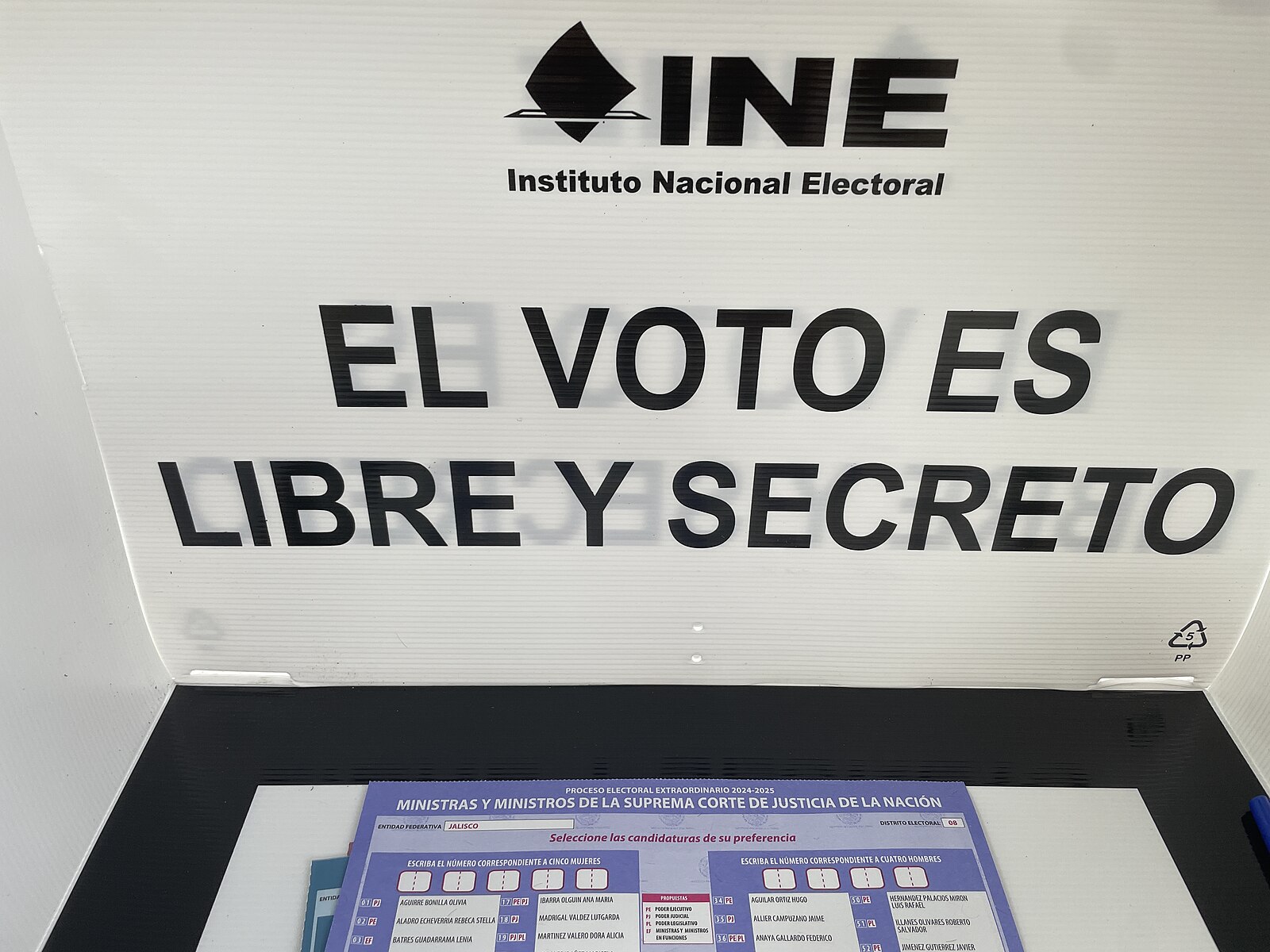
The next major nationwide electoral test is scheduled for 2027, when Mexico is due to renew the Chamber of Deputies. Local elections are also expected in numerous states, including gubernatorial, legislative, and municipal contests. The National Electoral Institute, or Instituto Nacional Electoral (INE), organises federal elections, maintains the voter registry, and oversees important electoral procedures.
Mexico’s security structure is divided among federal, state, and municipal authorities. At federal level, important institutions include the Secretariat of Security and Citizen Protection, the National Guard, the Secretariat of National Defense, the Secretariat of the Navy, and the Attorney General’s Office, which is formally independent from the executive branch.
Security conditions vary sharply by state and municipality. For expatriates and companies, nationwide crime statistics are less useful than location-specific information concerning organised crime, extortion, cargo theft, kidnapping, protest activity, and police capacity.
Related reading: Cemex Explained, Mexico's Cement Giant in 2026; Mexico Visa Options 2026 Explained; What Is Pemex? Mexico’s State Oil Giant, Its US$77.5 Billion Debt and Why It Matters; more from Mexico.
Frequently Asked Questions
Who is the current president of Mexico?
Claudia Sheinbaum Pardo is the president of Mexico as of October 2026. She took office on October 1, 2024, and is scheduled to serve until September 30, 2030.
How long is the presidential term in Mexico?
The president of Mexico serves a single six-year term. The Constitution does not permit presidential re-election.
What type of government does Mexico have?
Mexico is a federal representative democratic republic with three branches: executive, legislative, and judicial. The president is both head of state and head of government, and Mexico has no prime minister.
Which political party is in power in Mexico?
Morena is the governing party and the principal vehicle of the Fourth Transformation. It leads the Sigamos Haciendo Historia coalition with the Labor Party and the Green Ecologist Party of Mexico.
How many states does Mexico have?
Mexico has 32 federal entities: 31 states and Mexico City. Each has an elected governor or head of government, a local legislature, and its own constitution.
When is the next major election in Mexico?
The next major nationwide electoral test is scheduled for 2027, when Mexico is due to renew the Chamber of Deputies. Local elections are also expected in numerous states.
Who is the governor of the Bank of Mexico?
Victoria Rodríguez Ceja is the governor of the Bank of Mexico.
Sources: gob.mx, gob.mx, gob.mx, gob.mx, gob.mx, gob.mx. Retrieved 4 October 2026.
This article was produced by The Rio Times’ automated newsroom system. How we use AI · Report an error · Editorial responsibility: Matthias Camenzind, Editor-in-Chief