
MEXICO · SECURITY
Key Facts
- —The country About 131 million people in 32 federal entities (INEGI, 2025).
- —What happened Daily homicide victims fell to 40.8 in August 2026, from 86.9.
- —The hotspots Colima, Morelos and Sinaloa had the highest 2025 homicide rates.
- —US advisory Level 2 overall; six states at Level 4, Do Not Travel.
- —Hidden crime 93.4% of 2025 crimes were unreported or never investigated.
- —Still open Disappearances and unreported crime may hide part of the decline.
Killings in Mexico have fallen sharply since 2024. But the picture is uneven by state, and much everyday crime never reaches the police.
Mexico security has improved on the main official measure: daily homicide victims fell by 53% between September 2024 and August 2026. Yet violence remains concentrated in a handful of states, and extortion and fraud are more common than ever in surveys.
This guide explains the data, the armed groups, the police and military, and where risk is highest or lowest. Daily coverage sits in the Rio Times Mexico section.
How Mexico Security Has Changed Since 2024
Mexico has two official ways of counting killings, and they measure different things. Both now point in the same direction.
The first is the monthly count of the SESNSP, the National Public Security System secretariat, led by Marcela Figueroa Franco. It tallies victims recorded in investigation files opened by the 32 state prosecutors’ offices.
At a government briefing on Tuesday, 8 September 2026, the SESNSP put August 2026 at 40.8 intentional-homicide victims a day. That compares with 86.9 a day in September 2024, the last month before President Claudia Sheinbaum took office.
Omar García Harfuch, the federal Security and Citizen Protection minister, presented the figures as a 53% fall in 23 months. The Mexican daily Crónica reported that the data were consolidated as of 31 August 2026.
The second count comes from INEGI, the national statistics institute, which works from death certificates. On Monday, 3 August 2026, it reported 27,989 presumed homicides in 2025, a preliminary figure.
That equals 21.4 homicides per 100,000 people, down from a definitive 25.8 in 2024. For men the 2025 rate was 38.4 per 100,000; for women it was 4.7.
The two series rarely match exactly, because prosecutors and coroners classify deaths differently. A one-month comparison, like the 53% figure, also exaggerates trends that annual totals smooth out.
The Rio Times examined the limits of the headline number in a separate analysis of the 53% claim. INEGI has not yet published any 2026 death-certificate data.
What Crime Looks Like Beyond Homicide
Most crime in Mexico is not lethal, and most of it is never reported. INEGI’s annual victimisation survey, ENVIPE, is the best guide to that hidden layer.
The 2026 edition, published on Thursday, 10 September 2026, estimates that 23.0 million adults were victims of a crime in 2025. That is 23,473 victims per 100,000 adults, statistically lower than in 2024.
The survey counted 33.8 million crimes, and 28.5% of households had at least one victim. The most common offence was fraud, at 8,290 cases per 100,000 people.
Extortion came second, at 6,831 per 100,000, up from 5,971 the year before. Street or public-transport robbery followed at 5,641.
The key number is what INEGI calls the hidden figure. In 2025, 93.4% of crimes were either not reported or did not lead to a criminal investigation.
The SESNSP reported that recorded extortion fell 2.8% in January to August 2026 from a year earlier. The survey suggests most extortion is never recorded at all.
Perceptions have eased slightly. Between February and April 2026, 74.0% of adults said living in their state was unsafe, statistically lower than in 2025.
INEGI’s quarterly urban survey, ENSU, found that 59.8% of city residents felt unsafe in June 2026, against 63.2% a year earlier. The next reading is due on Friday, 23 October 2026.

The Armed Groups and Who They Are
Organised crime in Mexico is dominated by a few large networks and many local gangs. They earn money from drug trafficking, extortion, fuel theft and migrant smuggling.
On Thursday, 20 February 2025, the US State Department designated six Mexican groups as Foreign Terrorist Organizations:
- Sinaloa Cartel: a trafficking network from the north-west, split into rival factions that have fought each other since 2024.
- Jalisco New Generation Cartel (CJNG): a group based in western Mexico that expanded nationwide over the past decade.
- Gulf Cartel: one of the oldest groups, rooted in Tamaulipas along the Texas border.
- Cartel del Noreste: an offshoot of the former Zetas, active around Nuevo Laredo in Tamaulipas.
- La Nueva Familia Michoacana: a group operating in Michoacán, Guerrero and the State of Mexico.
- Cárteles Unidos: an alliance of local groups in Michoacán.
On Sunday, 22 February 2026, CJNG leader Nemesio Oseguera, known as El Mencho, died after an army operation in Tapalpa, Jalisco. The Defence Ministry confirmed his death, regional outlets including Zeta Tijuana and La Razón reported.
Arrests of the group’s mid-level figures have continued, including the October 2026 detention of an alleged CJNG fuel-smuggling chief. Removing leaders has historically splintered groups rather than ended violence.
In Sinaloa, the cartel’s internal split coincided with a jump in the homicide rate. It rose from 33 per 100,000 in 2024 to 57 in 2025, INEGI data show.
Police, National Guard and Armed Forces
Mexico’s security forces are layered, and responsibility is often blurred. Understanding who does what helps explain why results differ so much by state.
- Security and Citizen Protection Ministry (SSPC): the federal civilian security ministry, led by Omar García Harfuch, which coordinates intelligence and investigations.
- National Guard: a national force created in 2019 and placed under the Defence Ministry by a constitutional reform in September 2024.
- Defence Ministry (SEDENA) and Navy (SEMAR): the armed forces, which carry out most high-risk operations against cartels.
- State and municipal police: local forces that handle most day-to-day policing and vary widely in pay, training and trust.
- State prosecutors and the federal Attorney General’s Office (FGR): the bodies that open investigations and bring charges.
Mexico City runs its own large force, the Public Security Secretariat (SSC). Its patrols are a common sight in tourist districts.
Security policy is also shaped by relations with Washington, which pressures Mexico on fentanyl, guns and cartel leaders. Recent friction includes a US warning to Mexican governors accused of aiding cartels.
The two governments have also expanded technical cooperation, such as a drone cooperation declaration signed in August 2026. The wider balance of power is explained in the Rio Times guide to who holds power in Mexico.
Hotspots and Safer Areas
Violence in Mexico is highly local. A state can contain both a peaceful tourist city and a rural area controlled by armed groups.
INEGI’s 2025 figures, by state of registration, show the highest homicide rates per 100,000 people in:
- Colima: 89, more than four times the national rate of 21.
- Morelos: 58, just south of Mexico City.
- Sinaloa: 57, where cartel factions are at war.
- Baja California: 55, home to Tijuana.
- Sonora, Chihuahua and Guanajuato: 54, 53 and 51 respectively.
The lowest rates were in Yucatán at 2, Coahuila at 3 and Durango at 6. Mexico City recorded 9 per 100,000.
In absolute numbers, seven states accounted for 49.3% of homicides from January to August 2026, according to the SESNSP. They were Guanajuato, Baja California, Chihuahua, Sinaloa, the State of Mexico, Guerrero and Morelos.
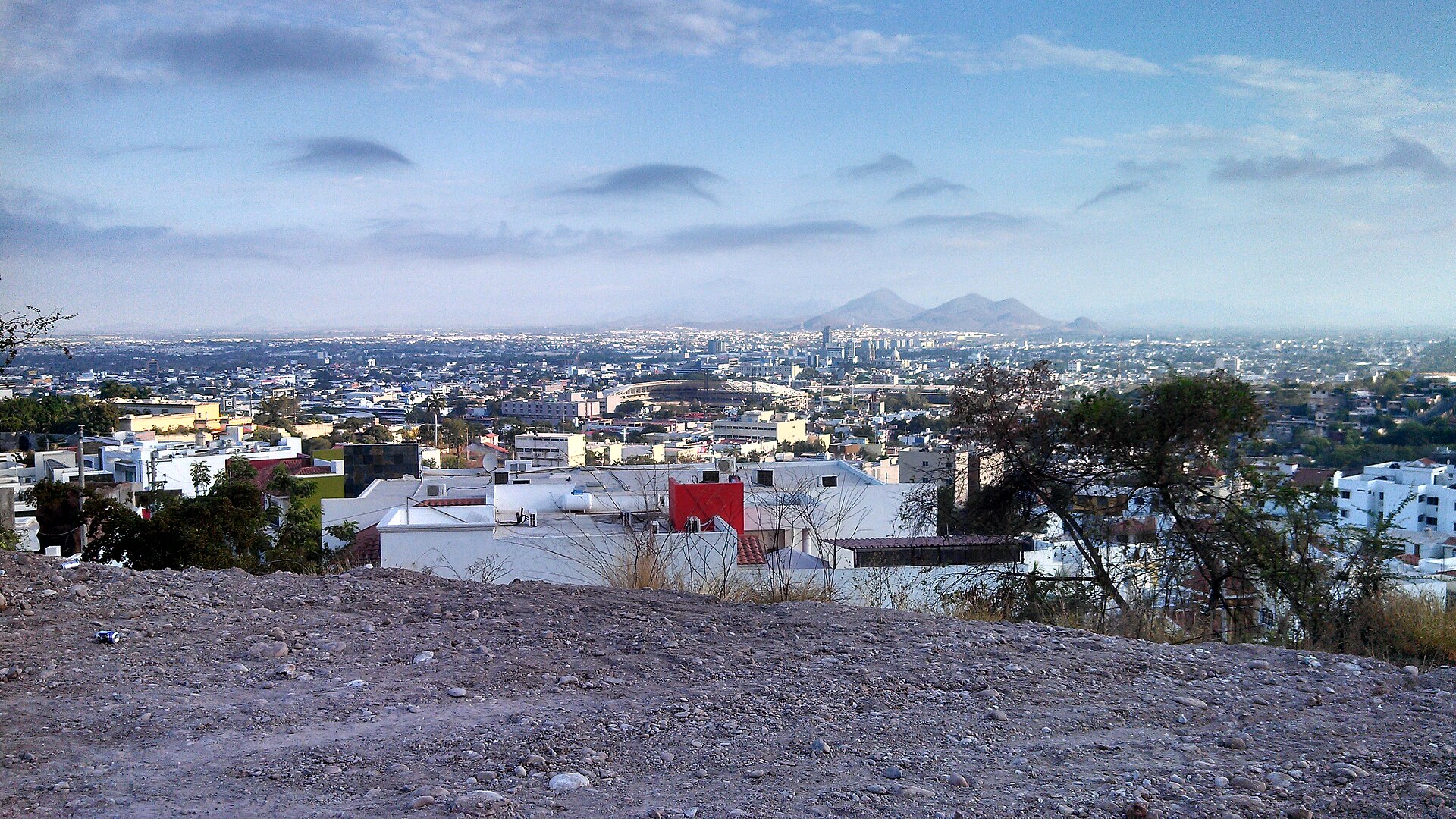
Perceptions follow a similar map. In the 2026 ENVIPE, residents of the State of Mexico, Morelos and Tabasco felt least safe, at 90.0%, 88.7% and 87.6%.
Residents of Coahuila, Yucatán and Aguascalientes felt safest, at 27.8%, 35.5% and 41.0%. Some tourist cities changed fast: in Puerto Vallarta, ENSU’s insecurity reading rose from 27.3% in June 2025 to 65.4% in June 2026.
Daily Life for Residents and Visitors
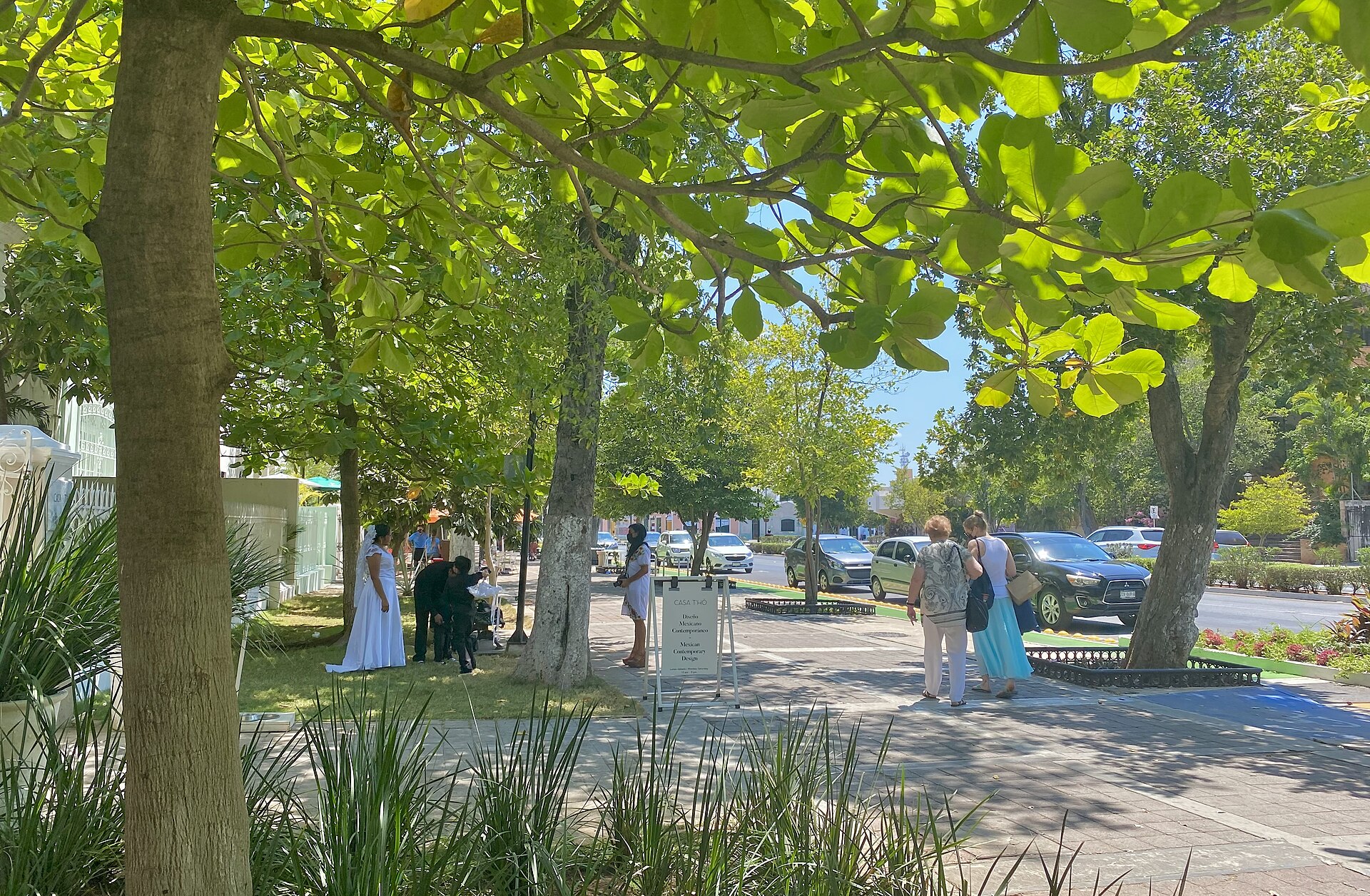
For most residents, the main risks are fraud, extortion, robbery on public transport and threats, not cartel violence. In the 2026 ENVIPE, 60.7% of adults named insecurity as the country’s most serious problem.
Only 43.4% of adults said they felt safe walking alone near their home at night between February and April 2026. Among women the share was 35.4%, against 52.4% among men.
Visitors to major tourist areas generally face petty crime and scams rather than targeted violence. But the State Department warns that violent crime occurs widely, and roadblocks can appear quickly after major security operations.
Practical habits reduce risk: use dispatched taxis or app-based rides, avoid intercity road travel after dark and keep valuables out of sight. Be wary of virtual kidnapping calls, a common extortion scam in which callers fake a relative’s abduction.
What It Means for US Readers
The US State Department rates Mexico overall at Level 2, Exercise Increased Caution, in an advisory updated in May 2026. It cites terrorism, crime and kidnapping, and assigns a level to each state.
- Level 4, Do Not Travel: Colima, Guerrero, Michoacán, Sinaloa, Tamaulipas and Zacatecas.
- Level 3, Reconsider Travel: Baja California, Chiapas, Chihuahua, Guanajuato, Jalisco, Morelos and Sonora.
- Level 2, Exercise Increased Caution: 17 entities, including Mexico City, Quintana Roo, Baja California Sur, Oaxaca and Nuevo León. Coahuila is listed here, though its own entry says Reconsider Travel.
- Level 1, Exercise Normal Precautions: Campeche and Yucatán.
Even within Level 3 and 4 states, the advisory lists permitted zones, such as the tourist areas of Mazatlán or central Manzanillo. US government staff may not travel between cities after dark or hail taxis on the street.
The department urges US citizens to follow the same restrictions and to comply at any road checkpoint. It warns that its ability to help is limited in many parts of Mexico.
For businesses, the terrorism designations raise legal stakes: providing material support to a designated group is a federal crime under US law. Companies facing extortion in Mexico should take legal advice.
Security in Mexico also shapes US debates on fentanyl, migration, remittances and cross-border trade. Violence near factories and highways adds cost for US firms operating there.
What Is Not Known
It is not clear how much of the homicide decline reflects real change and how much reflects reclassification. Analysts, including the think tank México Evalúa, have pointed to disappearances and other killings outside the intentional-homicide category.
No reliable total of missing people is given here, because the official register has been under revision and its count is disputed. INEGI’s 2026 death-certificate data will not be available until 2027.
It is also unknown whether the killing of El Mencho will weaken the CJNG or trigger new succession fights. The effect of US pressure, including the terrorism designations, on violence inside Mexico has not been measured.
Frequently Asked Questions
Is Mexico safe to visit in 2026?
The State Department rates Mexico overall at Level 2, Exercise Increased Caution, as it does Mexico City and Cancun’s state, Quintana Roo. Risk varies sharply by state, so check the state-level advisory before you travel.
Which Mexican states have a Do Not Travel warning?
In the State Department advisory updated in May 2026, six states are at Level 4. They are Colima, Guerrero, Michoacan, Sinaloa, Tamaulipas and Zacatecas.
Are homicides in Mexico really falling?
Yes, daily homicide victims fell from 86.9 in September 2024 to 40.8 in August 2026, government data show. INEGI put the 2025 rate at 21.4 per 100,000, down from 25.8 in 2024.
What is the most common crime in Mexico?
Fraud, according to INEGI’s 2026 victimisation survey, followed by extortion and street or public-transport robbery. About 93.4% of crimes in 2025 were not reported or did not lead to an investigation.
Which parts of Mexico are safest?
Yucatan had the lowest homicide rate in 2025, at about 2 per 100,000, followed by Coahuila and Durango. Yucatan and Campeche are the only states the State Department places at Level 1, Exercise Normal Precautions.
Who are the main cartels in Mexico?
The largest are the Sinaloa Cartel and the Jalisco New Generation Cartel. The US designated both, plus four other Mexican groups, as Foreign Terrorist Organizations in February 2025.
Sources: INEGI, ENVIPE 2026 results (10 September 2026); INEGI, homicide deaths 2025, preliminary (3 August 2026); INEGI, ENSU second quarter 2026 (24 July 2026); US Department of State, Mexico Travel Advisory; US Department of State, Foreign Terrorist Organizations; Crónica, SESNSP briefing (8 September 2026); Zeta Tijuana, Sedena confirms El Mencho death (February 2026); La Razón (22 February 2026) (all accessed 9 October 2026).
This article was produced by The Rio Times’ automated newsroom system. How we use AI · Report an error · Editorial responsibility: Matthias Camenzind, Editor-in-Chief