Honduras Explained 2026: The Country, Its Politics, Its Economy and What to Watch
GUIDES · HONDURAS
Key Facts
- —Capital Tegucigalpa, which under the constitution shares capital status with its twin city, Comayagüela. Its department, Francisco Morazán, is one of 18 and elects 23 of the 128 members of Congress.
- —Population About 11.0 million in 2025, the World Bank estimates, close to the US state of Georgia. About 59 percent live in towns and cities.
- —Currency The lempira, at about 26.85 to the US dollar on 26 September 2026. It moves slowly. The central bank’s reference rate lost 1.93 percent against the dollar from the end of 2025 to 10 September 2026.
- —Language Spanish is the official language under Article 6 of the 1982 constitution. English is widely spoken on the Bay Islands, and Garífuna is spoken along the Caribbean coast.
- —GDP US$39.6 billion in 2025, or about US$3,600 per person, less than a twentieth of the US level. Money sent home by migrants equalled 30 percent of that output.
- —Government A presidential republic with a single-chamber, 128-seat Congress. President Nasry Asfura of the National Party has governed since 27 January 2026, for a single four-year term.
Honduras explained for outsiders: a Central American country the size of Tennessee, run on coffee, factory exports and dollars sent home by migrants. Its new right-leaning government is courting Washington and foreign investors.
Honduras explained in brief: it is one of the poorest countries in the Americas and one of the most tied to the United States. Nearly half its exports go there, and most of its hard currency comes from Hondurans living there. US decisions on tariffs and migration now shape its economy as much as anything decided in Tegucigalpa.
What kind of country is this?
Honduras covers 112,490 square kilometres, a little larger than Tennessee or Virginia. It borders Guatemala, El Salvador and Nicaragua.
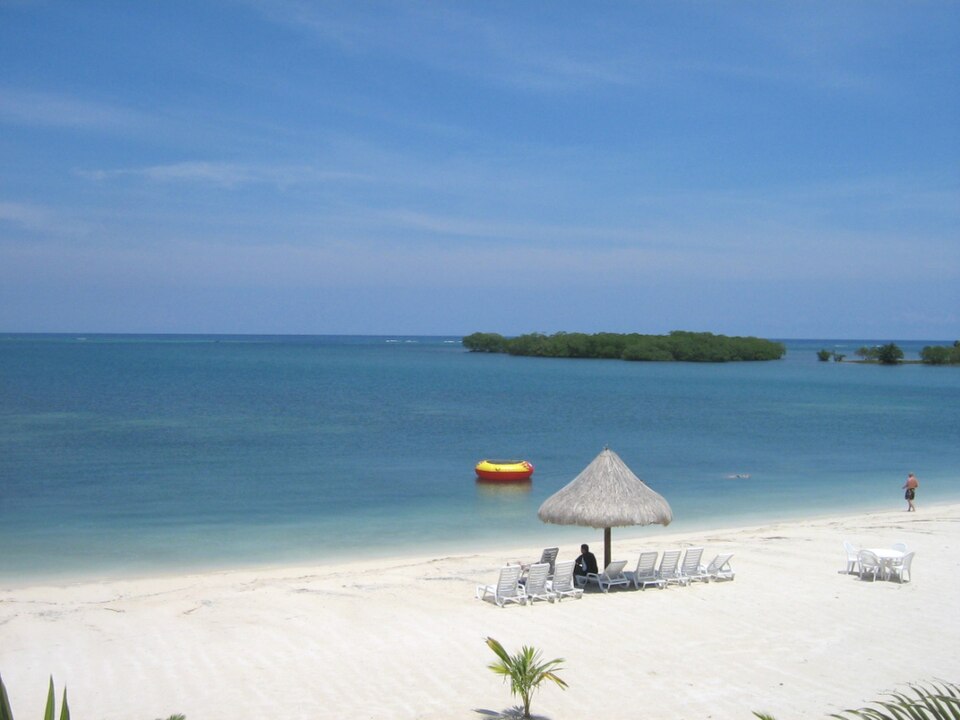
It has a long Caribbean coast to the north and a short Pacific shore on the Gulf of Fonseca. The Bay Islands, including Roatán, sit off the Caribbean coast and are where many foreign visitors first arrive.
About 11.0 million people live there, according to the World Bank, roughly as many as in Georgia or Portugal. The national statistics institute uses a lower projection, near 10.0 million, so population figures differ by source. About 59 percent of Hondurans live in urban areas, chiefly Tegucigalpa and the industrial city of San Pedro Sula.
Poverty is the defining fact. By the national poverty line, 60.1 percent of Hondurans were poor in 2025, down from 64.1 percent in 2023.
Output per person was about US$3,600 in 2025. That is why so many people leave for the United States, and why their remittances matter so much.
Honduras became independent from Spain on 15 September 1821, alongside its Central American neighbours. The current constitution dates from 1982, when civilian rule returned after military governments.
On 28 June 2009 the army removed President Manuel Zelaya, a rupture that still divides Honduran politics. His wife, Xiomara Castro, governed from 2022 to January 2026.
Who runs Honduras and how
The president is head of state and government, elected in a single round by simple plurality for four years. There is no runoff, so a candidate can win with around 40 percent. The constitution bars re-election, although a 2015 Supreme Court ruling let Juan Orlando Hernández win a second term in 2017.
Nasry Asfura of the conservative National Party won the election of 30 November 2025. The National Electoral Council (CNE) declared him the winner with 40.26 percent, against 39.54 percent for Salvador Nasralla of the Liberal Party. Rixi Moncada of Castro’s left-wing Libre party came third, after a slow count, technical problems and fraud allegations.
US President Donald Trump publicly backed Asfura before the vote. Days after it, Trump pardoned Hernández, the National Party president of 2014 to 2022. Hernández had been sentenced in New York in 2024 to 45 years for drug trafficking, and was released on 1 December 2025.
Congress has one chamber of 128 deputies, elected by department for four years. The National Party holds 49 seats, the Liberals 41, Libre 35, the small PINU-SD party two and the Christian Democrats one.
No party has the 65 votes needed for a majority, so the governing party relies on the Liberals. Congress is led by Tomás Zambrano of the National Party.
Congress also elects the 15 justices of the Supreme Court, by a two-thirds majority, for seven-year terms. That gives the legislature unusual weight over the courts and the attorney general. It also means every senior appointment requires cross-party deals.
How the economy works
Honduras earns dollars in three main ways: migrants’ remittances, factory exports and farm commodities. Remittances equalled 30 percent of output in 2025, one of the highest shares in the world. By 14 September 2026 they had reached US$9.5 billion for the year, the central bank reported.
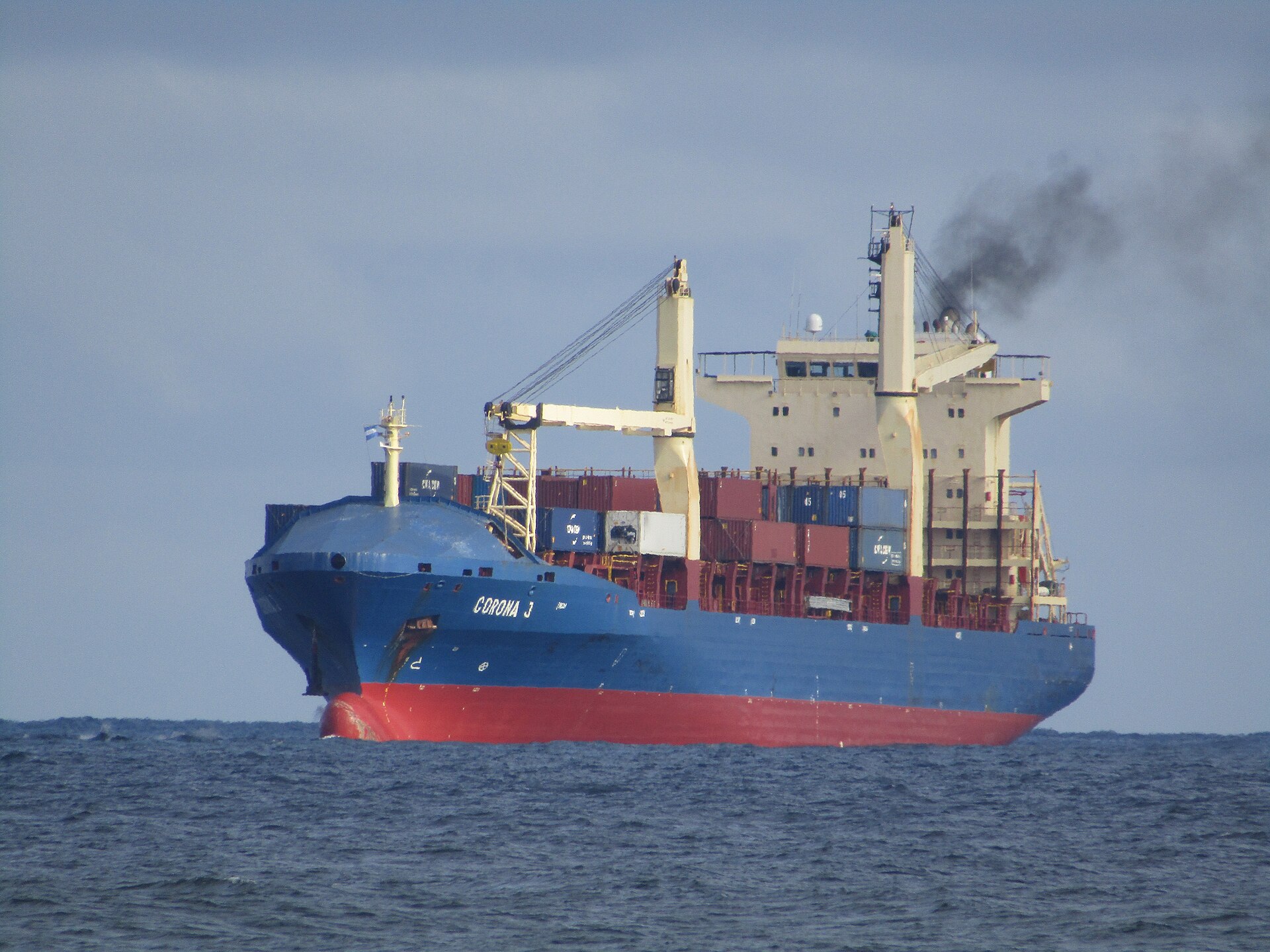
Goods exports totalled US$12.2 billion in 2025, and the United States bought 47.2 percent of them. Coffee earned a record US$2.33 billion, up 91 percent as world prices soared. Honduras is Central America’s largest coffee producer.
Maquila, the assembly of imported inputs for re-export, contributed US$5.35 billion, mostly clothing and car wiring harnesses.
Honduras imports far more than it sells. The goods trade deficit was US$8.2 billion in 2025, and imports from China grew 18 percent to US$3.19 billion. Fuel is a large item, because the country produces no oil, which makes it exposed to every rise in world prices.
The economy grew 3.8 percent in 2025, helped by coffee and remittances, the International Monetary Fund (IMF) says. Its staff project 3.3 percent for 2026 as oil prices bite.
Public debt stood at 45.4 percent of output in 2025, far lower than in most rich countries. The 2025 budget deficit was just 0.7 percent.
Fiscal discipline is anchored by an IMF programme. The 36-month arrangements, worth about US$847 million, were approved on 21 September 2023. About US$725 million has been paid out, and the programme was extended to 31 December 2026 to finish its final review.
What is happening right now
As of 26 September 2026, inflation is the main economic worry. Prices rose 6.20 percent in the year to August, above the central bank’s 3 to 5 percent target range.
Food and energy inflation reached 10 percent, driven by costlier imported fuel and an El Niño drought. Underlying inflation, a central bank measure that strips out volatile prices, was 3.74 percent.
On 18 September the central bank, the Banco Central de Honduras (BCH), raised its policy rate to 6.00 percent. It was the first change since October 2024. The bank called the move preventive, and aims to keep underlying inflation within its range during 2026. The IMF expects headline inflation of about 5.7 percent at the end of 2026.
The government is also cushioning fuel prices. Since 14 September the state pays 65 percent of each weekly rise in petrol and diesel prices, up from 50 percent. The budget for that subsidy was exhausted by June, and the IMF deficit target of 1 percent of output leaves little room.
Relations with Washington dominate foreign policy. The United States has ended Temporary Protected Status (TPS), a US work-and-residence permit, for Hondurans. On 3 September it refused Asfura’s request for a grace period.
As of late July, Honduran goods faced a 10 percent US tariff, with exemptions for some farm goods and clothing, and car wiring harnesses 25 percent. Talks on a trade deal continued.
Asfura has reversed several of Castro’s choices. On 6 March 2026 he re-signed the convention of the World Bank’s arbitration body, the International Centre for Settlement of Investment Disputes (ICSID).
Membership took effect again on 16 August. He has also begun reviewing agreements signed with China, which Honduras recognised instead of Taiwan in 2023.
On security, the National Defence and Security Council declared three criminal groups terrorist organisations on 18 September, without naming them. Congress President Zambrano said a new state of exception, which suspends some constitutional rights, was not needed for now.
The national university’s observatory put the 2025 homicide rate at 26.2 per 100,000 people. It was above 80 in 2011 and 2012.
What to watch
The next inflation figure comes in early October, when the central bank publishes September prices. Watch whether headline inflation moves back toward 5 percent, the top of the bank’s target range. A further rate rise would signal that the fuel shock is spreading to other prices.
The IMF’s sixth and final review must be completed before the arrangements expire on 31 December 2026. Congress will also debate the draft 2027 budget of 455.37 billion lempiras (about US$17.0 billion).
The budget is built on the same 1 percent deficit target. Whether Honduras seeks a successor IMF programme is not yet announced.
On trade, watch for a reciprocal tariff deal with Washington. Honduras wants terms like those given to Guatemala and El Salvador.
On remittances, the BCH forecasts US$13.16 billion for 2026. It expects much slower growth in 2027, when lost TPS permits and deportations bite.
Two longer-running questions matter to investors. One is whether Asfura restores ties with Taiwan, as he promised in his campaign.
The other is the pending ICSID claim by Próspera, a US-owned private city project on Roatán, which seeks up to US$11 billion. The next general election falls in November 2029.
What this means for foreigners
For visitors, entry is simple. US, Canadian, British and EU passport holders can visit without a visa for up to 90 days.
That period is shared with Guatemala, El Salvador and Nicaragua under the CA-4 agreement. Longer stays need residency, and our visa and residency guide sets out the routes.
Honduras is cheap by North American or Western European standards, and it actively courts retirees. A foreign pensioner can apply for residence on a monthly pension of US$1,500. Foreigners can also buy a coastal home, within limits described in our property guide.
Safety depends heavily on location. The national homicide rate is several times the US level, but violence is concentrated in certain cities and departments.
The Bay Islands are a different world from parts of San Pedro Sula. Our safety guide breaks this down, and travellers should check their own government’s advice.
For investors, the direction has changed. The return to ICSID, the IMF anchor and a government openly seeking US capital all point toward more predictable rules. But tariffs, an energy utility with arrears and a divided Congress remain real constraints.
Connected Coverage
Moving to Honduras: Visas, Costs, Safety and Where Foreigners Settle
Investing in Honduras as a Foreigner: Property, Energy and the Rules After ICSID
Honduras for Expats: Homicide Falls to 26.2 per 100,000, but Location Decides Safety
Honduras Bank Accounts for Foreigners: Passport or Residency Card, Free Tax Number
Honduras Offers Retirees Residence on a US$1,500 Monthly Pension
Honduras Lets Foreigners Buy One Coastal Home on 3,000 Square Metres
Healthcare in Honduras for Expats 2026 — Costs, Hospitals and Evacuation Cover
Honduras Visa and Residency 2026 — Routes, Income Rules and What They Cost
Taxes in Honduras for Expats 2026 — Territorial Rules, Rates and What You Owe
Castro Government Leans on Record Remittances as Honduras Faces 2026 Slowdown
Sources: Population, output, poverty and remittance shares from the World Bank; inflation, the policy rate, reserves, remittances and trade from the Banco Central de Honduras; the programme and projections from the International Monetary Fund; seat totals from the Inter-Parliamentary Union; homicide data from the National Autonomous University of Honduras. The exchange rate of about 26.85 lempiras to the US dollar is the open.er-api.com market rate on 26 September 2026. The central bank’s reference rate was 26.88 on 10 September. All accessed 26 September 2026.
- World Bank — Honduras data: population, GDP, remittances, poverty
- Banco Central de Honduras — press bulletin 84-2026, policy rate raised to 6.00 percent
- Banco Central de Honduras — consumer price index, August 2026
- Banco Central de Honduras — foreign trade in goods, December 2025
- International Monetary Fund — fourth and fifth reviews, 29 June 2026
- Inter-Parliamentary Union — National Congress election, 30 November 2025
- ICSID — Honduras signs the ICSID Convention, 6 March 2026
- UNAH National Violence Observatory — national bulletin, January to December 2025
- ICSID — Honduras Próspera Inc. and others v. Republic of Honduras, case ARB/23/2
What Is Not Known
Whether Washington cuts its tariffs. Honduras has sought a reciprocal trade deal since early 2026, aiming for the treatment Guatemala and El Salvador received. No agreement had been announced by late July, and its timing and terms remain open.
How hard the end of TPS and rising deportations will hit remittances. Estimates by Honduran analysts range from about US$310 million to US$700 million a year, and none is an official forecast. So far the flow keeps rising, which says little about 2027.
Whether Honduras switches back to Taiwan. Asfura promised it during the campaign and is reviewing the China agreements, but no decision or date has been announced. A switch would affect trade with China, which supplied 15.6 percent of Honduras’s goods imports in 2025.
Which groups were declared terrorist organisations on 18 September, and what the new powers will mean in practice. The government has not named them, and the related prison and court reforms were still before Congress as of 26 September 2026.
How many people live in Honduras. The World Bank estimate of 11.0 million and the statistics institute’s projection near 10.0 million differ by about a million. That gap changes every per-person figure.
Frequently Asked Questions
Who is the president of Honduras in 2026?
Nasry Asfura of the conservative National Party, in office since 27 January 2026. He won the election of 30 November 2025 with 40.26 percent of the vote, narrowly ahead of the Liberal Salvador Nasralla, and serves a single four-year term.
What currency does Honduras use?
The lempira. It traded at about 26.85 to the US dollar on 26 September 2026 and moves slowly, losing under 2 percent against the dollar between the end of 2025 and 10 September 2026. Honduras is not a dollarised country.
How important are remittances to Honduras?
Very. Money sent home by migrants equalled 30 percent of output in 2025, one of the highest shares in the world. By 14 September 2026 remittances had reached US$9.5 billion for the year, and most of it comes from the United States.
Do Americans need a visa to visit Honduras?
No. US, Canadian, British and EU passport holders can visit without a visa for up to 90 days. That period is shared with Guatemala, El Salvador and Nicaragua under the CA-4 agreement, and longer stays need residency.
Is Honduras safe?
It is safer than a decade ago but still violent. The homicide rate was 26.2 per 100,000 people in 2025, down from above 80 in 2011 and 2012. Risk depends heavily on location, and the Bay Islands differ sharply from parts of San Pedro Sula.
Does Honduras recognise China or Taiwan?
China, since 2023, when the Castro government switched recognition from Taiwan. President Asfura promised to restore ties with Taiwan and is reviewing the agreements signed with China, but no decision had been announced as of 26 September 2026.
This article was produced by The Rio Times’ automated newsroom system. How we use AI · Report an error
Read More from The Rio Times