
ARGENTINA · LATIN AMERICA
Key Facts
- The basics Third-largest economy in Latin America after Brazil and Mexico: US$768 billion in 2026, 47.9 million people.
- The numbers The International Monetary Fund forecasts 2.1% growth in 2026; national statistics office INDEC measured 33.4% inflation.
- Trade bloc Founding member of Mercosur, South America’s trade bloc; its EU deal applies provisionally since 1 May 2026.
- Great powers Washington signed a trade deal in February; China renewed its currency swap for five years in August.
- What to watch A sea-law tribunal in Hamburg hears Argentina’s Falklands oil case on 10 and 11 November 2026.
- Prediction markets Polymarket, a betting market, gives President Javier Milei 44.5% for 2027 and Buenos Aires governor Axel Kicillof 33.5% (10 November 2026, 9:28 a.m. ET).
- Power Index Argentina ranks 4th of 14 in The Rio Times Latin America Power Index, with 60.2 points (November 2026 edition).
Argentina is a mid-sized giant: large in land, minerals and diplomacy, smaller in money than Brazil or Mexico. This guide explains its weight, its alliances and its disputes as of 10 November 2026.
Argentina is the third-largest economy in Latin America, behind Brazil and Mexico, with an output of US$768 billion in 2026 and about 47.9 million people. It is a founding member of the Mercosur trade bloc, a close partner of Washington under President Javier Milei, and the claimant of the British-run Falkland Islands.
For US readers, Argentina matters as a supplier of lithium for batteries, as a country to which the US Treasury has offered a US$20 billion exchange line, and as a test of how far Washington can pull a South American government away from Beijing. It also matters because Brazil and China, not the United States, remain its two largest trading partners.
Figures come from the International Monetary Fund’s World Economic Outlook of October 2026, the national statistics office INDEC, the central bank (BCRA) and the US Trade Representative, the White House trade office. All money is given in US$, using the IMF’s own dollar series.
Daily news is in the Rio Times Argentina section, and the pillar Argentina and the United States, Relations Explained goes deeper on Washington. The banking and currency explainer covers the peso.
In Plain English
- Mercosur: a South American trade bloc created in 1991 by Argentina, Brazil, Paraguay and Uruguay, since joined by Bolivia.
- Swap line: a loan between central banks in which each lends its own currency, used to top up foreign-currency reserves.
- INDEC: Argentina’s national statistics office, which publishes official inflation and trade data.
- ITLOS: the International Tribunal for the Law of the Sea, a court in Hamburg set up under the UN sea-law treaty.
Argentina’s Weight in Numbers
The IMF, the Washington-based lender to governments, projects Argentina’s economy at US$768 billion in 2026. That is behind Brazil (US$2.65 trillion) and Mexico (US$2.18 trillion) and ahead of Colombia (US$573 billion).
Income per person is about US$16,021, close to Mexico’s US$16,191 and well above Brazil’s US$12,397. The IMF expects growth of 2.1% in 2026, after 4.5% in 2025, and 3.5% in 2027.
Prices remain the weak spot. INDEC reported monthly inflation of 1.9% for September and 33.4% over twelve months, published on Tuesday, 13 October 2026.
The IMF forecasts average inflation of 32.5% in 2026 and 21.2% in 2027. It puts gross government debt at 69.3% of output in 2026, against 97.0% for Brazil.
In trade, INDEC counted US$87.1 billion of goods exports in 2025 and US$75.8 billion of imports, a surplus of US$11.3 billion. Brazil, China and the United States were the three largest partners.
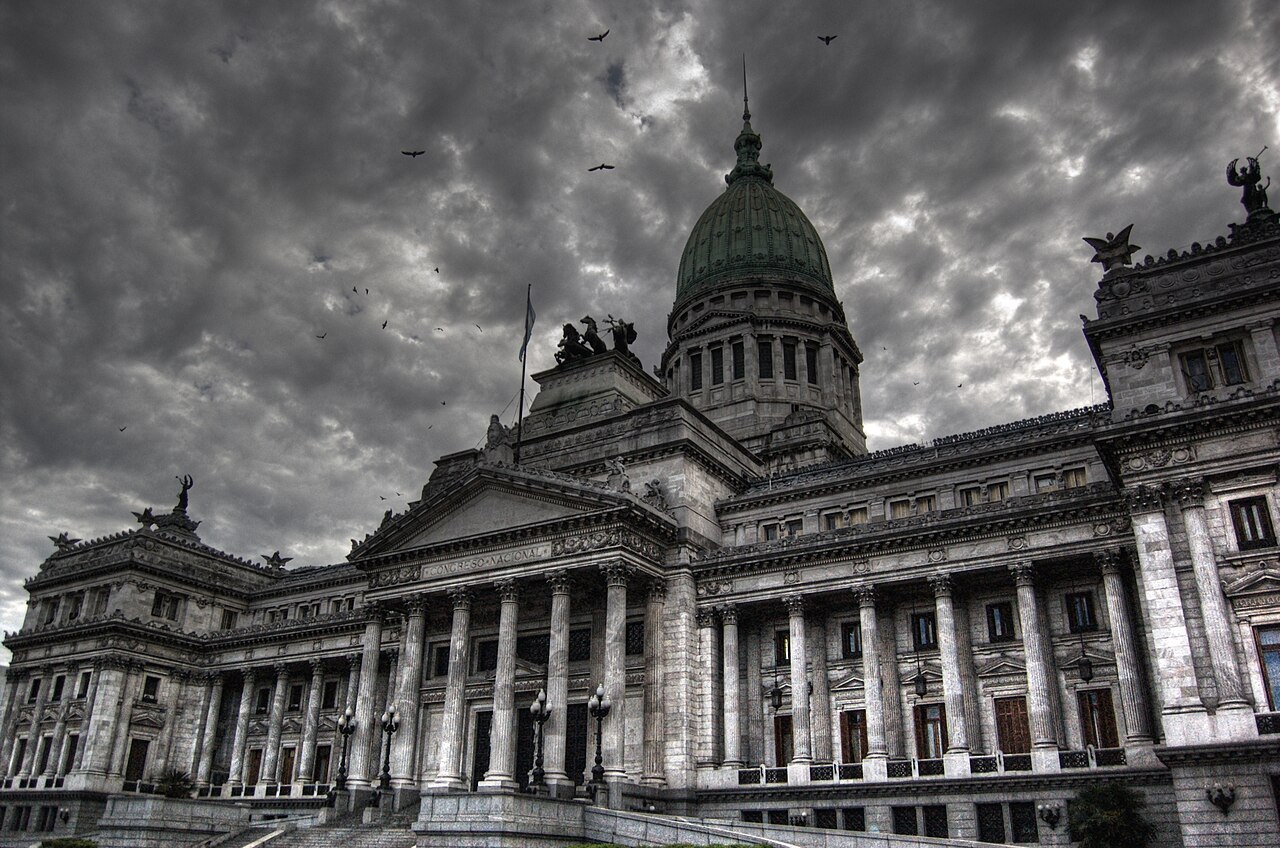
Argentina also holds an estimated 28 million metric tons of lithium resources, the second-largest national figure after the United States at 30 million, according to the US Geological Survey, a federal science agency. The same agency says Argentina supplied 43% of US lithium imports in 2021 to 2024, behind Chile at 54%.
Mercosur, the Bloc Argentina Helped Found
Mercosur, short for Common Market of the South, began with the Treaty of Asunción of 26 March 1991, signed by Argentina, Brazil, Paraguay and Uruguay. Bolivia has since joined as a full member, while Venezuela remains suspended.
Leaders met in Paraguay on Tuesday, 30 June 2026, where the rotating presidency passed to Uruguay for the second half of the year. Milei cancelled his attendance and Foreign Minister Pablo Quirno spoke for Argentina.
The EU–Mercosur agreement was signed on Saturday, 17 January 2026, and Argentina notified the EU of its completed ratification on 26 February 2026. The European Commission has applied the interim trade agreement provisionally since Friday, 1 May 2026, while full entry into force still awaits the European Parliament’s consent.
Our explainer on the EU–Mercosur interim trade agreement covers the beef quotas. For a smaller member’s view, see Bolivia’s role in Latin America.
Brazil, the Biggest Partner and a Cool Neighbour
Brazil is Argentina’s largest trading partner. INDEC counted US$12.8 billion of Argentine exports to Brazil in 2025 and US$18.4 billion of imports, a deficit of US$5.7 billion for Argentina.
The politics are cooler than the trade. Milei, a libertarian, and Brazil’s left-wing president Luiz Inácio Lula da Silva have traded public criticism since Milei’s 2023 campaign, and Milei skipped the June 2026 Mercosur summit.
Washington and Buenos Aires
The US Treasury’s Exchange Stabilization Fund, its currency-intervention reserve, signed a US$20 billion exchange agreement with Argentina’s central bank in October 2025, according to the Treasury’s inspector general, its internal watchdog. A first swap of US$2.5 billion followed that month, and the central bank repaid it in full in December 2025.
On Thursday, 5 February 2026, Jamieson Greer, the US Trade Representative, and Foreign Minister Pablo Quirno signed the Agreement on Reciprocal Trade and Investment in Washington. We could not confirm that both sides have finished the approvals the deal needs to take effect.
INDEC counted US$8.3 billion of Argentine goods exports to the United States in 2025 and US$6.7 billion of imports, a surplus of US$1.6 billion for Argentina. The US Trade Representative puts the US services surplus with Argentina at about US$6 billion for 2025.
China, the Second Partner and a Swap Lender
China is Argentina’s second-largest trading partner. INDEC recorded US$9.8 billion of exports to China in 2025 and US$18.0 billion of imports, a deficit of US$8.2 billion.
On 5 August 2026 the BCRA announced that it and the People’s Bank of China, China’s central bank, had renewed their currency swap of 130 billion Chinese yuan (CNY) (about US$19 billion at recent exchange rates) and extended its term from three to five years. The central bank says the activated tranche of CNY35 billion (US$5 billion, in its own figure), in use since early 2023, remains in effect.
Milei also told the leaders of the BRICS group of emerging economies in December 2023 that joining was not appropriate at that time. Argentina therefore never entered the bloc it had been invited to join.
The Falklands, the Malvinas and the Sea Lion Case
The Falkland Islands, which Argentina calls the Malvinas, are administered by the United Kingdom and claimed by Argentina. Argentina invaded them on 2 April 1982, and its forces surrendered on 14 June 1982.
On Tuesday, 13 October 2026, Argentina asked ITLOS for provisional measures against the United Kingdom over oil and gas exploitation in the South-West Atlantic. The request followed a notice of arbitration that Argentina sent to the UK on 28 September 2026 under the UN sea-law treaty.
ITLOS fixed public hearings for Tuesday, 10 November, and Wednesday, 11 November 2026, with a live webcast. Any order would be provisional, meaning temporary, because the main case would go to a separate arbitral tribunal that is still to be formed.
The target is the Sea Lion field north of the islands, where the oil company Navitas Petroleum is the operator and the explorer Rockhopper Exploration holds 35%. Rockhopper reports a final investment decision on 10 December 2025, financial close on 22 December 2025 and first oil targeted for 2028.
Milei’s government also sent a Sovereignty Defence Bill to Congress in September 2026 that would raise prison terms for unauthorised resource extraction in the disputed waters to up to 20 years for the gravest cases. We found no confirmation that Congress has passed it; our reports on the tribunal request and the Sea Lion contractors track the case.
How Milei Plays the Powers
Javier Milei, a libertarian economist, took office on 10 December 2023, and his term runs to December 2027. His line is alignment with Washington on finance and security, trade with everyone, and distance from BRICS and from the Brazilian government.
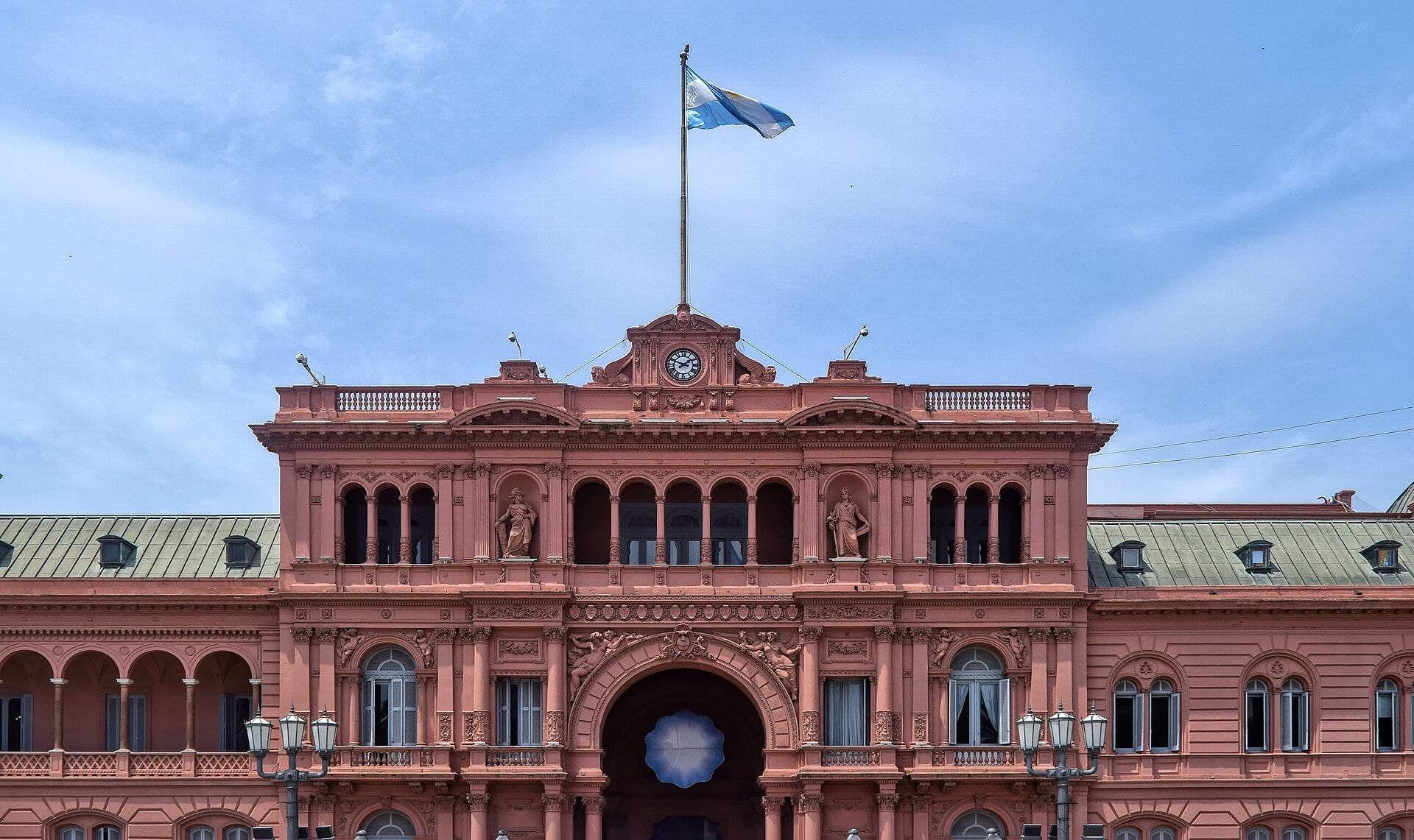
The next presidential election is set by law for Sunday, 24 October 2027. Axel Kicillof, the governor of Buenos Aires Province and a leader of the Peronist opposition, the movement built on the legacy of Juan Perón, is among the names traded by bettors as a challenger.
How Argentina Compares With Its Peers
IMF Forecasts for 2026
- Brazil: US$2,655 billion economy, 2.2% growth, 4.4% inflation.
- Mexico: US$2,176 billion economy, 1.5% growth, 3.8% inflation.
- Argentina: US$768 billion economy, 2.1% growth, 32.5% inflation.
- Colombia: US$573 billion economy, 2.2% growth, 6.0% inflation.
- Chile: US$402 billion economy, 0.6% growth, 3.7% inflation.
- Peru: US$400 billion economy, 3.0% growth, 3.8% inflation.
Argentina’s growth sits in the middle of the pack. Its inflation is the outlier, more than seven times the rate forecast for Brazil or Mexico.
Dates to Watch
Calendar
- 10 and 11 November 2026: ITLOS hearing on the Sea Lion case.
- Thursday, 12 November 2026: INDEC publishes October inflation.
- Sunday, 24 October 2027: presidential election.
What It Means for US Readers
Argentine assets carry currency risk: inflation of 33.4% a year erodes peso returns unless the exchange rate keeps pace. US investors should read the central bank’s reserve figures and the inflation release together.
The Treasury line and the trade deal show Washington has a stake in Milei’s success, while the China swap shows Beijing keeps one too. For US companies, the practical effects are lithium supply and a trade agreement that, once in force, is meant to open Argentine markets to US goods.
What Prediction Markets Say
On Polymarket, a crypto-based prediction market, traders gave Javier Milei 44.5% to win the 2027 presidential election, Axel Kicillof 33.5%, Sergio Massa, a former economy minister, about 14.5% and Patricia Bullrich, a senator and former security minister, 3.8% (10 November 2026, 9:28 a.m. ET). The market had US$1.44 million traded and includes any second round.
A separate Polymarket market gave about 2.7% to Milei leaving office before 2027, with US$168,773 traded. These are bets, not polls.
Why we show this: prediction markets turn real-money bets into a live probability that moves within minutes of the news, which is why investors, campaigns and newsrooms in the United States now follow them closely. We show them next to polls and official results, never instead of them.
What Is Not Known
It is not known when ITLOS will rule or whether it will grant any of Argentina’s requests. The hearing runs on 10 and 11 November 2026, and the tribunal had announced no decision when we published.
It is not known whether Congress will pass the Sovereignty Defence Bill in its original form. We also could not confirm when the US trade agreement takes effect.
Frequently Asked Questions
Is Argentina the biggest economy in Latin America?
No. The IMF ranks it third in 2026 at US$768 billion, behind Brazil (US$2.65 trillion) and Mexico (US$2.18 trillion).
Is Argentina a member of Mercosur?
Yes, it is a founding member, having signed the Treaty of Asunción on 26 March 1991. The EU–Mercosur interim trade agreement has applied provisionally to Argentina since 1 May 2026.
Does Argentina still claim the Falkland Islands?
Yes, it calls them the Malvinas and claims them. On 13 October 2026 it asked a UN-treaty sea court for provisional measures over oil work there, with hearings on 10 and 11 November.
Is Argentina allied with the United States or China?
Both play a role. The US signed a trade deal in February 2026 and a US$20 billion Treasury exchange agreement in October 2025, while China is the second-largest trading partner and renewed a CNY130 billion (about US$19 billion) swap in August 2026.
When is Argentina’s next presidential election?
The election is set by law for Sunday, 24 October 2027. Milei’s term ends in December 2027.
Sources: IMF World Economic Outlook, October 2026 (DataMapper, series NGDPD, NGDPDPC, NGDP_RPCH, PCPIPCH, GGXWDG_NGDP, LP); INDEC, consumer price index for September 2026 (13 October 2026); INDEC, foreign trade in goods, December 2025 report; ITLOS press releases 401 (13 October 2026), 402 (20 October 2026) and 404 (6 November 2026); European Commission, EU–Mercosur interim trade agreement, 30 April 2026, and Council Decision (EU) 2026/183; USTR, Argentina page and signing release of 5 February 2026; US Treasury Office of Inspector General, Exchange Stabilization Fund audit report OIG-26-011; BCRA, notices on the Treasury settlement (9 January 2026) and the swap renewal with the People’s Bank of China (5 August 2026); USGS Mineral Commodity Summaries 2026, lithium; Rockhopper Exploration announcements of 10 and 22 December 2025; Mercosur, founding texts and country pages; INDEC release calendar, second half of 2026; Polymarket, Argentina Presidential Election Winner market (10 November 2026); The Rio Times Latin America Power Index, November 2026 (all accessed 10 November 2026).
This article was produced by The Rio Times’ automated AI newsroom. Editorial responsibility: Matthias Camenzind, Publisher and Editor-in-Chief. The Rio Times also runs Ask Rio Times, which answers from 100,000+ of our own articles, the daily Latin America Power Map, and prediction-market odds on elections and markets.. How we use AI · Report an error
Expat Guide to Argentina
What The Rio Times publishes for foreigners who live in or move to Argentina.
Start here
- Argentina Banking and Currency Explained
- Argentina Security and Crime Explained 2026
- Argentina Money Guide for US Travelers
- Best Places to Live in Argentina for Expats 2026
City guides
Coming up in Argentina
- What to Do in Córdoba in November 2026 10 Nov
- Córdoba City Guide 2026 With the Pope's 10 November Visit 10 Nov
- Primavera Sound Buenos Aires 2026: Gorillaz, The Strokes to Headline 28 Nov
- Colombian Star Karol G Plays Buenos Aires on 5 February 5 Feb
Understand Argentina