Moving to Honduras 2026: Visas, Costs, Safety and Where Foreigners Settle
GUIDES · HONDURAS
Key Facts
- —What it is A guide to the legal routes into Honduras, what living there costs, where foreigners actually end up, and how safe those places are.
- —Who it’s for Retirees on a foreign pension, remote workers and divers drawn to the Bay Islands, investors, and staff transferred to San Pedro Sula or the capital.
- —What it costs Residency on a pension needs US$1,500 a month, on other income US$2,500 a month, or a documented investment of US$50,000. One person on Roatán budgets roughly US$1,200 to US$2,500 a month, on expat-reported figures.
- —Why it matters The ninety-day tourist allowance is shared across Honduras, Guatemala, El Salvador and Nicaragua combined. Hopping between them buys no extra time at all.
- —The catch Residency as a pensioner or a person of independent means takes five to six months and forbids paid work. And the public health system has been under a declared national emergency since February 2026.
What actually governs a move to Honduras: the four-country visa clock, three residency thresholds fixed in a 2003 statute, and the gap between island life and the mainland.
Moving to Honduras rewards people who read the rules before they buy the ticket. Three things decide how the first year goes: a regional visa agreement that almost every online guide gets wrong, three income thresholds written into a 2003 law and never indexed since, and a health system that works very differently depending on which side of the water you live.
Getting in, and the four-country clock
Moving to Honduras starts easily enough. Most Western nationals enter without a visa as tourists, including citizens of the United States, Canada, the United Kingdom, the European Union, Australia and Japan. Your passport must have at least six months of validity. The officer stamps the passport and writes the number of days granted by hand, so ninety days is a maximum rather than an entitlement.
Now the part that catches people out. Honduras, Guatemala, El Salvador and Nicaragua operate as one immigration zone under the Central America-4 agreement, in force since 2005 and 2006. Your allowance is shared across all four countries combined, and the clock starts the moment the first of them stamps you in.
That means crossing from Honduras into Guatemala or Nicaragua is an internal trip. It buys no time. To reset the clock you have to leave the zone altogether, for Mexico, Belize, Costa Rica, Panama or a flight out of the region. No minimum time outside is officially published, whatever the forums say.
Canada’s own advisory notes that Honduras allows stays of up to 120 days domestically while the four-country cap stays at ninety unless extended. Anyone planning to live there should treat the tourist route as a bridge to residency, not a substitute for it.
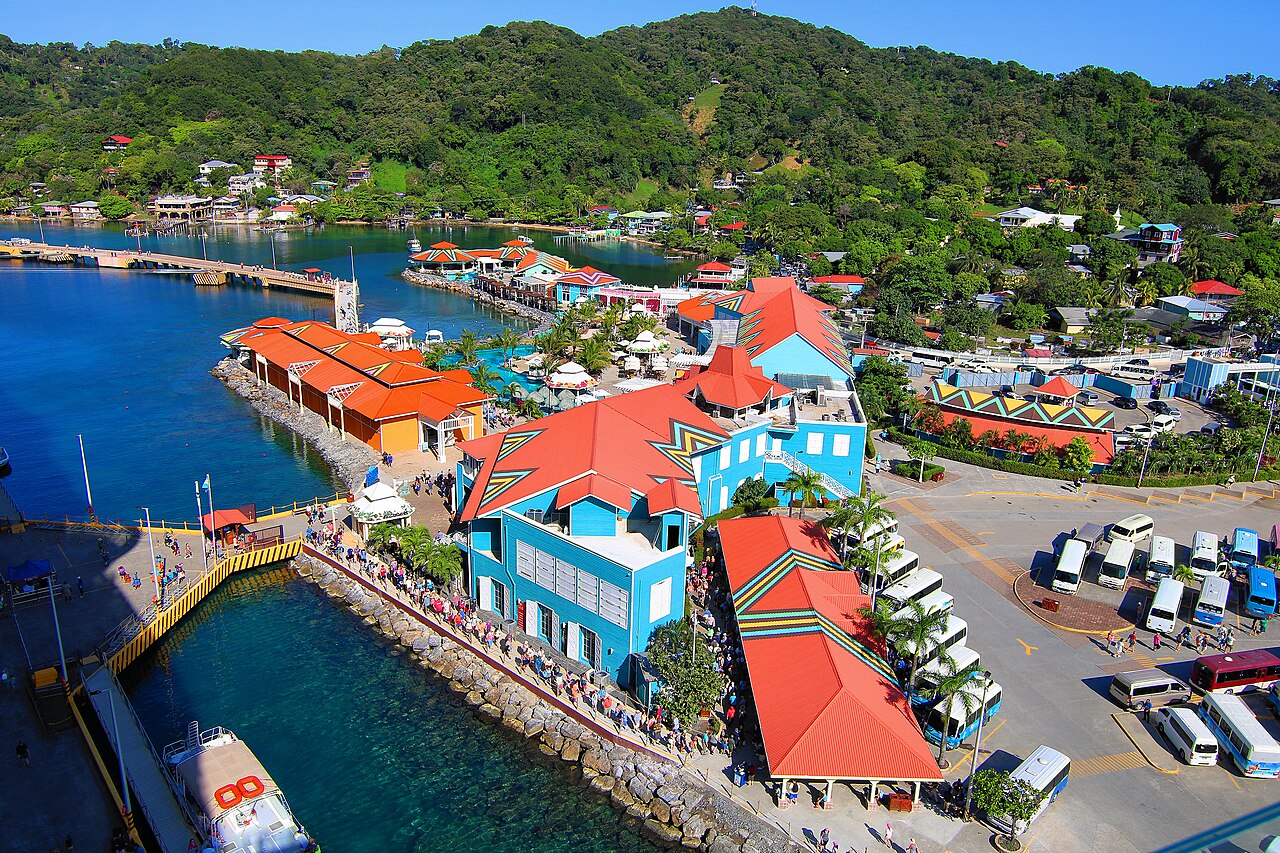
The residency routes and what they require
Three routes carry most of the traffic for anyone moving to Honduras permanently. All three are fixed in Decree 208-2003 rather than in a regulation that shifts with the exchange rate.
The pensioner route, residencia pensionado, needs at least US$1,500 a month in permanent pension income generated abroad. The independent means route, residencia rentista, needs US$2,500 a month in stable lawful income, which may come from inside or outside Honduras. The investor route needs a documented investment of at least US$50,000, plus a certificate of deposit of no less than US$5,000 lodged with the central bank as a guarantee that the money will actually be invested. That deposit is returned within a year once the investment is proved.
Two conditions apply to the first two routes and surprise people. The income has to be received in Honduras through an institution of the national financial system, so you must bank it locally. And holders may not take salaried or otherwise paid work, though they may invest in business.
There is compensation. Pensioners and rentistas get a one-off duty-free import of household goods and personal effects, and may import one vehicle free of duty and sales tax. Sell either within the qualifying period, three years for goods and five for the car, and the waived taxes fall due.
Budget five to six months for a pensioner or rentista file, lodged through a Honduran lawyer with the interior ministry, or at a consulate if you apply from abroad. Family routes exist for spouses, children and parents, and for relatives of Honduran citizens.
Working, and the ninety percent rule
Two separate things are needed to work: an immigration status that permits it, and a labour card from the labour ministry. People routinely confuse them.
Then there is the quota. Article 11 of the Labour Code requires employers to keep at least 90 percent of their workforce Honduran, and to pay those workers at least 85 percent of total wages. Where a business has fewer than five employees, four must be Honduran. The labour ministry may relax both proportions by up to ten points for up to five years where there is a genuine shortage of Honduran technicians, and may equally tighten them to zero.
In practice this pushes foreign employment towards management, specialist technical roles and companies large enough to absorb the ratio. It is a poor fit for someone hoping to arrive and find ordinary local work.
What it costs to live
Costing a move to Honduras needs care, including with the numbers below. Honduras publishes excellent official data on wages, the food basket and inflation. It publishes no official rent index and no city-by-city cost-of-living series at all.
The official anchors are these. The average minimum wage for 2026 is 14,917 lempiras a month, about US$555, set by tripartite agreement in April 2026 for two years. The basic food basket cost 2,622 lempiras per person a month in March 2026, roughly US$97, which is 18.7 percent of the daily minimum wage. Inflation ended 2025 just under 5 percent, dipped to 3.5 percent in February 2026 and rose to 5.6 percent in April on fuel prices.
For the mainland cities there is no verifiable rent series, and this guide will not invent one. Roatán is the exception, because four independent 2026 surveys of what foreigners actually pay converge. One person budgets US$1,200 to US$1,800 at the lower end and US$1,500 to US$2,500 for a comfortable life in West End. A retired couple is put at about US$2,200 a month comfortably.
Island rents follow the beach. A one-bedroom runs US$800 to US$1,200 in West End and West Bay, US$500 to US$800 around French Harbour, and US$300 to US$500 in Coxen Hole and local neighbourhoods. Beachfront carries a premium of 20 to 50 percent. Utila is cheaper and more basic, with simple apartments from about US$500. All of these come from expat and agency sources, not from an official series.
Where foreigners actually settle
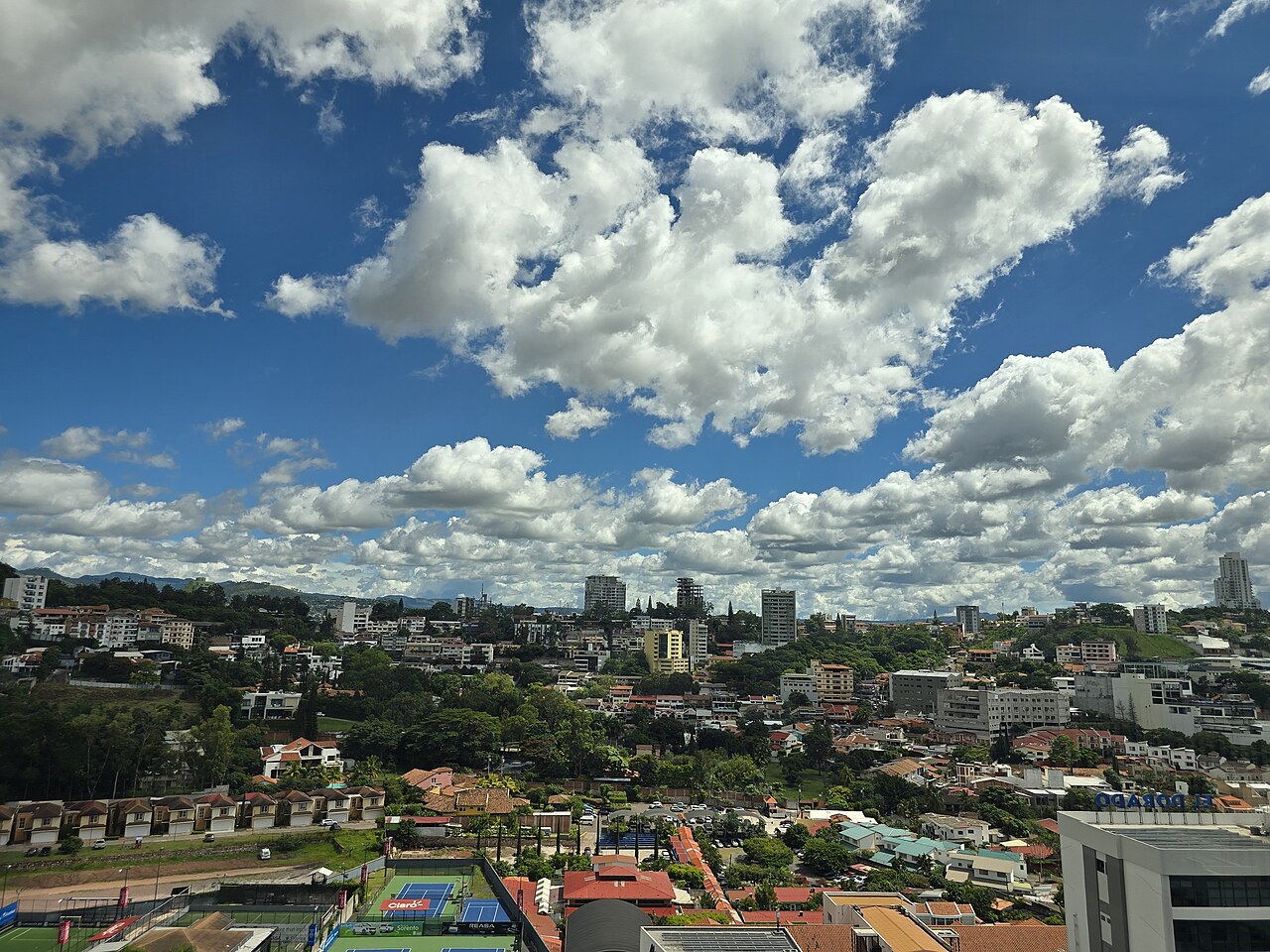
No official register of foreign residents by locality exists, so treat any headline count of expatriates with suspicion. The pattern of settlement, however, is clear enough.
Roatán is the centre of gravity: 77 kilometres long, on the second largest barrier reef in the world, with one of the oldest established foreign communities in Central America. It is disproportionately American and Canadian, and English is genuinely usable thanks to the islands’ British and Garífuna history. West End is the walkable hub, West Bay the polished resort end, Sandy Bay quieter and popular with retirees.
Utila draws a younger crowd of divers, dive professionals and remote workers rather than retirees, on a cash-dominant island with minimal healthcare. On the mainland the split is occupational. San Pedro Sula attracts corporate transferees and has the best private hospitals outside the capital. Tegucigalpa draws embassy staff, international organisations and consultants. Copán Ruinas and Tela appeal to people wanting a small town or a beach on a tight budget.
One non-obvious warning belongs here. Copán department recorded a 2025 homicide rate of 37.9 per 100,000 and Atlántida, which contains Tela and La Ceiba, 33.3, both well above the national 26.2. The towns’ reputation and their departments’ statistics point in different directions, and an honest guide says so.
Healthcare and the evacuation question
The public system is in declared crisis, and that is the government’s own position. Congress enacted a national health emergency on 2 February 2026 for one year, citing saturated hospitals, medicine shortages and too few specialists. The social security institute’s sickness and maternity regime was placed under intervention in March.
The underlying numbers explain why. More than half of all health spending in Honduras comes straight out of households’ pockets. Public health spending is around 3 percent of economic output against the 6 percent regional minimum, and hospital beds fell to 0.5 per thousand people. Only about two-thirds of prescriptions were being filled completely by early 2026.
Foreign residents therefore use private care, and the private sector is genuinely good and cheap by North American standards. The named hospitals are Honduras Medical Center, San Jorge and Viera in the capital, CEMESA and Hospital del Valle in San Pedro Sula. Expat-reported private insurance runs roughly US$80 to US$150 a month for a healthy adult, more with international cover.
On the islands, one rule overrides everything: evacuation cover is essential rather than optional. Roatán handles routine care and dentistry well and cheaply, but sources report the island has no scanner for complex imaging. Serious cases fly 45 minutes to San Pedro Sula, or to Houston, Miami or Mérida. A new general hospital for Roatán is under construction with development bank funding. The healthcare ceiling is the most commonly cited reason foreigners eventually leave the island.
Safety, without the euphemisms
Three different homicide figures circulate for 2025 and the gap between them is a factor of 1.7. The most transparent series, from the national violence observatory at the public university and validated with the police and forensic service, gives 26.2 per 100,000 with 2,633 cases. That is down from 38.2 in 2022, but the fall has slowed to roughly one point a year.
Geography matters more than the national average. Nine departments exceeded it in 2025, led by Colón at 49.6 and Olancho at 40.9, mostly along the Caribbean drug-transit corridor. In the first half of 2026, 101 municipalities recorded no homicides at all.
The Bay Islands are the recognised exception, and the language is the United States government’s own: around the resort areas of Roatán, Utila and Guanaja there is a concentration of resources and these areas are better policed. Islas de la Bahía did not appear among the departments above the national rate.
Washington rates Honduras level three, reconsider travel, reissued on 25 August 2026 with a terrorism indicator added to the existing crime indicator. Gracias a Dios department, in the far east, is level four, do not travel, and United States government staff are barred from going there.
Connected Coverage
Honduras Visa and Residency 2026
Honduras Offers Retirees Residence on a US$1,500 Monthly Pension
Healthcare in Honduras for Expats 2026
Sources: Residency thresholds and import concessions from Decree 208-2003 and its regulation, the minimum wage and food basket from the labour ministry, inflation from the central bank through the International Monetary Fund, homicide figures from the national violence observatory at the public university, and the travel rating from the United States State Department.
- Ley de Migración y Extranjería, Decree 208-2003 — residency categories
- Secretaría de Trabajo y Seguridad Social — cost of the basic food basket, 2001 to 2026
- United States State Department — Honduras travel advisory
- Observatorio Nacional de la Violencia, UNAH — national bulletin on mortality
- Decreto 5-2026 — the national health emergency law
- Secretaría de Gobernación y Justicia — residency document requirements
- International Monetary Fund — Honduras country page and June 2026 review
What Is Not Known
What it costs to rent in Tegucigalpa or San Pedro Sula. Honduras has no official rent index and no city cost-of-living series. Every figure circulating for the two mainland cities comes from crowd-sourced databases or agency listings, and several of those sites state openly that they triangulate from the same source. The Roatán ranges in this guide are better documented but still come from expat surveys rather than official data.
How many foreigners live in Honduras, or in any particular town. There is no public register of foreign residents by locality. The last complete census was in 2013, and the census that began fieldwork in August 2026 has not reported. Any headline number of expatriates should be treated as invented until a source is produced.
The real homicide rate. Three figures exist for 2025: 26.2 per 100,000 from the university observatory, 23.2 from InSight Crime and United States government sources, and a police projection of 15.30 cited by Human Rights Watch. Part of the gap comes from 997 deaths of unknown intent recorded in 2025, of which 787 were still under investigation. How those are eventually classified will move the number.
Medical evacuation logistics from the Bay Islands. Every source agrees the cover is essential, but no named air ambulance operator serving Roatán, no published price and no official protocol could be found. Anyone relying on evacuation should get the operator and the procedure in writing from their insurer before they need it.
Whether Honduras taxes the foreign income of residents. The professional consensus is that the system is territorial, but the regulation under the income tax law says otherwise, one Big Four guide says foreign income would be taxable in the absence of any treaty, and the government’s own programme lists a move to global income among its revenue measures. With tax residence triggered after only three months in the country, this matters for remote workers.
Frequently Asked Questions
How long can I stay in Honduras without a visa?
Normally up to ninety days, but the allowance is shared with Guatemala, El Salvador and Nicaragua under the Central America-4 agreement, and the clock starts when the first of those countries stamps you in. Crossing between them buys no extra time. The officer also writes the number of days granted by hand, so ninety is a ceiling rather than a guarantee.
What income do I need for residency in Honduras?
US$1,500 a month in pension income generated abroad for the pensioner route, or US$2,500 a month in stable lawful income for the independent means route. The investor route requires a documented investment of at least US$50,000 plus a US$5,000 certificate of deposit at the central bank as a guarantee. The thresholds are fixed in a 2003 statute and are not indexed to inflation.
Can I work in Honduras on a residency permit?
Not on the pensioner or independent means routes, which both prohibit salaried or otherwise paid work, though holders may invest in business. Paid employment needs both an immigration status that permits it and a labour card from the labour ministry, and employers must keep at least 90 percent of their workforce Honduran.
Is Honduras safe for foreigners?
It depends heavily on where. The national homicide rate was 26.2 per 100,000 in 2025 on the most transparent series, down from 38.2 in 2022, but nine departments ran well above that and 101 municipalities recorded none at all in the first half of 2026. The United States rates the country level three, reconsider travel, while noting that the Bay Islands resort areas are better policed.
What does living in Honduras cost?
For the mainland there is no reliable published answer, because the country has no official rent index or city cost series. On Roatán, where four independent 2026 surveys agree, one person budgets roughly US$1,200 to US$2,500 a month depending on comfort, with a one-bedroom at US$800 to US$1,200 in the beach villages and US$300 to US$500 in local neighbourhoods.
Is healthcare in Honduras good enough to move there?
The private sector is good and inexpensive by North American standards, and the named hospitals in Tegucigalpa and San Pedro Sula handle most conditions. The public system is under a declared national emergency running into 2027, with hospital beds at 0.5 per thousand people. On the islands, international insurance including medical evacuation is essential rather than optional.
This article was produced by The Rio Times’ automated newsroom system. How we use AI · Report an error
Read More from The Rio Times