Who Runs Honduras’s Economy, the Key Players in 2026
HONDURAS · ECONOMY
Key Facts
- —The country Honduras is a Central American nation of about 11.2 million people with an economy of roughly US$40.6 billion in 2026, built on coffee, garments and money sent home.
- —Why it matters The United States took about 46% of Honduran goods exports in early 2026, and the two countries traded US$12.5 billion in goods in 2025.
- —Who holds the levers A handful of banks, the state power company, family groups and foreign-owned plants hold the main levers. President Nasry Asfura has led the government since January 2026.
- —The numbers The World Bank forecasts 3.4% growth in 2026. Inflation reached 6.28% in September 2026, above the central bank’s target range of 4%, give or take one point.
- —For US readers Remittances equal about 30% of national output, so US immigration policy moves Honduran spending. A 10% US tariff on Honduran goods has applied since 24 July 2026.
- —Still open The IMF’s final review of its 2023 programme runs to 2 November 2026, with a new 2027 to 2030 deal to follow.
The Honduras economy, worth about US$40.6 billion in 2026, runs through a handful of banks, state firms and family groups. It also leans on money sent home from the United States, which equals about 30% of output, according to the World Bank.
This guide names the main players, shows who controls them and explains what that means for US readers.

How the Honduras Economy Is Built
Honduras has about 11.2 million people, according to the IMF’s 2026 country data. Budget papers reported by La Tribuna in September 2026 put the 2026 economy at 1.08 trillion lempiras (about US$40.6 billion).
All conversions here use about 26.7 lempiras to the US dollar.
The World Bank expects growth of 3.4% in 2026, after 3.8% in 2025. The central bank’s activity index showed output up 5.0% in June 2026 from a year earlier.
Commerce, coffee and a banana recovery led the rise.
Prices are climbing faster than the central bank’s target of 4%, give or take one point. Annual inflation reached 6.28% in September 2026, up from 4.55% a year earlier.
The central bank blames dearer fuel and the effects of climate on crops.
Poverty remains high. The World Bank estimates that 43.1% of Hondurans lived below its US$8.30-a-day line in 2025, down from 54.5% in 2019.
Remittances, the Biggest Source of Dollars
Hondurans abroad sent home US$7.69 billion from January to July 2026, up 11.2% on a year earlier, the central bank’s survey shows. That is less than half the 25.3% growth recorded in the same months of 2025.
Few parts of the Honduras economy matter as much as the money sent home. The World Bank puts remittances at about 30% of output and calls the economy critically reliant on them.
In the central bank’s survey, 88.2% of the migrants live in the United States and 8.8% in Spain.
The central bank’s president, Roberto Lagos, expects remittances above US$1.2 billion a month in the last three months of 2026. He says reaching his reserves goal depends on those inflows and on the 2026-27 coffee harvest.
A risk sits in Washington. On 14 August 2026 the US government made official the end of Temporary Protected Status for Hondurans.
That permit let people live and work legally in the United States.
Coffee, Bananas and the Export Economy
The goods side of the Honduras economy leans on farms and sewing plants. Exports reached US$5.80 billion between January and May 2026, up 12% on a year earlier, central bank figures show.
Higher volumes added US$551.8 million, while lower prices, mainly for coffee, took away US$145.9 million.
Coffee is the leading export. It earned US$1.67 billion in those five months, up 8%, because volume rose 24.6% while the average price fell 13.3%.
For the 2025-26 harvest, which closed on 30 September, the coffee institute Ihcafé reports preliminary earnings above US$2.3 billion. That came from 7.2 million sacks sold in 64 markets, and more than 100,000 families grow coffee.
Bananas brought in US$207.5 million, up 31.6%, as farmers expanded planted areas. Gold exports rose 51.6%, shrimp 9.2% and palm oil 2.5%, while recycled materials and waste climbed 65.2% to US$200.7 million.
The United States buys 45.9% of all Honduran exports and Central America 20.4%. The United States also takes 34.2% of the coffee by volume, ahead of Germany and Belgium.
Garment Plants and the Maquila Sector
A maquila is a factory that imports cloth, sews garments and ships them out, mostly to the United States. The Honduran Maquila Association, known as AHM, represents the plants, which cluster in Cortés, Santa Bárbara and Atlántida departments near Puerto Cortés.
Maquila exports were US$2.01 billion from January to May 2026, down 8.2%, as textile sales fell US$151.2 million, the central bank reports. Its activity index showed garment production down 13.2% in July 2026.
At the end of 2025 the industry employed 125,242 people, or 3.1% of the workforce, according to the central bank’s annual survey. Industry leaders quoted by La Tribuna in October 2026 say about 60,000 jobs were lost between 2024 and 2025.
The same leaders warn that exports could fall by about US$500 million, roughly 10%, in 2026. They say wages are about 40% higher than in Nicaragua and 60% higher than in Vietnam, which pulls orders elsewhere.
The Banks That Hold the Money
The banking regulator, the Comisión Nacional de Bancos y Seguros (CNBS), listed 15 private banks at the end of 2025. Together they held loans of 699.6 billion lempiras (about US$26.2 billion) and deposits of 722.9 billion lempiras (about US$27.1 billion).
Ficohsa leads in total assets, with 231.2 billion lempiras (about US$8.7 billion) or 19.46% of the system. Founded in 1994, it also operates in Guatemala, Nicaragua and Panama.
Banco Atlántida, in business since 1913, leads in loans and deposits with about a fifth of each. Its loans stood at 144.7 billion lempiras (about US$5.4 billion) and its deposits at 151.3 billion lempiras (about US$5.7 billion).
Banco de Occidente, which opened in 1951, earned the most profit in 2025. Its 3.7 billion lempiras (about US$138 million) was 32.42% of the system.
The whole system earned 11.3 billion lempiras (about US$425 million) that year.
In the first half of 2026 profits rose 51.95% to 7.9 billion lempiras (about US$296 million), according to the CNBS. Occidente, BAC Credomatic, Atlántida, Ficohsa and Banpaís together took 86.89% of that total.
Banks also raise money on the Bolsa Centroamericana de Valores, the Honduran securities exchange, which trades notes, bonds, shares and repurchase deals. Its front page in October 2026 showed a Banpaís bond auction on 15 October that awarded US$4,451,000.
State Companies: Power, Ports and Phones
The Empresa Nacional de Energía Eléctrica, or ENEE, is the state power company and the biggest weak spot in public finances. Its debt stood at 121.8 billion lempiras (about US$4.6 billion) in May 2026.
It lost 33.6% of the energy it distributed in 2025.
Private generators supplied 76.94% of national power in 2025 and ENEE only 23.06%, according to figures reported by the outlet Contracorriente. Congress approved an energy law on 31 August 2026, by 78 votes, that splits ENEE into generation, transmission and distribution subsidiaries.
ENEE’s general manager, Guillermo Peña, says the split could take 12 to 18 months. The law also freezes the electricity tariff for six months, extendable by six more, and creates an independent market operator.
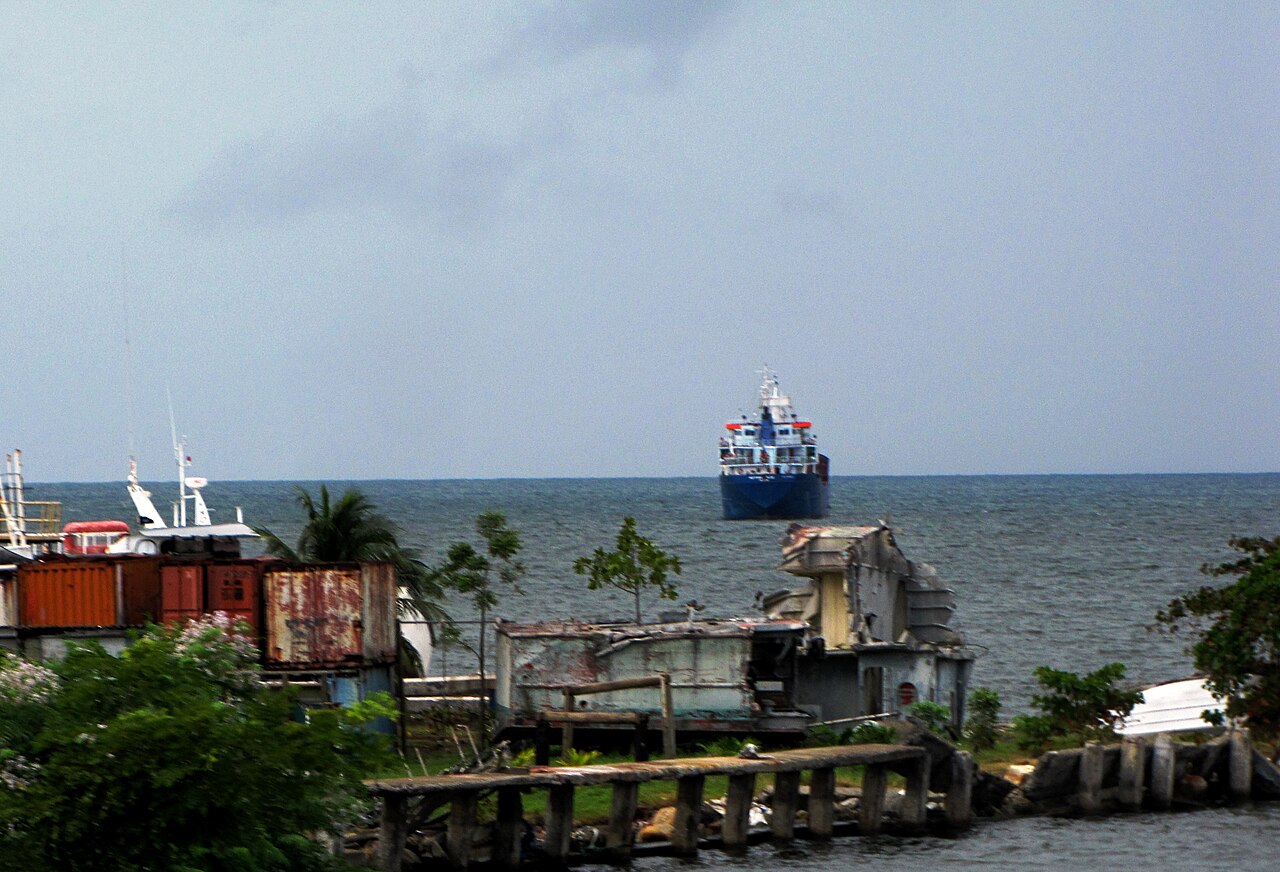
The Empresa Nacional Portuaria is the state port company. Manager Yaudet Burbara said in September 2026 that revenue would top 2 billion lempiras (about US$75 million at 26.7 lempiras to the dollar).
Puerto Cortés is run under concession by Operadora Portuaria Centroamericana, a subsidiary of the Manila-based group ICTSI.
In February 2026 President Asfura announced a US$100 million expansion, backed by the port operator and its parent. It aims to lift capacity from 816,000 to 1.4 million standard containers by early 2027.
In phones, Claro and Tigo hold most of the radio spectrum, with 120 and 90 megahertz. The state-owned Hondutel holds 40, according to World Bank data cited in a July 2026 industry report.
Hondutel lost 95.1 million lempiras (about US$3.6 million) in the first half of 2026, La Prensa reported in July. Regulator Conatel counted 6.95 million active mobile lines in 2025, a penetration of 69.5%.
Family Groups and Foreign Owners
Corporación Dinant, founded by Miguel Facussé Barjum, who died in 2015 at age 90, makes food, cleaning products and palm oil. It began planting African palm in northern Honduras in 1994.
A family heir, Miguel Mauricio Facussé, showed a new snack plant in Comayagua in April 2025.
Grupo Elcatex, founded in 1960 by Juan Miguel Canahuati, runs textiles, energy, industrial parks and technology. It employs more than 15,000 people.
Its eight sewing plants make more than 270 million garments a year, according to a 2022 financing announcement.
In June 2022 BID Invest, the private-sector lender of the Inter-American Development Bank Group, announced a US$40 million package for the group. It combined US$25 million of its own money with US$15 million raised from other lenders.
The money aims to lift output at its San Juan Textiles unit by 50%. It also pays for two new sewing plants, one in Choloma near San Pedro Sula.
A 2026 brand survey by the research firm Kantar Mercaplan found local brands lead most categories in Honduras. They include SalvaVida beer, Diunsa department stores, La Colonia supermarkets and Yummies snacks.
Foreign capital shows up in ports, banking and investment zones. The Zonas de Empleo y Desarrollo Económico were special areas with their own rules.
The Supreme Court ruled them unconstitutional on 20 September 2024.
The zone operator Honduras Próspera Inc. is suing under the CAFTA-DR trade pact before ICSID, the World Bank’s investment arbitration centre. Honduras filed its defence on 12 July 2026, and the case is pending.
Who Sets the Rules
President Nasry Asfura, leader of the conservative National Party, was sworn in on 27 January 2026. His finance minister, Emilio Hernández Hércules, coordinates the economic cabinet and his ministry sent the 2027 budget to Congress in September 2026.
That budget totals 455.4 billion lempiras (about US$17.1 billion), including 74.6 billion lempiras (about US$2.8 billion) for debt service, or 16.4%. Central government debt stood at US$18.72 billion, 46.0% of output, at the end of June 2026.
The central bank holds reserves of US$11.56 billion as of 13 October 2026, enough for 6.7 months of imports. The IMF began the sixth and final review of its 2023 arrangement on 20 October 2026, which could release about US$120 million.
The Consejo Hondureño de la Empresa Privada, or COHEP, is the main business lobby. Its president, Anabel Gallardo, won re-election in March 2026 for a term to 2028.
She has called for the 10% US tariff to be removed.
What It Means for US Readers
For US readers, the Honduras economy matters through trade and migration. The United States sold Honduras US$6.95 billion of goods in 2025 and bought US$5.50 billion, according to the US Census Bureau.
That left a US surplus of US$1.45 billion. From January to August 2026 sales were US$5.20 billion and purchases US$3.92 billion.
A 10% US tariff on Honduran goods took effect on 24 July 2026 under Section 301 of the Trade Act of 1974. The US Trade Representative acted after finding that 60 economies had not enforced bans on goods made with forced labour.
Honduras joined the CAFTA-DR free-trade pact with the United States on 1 April 2006, according to the US Trade Representative. Americans meet Honduras in their coffee, bananas and T-shirts.
The United States takes 34.2% of Honduran coffee by volume.
For families, the TPS decision matters most. Remittances come from workers in the United States, so changes to their legal status can reduce what reaches households in Honduras.
Investors will find a bank-led financial system and a power sector still under repair. The Próspera case shows how contract disputes can end in international arbitration.
Readers can follow the Honduras hub for daily coverage. Earlier guides cover Honduras geopolitics and Honduras in Latin America.
Recent reports track Honduran remittances and the IMF review.
What Is Not Known
The IMF has not yet said whether the sixth review will pass or what a new 2027 to 2030 programme would require. The mission stays until 2 November 2026, and the next year of the Honduras economy depends partly on that result.
It is open how far the 10% tariff will cut garment exports. The maquila sector forecasts a fall of about US$500 million in 2026.
The exact size of the family groups is also hard to state, because they rarely disclose their full holdings.
How quickly ENEE can cut its losses under the new energy law is also open, after losses of 33.6% in 2025.
Frequently Asked Questions
How big is the Honduras economy?
The Honduras economy is worth about 1.08 trillion lempiras (about US$40.6 billion) in 2026, according to budget papers. The World Bank expects growth of 3.4% this year.
What does Honduras export?
Coffee is the leading export, at US$1.67 billion from January to May 2026. Garments, bananas, gold, shrimp and palm oil follow, and the United States takes 45.9% of all exports.
Who are the biggest banks in Honduras?
Ficohsa leads in assets, Banco Atlántida in loans and deposits, and Banco de Occidente in profit, according to the CNBS. BAC Credomatic and Banpaís complete the top five by 2026 profit.
How much do remittances matter to Honduras?
The World Bank puts remittances at about 30% of national output. Hondurans abroad sent home US$7.69 billion from January to July 2026, up 11.2% on a year earlier.
Is the Honduran power company state owned?
Yes, the Empresa Nacional de Energía Eléctrica is state owned, but private generators supplied 76.94% of national power in 2025. A law passed on 31 August 2026 splits it into three subsidiaries.
Does the United States charge a tariff on Honduran goods?
A 10% tariff has applied since 24 July 2026 under Section 301 of the Trade Act of 1974. COHEP, the business lobby, has asked for it to be removed.
What currency does Honduras use?
The lempira. The exchange’s website showed a selling rate of about 26.7 lempiras to the US dollar in October 2026.
Sources: US Census Bureau, trade in goods with Honduras, 2026-10-21; World Bank, Honduras country overview, 2026-10-06; IMF, Honduras country page, 2026-10-21; ICSID, Honduras Próspera Inc. v. Honduras (ARB/23/2), 2026-09-09; US Trade Representative, CAFTA-DR entry into force for Honduras, 2026-10-21; Bolsa Centroamericana de Valores, 2026-10-21; Banco Ficohsa, 2026-10-21; La Prensa, CNBS bank ranking for 2025, 2026-01-28; El Heraldo, bank profits to June 2026, 2026-07-23; El Heraldo, central bank reserves, 2026-10-16; Revista E&N, goods exports January to May 2026, 2026-07-20; AgroLatam, coffee exports 2025-26, 2026-08-18; Proceso Digital, remittances, 2026-09-30; La Prensa, inflation in September 2026, 2026-10-11; Hondudiario, central bank activity index for June, 2026-08-20; La Tribuna, maquila exports, 2026-10-05; La Tribuna, 2027 budget and public debt, 2026-09-28; Contracorriente, energy law and ENEE, 2026-09-04; Infobae, ports and ENP revenue, 2026-09-17; Infobae, Puerto Cortés expansion, 2026-02-19; TeleSemana, spectrum tender, 2026-07-30; La Prensa, Hondutel losses, 2026-07-15; Infobae, IMF final review, 2026-10-20; Infobae, COHEP and the US tariff, 2026-07-22; El Heraldo, COHEP president re-elected, 2026-03-04; La Nación (Costa Rica), US tariff rates, 2026-07-29; Telemundo, Asfura sworn in as leader of the National Party, 2026-01-27; Revista E&N, Miguel Facussé obituary, 2015-06-23; Contracorriente, the Facussé business group, 2025-05-14; Bloomberg Linea, BID Invest financing for Grupo Elcatex, 2022-06-29; La Prensa, Top of Mind 2026 brand survey, 2026-04-09.
This article was produced by The Rio Times’ automated newsroom system. How we use AI · Report an error · Editorial responsibility: Matthias Camenzind, Editor-in-Chief
Expat Guide to Honduras
What The Rio Times publishes for foreigners who live in or move to Honduras.
Start here
- Moving to Honduras: Visas, Costs, Safety and Where Foreigners Settle
- Honduras for Expats: Homicide Falls to 26.2 per 100,000, but Location Decides Safety
- Honduras Bank Accounts for Foreigners: Passport or Residency Card, Free Tax Number
- Healthcare in Honduras for Expats 2026 — Costs, Hospitals and Evacuation Cover
Coming up in Honduras
Understand Honduras
Rotate for Best Experience
This report is optimized for landscape viewing. Rotate your phone for the full experience.
You've reached your free article limit
Subscribe to The Rio Times for unlimited access to our news, expat and nomad guides and market intelligence on Latin America and Africa.
Expat Guide to Honduras
What The Rio Times publishes for foreigners who live in or move to Honduras.
Start here
- Moving to Honduras: Visas, Costs, Safety and Where Foreigners Settle
- Honduras for Expats: Homicide Falls to 26.2 per 100,000, but Location Decides Safety
- Honduras Bank Accounts for Foreigners: Passport or Residency Card, Free Tax Number
- Healthcare in Honduras for Expats 2026 — Costs, Hospitals and Evacuation Cover
Coming up in Honduras
Understand Honduras