Healthcare in Honduras for Expats 2026 — Costs, Hospitals and Evacuation Cover
GUIDES · HONDURAS
Key Facts
- —What it is a three-part system — public network, social-security IHSS, and the private tier foreigners mostly use.
- —Who it’s for expats, retirees and remote workers in the cities, on Roatán, or in rural Honduras.
- —What it costs private consultations are widely reported at about US$25–80, with no official national fee schedule.
- —Why it matters routine care is affordable, but complex surgery and cancer care often mean leaving.
- —The catch island and rural care is thin, so evacuation cover is the decisive purchase.
Healthcare in Honduras for expats in 2026 comes down to one practical split: cheap, quick routine care in the private tier, and a planned route out for the rare serious case.
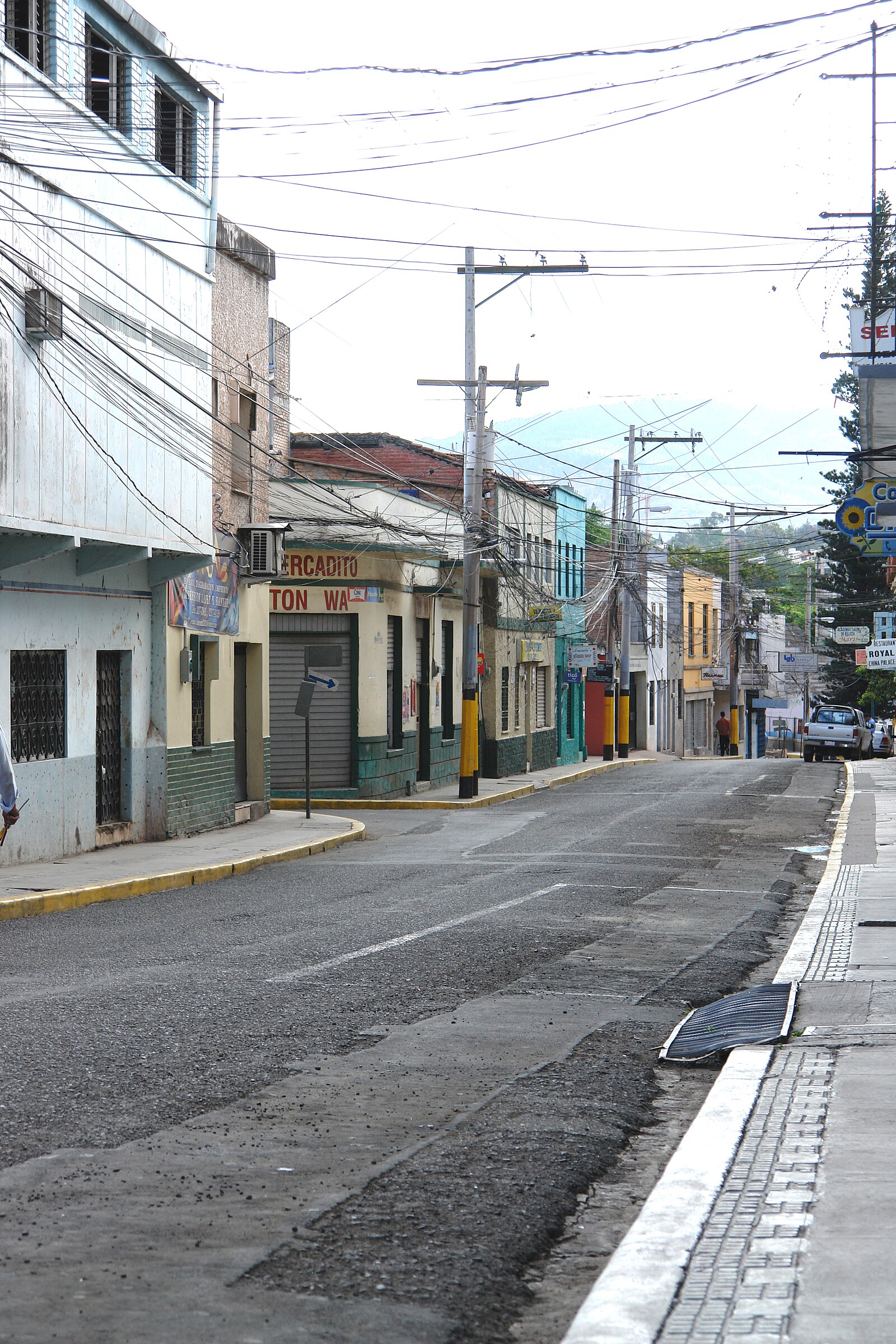
Healthcare in Honduras for expats in 2026 runs mostly on private hospitals in Tegucigalpa and San Pedro Sula. The public network and the IHSS social-security system carry the country, but foreigners rarely use them by choice.
The three systems behind healthcare in Honduras for expats
Honduras runs three health systems at once, and knowing which one you are in prevents most surprises. The Secretaría de Salud runs the public network, which serves the large majority of the population.
The Instituto Hondureño de Seguridad Social, known as IHSS, is the social-security system for formally employed workers. It is financed by contributions from workers, employers and the state, and it runs its own hospitals and clinics.
The private sector is the third layer, and it is where most foreign residents end up. It is concentrated in Tegucigalpa and San Pedro Sula, with smaller clusters in La Ceiba and on Roatán.
None of the three is closed to you. The question is not access but depth, waiting time and what happens when a case stops being routine.
Why foreigners end up paying privately
The Pan American Health Organization puts Honduran public health spending at 3.44 percent of GDP in 2021. It records out-of-pocket payments at 51.71 percent of total health spending in the same year.
That second figure explains daily reality better than any ranking. Paying cash at the point of care is normal in Honduras rather than exceptional.
A 2025 report by the Honduran group ASJ, cited in September 2026, found 1.8 million people facing barriers to care. The same work counted roughly 3.04 physicians per 10,000 people in 2022 and 0.60 hospital beds per 1,000 in 2024.
Those numbers are not a verdict on the country. They describe a system where the public side is stretched and the private side absorbs anyone who can pay.
Private hospitals in Tegucigalpa and San Pedro Sula
The United States embassy in Tegucigalpa publishes lists of private and public hospitals, and of air ambulance operators. Those lists are the most neutral starting point, because Honduras has no official national hospital ranking.
Expat guides most often name Honduras Medical Center, Hospital Viera and Centro Médico Hondureño in Tegucigalpa. In San Pedro Sula the recurring names are Hospital del Valle and CEMESA.
Expect specialists trained abroad, private rooms and some English at the larger facilities. Expect also that the embassy’s standing guidance says supplies and support staff do not match US standards anywhere in the country.
What private care costs, and what is not published
Honduras publishes no official fee schedule for private care, so every figure here is a market estimate. Expat guides commonly report about US$25–50 for a general practitioner and US$40–80 for a specialist.
A 2026 guide to San Pedro Sula puts a private consultation at 800–1,600 lempiras, about US$30–59. All conversions here use exchange rates of 21 September 2026, about 26.95 lempiras to the dollar.
Commonly quoted procedure ranges run from about US$40–100 for a lab panel to US$250–450 for an MRI scan. These are ranges reported by expat guides, not tariffs, and they vary widely by hospital and case.
What is not known is just as important. No Honduran authority publishes private hospital prices, insurance premiums or transfer statistics, so treat any single quoted number with care.
Insurance, evacuation cover and what it actually pays
Honduran insurers are supervised by the Comisión Nacional de Bancos y Seguros, the national banking and insurance regulator. Local health plans are generally cheaper than international policies, but no national premium table is published.
International cover costs more and buys a wider network, higher limits and treatment outside Honduras. Evacuation cover is the separate purchase that decides what happens in a serious emergency.
Allianz Travel Insurance puts a Caribbean evacuation to Florida at around US$20,000, and air ambulance transport at up to US$50,000. Check the evacuation limit in your own policy in writing, because a low cap is the usual failure point.
The United States government reminds its citizens that Medicare and Medicaid do not work abroad. It also notes that most providers overseas expect payment in cash at the time of care.
What routinely leaves the country
The embassy’s guidance is blunt: outside Tegucigalpa and San Pedro Sula, care is not adequate for complex situations. The State Department’s country page is milder, saying the two cities have adequate facilities for non-elective advanced surgery.
Those two official statements do not fully agree, and the gap is itself useful. Capacity exists in the cities, but the margin is thin once a case turns complicated.
In practice, complex surgery, advanced cancer treatment and major trauma are the categories most likely to travel. Honduran reporting in July 2026 described shortages of oncology medicines and failing angiography equipment inside the IHSS system.
That same reporting described IHSS paying private clinics to carry out urgent cardiovascular procedures. A public system buying capacity from the private tier tells you where the depth sits.
Roatán and the Bay Islands, described honestly
Roatán has private clinics, a small private hospital with an operating room, and a public hospital in Coxen Hole. The embassy’s standing guidance still says wide areas, including the Bay Islands, lack a general surgery hospital.
Both statements can be true at once, and that is the point. Island facilities handle a great deal, and they are not built for the worst day.
The island’s real specialism is diving medicine. A resort-based clinic in Sandy Bay runs the island’s hyperbaric chamber with resident physicians and belongs to the Divers Alert Network provider list.
For anything beyond stabilisation, transfer to the mainland is the norm, and some cases continue to the United States. Settle that route before you need it, not during it.
Pharmacies, medicines and mosquito-borne risk
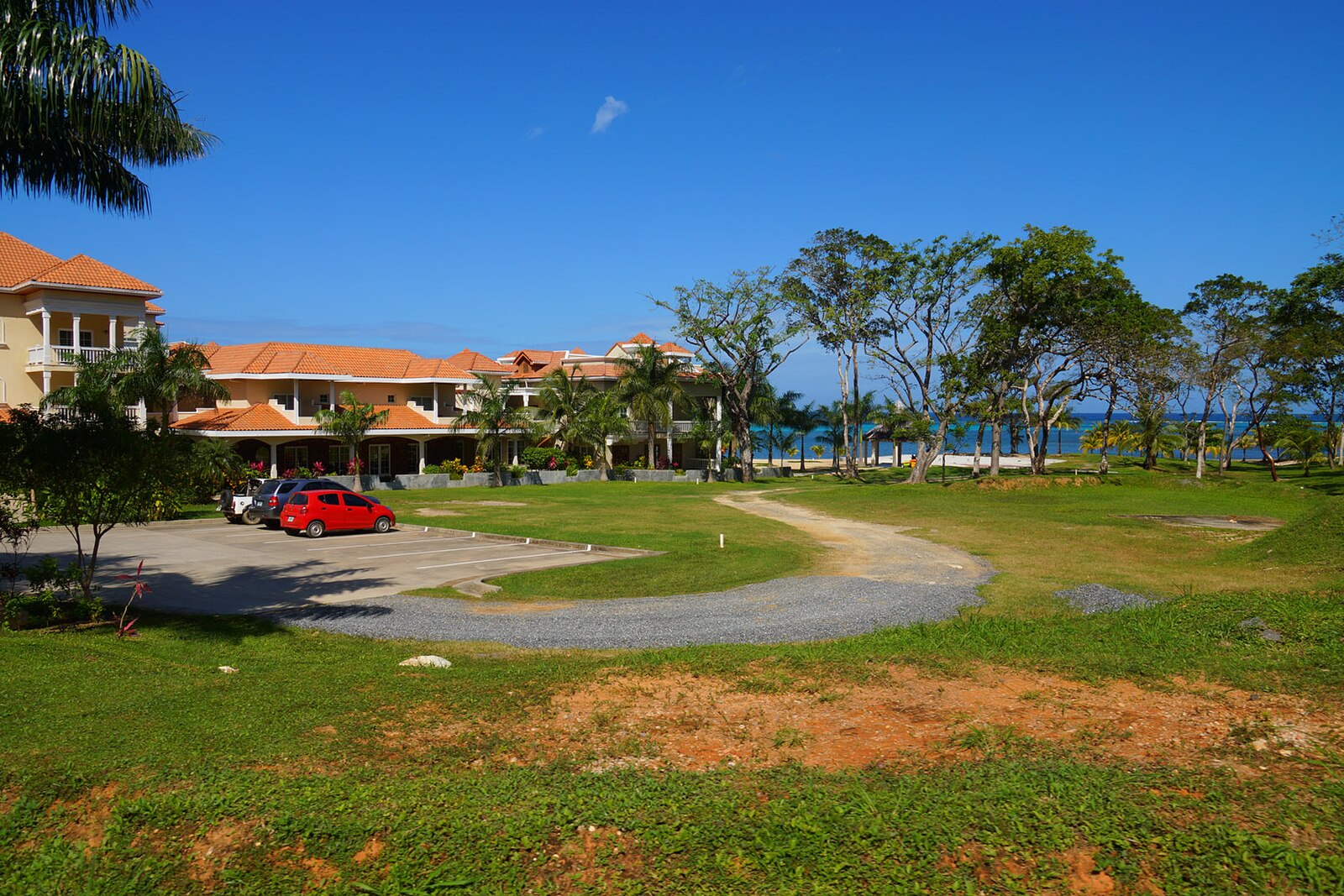
Private pharmacies in the cities and tourist areas handle routine prescriptions without much difficulty. Public and IHSS supply is the weaker link, and Honduran reporting through 2026 has repeatedly described shortages of specific medicines.
Bring a written list of your medicines using generic names, because brand names differ across the region. Ask a local doctor for equivalents rather than assuming your usual brand exists here.
Dengue is the mosquito-borne risk that matters most. Health authorities reported 11,848 cases and four deaths for epidemiological weeks 1 to 36 of 2026.
That count, given on 18 September 2026, sits far below the 2024 epidemic year. Regional monitoring also shows dengue falling sharply across the Americas in 2026.
Chikungunya, Zika and malaria also circulate in Honduras. Repellent, screens and removing standing water stay useful all year, not only in the rainy season.
Emergencies, ambulances and the first hour
The national emergency line is 911, and the Honduran Red Cross can be reached on 195. Both numbers are listed by the United States embassy in Tegucigalpa.
The same embassy guidance says ambulance services are limited in the major cities and almost non-existent elsewhere. In practice, many residents drive themselves to a private hospital rather than wait.
Decide now which private hospital you would use, and how you would reach it at three in the morning. Keep your insurance card, a passport copy and an emergency contact list together in one place.
Dental and optical care as a low-cost draw
Dental and optical work is one of the clearest savings for foreign residents in Honduras. Cleanings, fillings, crowns and standard eyewear are the usual categories, handled routinely in both big cities.
No official national fee schedule exists for dental or optical work either, so quoted prices remain market estimates. Ask for a written quote, and compare at least two clinics before agreeing to implants or orthodontics.
Quality varies more between clinics than between cities. Ask where the dentist trained, and which materials and laboratory the clinic uses.
How Honduras compares, and what it means for your life
Honduras, Guatemala, El Salvador and Costa Rica all run the same basic shape. Each has a public ministry network, a social-security system and a private tier, and the differences lie in depth, price and obligation.
Costa Rica is the clearest contrast. Legal residents there must enrol in the CCSS, the public social-security fund, and pay a monthly income-based contribution to keep their residency card.
Honduras asks nothing comparable of foreign residents. That lowers your fixed cost and raises your personal responsibility, because nobody enrols you by default.
What this changes for a life is short enough to say in two lines. Routine medicine in Honduras is cheap, close and quick, and that is a real gain for a monthly budget.
The rare serious event is the thing you insure against and plan for, and it may mean leaving the country. Public capacity is visibly strained, while the private tier in the two big cities is where depth has concentrated.
Neither end of that spectrum is fixed. Review your cover and your chosen hospital once a year, because networks, prices and the exchange rate all move.
Connected Coverage
Honduras Visa and Residency 2026 — Routes, Income Rules and What They Cost
Cost of Living in Honduras 2026: What Expats Pay on 26.5 Lempiras to the Dollar
Frequently Asked Questions
Frequently Asked Questions
Can expats use public hospitals in Honduras?
Yes, the public network run by the Secretaría de Salud is open to residents. The Pan American Health Organization records public health spending at 3.44 percent of GDP in 2021, and out-of-pocket payments at 51.71 percent of the total. Most foreign residents therefore use private hospitals for anything planned, and keep the public system as a last resort.
Can a foreigner join the IHSS in Honduras?
IHSS is built for formally employed workers, whose contributions come from the worker, the employer and the state. Honduran reporting in July 2026 described a voluntary affiliation route for independent workers and people with provable fixed income. That route was still administered only in the department of Francisco Morazán, which means travelling to Tegucigalpa to register.
How much does a private doctor visit cost in Honduras?
Expat guides commonly report about US$25–50 for a general practitioner and US$40–80 for a specialist. A 2026 guide to San Pedro Sula puts a consultation at 800–1,600 lempiras, about US$30–59 at 21 September 2026 exchange rates. Honduras publishes no official private fee schedule, so these are market estimates rather than tariffs.
Do I need medical evacuation insurance in Honduras?
It is the single most useful policy for anyone living outside Tegucigalpa or San Pedro Sula. The United States embassy states that ambulance services are limited in the major cities and almost non-existent elsewhere, and that wide areas including the Bay Islands lack a general surgery hospital. Allianz Travel Insurance puts a Caribbean evacuation to Florida at around US$20,000, and air ambulance transport at up to US$50,000.
Is healthcare on Roatán good enough for an emergency?
Roatán has private clinics, a small private hospital and a public hospital in Coxen Hole, plus the island’s hyperbaric chamber for diving injuries. That chamber is run by a resort-based clinic in Sandy Bay with resident physicians. For anything beyond stabilisation, transfer to the mainland is the norm, and some cases continue to the United States.
Sources: Figures and guidance here come from the Pan American Health Organization, the United States State Department and its embassy in Tegucigalpa, Honduras’s banking and insurance regulator, dated Honduran reporting on dengue, medicine supply and social-security affiliation, a Roatán hyperbaric clinic and a major travel insurer.
- hia.paho.org
- travel.state.gov
- hn.usembassy.gov
- travel.state.gov
- cnbs.gob.hn
- paho.org
- icndigital.com
- tunota.com
This article was produced by The Rio Times’ automated newsroom system. How we use AI · Report an error
Read More from The Rio Times