Buying Property in Honduras 2026: Roatán and the 3,000 m² Rule
Guides · Honduras
—The rule. Article 107 of the Constitution reserves land within 40 kilometres of the coast, and all island land, for Hondurans by birth.
—The exception. Decree 90-90 lets a foreign individual buy one home on up to 3,000 m² in a declared urban or tourism zone.
—The deadline. A foreigner who buys a vacant lot has 36 months to finish the house, or pays a 20 per cent yearly surtax.
—The costs. Transfer tax is 1.5 per cent; registry fees add about 0.15 per cent; notary fees run roughly 1 to 3 per cent.
—The title. The US government cites estimates that about 80 per cent of private land is untitled or improperly titled.
—The catch. ZEDEs such as Próspera on Roatán were ruled unconstitutional in 2024 but still operate, so their titles carry unresolved legal risk.
On Roatán and the rest of the coast, a foreigner buys under a 1990 exception to a constitutional ban. The exception is workable, but it has a size limit, a one-home limit and a building deadline.
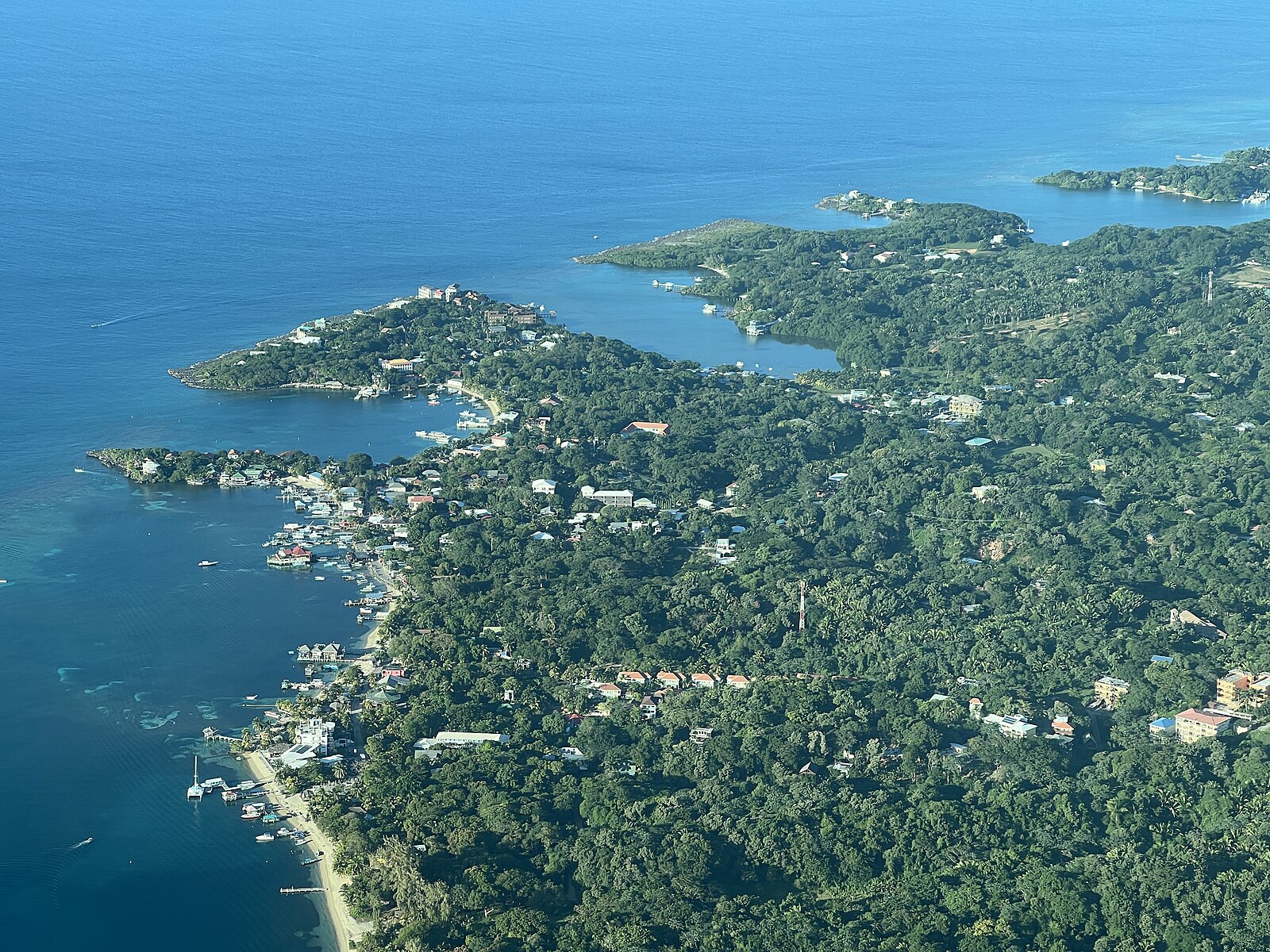
Buying property in Honduras as a foreigner is legal, including on Roatán and the other Bay Islands. It happens through a narrow exception to a constitutional ban, and that exception comes with conditions a buyer should know before signing.
This guide sets out the rules as of September 2026. Lempira figures convert at 26.86 lempiras to the US dollar (so L1,000 is about US$37), the mid-market rate on 21 September 2026 per two market data feeds.
The constitutional ban on coastal and island land
Article 107 of the Honduran Constitution covers land within 40 kilometres of the land borders and of both coasts. It also covers all land on islands, cays, reefs, rocks and sandbanks.
That land may be acquired or held only by Hondurans by birth, by companies wholly owned by Hondurans, and by state bodies. A contract that breaks the rule is void, and property registrars are forbidden to record it.
Read literally, that would exclude foreigners from Roatán, Utila, Guanaja and almost every beach town on the mainland. The second paragraph of Article 107 opens the door: urban property inside those limits is to be governed by a special law.
Decree 90-90 and the 3,000 m² rule
The special law is Decree 90-90, passed by Congress on 14 August 1990 and published in the official gazette, La Gaceta, on 27 August 1990. It regulates purchases of urban property in Article 107 areas by foreigners and by companies that are not wholly Honduran.
The law defines urban land in three ways. It includes areas already declared urban, areas the tourism ministry declares urban for their tourism potential, and any land inside a declared tourism zone.
Article 5 is the rule most Roatán buyers rely on. A foreign individual may buy an existing home for occasional or permanent personal use. The plot may not exceed 3,000 square metres, about three-quarters of an acre.
The same article applies the limit to condominium units. It also says a foreign individual may hold only one such property, although inheritance is exempt from the one-home limit.
A home bought under Article 5 can later be sold freely, as long as the next buyer also meets its conditions. Inherited property passes freely as well.
Vacant lots and the 36-month building deadline
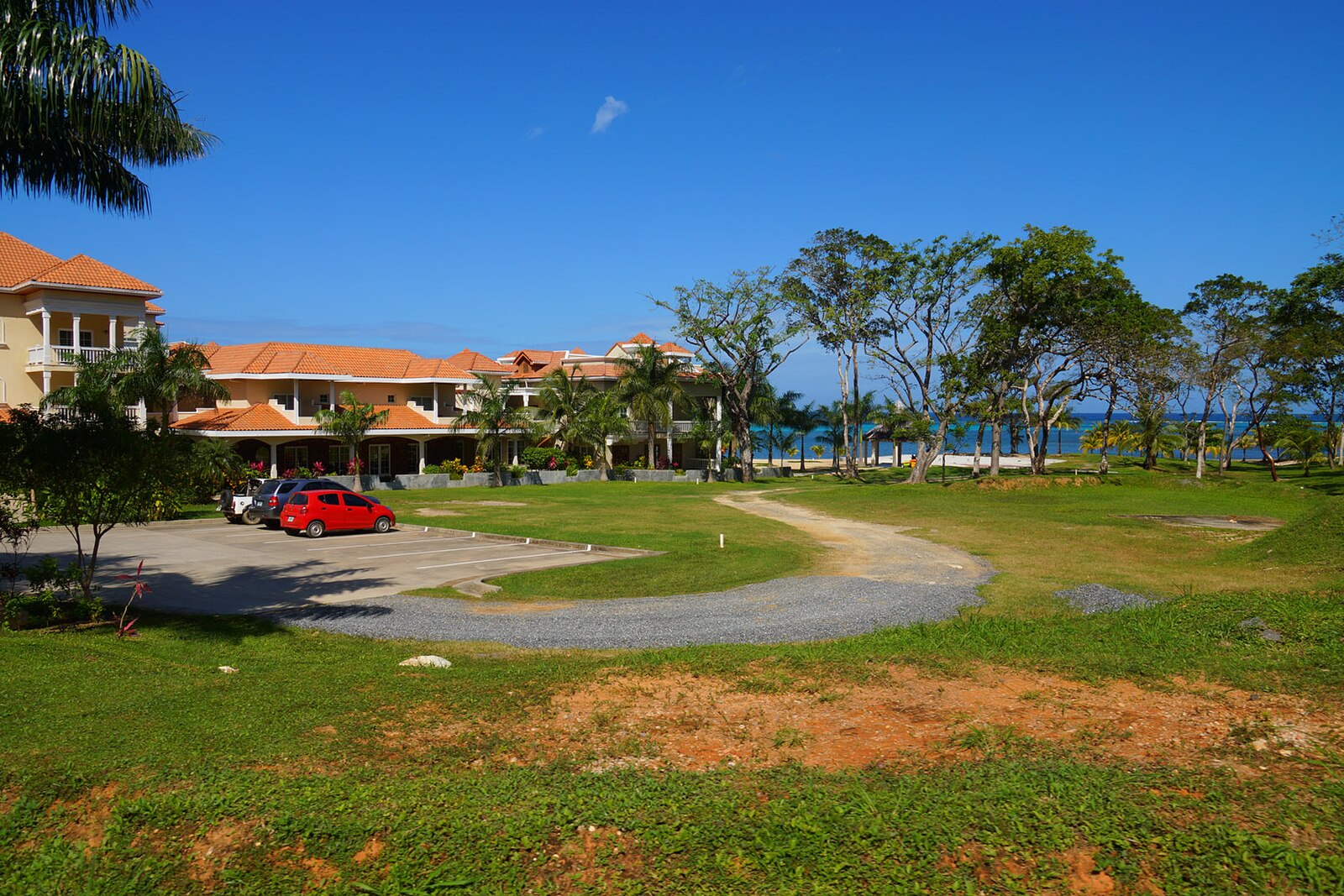
Buying an empty lot to build on is allowed under the same article, with a deadline attached. The house must be finished within 36 months of the purchase.
If it is not, the owner pays a surtax of 20 per cent a year on the appraised value of the property until construction is complete. The surtax is waived only for delays caused by proven force majeure, argued before the tourism authority.
That clause matters on the islands, where building is slow and materials arrive by boat. A buyer who plans to wait before building should cost the delay before signing, not after.
Larger plots, several properties and companies
Anything beyond one home of up to 3,000 m² falls under Article 4 of the decree. Foreigners and companies that are not wholly Honduran may then acquire urban land only for a tourism, economic development, social development or public interest project.
The project must be qualified and approved by the tourism authority. Under the 1991 implementing regulation, the Honduran Tourism Institute, known by its Spanish initials IHT, processes the application and the tourism ministry issues the final approval.
The regulation sets further duties for project buyers. The acquisition must be reported to the IHT within 60 days, or a fine of half a per cent of the price accrues each month.
The project itself must be submitted within 12 months, or the 20 per cent annual surtax applies. Project land can be resold only with the tourism ministry’s approval, and only to a buyer who takes on the project.
Companies with bearer shares cannot acquire land in Article 107 areas at all. A company whose shares pass to a foreigner must tell the IHT within 30 days. Otherwise it faces a fine of L1,000 to L10,000 (about US$37 to US$372).
Some Roatán agents describe the company route as unlimited. The statute says otherwise: the size limit falls away, but the project approval and the reporting duties take its place.
Titles and the Instituto de la Propiedad
Land records are kept by the Instituto de la Propiedad (IP), the Property Institute created by the Property Law, Decree 82-2004. The IP runs the real estate registry and the national cadastre, the technical map of parcels and their values.
The US State Department’s 2025 Investment Climate Statement is blunt about the system. It cites earlier estimates that about 80 per cent of privately held land is untitled or improperly titled.
The same report says registry records and survey data have not always matched, which has produced disputes. It also notes that 20 years of uninterrupted, peaceful possession can support a court claim to ownership without a title.
In practice, a buyer needs a registry search covering the full chain of owners, a current cadastral certificate and a survey that matches both. Title insurance exists in Honduras, according to the same report, but few buyers take it.
On the islands, a common trap is land sold on the strength of possession rather than a registered title. Another is a plot whose surveyed boundaries do not match the registered description.
Transfer tax, registry fees and notary costs
Every sale is formalised as a public deed before a Honduran notary, who must also attest the buyer’s nationality. Both parties need a Registro Tributario Nacional (RTN), the national tax number, for the transfer tax return.
The transfer tax, the impuesto de tradición, is 1.5 per cent of the value of the transaction. According to the Servicio de Administración de Rentas (SAR), the revenue service, it is charged on market or cadastral value, whichever is higher.
The law puts the tax on the seller, who must pay within three days of the deed or face a 20 per cent penalty. Honduran closing-cost guides say buyers often pay it by custom, so the contract should settle who pays.
Registration at the IP carries a base fee of L200 (about US$7), plus L1.50 per thousand lempiras (about US$0.06) of the deed value. That works out at roughly 0.15 per cent of the price.
Notary fees follow the bar’s fee schedule and are negotiated in practice. A Honduran property portal puts them at 1 to 3 per cent of the value, and a Roatán broker estimates total closing costs at about 5.2 per cent.
On a US$250,000 house, the transfer tax comes to L100,725 (about US$3,750). The registry fee would be about L10,271 (about US$382), before notary fees, surveys and legal review.
Holding and selling costs
Municipalities levy an annual property tax, the impuesto sobre bienes inmuebles, under Article 76 of the Municipalities Law. The ceiling is L3.50 per thousand (about US$0.13) of cadastral value for urban property and L2.50 per thousand (about US$0.09) for rural land.
Each municipal council sets its own rate within that ceiling, and can raise it by at most L0.50 per thousand (about US$0.02) at a time. At the urban ceiling, the US$250,000 house would pay up to L23,502 (about US$875) a year.
When the owner sells, capital gains are taxed at 10 per cent, according to PwC’s Honduras tax summary, last reviewed in August 2026. If the seller is not tax resident, the buyer must withhold 4 per cent of the price as an advance payment.
The same summary notes a reduced flat capital gains rate of 4 per cent under ZOLITUR, the free tourism zone regime covering the Bay Islands. For anyone buying property in Honduras on the islands, whether a later sale qualifies should be confirmed with a Honduran tax adviser before closing.
The ZEDE caveat on Roatán
Roatán also hosts Próspera, a Zone for Employment and Economic Development, or ZEDE. These zones were created under a 2013 law as semi-autonomous areas with their own rules and administration.
Congress repealed the ZEDE framework in April 2022, and the Supreme Court declared the regime unconstitutional in September 2024. Honduran outlet Criterio.hn reported in June 2026 that both decisions remain in force.
The zones have not closed. Próspera has an arbitration claim of about US$10.7 billion against Honduras at the International Centre for Settlement of Investment Disputes (ICSID), a World Bank body.
The government of President Nasry Asfura, in office since January 2026, said that month it would seek to rejoin the ICSID convention, which Honduras left in 2024. It has taken a softer public line on the zones, without reversing the court ruling.
Property bought inside a ZEDE therefore rests on a legal regime the country’s highest court has struck down. A buyer considering one should get independent Honduran legal advice on how that title would survive a final settlement.
What this means for your plans
For a retiree who wants one house or condominium on Roatán, buying property in Honduras is straightforward on paper. The plot must be within 3,000 m², in a declared urban or tourism zone, and it must be the buyer’s only such property.
A buyer who wants a larger estate, a second home or rental units is entering the project regime. That means a business plan, tourism approval, reporting deadlines and fines that run by the month.
The largest risk is the title, more than the tax bill. Budget for an independent lawyer who is not the seller’s notary, a full registry search, a new survey and, where offered, title insurance.
Taxes and fees at purchase run from about 1.2 to 4.7 per cent of the price, depending on who pays the transfer tax and the notary’s rate. Wire the money through a bank and keep the records, because the next sale will be taxed on the gain.
More: Latin America coverage from The Rio Times.
Sources: Constitution of Honduras, Article 107 (Spanish text), Decree 90-90 on urban property in Article 107 areas, via the Tribunal Superior de Cuentas, Regulation of Decree 90-90 (Acuerdo 754 of 1991), Canada-Honduras free trade agreement, Honduran land reservations, Property Law, Decree 82-2004, SAR guide to the property transfer tax return, July 2026, La Prensa on Property Institute registration fees, Rentify on Honduran closing costs, PwC Tax Summaries on Honduran capital gains, PwC Tax Summaries on Honduran transfer and capital gains taxes, including ZOLITUR, Municipalities Law, Article 76 on property tax, US State Department 2025 Investment Climate Statement on Honduras, Criterio.hn on the legal status of the ZEDEs in 2026, Criterio.hn on the request to rejoin ICSID, Century 21 Roatán on foreign ownership and closing costs
This article was produced by The Rio Times’ automated newsroom system. How we use AI · Report an error
Read More from The Rio Times