Castro Government Leans on Record Remittances as Honduras Faces 2026 Slowdown
Economy · Honduras
—The stakes. A remittance-driven boom is masking a weak investment climate and rising political risk for foreign business.
—The date. IMF data from August 2026 shows real GDP grew 3.8% in 2025 but is projected to slow to 3.3% in 2026.
—The driver. Remittances hit USD 12.2 billion in 2025, equal to 31% of GDP, before slowing to 12.3% growth in early 2026.
—The weakness. Maquila sector output growth fell from minus 1.4% to minus 8.2% between January and May 2026 on weak demand.
—The risk. The World Bank expects changing US migration dynamics to reduce remittances and dampen household consumption in 2026.
Honduras enters the second half of 2026 with an economy running on external transfers rather than domestic production. The political calculus of the Castro government now depends on preserving the very migration flows that Washington is trying to restrict.
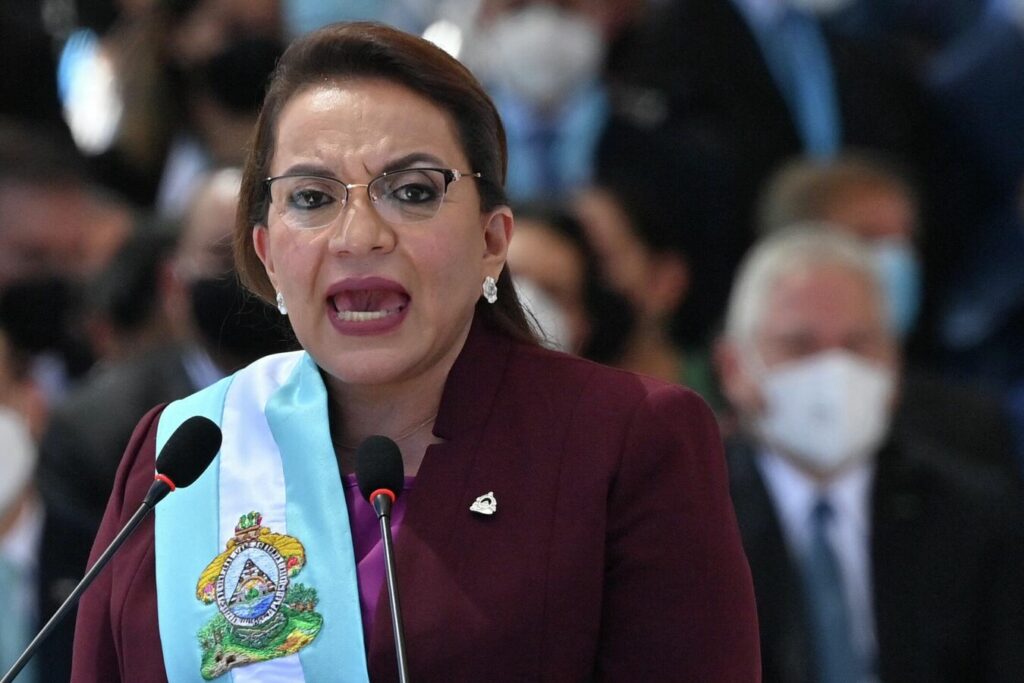
Macroeconomic Growth Under Castro
The IMF reported real GDP growth of 3.8% in 2025, up from 3.6% in 2024. The boost came largely from remittance-supported consumption and improved coffee export volumes.
For 2026, the IMF projects growth of 3.3%, below the economy’s potential. Higher oil prices and weaker private investment are weighing on activity.
The Central Bank of Honduras, known as the BCH, projects growth within a 3.5% to 4.0% range for 2025-2026. Public investment and domestic demand support that forecast.
Coface noted that private consumption represents 83% of GDP, one of the highest shares in Latin America. This makes growth highly sensitive to external income shocks.
The current account surplus reached 2.4% of GDP in 2025, reflecting record remittances and favourable terms of trade for coffee exporters.
Remittances as the Economic Pillar
Remittances closed 2025 at USD 12.2 billion, a record and a 27% year-on-year increase. The figure was equivalent to 31% of GDP.
Through September 2025, remittances had already reached USD 11.106 billion in the first eleven months. Growth peaked at 26.2% over that period.
Between January and June 2026, remittances totalled USD 6.5 billion, 12.3% more than the same period in 2025. Sendas noted the pace is slowing from 2025’s extraordinary surge.
The World Bank expects remittances to drop in 2026 as migration dynamics change, which would moderate household consumption. The IMF projects about 14% year-to-date growth through April 2026.
Sendas attributes part of the 2025 surge to precautionary transfers by migrants reacting to tighter US immigration policies. That defensive behaviour may not repeat at the same scale.
Migration Economics and Labour Flows
As of 2026, remittances from Hondurans living in the United States account for more than a quarter of GDP. The flow is the single largest source of foreign income for the country.
Earlier official projections had assumed far slower growth in the flow. Actual performance far exceeded that forecast.
Changing US enforcement policy is now a central variable for Honduran macroeconomics. Fewer migrants or deportations would directly reduce the transfers that fund consumption.
Sendas characterises Honduras as an economy sustained almost entirely by consumption. It is fed by extraordinary external income from remittances, high coffee prices, and public spending in an electoral year.
Investment was zero in 2025, according to Sendas, meaning the economy is not building new productive capacity. This leaves future growth dependent on the same volatile external flows.
Maquila Sector Contraction
Maquila apparel and electric harnesses remain among Honduras’ most significant export categories. IMF data shows maquila apparel accounted for 32.5% of exports over 2022-2024.
Electric harnesses represented 11% of exports over the same period, making the sector a core source of formal industrial employment. The maquila model relies on imported inputs assembled for re-export.
Sendas reports the maquila decline intensified in early 2026. Output growth fell from minus 1.4% to minus 8.2% between January and May 2026.
Weaker external demand and tariff uncertainty are driving the contraction. The sector’s net export value rose to USD 2,489 million in 2025 from USD 2,021 million in 2024, but 2026 flows may reverse that gain.
The IMF projects maquila net exports to rise to USD 2,619 million in 2026. That projection assumes a stabilisation that current output data do not yet support.
Agriculture and Coffee Exports
Goods export values increased 10% in 2025, driven primarily by higher coffee export volumes amid record-high prices. Coffee remains Honduras’ leading agricultural export.
The BCH expects moderation of general merchandise exports in 2026 due to lower coffee prices. That would remove one of the two main supports for the 2025 surplus.
The World Bank projects an El Niño-related drought will reduce crops in 2026. That weather risk compounds the price risk for agricultural exporters.
The current account surplus reached 1.7% of GDP in 2025 according to World Bank data, driven by record remittances and coffee exports. The IMF recorded a higher surplus of 2.4% of GDP for the same year.
Honduras exports mostly processed goods and agricultural products. The concentration in coffee and maquila leaves export revenue exposed to both weather and US trade policy shifts.
Security and Justice Under Castro
An inform from Centroamérica360 warned of setbacks in security and justice during the third year of Xiomara Castro’s government. The report points to deteriorating institutional performance.
Honduras has long suffered from high homicide rates and extortion networks. Gang activity and organised crime remain central obstacles to investment outside major export zones.
The security situation affects smaller businesses and agricultural operations the most. Extortion payments are a common burden in urban and transport sectors.
The Castro government has not delivered a clear improvement in citizen security, according to the report. This weakens the government’s political standing before the next election cycle.
Foreign investors often isolate themselves in maquila parks with private security. That model limits the broader economic benefits of investment and keeps risk premiums high.
Fiscal and External Balances
The merchandise trade deficit remained around 20% of GDP in 2025, down from 23% in 2024. The improvement came from stronger exports and still-limited import growth.
Remittances offset much of the trade gap, turning the current account positive. Without them, Honduras would face a severe external financing constraint.
Public spending in an electoral year has supported growth, according to Sendas. That spending may ease after the election, removing another consumption support.
The IMF projects growth within a 3.5% to 4.0% range for 2025 and 2026. That range assumes continued remittance inflows and no major disruption to maquila trade rules.
Coface notes that macroeconomic stability depends on the continuation of US market access and remittance channels. Both are now subject to political negotiation.
Foreign Business Outlook
The business climate for foreign investors is split between maquila zones and the rest of the economy. Maquila operators face tariff uncertainty, while non-maquila firms deal with security and legal risks.
The IMF projects maquila net exports of USD 2,619 million in 2026, a modest increase from 2025. Achieving that would require a recovery in US demand that is not yet visible.
Sendas reports the maquila decline is aggravating, with output falling 8.2% year-on-year through May 2026. That suggests foreign manufacturers are cutting shifts or delaying investment.
The Castro government’s record on security and justice has not reassured investors outside the maquila sector. The Centroamérica360 report highlights a lack of progress on institutional reform.
For 2027, the political calendar adds uncertainty as election campaigns begin. Foreign investors will likely defer new commitments until the policy direction after the vote is clear.
INFLATION AND OIL RISKS
The IMF notes that higher oil prices are weighing on economic activity in 2026. Honduras is a net importer of fuel, so global crude prices affect transport and energy costs.
Rising inflation would dampen private consumption and investment. The IMF projects growth of 3.3% in 2026 partly due to that pressure.
The BCH monetary program for 2025-2026 assumes sustained domestic demand and public investment. Lower-than-expected remittances would challenge that base case.
The World Bank links inflation risk to the projected El Niño drought, which could raise domestic food prices. Food makes up a large share of the consumer basket in Honduras.
A combined food and fuel price shock would hit the poorest households hardest. Those households depend most on remittances for basic consumption.
Policy Options and Limits
The Castro government has limited fiscal space to offset a remittance slowdown. The economy’s dependence on consumption leaves few domestic policy levers.
Public investment has been a growth driver, but investment overall was zero in 2025 according to Sendas. That suggests private investors are not responding to government stimulus.
The IMF’s growth range implies a stable policy environment and continued US market access. Any change in US tariff or migration rules would force a reassessment.
Honduras could pursue a more diversified export base, but that requires security improvements and infrastructure spending. Neither has advanced sufficiently to change the outlook by 2026.
Without structural change, Honduras will remain sensitive to external shocks that are outside the government’s control. The 2026 slowdown is a reminder of that vulnerability.
Connected Coverage
Honduras in Washington’s Sights: Energy, Gas, AI and Data Centres
Honduras Returns to the World Bank’s Arbitration Court With an Eye on Investors
Honduras Sees the Dollar Break 27 Lempiras for the First Time
The Big Picture
Latest developments
- Best Places to Live in Chile for Expats 2026 — 7 October 2026
- Fuerza Regida Plays Mexico City From 31 January 2027 — 6 October 2026
- Best Places to Live in Argentina for Expats 2026 — 6 October 2026
- Honduras Returned Migrants Reach 36,658 by September — 5 October 2026
This article was produced by The Rio Times’ automated newsroom system. How we use AI · Report an error · Editorial responsibility: Matthias Camenzind, Editor-in-Chief
LatAm Markets: Live Signals → — real-time movers, turnover leaders and FX across Latin America.
Expat Guide to Honduras
What The Rio Times publishes for foreigners who live in or move to Honduras.
Start here
- Moving to Honduras: Visas, Costs, Safety and Where Foreigners Settle
- Honduras for Expats: Homicide Falls to 26.2 per 100,000, but Location Decides Safety
- Honduras Bank Accounts for Foreigners: Passport or Residency Card, Free Tax Number
- Healthcare in Honduras for Expats 2026 — Costs, Hospitals and Evacuation Cover
Coming up in Honduras
Understand Honduras