
GUIDES · HONDURAS
Key Facts
- —The country Honduras had 11,005,850 people and a US$39.6 billion economy in 2025. It is smaller than Guatemala and larger than El Salvador and Nicaragua on both counts.
- —The borders Honduras has land borders with Guatemala to the west, El Salvador to the south-west and Nicaragua to the south-east. It shares the Gulf of Fonseca with El Salvador and Nicaragua, and lies across the Gulf of Honduras from Belize.
- —Who governs Nasry Asfura of the National Party took office on 27 January 2026 for a four-year term. He has had contact with the leaders of all three neighbouring countries since.
- —The courts In 1992 the International Court of Justice put the waters of the Gulf of Fonseca under the joint sovereignty of three states. In 2007 it fixed Honduras’s sea boundary with Nicaragua in the Caribbean.
- —Trade From January to September 2025 Honduras sold US$2.2 billion of its US$9.6 billion in goods exports, about 23%, to Central America. The United States took 46.5%, or US$4.5 billion.
- —The bank The Central American Bank for Economic Integration, known as BCIE, was founded in 1960 and is headquartered in Tegucigalpa.
Honduras sits at the hinge of Central America, with three land neighbours, a long Caribbean coast and a short Pacific shore. This guide covers its borders, rivalries, trade, rivers and regional bodies as of October 2026.
The Honduras neighbourhood is small, crowded and tied together by trade, rivers, migration routes and old border lawsuits. Honduras has land borders with Guatemala, El Salvador and Nicaragua, and shares a Pacific gulf with the last two.
For US readers it matters because the same borders carry the migrants, goods and gang pressure that shape US policy and US prices. Every figure below carries its year, and the guide is dated October 2026.
Honduras in the Middle of Central America
Honduras had 11,005,850 people in 2025, against 18,687,881 in Guatemala, 7,007,502 in Nicaragua and 6,365,503 in El Salvador. Only Guatemala is bigger.
Its economy was worth US$39.6 billion in 2025, behind Guatemala’s US$123.3 billion and just ahead of El Salvador’s US$36.7 billion. Nicaragua’s economy was US$22.2 billion.
Income per person tells a different story, at US$3,598 in Honduras, US$6,598 in Guatemala and US$5,767 in El Salvador. Only Nicaragua, at US$3,173, was lower among the four.
Honduras is the bigger partner in its dealings with Nicaragua and El Salvador, and the smaller one next to Guatemala. Its government, led since 27 January 2026 by President Nasry Asfura of the conservative National Party, has had contact with the leaders of all three neighbours.
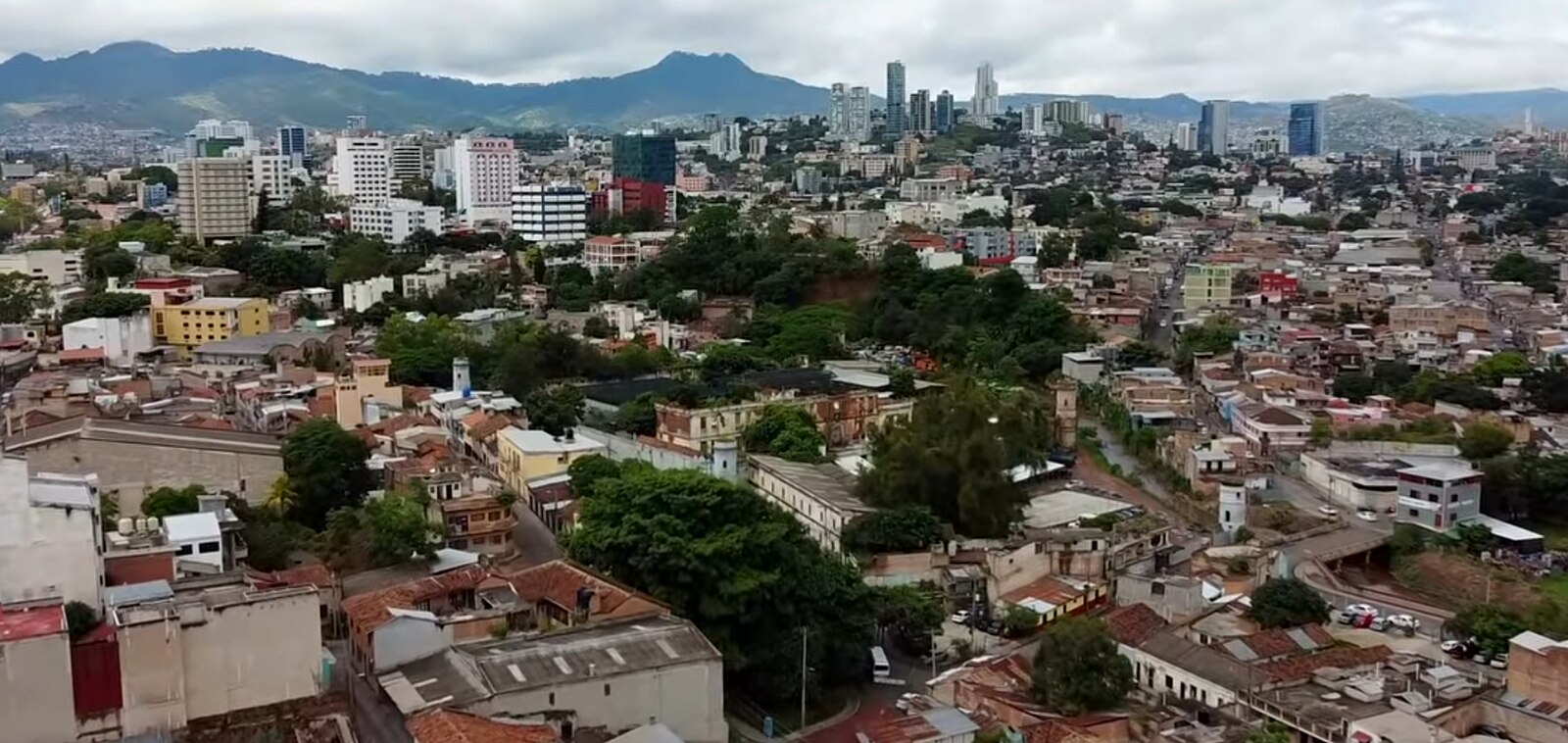
Guatemala, the Western Neighbour
Guatemala is the largest of Honduras’s three land neighbours by both population and economy. On 27 January 2026, the day Asfura took office, President Bernardo Arévalo sent a message saying he wanted to keep working jointly with Honduras.
Arévalo named regional development and the strengthening of democracy as common aims. The message, as reported, named no specific projects.
The two countries launched a customs-union initiative in 2015, the World Bank says. La Prensa reported on 25 June 2017 that the opening was due on 26 June 2017 at the posts of El Florido, Agua Caliente-Corinto and Entre Ríos.
Goods were to move freely under the union, while free movement of people was left for a later stage. A World Bank blog says use of the single invoice and declaration, known as FYDUCA, became mandatory on 1 March 2018.
The same blog cites a border crossing that took about 10 hours in 2017 and 15 minutes in a January 2018 pilot. It names Grupo Bimbo, Colgate-Palmolive and Unilever among the firms that ran pilots.
El Salvador, the South-Western Neighbour
Honduras and El Salvador took their land and island disputes to the International Court of Justice, or ICJ, the United Nations’ main court. The two countries notified the Court of a Special Agreement on 11 December 1986, and a Chamber of the Court gave its judgment on 11 September 1992.
The Chamber found that the islands of Meanguera and Meanguerita belong to El Salvador and that El Tigre belongs to Honduras. It treated uti possidetis juris, the principle that new states inherit colonial-era boundaries, as the basic rule for the land frontier.
On 7 December 2023 the two countries began an integrated border scheme at El Amatillo, where migration, customs and plant-health officers work from one site. Diario El Mundo called it the first of six crossings that El Salvador had planned with Guatemala and Honduras.
El Salvador joined the customs process in 2018, a year after Guatemala and Honduras. The wider Northern Triangle plan lists nine integrated border posts and 11 peripheral customs offices.
Politics has been more awkward than the paperwork. Salvadoran President Nayib Bukele wrote on 16 February 2026 that thousands of Hondurans would die “because of these people”.
He was answering Honduran Security Minister Velásquez, who had called the Salvadoran model interesting but said Honduras differs from El Salvador. Asfura and Bukele then greeted each other briefly at a summit in Miami on 7 March 2026, El Heraldo reported.
Nicaragua, the South-Eastern Neighbour
Nicaragua is the poorest of the four countries compared here, at US$3,173 per person in 2025. Its government is led by Daniel Ortega and Rosario Murillo.
After Asfura won the 30 November 2025 election, Ortega and Murillo sent a letter of congratulation that stressed how close the two countries are. Asfura confirmed a conversation with Ortega on regional stability.
Asfura called Nicaragua a “brother and neighbouring country” and spoke of chances to advance stability, the outlet Tunota reported on 28 December 2025. Nicaraguan opposition groups meanwhile urged the world not to legitimise the Ortega-Murillo government.
Trade runs in Honduras’s favour. In the first nine months of 2025 Honduras recorded a surplus of US$487.6 million with Nicaragua, La Tribuna reported from central bank data.
The Gulf of Fonseca, a Shared Sea
The Gulf of Fonseca opens onto the Pacific and is shared by Honduras, El Salvador and Nicaragua. In 1992 the ICJ Chamber found it to be a historic bay whose waters, apart from a three-mile coastal belt, are under the joint sovereignty of the three coastal states.
The Chamber said it had no jurisdiction to draw boundary lines inside the gulf. It also found that Honduras has legal rights in the gulf waters up to the closing line of the bay.
Outside the gulf, each of the three states is entitled to a territorial sea, a continental shelf and an exclusive economic zone, which they must divide by agreement. The ruling did not bind Nicaragua, which had been allowed to intervene only on the legal regime of the gulf waters.
The Chamber found that Honduras has occupied the island of El Tigre since 1849. That island gives Honduras a foothold inside the gulf.
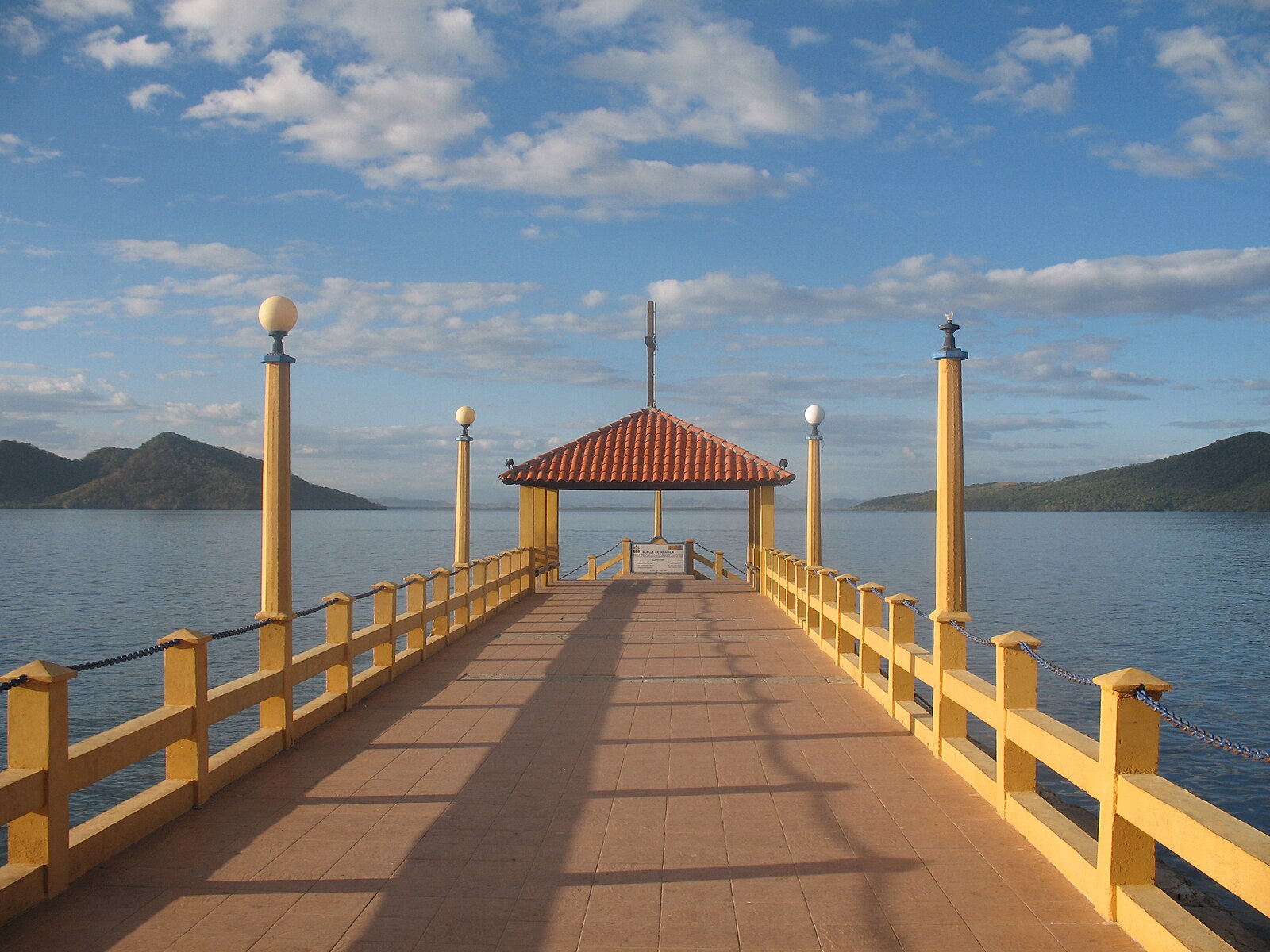
The Caribbean Coast and the Sea Border With Nicaragua
Honduras and Nicaragua also fought out their Caribbean boundary in court. Nicaragua filed its application on 8 December 1999, and the ICJ ruled on 8 October 2007.
The Court rejected Honduras’s claim that the 15th parallel was a traditional sea boundary. It drew a bisector line instead, a line that splits the angle between the two coasts, because the shifting river mouth made an equidistance line unworkable.
All four disputed cays, named Bobel, Savanna, Port Royal and South, went to Honduras by a unanimous vote. The Court left open the status of Logwood Cay and of the islands at the mouth of the River Coco.
The judges told the two countries to negotiate the short stretch of territorial sea between the end of their land boundary and the start of the line. The sources opened for this guide do not say whether that talk has been concluded.
The Gracias a Dios department lies on the Caribbean coast at the Nicaraguan frontier. The US State Department rates it Level 4, Do Not Travel, because of crime, in an advisory issued on 25 August 2026.
Trade, Money and Shared Rivers
From January to September 2025 Honduras exported US$9.6 billion of goods, according to central bank figures published by La Tribuna in November 2025. The United States took 46.5% of that, or US$4.5 billion, and Central America took about 23%, or US$2.2 billion.
El Salvador, Guatemala and Costa Rica were the main Central American buyers in the same report. The report put Honduras’s deficit with Guatemala at US$1.1 billion and gave no export shares by country.
The Central American Bank for Economic Integration, or BCIE, was founded in 1960 and has its headquarters in Tegucigalpa. Its December 2024 figures show US$2.2 billion in approvals, of which Honduras took US$476.3 million, or 21%.
Rivers tie the border regions together. Plan Trifinio, run by a commission that a 1997 treaty among Guatemala, El Salvador and Honduras created, covers 7,541 square kilometres and about 932,000 people in 45 municipalities, 22 of them in Honduras.
The Lempa River basin that the plan helps manage spans 17,919 square kilometres. Montecristo National Park, a protected area of under 12,000 hectares, is part of the trinational protected zone.
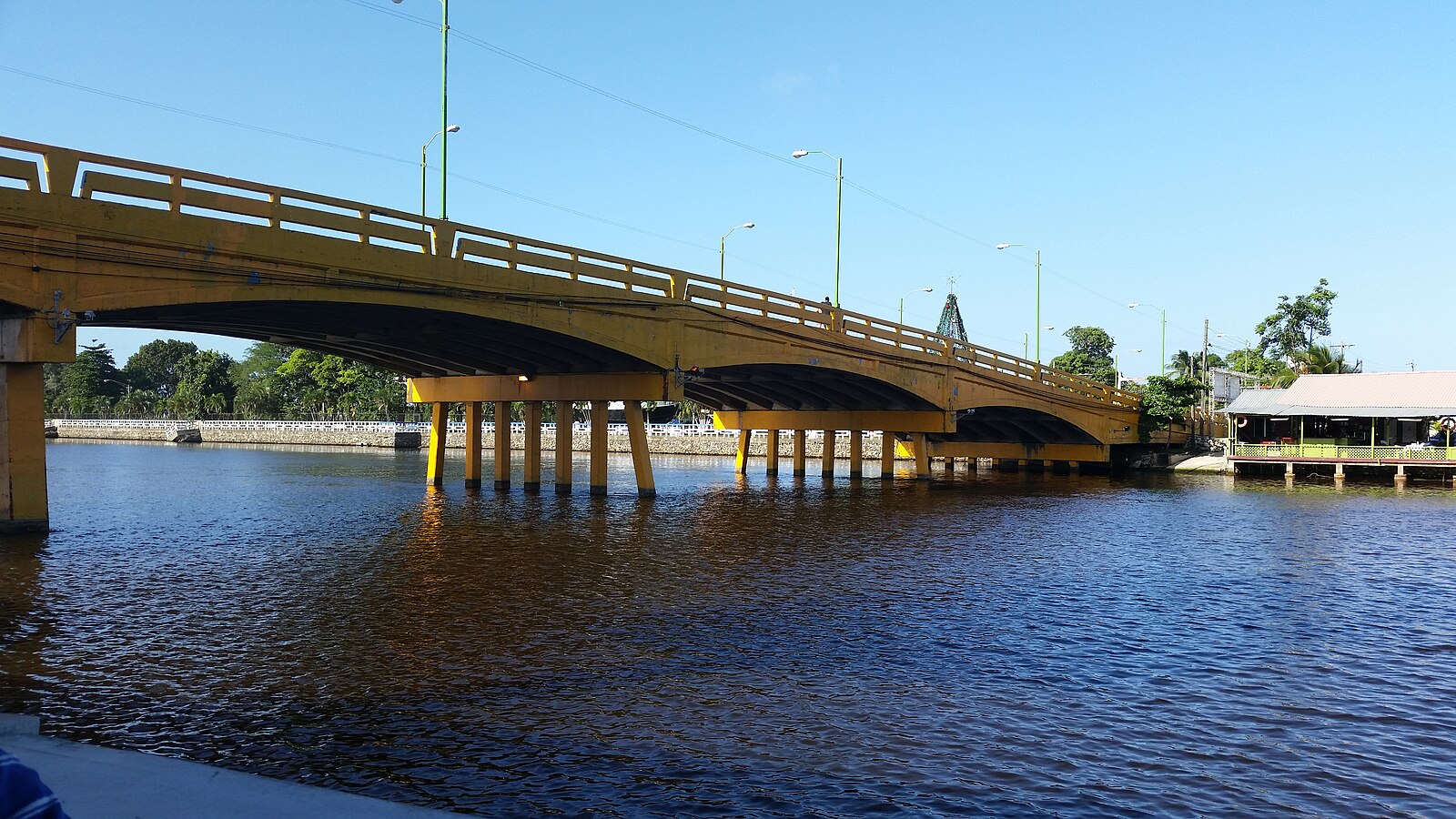
People on the Move
Honduras is both a source of migrants and a corridor for people from other countries. The National Migration Institute counted 19,074 migrants in transit from January to June 2025, against 374,959 for all of 2024.
Cubans were the largest group in the first half of 2025, at about 10,000 of the 19,000. Venezuelans numbered about 1,300, against about 187,000 in 2023.
El Heraldo also described a newer reverse flow of people moving south from Guatemala toward Nicaragua. It gave no count for that flow.
About 42,000 Hondurans were returned to the country in 2025, the same institute said on 30 December 2025. The United States was the main point of return, followed by Mexico.
Regional Bodies and Politics
The Central American Integration System, known as SICA, is the region’s main political forum. Belize took over its rotating presidency for the second half of 2026 from the Dominican Republic on 25 June 2026, EFE reported.
On 22 June 2026 Presidents José Raúl Mulino of Panama and Asfura agreed to strengthen ties and advance SICA integration. A June 2025 State of the Region report, as summarised by El Heraldo, said Honduras had not been able to pay all its financial commitments to the bloc.
Nicaragua went to the Central American Court in December 2024 after SICA failed to appoint a secretary general, a post then vacant since Werner Vargas resigned in November 2023. On 11 August 2026 the bloc’s general secretariat called for reviving high-level political dialogue on security, migration, climate and inequality, EFE reported.
Belize’s Prime Minister John Briceño arrived in Tegucigalpa on 23 August 2026 to meet Asfura, La Tribuna reported. The agenda covered health, trade and investment, security and education, and no signed agreements were reported.
Where Honduras Leads and Where It Follows
Honduras leads as the home of BCIE and ranks second by population and by economic size among the four countries compared here. It follows Guatemala on the customs union, which began on their border in 2017 and reached El Salvador in 2018.
On income per person it trails Guatemala and El Salvador and edges ahead of Nicaragua. On migration it moved from a corridor with 374,959 transit migrants in 2024 to a far quieter route in the first half of 2025.
On security, other leaders measure it against El Salvador, as the February 2026 exchange showed. A State of Exception declared in December 2022 remained in force, the State Department said in its August 2026 advisory.
What It Means for US Readers
The United States took 46.5% of Honduran exports in the first nine months of 2025, so US importers feel any disruption at Honduran ports and borders. Faster crossings under the customs union cut delays for regional supply chains.
Visitors need no visa for stays of 90 days or less, the State Department says, but must hold a return or onward ticket. Its advisory for Honduras stood at Level 3, Reconsider Travel, when it was issued on 25 August 2026, citing crime and terrorism.
The migration data matter for US policy because the United States was the main point of return for the roughly 42,000 Hondurans sent back in 2025. Investors should follow SICA and the customs-union rollout, which set the rules for regional trade.
What Is Not Known
Several questions about the Honduran frontier have no public answer in the sources opened for this guide. These are the main ones as of October 2026.
- Whether Honduras and Nicaragua have agreed the short territorial-sea segment that the ICJ told them to negotiate in 2007.
- Whether the customs union will extend to Nicaragua, which a Honduran business official quoted in December 2017 said had been formally invited.
- The exact date on which the Guatemala-Honduras customs union formally began, which the sources opened do not state.
- How much Honduran trade moves through each land crossing, because no per-crossing data was found.
- Whether the Bukele-Asfura exchange of 2026 leads to formal security cooperation.
- Who holds sovereignty over the islands at the mouth of the River Coco.
Connected Coverage
Frequently Asked Questions
Which countries border Honduras?
Honduras has land borders with Guatemala to the west, El Salvador to the south-west and Nicaragua to the south-east. It shares the Gulf of Fonseca with El Salvador and Nicaragua and lies across the Gulf of Honduras from Belize.
Who owns the Gulf of Fonseca?
In 1992 an ICJ Chamber found that the gulf’s waters, apart from a three-mile coastal belt, are under the joint sovereignty of Honduras, El Salvador and Nicaragua. It also found that Meanguera and Meanguerita belong to El Salvador and that El Tigre belongs to Honduras.
Does Honduras have border disputes with its neighbours?
The ICJ settled the main land and island disputes with El Salvador in 1992 and the Caribbean sea boundary with Nicaragua in 2007. The 2007 ruling left open the islands at the mouth of the River Coco and told the two countries to negotiate a short stretch of territorial sea.
Is there a customs union between Honduras and Guatemala?
Guatemala and Honduras launched a customs-union initiative in 2015, and El Salvador joined the process in 2018. A World Bank blog says a 2017 crossing of about 10 hours fell to 15 minutes in a January 2018 pilot.
How big is Honduras compared with its neighbours?
In 2025 Honduras had 11,005,850 people and a US$39.6 billion economy, which made it smaller than Guatemala and larger than El Salvador and Nicaragua. Its income per person of US$3,598 was above Nicaragua’s US$3,173 and below Guatemala’s US$6,598.
How many migrants cross Honduras?
The National Migration Institute counted 19,074 migrants in transit from January to June 2025, against 374,959 in all of 2024. Cubans were the largest group in 2025, at about 10,000.
Sources: ICJ, El Salvador/Honduras judgment of 11 September 1992 (https://www.icj-cij.org/en/case/75); ICJ, Nicaragua v. Honduras judgment of 8 October 2007 (https://www.icj-cij.org/node/103900); World Bank Open Data, Honduras, Guatemala, El Salvador, Nicaragua (https://data.worldbank.org/country/honduras); US State Department, Honduras travel advisory, issued 25 August 2026 (https://travel.state.gov/content/travel/en/traveladvisories/traveladvisories/honduras-travel-advisory.html); BCIE institutional presentation, December 2024 (https://www.bcie.org/api/documents/26127/BCIE%20Presentaci%C3%B3n%20Institucional%20Cifras%20Diciembre%202024.pdf); Plan Trifinio, strategic direction (https://www.presidencia.gob.sv/wp-content/uploads/2022/06/Strategic-Direction-of-the-Trifinio-Region.pdf); World Bank blog on the Guatemala-Honduras customs union (https://blogs.worldbank.org/es/latinamerica/uni-n-aduanera-entre-guatemala-y-honduras-de-10-horas-15-minutos); La Prensa Honduras, 25 June 2017 (https://www.laprensa.hn/honduras/guatemala-honduras-union-aduanera-centroamerica-DFLP1083617); La Tribuna, 21 November 2025 (https://www.latribuna.hn/2025/11/21/estados-unidos-recibe-el-46-5-de-exportaciones-hondurenas/); La Tribuna, 24 August 2026 (https://www.latribuna.hn/2026/08/24/primer-ministro-de-belice-llega-a-honduras-para-fortalecer-relaciones-bilaterales/); Emisoras Unidas, 27 January 2026 (https://emisorasunidas.com/nacional/2026/01/27/guatemala-quiere-seguir-trabajando-conjuntamente-con-honduras/); Diario El Mundo, 6 December 2023 (https://diario.elmundo.sv/economia/el-salvador-y-honduras-habilitan-el-amatillo-como-el-primer-paso-fronterizo-integrado); El Heraldo, 7 March 2026 (https://www.elheraldo.hn/honduras/efimero-encuentro-presidente-nasry-asfura-nayib-bukele-que-hablaron-HP29626652); Prensa Latina, 16 February 2026 (https://www.prensa-latina.cu/2026/02/16/augura-bukele-que-miles-de-personas-en-honduras-moriran/); Tunota, 28 December 2025 (https://www.tunota.com/honduras-hoy/presidente-electo-nasry-asfura-daniel-ortega-triunfo-electoral-2025-12-28); El Heraldo SICA file, accessed 17 October 2026 (https://www.elheraldo.hn/cronologia/-/meta/sica); El Heraldo, 30 June 2025 (https://www.elheraldo.hn/honduras/honduras-registra-fuerte-reduccion-paso-migrantes-2025-HD26433242); El Heraldo, 30 December 2025 (https://www.elheraldo.hn/honduras/honduras-registra-mas-42-mil-compatriotas-deportados-2025-JK28773802); Revista EyN, 21 December 2017 (https://www.revistaeyn.com/centroamericaymundo/honduras-preve-union-aduanera-con-el-salvador-en-febrero-DAEN1136984). All accessed 17 October 2026.
This article was produced by The Rio Times’ automated newsroom system. How we use AI · Report an error · Editorial responsibility: Matthias Camenzind, Editor-in-Chief
Expat Guide to Honduras
What The Rio Times publishes for foreigners who live in or move to Honduras.
Start here
- Moving to Honduras: Visas, Costs, Safety and Where Foreigners Settle
- Honduras for Expats: Homicide Falls to 26.2 per 100,000, but Location Decides Safety
- Honduras Bank Accounts for Foreigners: Passport or Residency Card, Free Tax Number
- Healthcare in Honduras for Expats 2026 — Costs, Hospitals and Evacuation Cover
Coming up in Honduras
- The Rasmus Plays Tegucigalpa, Honduras, on 18 October 18 Oct
- Ricardo Arjona Plays Tegucigalpa, Honduras, on 22 October 22 Oct
Understand Honduras