
Key Facts
- Population The United Nations estimates 11.0 million Hondurans in mid-2025; the last census, in 2013, counted 8.3 million.
- Peoples The National Statistics Institute counted 717,618 people, about 8.6%, as Indigenous or Afro-Honduran (of African descent), in nine named peoples plus “other”.
- Money The central bank recorded US$12.2 billion in remittances in 2025, 98.5% of it from the United States.
- Gap The latest census with published results is from 2013, so every current population figure is an estimate.
Honduras is a country of about 11 million people, most of them mestizo (people of mixed Spanish and Indigenous ancestry), with a smaller mix of Indigenous and Afro-Caribbean peoples. This guide explains who they are, where they live and why so many have family in the United States.
Honduras population is about 11.0 million people in mid-2025, according to the United Nations Population Division, but the last head count dates from 2013. That census, run by the National Statistics Institute (known by its Spanish initials INE), found about 8.3 million people and is the base for every later estimate.
This guide covers who lives in Honduras, which peoples make up the country, where they live and how migration shapes it, as of November 2026. Related reading: the Rio Times Honduras page, Honduras and its neighbours in Central America, the culture pillar and Honduras remittances.
Honduras Population in Numbers
INE took the census on 10 August 2013 and counted about 8.3 million people. Its own projections, which grow that base year by year, put the population at about 8.4 million in 2014.
The United Nations Population Division, using its World Population Prospects 2024 estimates, puts Honduras at 11,005,850 people on 1 July 2025. That is the figure this guide uses for the size of the country today.
The gap between 8.3 million and 11 million mostly reflects the years that have passed since 2013. A new count would show how close the estimates are.

Who Are Hondurans? Mestizo Majority, Nine Named Peoples
Hondurans outside the named peoples are generally described as mestizo, which means people of mixed Spanish and Indigenous ancestry. No mestizo share is quoted here because we could not confirm one.
What INE did count is how many people identify with one of the country’s named Indigenous and Afro-Honduran peoples. In 2013 that was 717,618 people, about 8.6% of the people counted, and that total includes 61,151 who ticked “other people”.
In Plain English
Mestizo: a person of mixed European and Indigenous roots, the largest group in Honduras.
Indigenous peoples: communities who lived in the territory before the Spanish arrived and keep their own language or customs.
Afro-Honduran: people of African descent, here the Garífuna, an Afro-Indigenous Caribbean people, and the English-speaking Black communities of the Bay Islands off Honduras’s Caribbean coast.
The Peoples Counted in 2013
The figures below are INE’s 2013 census counts, as published by a Honduran government human rights data portal and a national public-services site. Each describes people who identified with that group, not the whole country.
- Lenca: 453,672, the largest by far, living mostly in Lempira, Intibucá and La Paz in the western highlands.
- Miskito: 80,007, centred in Gracias a Dios, the sparsely populated eastern department on the Caribbean coast.
- Garífuna: 43,111, descendants of Africans and Indigenous Caribbean people, mostly along the north coast and nearby islands.
- Maya Chortí: 33,256, mainly around Copán in the west, near the famous Maya ruins.
- Tolupán: 19,033, mostly in the mountains of Yoro department.
- English-speaking Black people: 12,337, found mainly in the Bay Islands off the Caribbean coast.
- Nahua: 6,339, and Pech: 6,024, small communities in Olancho and nearby departments.
- Tawahka: the smallest of the nine peoples, living in the eastern rainforest.
The Lenca are therefore about 63% of the 717,618 total, which includes the “other” group, a share we worked out from the two census counts. The Miskito, Garífuna and Chortí come next, and every other people numbers under 20,000.
Where Hondurans Live: Highlands, North Coast and Islands
The capital, Tegucigalpa, sits in the central highlands beside its twin city Comayagüela. San Pedro Sula, in the northern department of Cortés, is the industrial and commercial hub, and Puerto Cortés on the same coast is the country’s main Caribbean port.
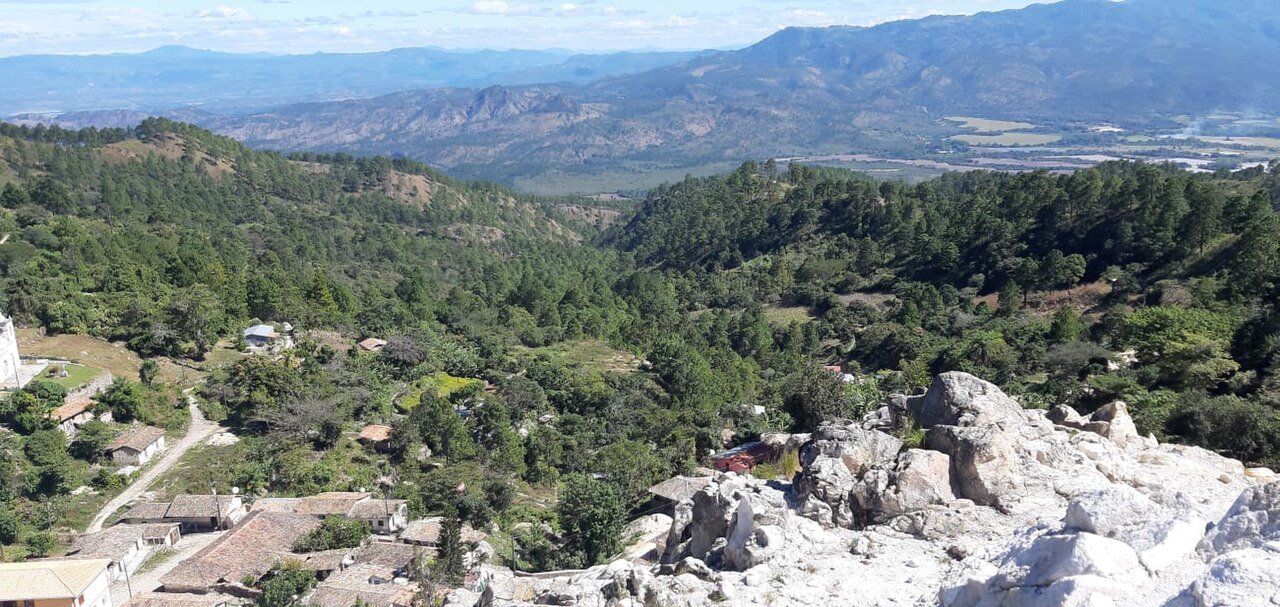
The peoples above follow the map. Lenca and Chortí communities live in the western mountains, Garífuna villages string along the north coast and the Cayos Cochinos islands, and the Miskito live in the eastern lowlands and rainforest of Gracias a Dios.
Spanish is the national language. Several peoples also keep their own tongues, including Miskito and Garifuna, while the Bay Islands have an English-speaking community.
Migration and Remittances: The US Link
Honduras’s central bank, the Banco Central de Honduras (BCH), recorded family remittances of US$12,212 million in 2025, up 25.3% from US$9,743 million in 2024. About 98.5% of that money came from the United States.
The bank also reports that 3,059,302 Hondurans received remittances in 2025, up from 2,922,860 a year earlier. Against a population of about 11 million, that is more than one in four of the population, if each recipient counts once, a ratio we calculated from those two figures.
For many families abroad the link is personal: Hondurans in the United States send money home, and deportations send people back. Our reporting on the topic is collected on the remittances page.
Garífuna and Land Rights in the News
Several of these peoples are in the news over land and sea rights, especially the Garífuna of the Cayos Cochinos islands. Our latest coverage is Honduras urged to obey Garífuna sea ruling.
The census counts give the scale of each community. The 43,111 Garífuna counted in 2013 are a small group next to a country of about 11 million.
What It Means for US Readers
If you have a Honduran neighbour or colleague, a relative back home may well depend on money sent from the United States. The central bank counted 3,059,302 people receiving such transfers in 2025, so US pay packets and US immigration rules reach far into Honduran households.
Travellers meet the same mix: Spanish in the highlands, English in the Bay Islands and Garífuna music and food on the north coast. Several Indigenous and Afro-Honduran communities are involved in land and sea disputes, which is part of understanding the country.
What Is Not Known
- A current head count: the latest census with published results is from 2013; the 11.0 million is a UN estimate.
- The mestizo share: we could not confirm a census figure, so none is given.
- Hondurans in the United States: we found no single reliable count, so none is given.
- Markets and data releases: as of 10 November 2026 we found no prediction market and no scheduled statistics release that bears on this topic.
Frequently Asked Questions
How many people live in Honduras?
The United Nations estimates 11.0 million people in mid-2025. The last census with published results, run by the National Statistics Institute in 2013, counted about 8.3 million, so every current figure is an estimate.
What are the main ethnic groups in Honduras?
Most Hondurans are generally described as mestizo, meaning mixed Spanish and Indigenous ancestry, though we could not confirm a census share. The 2013 census counted 717,618 people, about 8.6%, as Indigenous or Afro-Honduran, in nine named peoples plus “other”, led by the Lenca.
Who are the Garífuna?
The Garífuna are an Afro-Indigenous Caribbean people who live along Honduras’s north coast. The 2013 census counted 43,111 Garífuna.
How much money do Hondurans abroad send home?
Honduras’s central bank recorded US$12.2 billion in family remittances in 2025, up 25.3% from US$9.7 billion in 2024. About 98.5% came from the United States.
When will Honduras count its people again?
The latest census with published results is from 2013. No date for a new count has been confirmed.
Sources: National Statistics Institute of Honduras (INE), XVII Population Census 2013, volume 6 on population groups, and its 2014 to 2018 population bulletin; United Nations Population Division, World Population Prospects 2024; Banco Central de Honduras, remittance data for 2025 and its statistics yearbook Honduras en Cifras 2025.
This article was produced by The Rio Times’ automated AI newsroom. Editorial responsibility: Matthias Camenzind, Publisher and Editor-in-Chief. The Rio Times also runs Ask Rio Times, which answers from 100,000+ of our own articles, the daily Latin America Power Map, and prediction-market odds on elections and markets.. How we use AI · Report an error
Expat Guide to Honduras
What The Rio Times publishes for foreigners who live in or move to Honduras.
Start here
- Moving to Honduras: Visas, Costs, Safety and Where Foreigners Settle
- Honduras for Expats: Homicide Falls to 26.2 per 100,000, but Location Decides Safety
- Honduras Bank Accounts for Foreigners: Passport or Residency Card, Free Tax Number
- Healthcare in Honduras for Expats 2026 — Costs, Hospitals and Evacuation Cover
Understand Honduras