Honduras Culture, the Key Figures to Know in 2026
HONDURAS · CULTURE
Key Facts
- The country Honduras is a Central American nation of about 11.0 million people, where Maya ruins, Garifuna drums and Spanish-language poetry share one culture.
- Why it matters As of October 2026 Honduras has two World Heritage sites and two living-heritage traditions, and its national football team has played three World Cups.
- Who to know Poet Roberto Sosa, songwriter Guillermo Anderson, painter José Antonio Velásquez, the band Banda Blanca and actress America Ferrera, born in Los Angeles to Honduran parents.
- Heritage Copán, a World Heritage site since 1980, holds the longest known Maya inscription; Garifuna music and dance were listed in 2008, cassava bread in 2024.
- Sport Honduras played the men’s World Cup in 1982, 2010 and 2014 and finished fourth in the 2016 Olympic football tournament.
- What it means for you US readers can visit Copán or hear Garifuna music, but the US travel advisory for Honduras is Level 3, Reconsider Travel, as of October 2026.

As of October 2026, Honduran culture is best understood through a short list of names: the Maya city of Copán, the Garifuna people and their drums, the songwriter Guillermo Anderson, the poet Roberto Sosa, the painter José Antonio Velásquez, the national football team and the actress America Ferrera, whose parents are Honduran. This guide explains each one for a reader who knows nothing about the country, with every figure dated and checked against the body that awards or keeps the record.
Honduran Culture at a Glance
Honduras had about 11.0 million people in 2025, which is the World Bank’s latest figure as of October 2026, and its income per person was about US$3,600 that year. The country borders Guatemala, El Salvador and Nicaragua, with a Caribbean coast in the north and a short Pacific coast in the south.
Its culture is not one block, because it draws on the Maya civilisation of the west, the Garifuna people of the Caribbean coast and a Spanish-language tradition of poetry and painting. The sections below take those threads one at a time, from ancient stone to a football pitch to a Hollywood set.
The government body for the arts is the Secretaría de Estado en los Despachos de Cultura, Artes y Patrimonio de los Pueblos de Honduras, known by the initials SECAPPH. Its official website carried a notice in late October 2026 that a new portal is under construction, so the checks in this guide rely on international lists and the artists’ own pages.
Readers who want the political and economic background can start with the Rio Times guides to Honduras politics, the Honduran economy and Honduras geopolitics. The Honduras country page and the guide to Honduras and its neighbours in Central America place the country on the map.
The Maya City With the Longest Inscription
UNESCO, the United Nations cultural agency, lists the Maya Site of Copán in western Honduras as a World Heritage property, inscribed in 1980. It gives two reasons: the temples, plazas and terraces form one of the most characteristic complexes of Classic Maya architecture and sculpture, and the Hieroglyphic Stairway carries the longest known Maya inscription.
That stairway carries more than 1,800 individual glyphs, UNESCO’s text says, and the city was occupied in the Classic period, from AD 300 to 900, before it was abandoned in the early tenth century. UNESCO calls the site the political, civil and religious centre of the Copán Valley and of a wider territory.
UNESCO’s text names the Maya leader Yax Kuk Mo, who came from the Tikal area in AD 427 and began a dynasty of 16 rulers, and it says the ruins were discovered in 1570 by Diego García de Palacio. The main complex, the Acropolis, rises some 30 metres (about 98 feet) from the ground.
The archaeological park covers about 84.7 hectares (roughly 209 acres), and the Great Plaza alone covers about three hectares (about 7 acres), the same listing records. It also notes threats to the site, including river erosion, earthquake damage and pressure from the neighbouring town.
Honduras’s second World Heritage property, the Río Plátano Biosphere Reserve in the Mosquitia region, was inscribed in 1982 as a natural site of about 350,000 hectares (roughly 865,000 acres). UNESCO says Pech, Tawahka, Miskito and Garifuna communities live there alongside mestizo settlers, which ties the reserve to Honduras’s living cultures.
Garifuna Music, Dance and Cassava Bread
The Garifuna are a people of mixed Indigenous Caribbean and African origin who settled along the Atlantic coast of Central America after being forced to flee the island of Saint Vincent in the eighteenth century, UNESCO records. Garifuna communities live mainly in Honduras, Guatemala, Nicaragua and Belize.
UNESCO inscribed the language, dance and music of the Garifuna on its Representative List of the Intangible Cultural Heritage of Humanity in 2008, after first proclaiming them in 2001. Honduras shares the entry with Belize, Guatemala and Nicaragua.
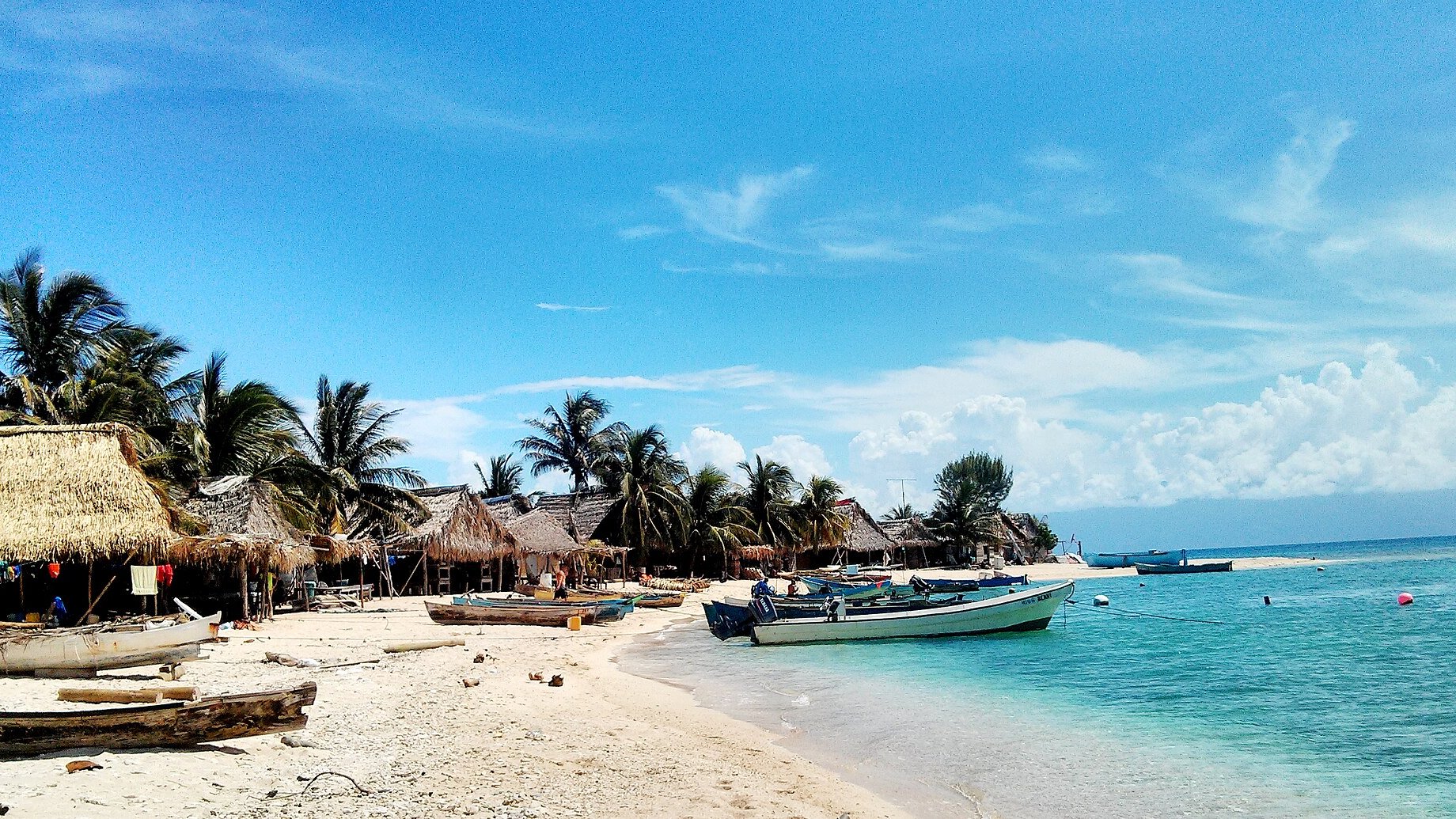
The entry says the songs bring together African and Amerindian melodies, often with satire, and are accompanied by drums and dances that spectators may join. It adds that the Garifuna language belongs to the Arawakan group and is still widely spoken, but that economic migration, discrimination and its absence from the school system endanger it.
A second Honduran entry came in 2024, when UNESCO listed the traditional knowledge and practices for making and eating cassava bread, a joint entry with Cuba, the Dominican Republic, Haiti and Venezuela. UNESCO describes it as a round bread made from the cassava tuber, usually baked over firewood, and a link to Indigenous and African heritage.
The Honduran group Banda Blanca had a No. 1 on the US Latin radio chart with Sopa de Caracol, a title that means conch soup. The chart for the week ending 16 March 1991 lists the song at No. 1 for its first week at the top, and that chart is compiled from national Latin radio airplay reports.
The Songwriter of La Ceiba
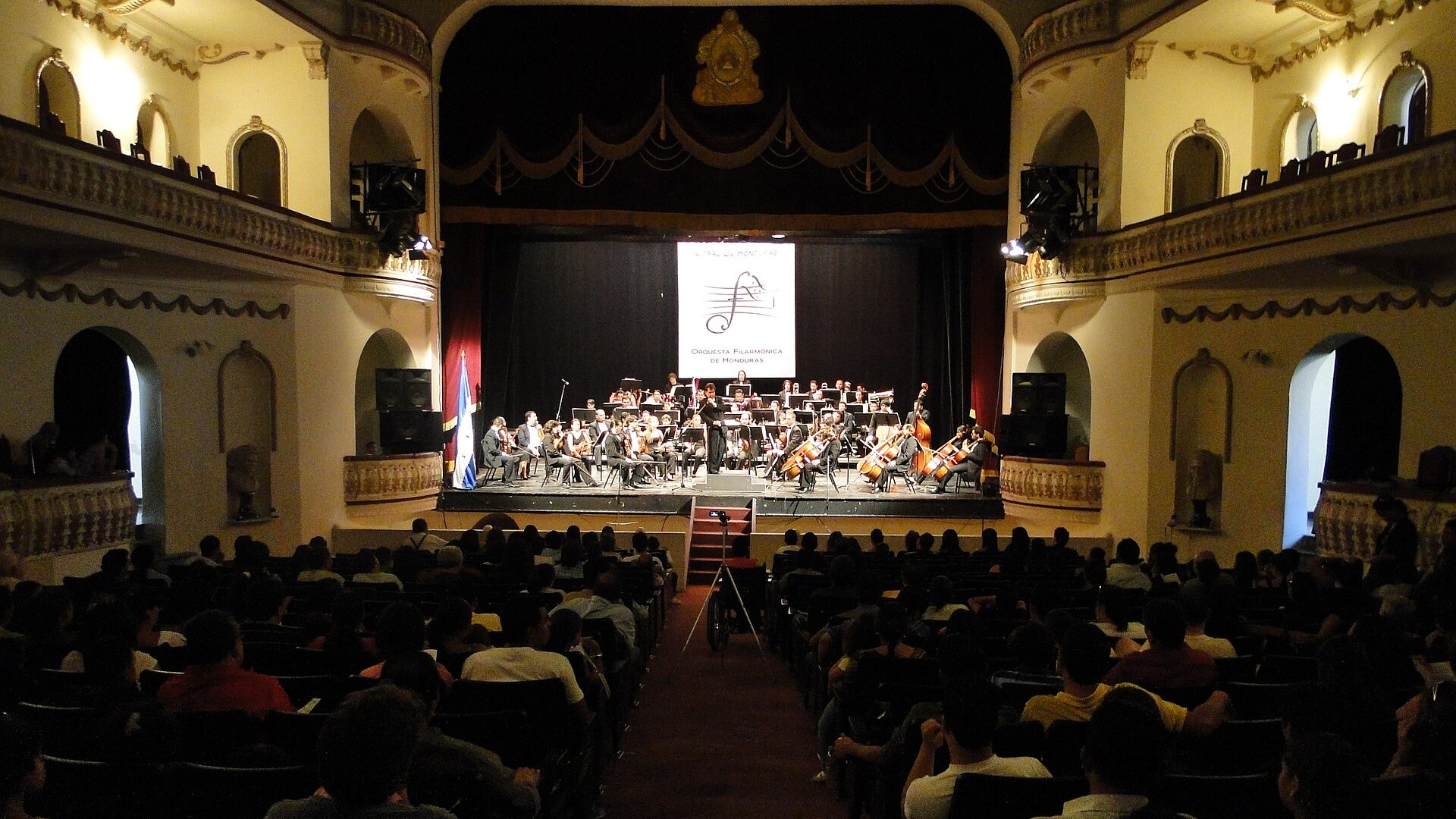
Guillermo Anderson was born in La Ceiba, a Caribbean port, and his official site says he fused Honduran percussion with contemporary sounds and with Garifuna rhythms such as parranda and punta. Those two rhythms are traditional Garifuna forms that his site places beside better-known Caribbean styles.
The site says it is hard to speak of Honduran music without mentioning his name, that he was named his country’s cultural ambassador to the world, and that his song En Mi País is regarded as an alternative anthem in Honduras. It also says he played on stages across North, Central and South America, Europe and Asia.
Anderson died on Saturday 6 August 2016 in the intensive care unit of the hospital of his home town, La Ceiba, at the age of 54, after thyroid cancer, according to the doctor who treated him. The doctor described the cancer as a severe and aggressive one.
The official site of the singer lists two albums, Encarguitos del Caribe and Costa y Calor. It describes his concerts, whether with voice and guitar or with his band, as a celebration of love, nature and life.
A Poet Who Won a Spanish Prize
Roberto Sosa was born on 18 April 1930 in Yoro, in northern Honduras, and a reference biography calls him a prominent Honduran poet. His first collection, Caligramas, appeared in 1959, according to the same biography.
His book Los pobres, which means The Poor, won Spain’s Adonáis poetry prize in 1968 and was published in Madrid in 1969. A Honduran critic quoted in an essay on his career calls his work the poetry of the greatest breadth, lucidity and rigour in Honduras today.
Sosa’s themes were love, poverty and social justice, and the biography says he gave voice to the poor and denounced violence in Honduras and Central America. His 1985 collection Secreto Militar, discussed in the same essay, continued a testimonial and critical line begun in his earlier books.
The Painter Who Put a Village on Canvas
According to a February 2023 account marking the 40th anniversary of his death, José Antonio Velásquez was a Honduran painter in the primitivist style who became famous for pictures of his adopted village, San Antonio de Oriente, where he was a telegraph operator, a barber and three times mayor. The same account gives his birth as 8 February 1906 in Caridad, in southern Honduras, and his death as 14 February 1983 in Tegucigalpa.
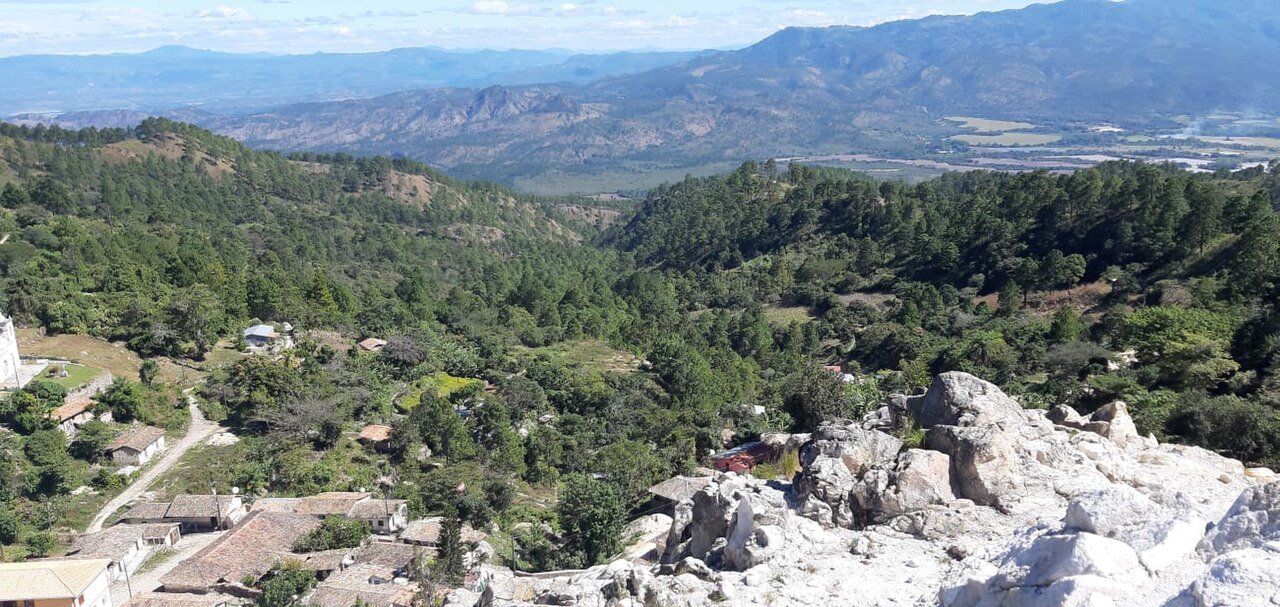
His daughter said in 2023 that the family was working for a museum or house museum in his name, in Tegucigalpa or in San Antonio de Oriente, and had met officials of the culture ministry. Whether it has opened since is not confirmed at an official source.
Football and the Olympic Fourth Place
FIFA, football’s world governing body, records that Honduras has played in three men’s World Cups, in 1982, 2010 and 2014, and went out in the group stage each time. As of October 2026 the 2014 tournament in Brazil remains the country’s last appearance at the finals.
Honduras entered qualifying for the 2026 tournament, its 16th qualifying campaign on FIFA’s record, but did not reach the finals. The national association is called the Honduran Football Association by FIFA and uses the name Federación de Fútbol de Honduras on its own website.
In the men’s Olympic football tournament Honduras has appeared five times, with fourth place at the 2016 Games as its best result and the group stage at the 2020 Games as its latest. Its under-17 team reached the World Cup quarter-finals in 2013.
FIFA also lists nine Honduran appearances at the Under-20 World Cup, the latest in 2023, and six at the Under-17 World Cup, the latest in 2025. Those youth records show a steady pipeline of players even in years without a men’s World Cup place.
America Ferrera and the Diaspora on Screen
America Ferrera was born in Los Angeles on 18 April 1984 to Honduran parents, the Golden Globe Awards say, and she made her film debut in Real Women Have Curves in 2002. She won the Golden Globe for best actress in a television musical or comedy for Ugly Betty at the 2007 ceremony.
The Golden Globes biography lists her later screen work as Superstore, from 2015 to 2021, and Barbie, in 2023. It also records Golden Globe nominations for Ugly Betty at the 2008 and 2009 ceremonies.
Her career is a reminder that Honduran culture reaches US audiences through the diaspora, the people of Honduran descent living in the United States, as well as through artists in Honduras itself. For a reader in the United States, that link is often the shortest road to the topic.
What It Means for US Readers
A US traveller can visit Copán, but the State Department’s travel advisory for Honduras was Level 3, Reconsider Travel, as of October 2026, in a notice dated 25 August 2026. Anyone planning a trip should read the current advisory and the embassy guidance before booking.
Most of the works in this guide were made in Spanish, so US readers may need translations, and UNESCO itself describes the Garifuna language as endangered. Music is the easiest way in, because Garifuna drumming and punta rhythms can be enjoyed without Spanish.
Honduran heritage is part of US culture too, as America Ferrera’s career shows. That matters for the many US readers whose families came from Honduras, and for travellers choosing what to see.
What Is Not Known
No official ranking of Honduran artists, writers or musicians was found, so this guide names figures with a checkable record rather than claiming a definitive list. Media figures and film-makers are not covered for that reason.
The culture ministry’s website was still under construction in late October 2026, and the dates of festivals such as the June fair of San Pedro Sula, the carnival of La Ceiba and Garifuna Settlement Day could not be confirmed at an official source. They are therefore left out.
It is also unknown whether the Velásquez museum planned by his family has opened since 2023. The state of Garifuna language teaching, which UNESCO’s entry says is limited to one village, is likewise unconfirmed.
Frequently Asked Questions
What is Honduras best known for in culture?
Honduras is best known for the Maya ruins of Copán, Garifuna music and dance, and poets and painters such as Roberto Sosa and José Antonio Velásquez. UNESCO lists Copán and the Garifuna tradition, which gives both an independent check.
Is Copán a UNESCO World Heritage site?
Yes, UNESCO inscribed the Maya Site of Copán in 1980. It holds the Hieroglyphic Stairway, which carries the longest known Maya inscription, with more than 1,800 glyphs.
Who are the Garifuna?
The Garifuna are a people of mixed Indigenous Caribbean and African origin who settled on the Atlantic coast of Central America after leaving Saint Vincent in the eighteenth century. UNESCO listed their language, dance and music in 2008.
Who is America Ferrera?
America Ferrera is an actress born in Los Angeles on 18 April 1984 to Honduran parents. She won a Golden Globe for Ugly Betty at the 2007 ceremony.
Has Honduras played in the World Cup?
Yes, Honduras played the men’s World Cup in 1982, 2010 and 2014 and went out in the group stage each time. It did not reach the 2026 finals.
Is it safe for US visitors to travel to Honduras?
The State Department rated Honduras Level 3, Reconsider Travel, in an advisory dated 25 August 2026. Check the current advisory before booking, because levels change.
Which Honduran traditions are on UNESCO’s living-heritage list?
UNESCO lists two Honduran living traditions. They are the language, dance and music of the Garifuna, listed in 2008, and cassava bread knowledge, listed in 2024 with four other countries.
Sources: UNESCO World Heritage Centre, Maya Site of Copán; UNESCO World Heritage Centre, Río Plátano Biosphere Reserve; UNESCO, language, dance and music of the Garifuna; UNESCO, cassava bread, 2024 listing; FIFA, Honduran Football Association record, read October 2026; Golden Globe Awards, America Ferrera biography and awards; Guillermo Anderson, official site; World Bank, Honduras population data, 2025; SECAPPH, Honduran culture ministry website, read 30 October 2026; US State Department travel advisories feed, Honduras entry of 25 August 2026.
This article was produced by The Rio Times’ automated newsroom system. How we use AI · Report an error · Editorial responsibility: Matthias Camenzind, Editor-in-Chief
Expat Guide to Honduras
What The Rio Times publishes for foreigners who live in or move to Honduras.
Start here
- Moving to Honduras: Visas, Costs, Safety and Where Foreigners Settle
- Honduras for Expats: Homicide Falls to 26.2 per 100,000, but Location Decides Safety
- Honduras Bank Accounts for Foreigners: Passport or Residency Card, Free Tax Number
- Healthcare in Honduras for Expats 2026 — Costs, Hospitals and Evacuation Cover
Understand Honduras