How to Open a Bank Account in Argentina as a Foreigner in 2026: Tax ID, Dollars, Apps
GUIDES · ARGENTINA
Key Facts
- —What it is A guide to opening a bank account in Argentina, South America’s second-largest economy.
- —Who it’s for New residents, retirees, remote workers and property buyers who need to hold pesos and dollars locally.
- —The rules Since 2 March 2026 the tax agency ARCA issues a CUIT instead of the old CDI to foreigners without an Argentine ID card.
- —What it costs A peso savings account and one debit card are free by central bank rule; dollar accounts depend on each bank’s fee list.
- —The catch Fintech apps are built around the Argentine DNI, and Wise still does not send money to Argentina.
- —What is still open Whether the 30% advance tax on card spending abroad survives, and how banks treat passport-only applicants.
Opening a bank account in Argentina used to mean living with two exchange rates and a wall of currency rules. In 2026 the rules are simpler, but the paperwork still decides who gets in.
For an American or European moving to Buenos Aires, a local account pays the rent and the salary and spares you carrying cash. This guide explains the tax number you need first, which banks and apps accept foreigners, and how to move money in and out.
As of 25 September 2026, three changes shape the answer. Individuals can buy dollars freely again, the old CDI tax number has been replaced by the CUIT, and banks may now run salary accounts in dollars.
All US$ conversions in this guide use 1,524 pesos per dollar, the market rate on 30 September 2026. The peso floats inside a central bank band whose limits move each month, so check the rate on the day.
What changed when the cepo ended
For years Argentina ran the cepo, a set of controls that capped how many dollars a person could buy. Savers paid extra taxes and often used the informal “blue” market instead.
The Central Bank of Argentina (BCRA) lifted most of those limits for individuals with Communication “A” 8226. It was issued on 11 April 2025 and took effect on 14 April 2025.
Since then, resident individuals can buy dollar notes or deposit dollars into an account without prior central bank approval. Purchases paid with peso cash are capped at US$100 a month; larger amounts must come from a bank account.
For a foreigner, the practical effect is large. A dollar account at a local bank is now a normal tool rather than a privilege. The official rate is also the one most people now use.
The rules keep moving in the same direction. With Communication “A” 8460 in July 2026, the central bank allowed salary accounts to receive US dollars.
Banks must keep those dollar salary accounts free of charge up to the amount of salary paid in. They must also let holders withdraw dollar cash at the branch that holds the account.

Step one: get your tax number (CUIL, CUIT and the end of the CDI)
No Argentine bank or payment app will open an account without a tax identification number. Which one you get depends on your status.
The CUIL is the labour and social security number issued by ANSES, the social security agency. It is tied to the Argentine national identity card, the DNI, and most employees and residents with a DNI already hold one.
The CUIT is the tax number issued by ARCA, the federal revenue agency that replaced AFIP in late 2024. Anyone who invoices, runs a business or registers for tax needs a CUIT.
Until 2026, foreigners without a DNI usually applied for a CDI, a simpler identification key. ARCA General Resolution 5803/2025, published on 24 December 2025, abolished that procedure for individuals.
Since the rule took effect on 2 March 2026, these applicants request a CUIT instead. Existing CDIs remain valid until the holder needs to change registered data, at which point ARCA converts them into a CUIT.
If you live in Argentina but have no DNI yet
Foreign residents without a DNI apply online through ARCA’s “Presentaciones Digitales” service. They attach their home-country identity card or passport, a facial photograph, a recent proof of address and a certificate from the National Directorate of Migration.
That migration certificate must show the case number and the type of residence: transitory, temporary or permanent. You need to have started a residency process first. The CUIT issued this way is provisional, valid for up to two years or until the residence expires.
If you live abroad
People resident outside Argentina cannot register themselves. Under the same resolution they must request a CUIT through a representative or authorised third party with an address in Argentina.
This matters mostly for property buyers and investors who do not plan to move. In practice the representative is often a local accountant, notary or lawyer.
Step two: open a traditional bank account
The basic product is the caja de ahorros, a savings account that works like a current account with a debit card. It can be held in pesos, and separately in dollars or other foreign currencies.
Central bank rules make the peso version cheap. Opening and maintaining a peso caja de ahorros is free, and so is one optional debit card, including replacements for worn or demagnetised cards.
The same rules do not spell out free maintenance for foreign-currency accounts. Dollar account fees therefore depend on each bank’s published tariff, which you should ask for before signing.
Any adult able to contract can open a caja de ahorros. Banks must record your full name, place and date of birth, address, occupation, marital status and whether you are a politically exposed person.
Identity must be proven with the documents listed in the central bank’s identification rules. In practice, most branches ask for a DNI plus a CUIL or CUIT, proof of address and sometimes proof of income.
Applicants with only a passport and a new CUIT should expect a longer conversation. Policies vary between banks and even between branches, so it helps to ask by e-mail before you queue.
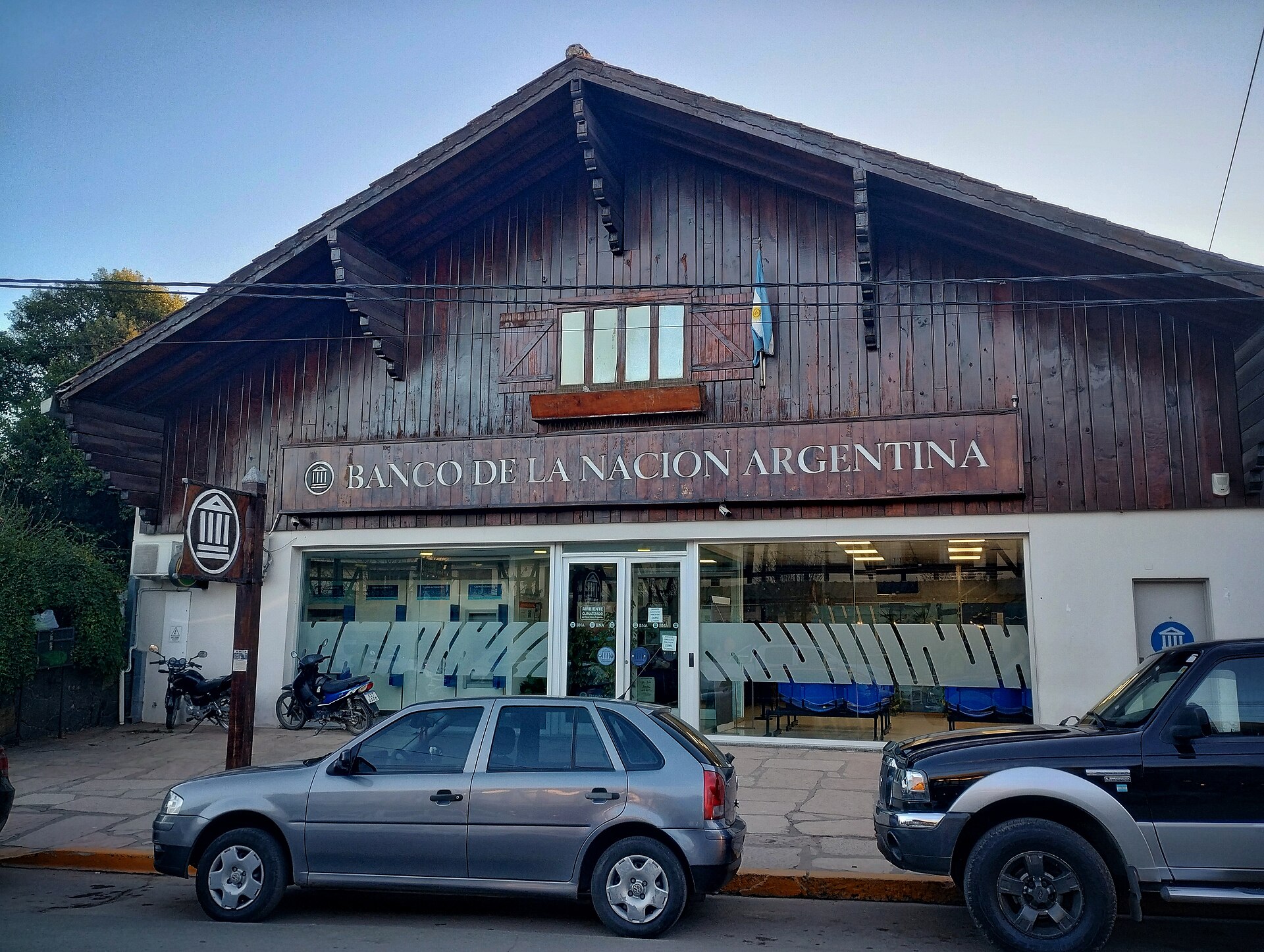
State-owned Banco de la Nación has the widest branch network, which helps in smaller towns. Large private banks tend to have better apps and English-speaking staff in central Buenos Aires.
Every account comes with a CBU, a 22-digit number used for domestic transfers, and an easier alias. Landlords, employers and utility companies will ask for one or the other.
Step three: add a fintech wallet
Many Argentines now run daily life through apps rather than branches. Digital wallets use a CVU, the virtual equivalent of a CBU, so money moves instantly between banks and apps.
The catch for newcomers is identity checks. These apps validate users against the national DNI, so a foreigner without one will usually be turned away at sign-up.
Mercado Pago
Mercado Pago is the payments arm of MercadoLibre and is accepted almost everywhere, from supermarkets to street stalls. Its account lets users deposit, buy, sell and transfer dollars as well as pesos.
In September 2026 its account page advertised annual returns of 19% on pesos and 1.8% on dollars. It also offered a credit card with no fixed fees, subject to a credit and risk review.
Ualá
Ualá offers a peso account, a dollar savings account and the option to buy official-rate dollars at any hour. Support runs through the in-app chat, seven days a week.
Brubank
Brubank is a fully digital bank that says an account needs only a phone, an age above 13 and an Argentine DNI. Opening and keeping the account is free, and it includes a US-dollar savings account.
The sensible order is a traditional bank first, then a wallet once your DNI arrives. Until then, a local friend’s transfer or your landlord’s alias can bridge the gap.
Cards and the 30% advance tax
Argentine card holders paying in foreign currency still face a 30% charge. It is not a final tax but an advance payment of income tax or wealth tax, collected by the card issuer for ARCA.
The separate PAIS tax, which once added another surcharge to dollar purchases, expired in December 2024. Buying dollars for savings has carried no tax since the cepo ended.
There are two ways to reduce the 30% charge. The simplest is to pay the foreign-currency part of your card statement with dollars already in your account, which avoids the advance.
The second applies to people who owe no income or wealth tax. They can ask ARCA to refund the amounts collected.
The charge falls on cards issued in Argentina. A visitor or new resident paying with a card from home does not pay it. The home bank may still add its own foreign transaction fee.
Moving money in and out
Getting money into Argentina is where many foreigners get stuck. The popular transfer service Wise still does not send pesos to Argentina from the United States or the United Kingdom.
Its pages for both countries said in September 2026 that the service was “not quite there yet”. Users can join a waiting list to be told when it launches.
Western Union remains the most widely used alternative. From the United States it pays out to a bank account, to cash pick-up at agent locations or to Pago Fácil mobile wallets.
Its US site lists pesos as the receiving currency and a maximum of US$50,000 per transfer, with daily limits that vary. Compare the exchange rate it offers with the official rate before sending.
Once you hold a local dollar account, an international wire from your home bank is often the cleanest route for larger sums. Ask your Argentine bank for its SWIFT details and incoming-wire fee first.
For money you already hold in cash, Congress passed the Inocencia Fiscal II law on 17 September 2026. It aims to draw undeclared savings into banks, but it mainly concerns Argentine taxpayers rather than newcomers.

A simple order of steps for 2026
First, start your residency file with the National Directorate of Migration and keep the certificate showing your case number. Our residency guide explains the routes and fees.
Second, request your CUIT through ARCA’s online service, or use your CUIL once you have a DNI. Third, open a peso caja de ahorros with a dollar account alongside it.
Fourth, add Mercado Pago, Ualá or Brubank when the DNI arrives. Keep a card from home for the first months, because it avoids the 30% advance on foreign spending.
Finally, keep copies of everything. Banks check the source of funds, and a clean paper trail makes the first large transfer much easier.
Connected Coverage
How to Get Residency in Argentina in 2026: Routes, Fees and the New Decree Rules
Moving to Argentina: Residency, Bank, Rent, Health
Argentina’s Central Bank Opens Door to Dollar Payroll Accounts
Argentina’s Congress Clears a Law to Coax Mattress Dollars Into Banks
What Is Mercado Libre? Latin America’s Online Shopping and Fintech Giant in 2026, Explained
Banco Inter Argentina Launch: US Investing From US$5 as CEO Vows to Compete
What Is Not Known
How banks treat passport-only applicants. The central bank sets minimum identity rules, but each bank decides whether a passport and a new CUIT are enough without a DNI.
Whether non-residents enjoy the same dollar freedom. The April 2025 opening was written for resident individuals, and banks may still apply tighter checks to people living abroad.
How long the 30% card advance will last. No end date has been set, and in late September 2026 it still applied to card statements.
When Wise will launch transfers to Argentina. The company has published no date.
Sources: Exchange rules from the Central Bank of Argentina. Tax registration from ARCA General Resolution 5803/2025. Product terms from the providers’ own pages. Exchange rate from open.er-api. All accessed 25 September 2026.
- BCRA — Communication “A” 8226, foreign exchange market access for individuals, 11 April 2025.
- BCRA — consolidated rules on savings, salary and special accounts.
- Boletín Oficial — ARCA General Resolution 5803/2025, 24 December 2025.
- Brubank — account requirements.
- Mercado Pago — account page.
- Wise — sending money to Argentina.
- Western Union — sending money to Argentina.
More: Argentina news in English, every day from The Rio Times.
Frequently Asked Questions
Can a foreigner open a bank account in Argentina without a DNI?
It is possible but harder. You first need a tax number, which foreign residents without a DNI now request as a CUIT through ARCA using a passport and a migration certificate. Each bank then decides whether to accept you without a DNI.
Does the CDI still exist?
Not for new applicants. ARCA General Resolution 5803/2025 replaced the CDI with the CUIT for individuals from 2 March 2026. Existing CDIs stay valid until the holder changes registered data.
Can I hold US dollars in an Argentine bank account?
Yes. Banks and apps such as Mercado Pago, Uala and Brubank offer dollar accounts, and since April 2025 resident individuals can buy dollars without the old monthly cap. Peso savings accounts are free by rule, while dollar account fees vary by bank.
Is there still a 30% charge on card spending abroad?
Yes, for cards issued in Argentina. It is an advance on income or wealth tax, and you can avoid it by paying the foreign-currency part of the statement with your own dollars.
Can I use Wise to send money to Argentina?
Not from the United States or the United Kingdom as of September 2026. Western Union pays out to Argentine bank accounts, cash agents and Pago Facil wallets, and an international wire to a local dollar account is another option.
This article was produced by The Rio Times’ automated newsroom system. How we use AI · Report an error
In depth
Read More from The Rio Times