How to Get Residency in Argentina in 2026: Routes, Fees and the New Decree Rules
GUIDES · ARGENTINA
Key Facts
- —What it is A practical guide to legal residence in Argentina, South America’s second-largest country by area and a long-time magnet for European settlers.
- —Who it’s for Retirees, people living on investment income, remote workers, Mercosur nationals and anyone planning a long stay.
- —What it costs About US$65 in migration fees for a non-Mercosur temporary residence, plus about US$13 for the first foreigner ID card.
- —The rules Rentistas and pensioners must show monthly income of at least five minimum wages, about US$1,255 in September 2026.
- —The catch Since Decree 366/2025, residents without permanent status can be billed at national public hospitals and must declare health insurance.
- —What is still open A court struck down the decree’s citizenship changes in June 2026; the government has appealed to the Supreme Court.
Residency in Argentina is still one of the more open doors in the Americas. A 2025 decree, however, has made life without permanent status stricter and costlier.
This guide explains the main routes to residency in Argentina for Americans, Europeans and South Americans, with fees in pesos and dollars. It also sets out what Decree 366/2025 changed, and what the courts have since undone.
As of 20 September 2026, the rules below reflect the pages of the Dirección Nacional de Migraciones (DNM), Argentina’s immigration agency. Dollar figures use the late-September 2026 rate of about 1,529 pesos per US dollar.
How residency in Argentina works
Argentine migration law, Law 25.871, sorts foreigners into three groups. Transitory residents, such as tourists and digital nomads, stay for months. Temporary residents stay for one to three years, and permanent residents stay indefinitely.
Almost everyone starts as a temporary resident and later switches to permanent status. The DNM lists more than a dozen temporary categories, from Mercosur nationality to retirees, workers, students and family reunification.
Applications are filed online through a system called RaDEX. You register, fill in the form, pay the fees and upload your documents. If the file is complete, the DNM emails you an appointment date.
You must be inside Argentina to use RaDEX. The DNM stresses that the process is personal and that no paid agent, known locally as a gestor, is required.
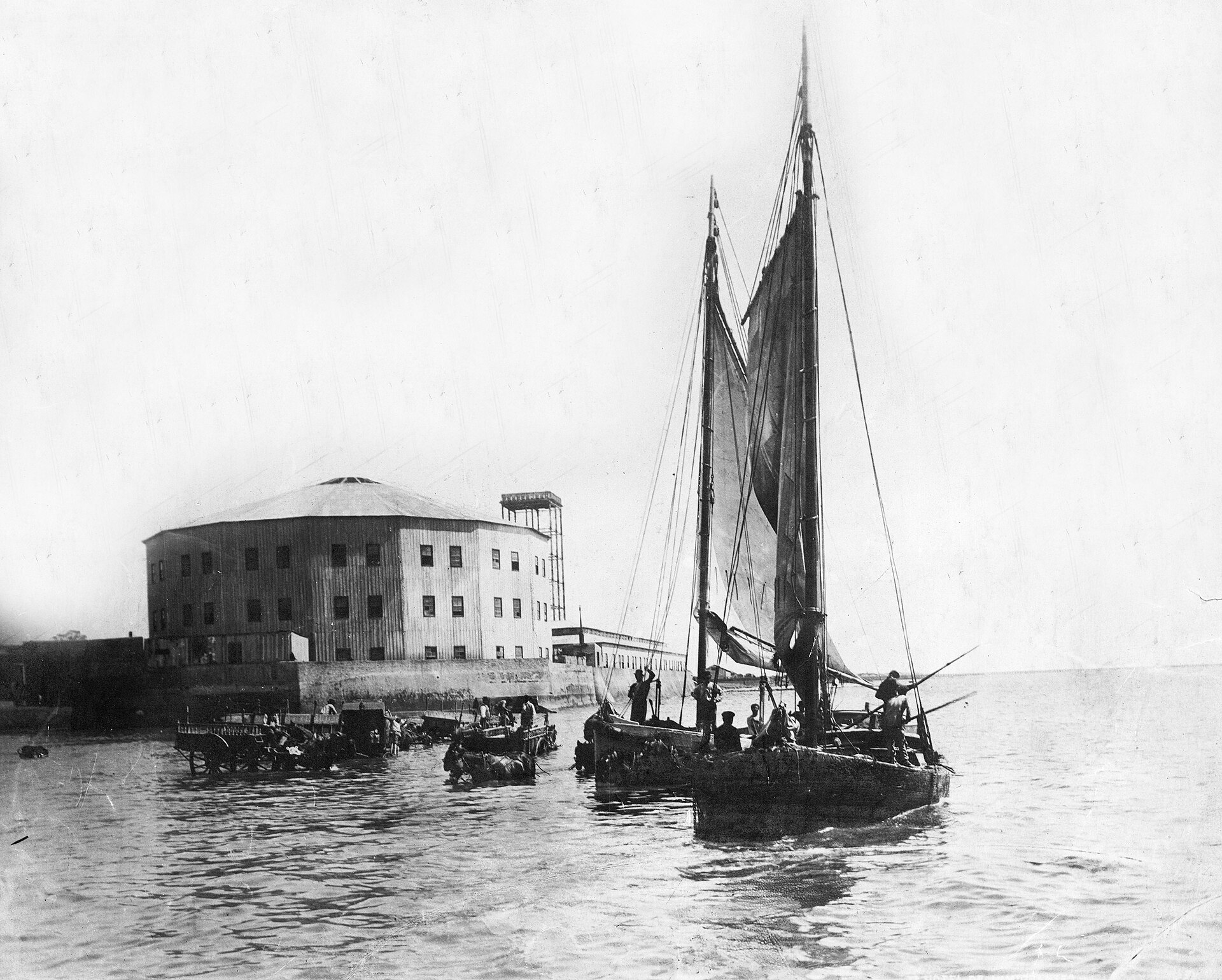
Argentina has handled mass migration for well over a century. The old immigrants’ hotel in Retiro, Buenos Aires, received arrivals from Europe in the late 1800s.
The Mercosur route: two years, few conditions
The simplest route is reserved for South Americans. Native nationals of Uruguay, Brazil, Paraguay, Bolivia, Chile, Peru, Ecuador, Colombia, Venezuela, Guyana and Suriname qualify for temporary residence by nationality.
People born elsewhere can also use it after five years as naturalised citizens of Brazil, Paraguay, Uruguay, Bolivia, Chile, Colombia, Ecuador or Peru. That matters for Europeans who naturalised in, say, Brazil.
The permit lasts two years, can be renewed and allows multiple entries. The official page lists only personal documents, criminal-record certificates, an address and regular entry. It sets no income test.
Brazilian nationals have an extra shortcut. Under Law 26.240, the DNM lets them apply for permanent residence directly by showing a valid Brazilian identity document.
Rentista and pensionado: the income rule in pesos
Most Americans and Europeans without a job offer apply as a rentista or a pensionado. A rentista lives on investment income, a pensionado on a pension. Both permits last one year and can be extended.
Both categories require monthly income of at least five times Argentina’s minimum wage, the Salario Mínimo, Vital y Móvil. Because the wage is set in pesos, the threshold moves every time it rises.
Unions and employers failed to agree on the latest minimum-wage rise. The government then fixed it at 383,800 pesos (about US$251) for September 2026 through Resolution 4/2026. Five times that is 1,919,000 pesos (about US$1,255) a month.
The same resolution raises the wage each month to 437,000 pesos (about US$286) in April 2027. The rentista and pensioner threshold would then reach 2,185,000 pesos (about US$1,429) a month.
Rentistas must prove where the money comes from. It must flow from assets such as financial instruments, property or company stakes. Pay for personal work does not count, and the money must enter Argentina through banks authorised by the central bank.
Pensioners need a certificate from a government, an international body or a private company. It must confirm a regular, permanent pension at or above the same five-wage level.
Digital nomads: 180 days, renewable once
Argentina created a digital nomad permit in 2022 under DNM Provision 758/2022. It is a transitory residence of 180 days, extendable for the same period, for people working remotely for clients or employers abroad.
It is open only to nationals of countries whose citizens do not need a tourist visa for Argentina. Applicants submit a CV, proof of their remote work, such as contracts or invoices, and at least one professional reference.
You can apply before travelling through the DNM’s electronic entry system, or in person once in the country. In Buenos Aires the in-country request starts by email, not through RaDEX.
To extend, you must show income earned from your services during the first period. Remember that the permanent-residence rules count years of temporary residence, not transitory stays.
Step by step: documents and appointments
Every temporary category shares a core file. You need a valid passport and an Argentine criminal-record certificate from the Registro Nacional de Reincidencia. For applicants over 16, RaDEX now requests it for you.
You also need clean criminal-record certificates from every country where you lived for more than one year during the last three years. Add proof of your Argentine address and proof that you entered the country legally.
Foreign documents must carry an apostille or Argentine consular legalisation. Anything not in Spanish must be translated by an Argentine sworn translator, a traductor público, and legalised by the translators’ association.
Once your application is filed, the DNM can issue a precarious residence, a stop-gap permit. Decree 366/2025 limits it to 90 days, renewable, and it lets you stay, travel, work and study while your case is decided.
What it costs: migration fees and the DNI
The DNM charges fees in a unit called the UMSM, currently worth 1,000 pesos (about US$0.65). Mercosur nationals pay half of what everyone else pays for most residence procedures.
A temporary or permanent residence costs 50,000 pesos (about US$33) for Mercosur nationals and 100,000 pesos (about US$65) for others. The same amounts apply to renewals and to switching to permanent status.
A transitory residence other than tourist costs 16,000 pesos (about US$10) for Mercosur nationals and 32,000 pesos (about US$21) for others. Switching from tourist to the special-reasons subcategory used by digital nomads costs 100,000 pesos (about US$65).
A preferential appointment adds 50,000 pesos (about US$33). Companies registered with the DNM can request urgent processing for 100,000 pesos (about US$65).
After approval, you apply for the DNI, Argentina’s national identity card, at the national registry, RENAPER. A foreigner’s first DNI costs 20,000 pesos (about US$13) under the tariff in force since March 2026.
What Decree 366/2025 changed
President Javier Milei’s government rewrote parts of the migration law by emergency decree. It appeared in the Official Gazette on 29 May 2025. Decree 366/2025 tightened entry, health, education and citizenship rules.
Foreigners seeking admission in any category must now sign a sworn statement of purpose. It includes a declaration that they hold health insurance for their medical needs.
Permanent residents keep the same access to public healthcare as Argentines. Everyone else gets routine care at national-government hospitals only with insurance or upfront payment. Emergencies can never be refused.
Resolution 1066/2026 put that billing into practice. The Health Ministry published it on 11 August 2026. It applies to national-government hospitals, not automatically to provincial or city hospitals.
The decree also lets public universities charge students without permanent residence. It widened the grounds for refusing entry or residence, including failing to disclose a criminal record.
A further decree, 681/2026, was published on 30 July 2026. It added new grounds for refusing entry to or expelling foreigners: hate messages or incitement to violence against Argentines, and insulting national symbols. Political or academic criticism is expressly excluded.
For permanent residence, the law now says applicants must show sufficient economic means and no criminal record that could justify rejection.
Citizenship: the part the courts struck down
Decree 366/2025 also moved naturalisation from federal judges to the DNM. It required two years of continuous legal residence with no trips abroad, or a relevant investment in the country.
On 30 June 2026, the Cámara Nacional Electoral, the national electoral appeals court, declared those citizenship changes null. It ruled that citizenship is tied to voting rights, an electoral matter that the constitution bars from emergency decrees.
The court ordered that its ruling be sent to all federal judges with electoral duties to unify criteria. Citizenship applications have therefore gone back to the courts, the traditional route. The government has filed an extraordinary appeal with the Supreme Court, which had not ruled as of 20 September 2026.
The ruling concerned citizenship only. The decree’s migration and health rules were still being applied as of 20 September 2026, as the August health resolution shows.
From temporary to permanent residency in Argentina
Permanent residence by arraigo, or settled roots, follows a period of temporary residence. Mercosur nationals need two years and everyone else three. You must also show enough income to live on.
The DNM checks that you spent at least half of the granted period in Argentina. You must not have left the country for six consecutive months or more.
Children of Argentine citizens born abroad qualify for permanent residence directly. Permanent status opens public healthcare on equal terms and ends the need to renew your residence every year or two.
What this means for foreigners planning a move
Pick your route first. A Mercosur passport is the easiest door, while retirees and investors need to prove income of at least five minimum wages.
Get apostilles, translations and criminal-record certificates before you fly, because they take the longest. Buy health insurance that works in Argentina, since national public hospitals now bill temporary residents for routine care.
Budget in pesos but watch the minimum wage schedule, which lifts the income threshold every month. Check the DNM fee table on the day you pay, because fees are set in UMSM units that can be revalued.
Connected Coverage
Argentina Residency and Visa Guide 2026: Routes, Money Thresholds and the Tax Trap
Residency in Argentina for Expats: Visas Explained (2026)
Foreign Retirees Test Argentina Residency as Milei’s Peso Shift Rewrites Income Rule
Moving to Argentina: Residency, Bank, Rent, Health
Taxes in Argentina for Expats: What Changes Under the New Tax Agency in 2026
Sources: Rules, requirements and fees come from the Dirección Nacional de Migraciones and RENAPER pages on argentina.gob.ar and from Decree 366/2025 in the Official Gazette, with minimum-wage, court and health-billing details from Argentine press; all accessed 20 September 2026.
- argentina.gob.ar
- argentina.gob.ar
- argentina.gob.ar
- argentina.gob.ar
- argentina.gob.ar
- argentina.gob.ar
- argentina.gob.ar
- argentina.gob.ar
- argentina.gob.ar
- argentina.gob.ar
- argentina.gob.ar
- argentina.gob.ar
- boletinoficial.gob.ar
- argentina.gob.ar
- chequeado.com
- perfil.com
- elesquiu.com
- infobae.com
- boletinoficial.gob.ar
- pagina12.com.ar
What Is Not Known
How strictly border officers and the DNM check the health-insurance declaration is not clear. The residence service pages do not yet list insurance among the required documents.
When the Supreme Court will rule on the government’s appeal over citizenship is not known. Other parts of Decree 366/2025 could still face new legal challenges or a vote in Congress.
Official processing times are not published. How long an application sits between filing and approval varies by office and category.
The dollar value of the income threshold is not fixed. It depends on each minimum-wage rise and on the path of the peso against the dollar.
More: Argentina news in English, every day from The Rio Times.
Frequently Asked Questions
How much income do I need for residency in Argentina as a retiree or rentista?
You must show monthly income of at least five times the minimum wage. With the minimum wage at 383,800 pesos, about US$251, in September 2026, that is 1,919,000 pesos, about US$1,255, a month. The threshold rises each month and would reach about US$1,429 in April 2027.
How much does an Argentine residence permit cost?
A temporary or permanent residence costs 100,000 pesos, about US$65, for non-Mercosur nationals and 50,000 pesos, about US$33, for Mercosur nationals. A preferential appointment adds 50,000 pesos, about US$33. A foreigner’s first DNI costs 20,000 pesos, about US$13.
Does Argentina have a digital nomad visa?
Yes. It is a transitory residence of 180 days, extendable for the same period, for people working remotely for clients or employers abroad. It is open only to nationals of countries that do not need a tourist visa for Argentina.
What did Decree 366/2025 change for foreigners?
It requires a sworn declaration of health insurance on entry and lets national-government hospitals bill foreigners without permanent residence for routine care. It also lets public universities charge those students and widened the grounds for refusing entry or residence. Its citizenship changes were declared null by the national electoral appeals court on 30 June 2026.
When can I apply for permanent residency in Argentina?
Mercosur nationals can switch after two years of temporary residence and other nationals after three years. You must have spent at least half the period in Argentina, not left for six consecutive months or more, and show enough income to live on.
This article was produced by The Rio Times’ automated newsroom system. How we use AI · Report an error
Read More from The Rio Times