Healthcare in Argentina for Expats 2026: The Free System Has Conditions Now
ARGENTINA · EXPAT GUIDE
Key Facts
- —What changed A 2025 decree removed the unconditional right of every foreigner to public healthcare.
- —Who still has it Permanent residents use national public hospitals on the same terms as citizens.
- —Everyone else At national facilities, non-emergency care now requires insurance or payment in advance.
- —Emergencies Still free to anyone, whatever their immigration status. A clinician decides, not an administrator.
- —Private plans Monthly fees ran from about 100,000 to over a million pesos in 2026.
- —The catch The rule binds national hospitals only, and most Argentine public hospitals are provincial or municipal.
For decades the answer was simple and generous. A decree in May 2025 changed it, and most guides have not caught up.
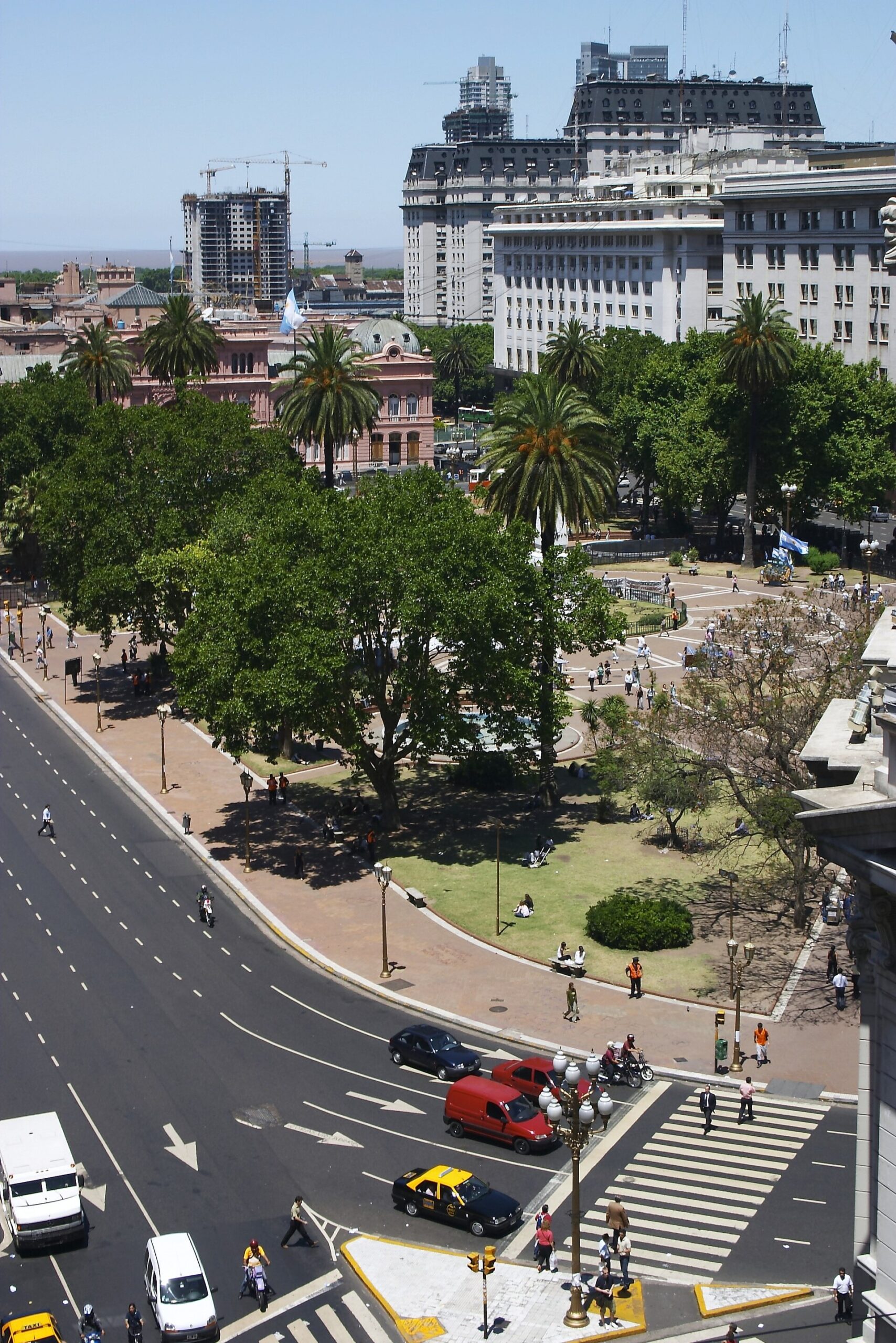
For years the answer was the same in every guide. Argentina gave free public healthcare to anyone who needed it, tourists included.
That was true in Argentina until 2025. It is no longer the position in law.
What the Decree Did
A decree published on 29 May 2025 replaced the relevant article of the migration law. The old text guaranteed every foreigner in Argentina access to health care, whatever their immigration status.
The new text is narrower and it separates three groups. Emergencies remain open to everyone, with no insurance and no prepayment, whatever your status.
Permanent residents keep full access on the same terms as citizens. Nothing changed for them.
Everyone else falls into the third group. At facilities run by the national state, routine care now requires proof of health insurance or payment in advance.
The implementing regulation arrived on 12 August 2026. It sets out how hospitals verify cover and how they bill.
The Limit Most Commentary Misses
The rule applies to establishments administered by the national state. That is a narrower category than it sounds.
Most public hospitals in Argentina are run by provinces or municipalities. The national rule does not by itself bind them.
So the practical position varies across Argentina by where you live. Do not assume a Buenos Aires city hospital follows the national procedure.
What is uniform is the emergency exemption. Cardiovascular emergencies, stroke, severe trauma, haemorrhage, sepsis, poisoning and obstetric emergencies are all named.
The treating clinician decides whether an emergency exists. Administrative checks on residency or billing must not delay assessment.
Once the emergency resolves, the billing circuit begins. Where there is an insurer the hospital recovers from it, and where there is none it charges the individual.
What Care Costs If You Pay
The Buenos Aires city price schedule gives the clearest picture. These are the official rates the city charges insurers and private payers.
A medical consultation is listed at 20,048 pesos and an emergency room consultation at 21,652. At mid-September rates that is roughly US$13 and US$14.
Imaging is where the numbers climb. A magnetic resonance scan is 176,823 pesos, about US$117, and a computed tomography scan 147,618.
A day on a general ward costs 412,793 pesos, near US$274. A surgical day is 528,466 and a critical care day with ventilation 775,494.
One caveat matters. That schedule covers January and February 2026 and the list is reissued monthly.
Consumer prices rose 21.3% between December 2025 and August 2026. The September figures are materially higher than those above.
Private Plans, and What Deregulation Did
A decree at the end of 2023 stripped the health regulator of authority over plan prices and co-payments. Companies now set prices freely.
In exchange they must report their tariff tables to the regulator within five days of each inflation release. Compulsory monthly reporting has run since July 2025.
Prices in Argentina have outpaced inflation. Plan fees rose 17.2% in greater Buenos Aires over the first half of 2026, and 30.5% nationally year on year at June.
Against national inflation of 19.3% from January to July, plan fees accumulated twenty to twenty-one percent. The gap is small but consistent.
September increases ran from 1.9% to 3.11%. Swiss Medical was highest and OSDE among the lowest.
What a Plan Actually Costs
For an individual of thirty on a private contract in greater Buenos Aires, the cheapest plans started near 100,901 pesos a month. That is about US$67.
Mid-market options ran from 137,529 to 175,111 pesos. A well-known mid-tier plan sat at 252,157 pesos, some US$167.
A family of two adults and one child paid 464,466 to 673,224 pesos a month on the lowest plan. That is roughly US$308 to US$446.
Across the main companies, July fees spanned 160,000 to 840,000 pesos, about US$106 to US$557. Top-tier plans passed a million pesos a month.
Age banding matters enormously for retirees. Prices step every five years, though two large companies hold rates flat between ages 36 and 63.
The Rules That Protect You
Argentina’s prepaid medicine law is more protective than most. Contracts may not impose waiting periods for anything in the compulsory medical programme.
Pre-existing conditions can only be established from your own sworn declaration. They cannot be a reason to refuse you admission.
The regulator may authorise a justified higher premium for admitting someone with a pre-existing condition. Refusal is not an option.
Age may not be a ground for refusing admission either. That is unusual and it matters if you are moving here in your sixties.
Every company must also offer a plan with co-payments priced at least twenty-five percent below its equivalent plan without them.
Two Practical Points
An employee can divert the nine percent social insurance contribution against the plan fee. That often halves the bill and it is not available to a retiree or the self-employed.
Joining a plan does not require a residence permit at every company, but permanent residency is what secures your public hospital access. If you are staying, that is the status worth pursuing.
More: Expat guides, every day from The Rio Times.
Frequently Asked Questions
Is public healthcare in Argentina still free for foreigners?
Only in emergencies, and for permanent residents on the same terms as citizens. Since 2025 other foreigners must show insurance or pay in advance at national facilities for routine care.
Does the new rule cover every hospital?
No. It binds establishments run by the national state. Most Argentine public hospitals are provincial or municipal and are not bound by it directly.
What does a private plan cost?
From about 100,901 pesos a month, some US$67, for an individual of thirty on the cheapest plan. A family of three on a basic plan ran 464,466 to 673,224 pesos, some US$308 to US$446.
Can a plan refuse me for a pre-existing condition?
No. The law allows a justified higher premium but not refusal. Age is also not a permitted ground for refusing admission.
What does a hospital day cost if I pay myself?
About 412,793 pesos on a general ward, near US$274, on the January price schedule. That list is reissued monthly and inflation has moved it since.
Sources: Article 8 of Ley 25.871 as replaced by DNU 366/2025, Resolucion 1066/2026 of the Ministerio de Salud, Ley 26.682, Decreto 70/2023, Decreto 743/2022, the Superintendencia de Servicios de Salud, INDEC, and the Buenos Aires city price schedule for January and February 2026.
This article was produced by The Rio Times’ automated newsroom system. How we use AI · Report an error
Read More from The Rio Times