Investing in Argentina 2026: What Foreigners Can Buy, Own and Take Out
ARGENTINA · EXPAT GUIDE
Key Facts
- —The account A broker registered with the securities regulator opens it. A foreign investor key came in for individuals in 2025.
- —The bonds Government bonds and publicly offered corporate bonds pay no local income tax to qualifying non-residents.
- —The dividends Seven percent withheld at source, as a single and final payment.
- —The wealth tax Company shares are not exempt. The issuer pays 0.50 percent and may recover it from you.
- —The cliff Investors resident in non-cooperating jurisdictions face 35 percent instead of 15.
- —The catch Money must settle into accounts in your own name. No cash and no third-party accounts.
A rule change in February 2025 opened the market to foreign individuals for the first time. Two tax traps survived it, and one of them depends on where you live.
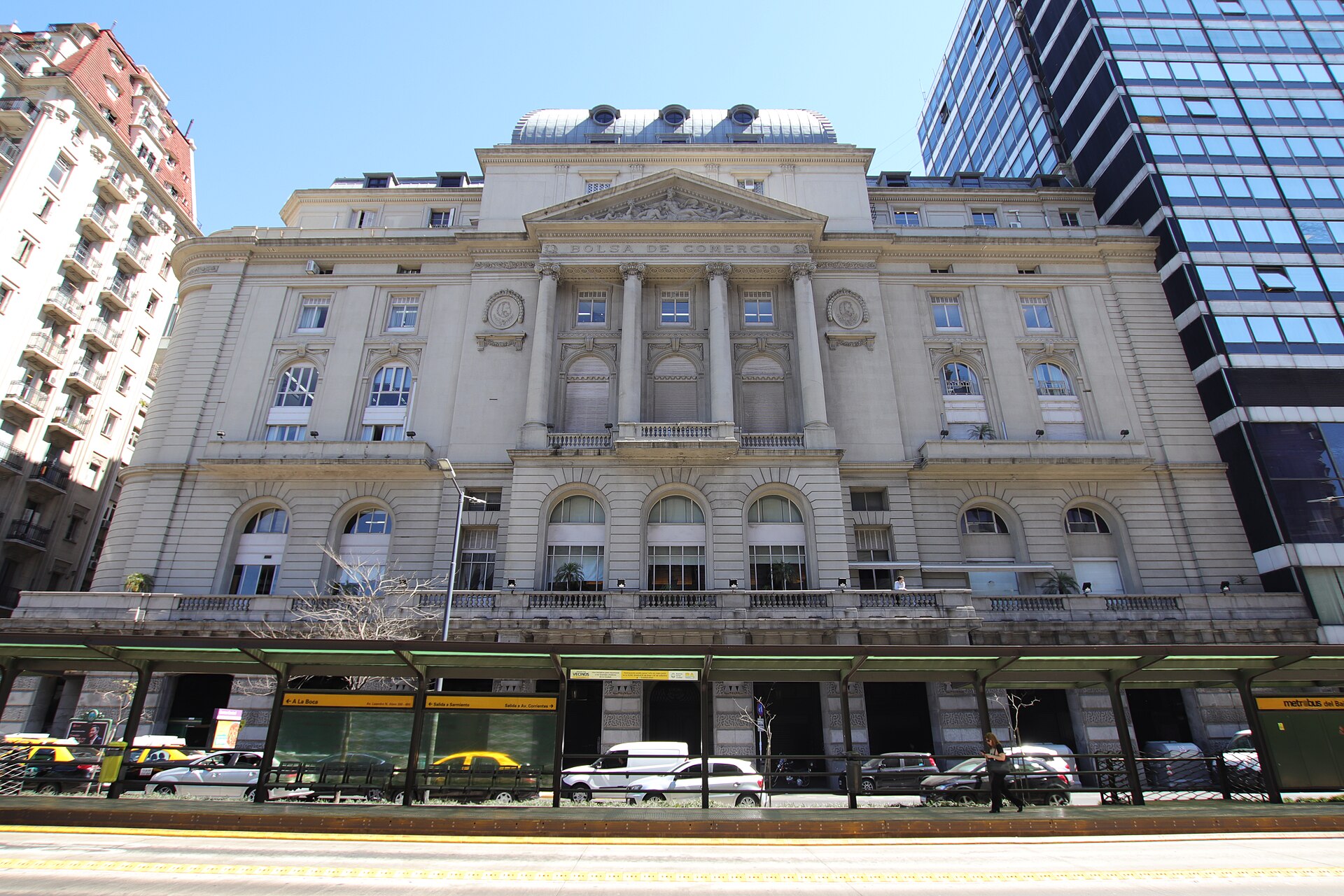
Investing in Argentina as a foreign individual became possible in a formal sense only in February 2025. Before that, the special investor key was reserved for companies and other collective entities.
A resolution of the tax authority extended it to natural persons. The rule now reads that a human person resident abroad may hold one.
The investor does not apply directly. The local bank or the registered broker applies as representative, and the key is issued within five working days.
One limit is worth knowing. The key identifies you for investment purposes only and cannot be used for tax filings.
What You Can Actually Buy
Argentina offers government bonds under local and New York law, corporate bonds, Treasury bills, listed shares and mutual funds. There are also local certificates representing foreign shares.
Those certificates trade in pesos, which matters. A foreign buyer takes peso and local settlement risk to reach an asset listed elsewhere.
Their real use to a non-resident is as one leg of a currency conversion. They are not a core holding.
The distinction between the two families of government bond is the most important choice. One family is governed by Argentine law and courts, the other by New York law.
A restructuring under domestic law needs no foreign court. The spread between the two families is the market’s price for exactly that difference.
Tax, Which Is Better Than People Expect
For a non-resident who is not in a non-cooperating jurisdiction, the position is generous. Interest and sale results on government bonds are exempt from income tax.
The same exemption covers publicly offered corporate bonds, financial trust debt and income units of local funds. Listed shares meeting the statutory conditions are covered too.
Dividends are the exception. Seven percent is withheld at source as a single and final payment.
Capital gains outside the exemptions are taxed at 5 percent on unindexed peso instruments and 15 percent on everything else. The law presumes a net gain of 90 percent of the price, giving an effective 13.5 percent.
Now the cliff. If you are resident in a non-cooperating jurisdiction, none of the exemptions apply and the rate is 35 percent.
Applied to the same presumption that reaches an effective 31.5 percent of the gross price. Check the current annex of jurisdictions before you invest anything.

The Wealth Tax Trap
A claim circulates that company shares in Argentina are exempt from the personal assets tax for non-residents. That is wrong and it matters.
Shares are excluded from one collection mechanism and caught by another, written specifically for them. The rate is 0.50 percent of proportional equity value.
The company itself pays it as substitute taxpayer. The statute gives it an express right to recover the money from the shareholder, including by seizing the shares.
Government bonds, publicly offered corporate bonds and fund units are outside that regime. A 2024 special regime did not change any of this and was never open to non-residents.
Getting Money In and Out
This is the part foreigners underestimate. Non-residents were excluded from the currency liberalisation that resident individuals received in April 2025.
A non-resident still needs prior central bank approval to buy foreign currency in the official market. The exceptions are diplomats, international bodies, pensioners and a small tourist allowance.
The securities route is open, but its settlement rules are strict for anyone who is not a resident individual. Money must move between sight accounts in your own name in Argentina.
The alternative is a wire to a bank account in your own name abroad. The foreign bank must not sit in a jurisdiction on the international blacklist.
Cash settlement is prohibited. So are custody accounts and third-party accounts.
One more date decides whether dividends can leave by the official route. Only profits from financial years beginning on or after 1 January 2025 qualify.
Earlier retained earnings cannot use it. They leave through the securities route or stay where they are.
The Rules Change Often
In September 2025 the central bank reimposed a restriction it had lifted five months earlier. Anyone accessing the official market now undertakes not to buy foreign-currency-settled securities for ninety days.
It was first applied to bank insiders and extended to everyone within a week. In December 2025 two narrow carve-outs were added, one requiring a fifteen working day holding period.
Take the sequence as the lesson rather than the detail. A single central bank communication can change the rules with immediate effect and no parliamentary process.
The consolidated rulebook published on the central bank website is also stale. At least ten amending communications post-date it, so anyone reading only that document is working from 2025 law.
Property and the Large Investment Regime
Two widely repeated statements about property are now wrong. Argentina repealed its rural land ownership restrictions by decree at the end of 2023.
The transfer tax on property sales was repealed in July 2024. What remains is a 15 percent tax on the gain, and only for property acquired from 1 January 2018.
The Buenos Aires market is not booming. In July 2026 the city recorded 6,051 sale deeds, down 9 percent on a year earlier, with mortgage-backed deeds down 31 percent.
The large investment incentive regime is often mentioned to individuals. It is not for them, since it requires a single-purpose company and a minimum of US$200 million.
Its relevance to a portfolio investor is indirect. Argentina published about US$49 billion of committed investment in early September, most of it in oil, gas and mining.
The window to join was extended to July 2027 by decree in February 2026. That pipeline is what underpins the equity and corporate bond stories.
Where the Market Stands
Country risk collapsed after the October 2025 midterm elections. It went from 1,081 basis points on the last session before the vote to 708 on the first session after.
It reached 411 in early August 2026 and stood at 485 on 11 September. Argentina is being repriced off a distressed base, not moving to investment grade.
The official wholesale rate was 1,508.50 pesos to the dollar on the same day. The two securities-based rates sat about 2 and 6 percent above it.
One caution about the calendar. The next presidential election falls in 2027, and the primaries suspended for 2025 remain on the statute book.
More: Argentina news in English, every day from The Rio Times.
Frequently Asked Questions
Can a foreign individual invest in Argentina?
Yes. A tax authority resolution of February 2025 extended the foreign investor key to natural persons, applied for by the local broker or bank.
Are government bonds taxed?
Not for a non-resident outside a non-cooperating jurisdiction. Both the interest and the sale result are exempt from income tax.
How are dividends taxed?
Seven percent is withheld at source as a single and final payment. Remittance by the official route is limited to profits from 2025 onward.
Do non-residents pay the wealth tax on shares?
Yes. The issuer pays 0.50 percent of proportional equity value and has a statutory right to recover it from the shareholder.
Can I take the money out?
Through the securities market, settling only into accounts in your own name. Cash settlement and third-party accounts are prohibited.
Sources: Comision Nacional de Valores, ARCA Resolucion General 5650/2025, Ley 20.628, Ley 23.966, Ley 27.742, Ley 27.743, Decreto 105/2026, BCRA Comunicaciones A 8226 to A 8464, Colegio de Escribanos CABA, Ministerio de Economia.
This article was produced by The Rio Times’ automated newsroom system. How we use AI · Report an error
In depth
Read More from The Rio Times