ARGENTINA · RELIGION
Key Facts
- The split Just under 63% of adults called themselves Catholic in the latest national survey, down from 76.5% in 2008, as of October 2026.
- The rivals Evangelicals rose from 9% to 15.3% of adults and people with no religion from 11.3% to 18.9% between 2008 and 2019.
- The law Article 2 of the constitution commits the federal government to support Catholic worship, while Article 14 guarantees every inhabitant the right to profess any faith.
- The papal link Pope Francis was born in Buenos Aires, and Pope Leo XIV is due in Buenos Aires, Córdoba and Luján from 8 to 11 November 2026.
- Other faiths A 2021 estimate put the Jewish population at 175,000, while a Muslim community body estimates 800,000 to 1 million.
- The habit Only 27% of adults attend services at least once a month in the 2019 survey, and 29.6% never attend.

Argentina religion is still mostly Catholic, but just under 63% of adults called themselves Catholic in the 2019 national survey, the latest one as of October 2026, down from 76.5% in 2008. This guide explains how the Catholic Church, evangelical churches, Jewish and Muslim communities and popular saints fit together in Argentina, and why the constitution still carries a Catholic clause.
How Many Argentines Are Catholic
CONICET, Argentina’s national science and technology research council, ran its second National Survey on Religious Beliefs and Attitudes in August and September 2019, with 2,421 household interviews across all regions. As of October 2026 it is the latest national count cited here, and it was funded by the national science ministry.
It found just under 63% of adults Catholic, against 76.5% in the first survey of 2008, while people with no religion rose from 11.3% to 18.9% and evangelicals from 9% to 15.3%. The Church is still the largest single group, but it is no longer close to the three quarters it held a decade earlier.
The slide is old. The survey team notes that Catholics were about 93% of the population in the 1947 census and 90.5% in 1960, the last two national censuses to ask about religion as of its January 2020 account.
Attendance is low, with 27% of adults at services at least once a month, 43.3% only on special occasions and 29.6% never. In the 2008 survey, 61.1% of believers said they relate to God on their own and only 23.1% through a church.
The shift is uneven across the country. In the northeast and northwest the Catholic decline came mostly at the expense of evangelicals, while in Cuyo, the central region, Patagonia and metropolitan Buenos Aires it came with growth of people without religion.
Education matters too, since evangelicals were 26.5% of adults with no schooling, while people without religion were 27.2% of university graduates. Younger adults are more often evangelical or without religion, and older adults keep the highest Catholic shares.
The Church and the State
Article 2 of the constitution says the federal government “sostiene”, which means supports, the Roman Catholic apostolic faith. Article 14 guarantees every inhabitant the right to profess their own faith freely, so the state backs one Church without making it the only legal one.
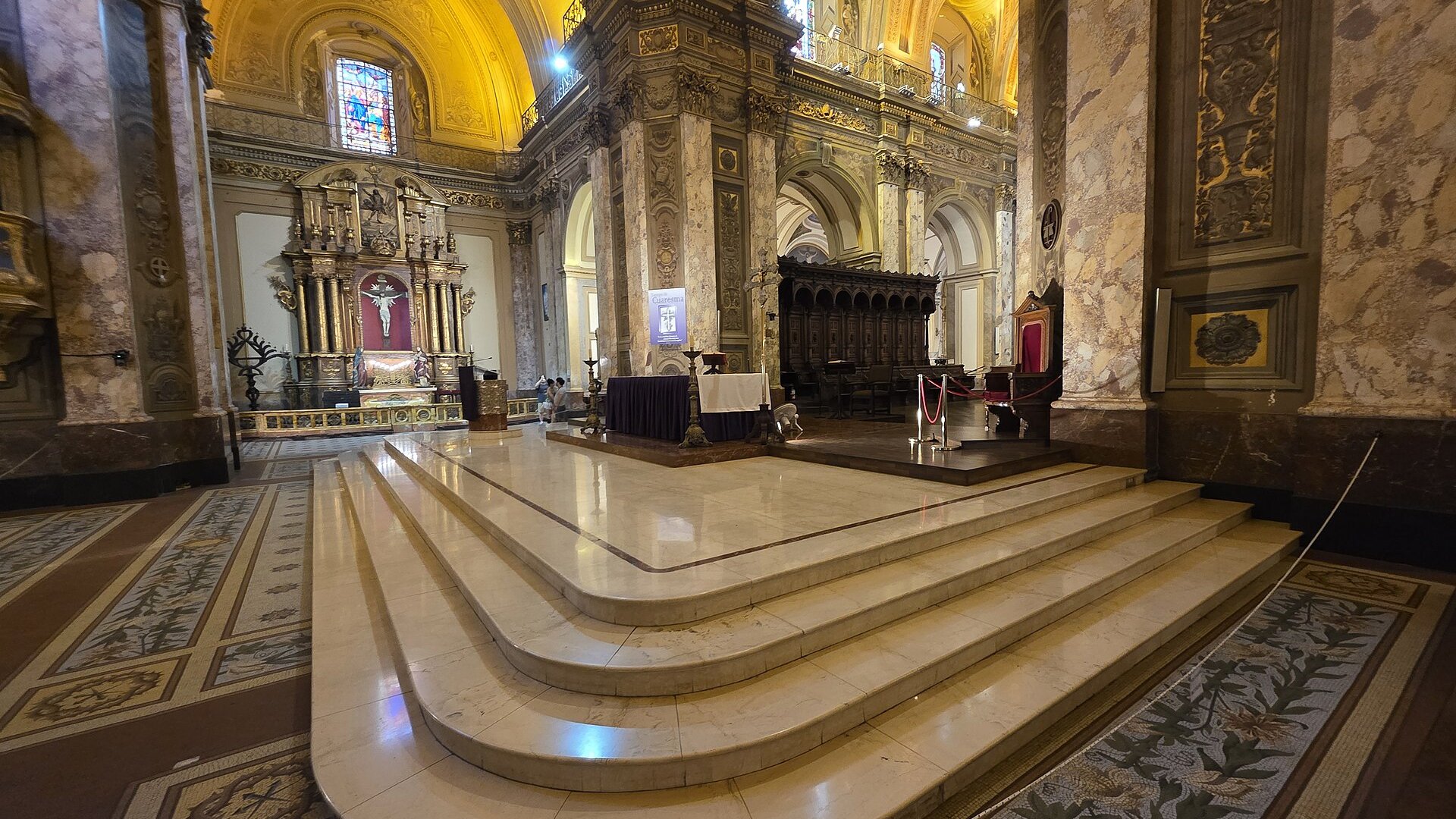
The current constitutional text requires no religion of the president, since Article 89 lists birth in Argentina or Argentine parentage and the qualities needed to be a senator. Under Article 93, the president and vice president swear to serve loyally and uphold the constitution, “respecting their religious beliefs”.
The US State Department’s 2023 religious freedom report notes that the government gives the Catholic Church tax-exempt subsidies and institutional privileges such as school subsidies. Public opinion has moved away from that link, since the share of adults who said the state should not fund religious groups rose from 41.7% in 2008 to nearly 60% in 2019, and the share who said it should fund only the Catholic Church fell from 34.4% to 6.4%.
Religion is written into the national calendar. Law 27,399 makes Good Friday, 8 December (the Immaculate Conception) and 25 December national holidays, makes Holy Thursday a non-working day, and gives Jewish and Muslim believers days off for Rosh Hashanah, Yom Kippur, Passover, the Islamic New Year, Eid al-Fitr and Eid al-Adha.
Pope Francis, Pope Leo XIV and the Argentine Church
Pope Francis, born Jorge Mario Bergoglio in Buenos Aires on 17 December 1936, served as archbishop of the city before the cardinals elected him pope on 13 March 2013, the first pope from the Americas. He died on 21 April 2025, and the cardinals elected the American Robert Prevost as Pope Leo XIV on 8 May 2025.
Pope Leo XIV, born in Chicago in 1955 and the first pope from the United States, is scheduled to visit Argentina from 8 to 11 November 2026, with stops in Buenos Aires, Córdoba and Luján. The Holy See published the programme on 21 September 2026, with Mass at the Monumento de los Españoles in Buenos Aires on 9 November, in Córdoba on 10 November and in front of the Basilica of Our Lady of Luján on 11 November.
As of October 2026 the archbishop of Buenos Aires is Jorge García Cuerva, whose archdiocese publishes his homilies and a 2026 pastoral letter titled “Queremos ver a Jesús”. The Argentine Episcopal Conference, the national body of bishops, lists the papal visit, from Sunday 8 to Wednesday 11 November, on its 2026 agenda.
Francis also canonised the Argentines José Gabriel del Rosario Brochero, a priest, on 16 October 2016 and María Antonia de San José, known as Mama Antula, on 11 February 2024. Trust in the institution is limited, though, because in the 2019 survey only the public university enjoyed significant trust, followed at a distance by the Catholic Church, the armed forces, Pope Francis and the media.
Evangelicals and Argentines Without Religion
Evangelical Christians, who belong to Protestant and Pentecostal churches that stress personal conversion and the Bible, grew from 9% of adults in 2008 to 15.3% in 2019. The survey team found that attendance at services is much more frequent among evangelicals than among Catholics.
On family and morals, evangelicals hold the most traditional views, with only 31.7% favouring adoption by gay and lesbian couples and about seven in ten saying the only valid marriage is between a man and a woman. Catholics and people without religion showed more acceptance of family diversity and same-sex marriage.
People without religion rose from 11.3% to 18.9%, but the group is not simply atheist. The survey team found that most still consider themselves believers, with 71.6% of 457 cases believing in “energy”, 55.2% in luck and 34.1% in life after death.
Political attitudes do not follow a simple religious line. More than 70% of all respondents wanted stricter control of immigration and a little over half favoured the death penalty for serious crimes, a kind of conservatism the team found more frequent among Catholics than among evangelicals.
Jewish and Muslim Communities
The Berman Jewish DataBank, a US research archive, put Argentina’s Jewish population at 175,000 in 2021, a figure the US State Department repeats in its 2023 religious freedom report. The Delegación de Asociaciones Israelitas Argentinas, known as DAIA, represents Jewish institutions and says it fights antisemitism and discrimination.
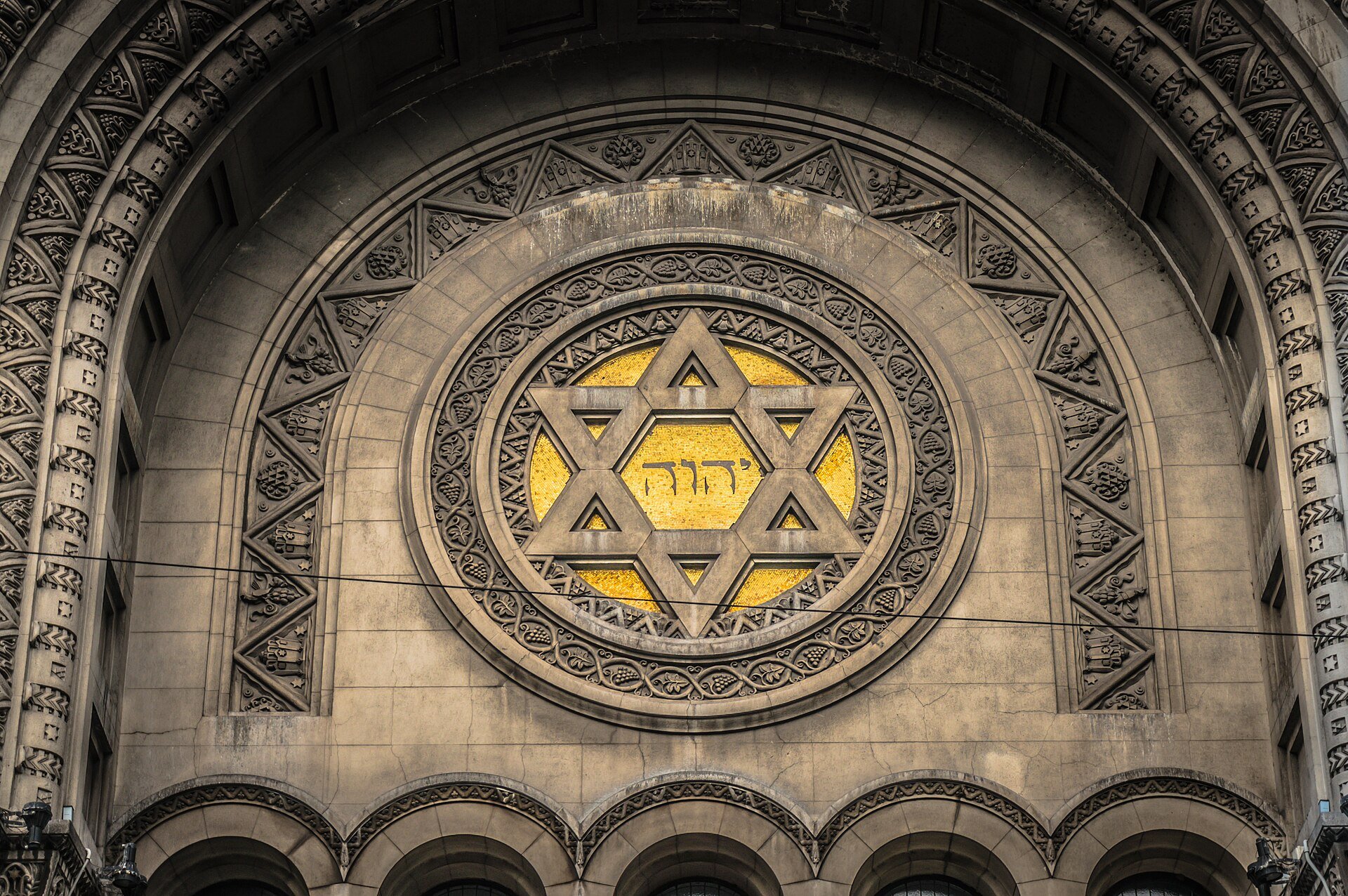
The July 1994 bombing of the AMIA, the Argentine Israelite Mutual Association, in Buenos Aires killed 85 people, and prosecutors identified the 85th victim through DNA tests more than two decades later. The State Department’s 2023 report states that there was no progress in bringing the accused perpetrators to justice.
The Islamic Center, a community body, estimates the Muslim population at 800,000 to 1 million, according to the same State Department report. That is far above the 2019 survey, which grouped Muslims and Jews with other religions at 1.2% of adults, so the true size is uncertain.
Popular Saints and Everyday Faith
Alongside official Catholicism, believers often mix practices, and the sociologist Fortunato Mallimaci of CONICET said in 2013 that a person can see a saint one day and a healer the next. The 2008 survey team found that praying at home and reading the Bible were the main religious practices of Argentines.
In Corrientes province, the Catholic bishop of Goya wrote in a January 2012 pastoral letter about devotion to Antonio Gil, known as Gauchito Gil, at the cross site in his diocese where Gil is said to have died. The bishop noted that very few historical data exist about Gil and that what is known rests on oral tradition.
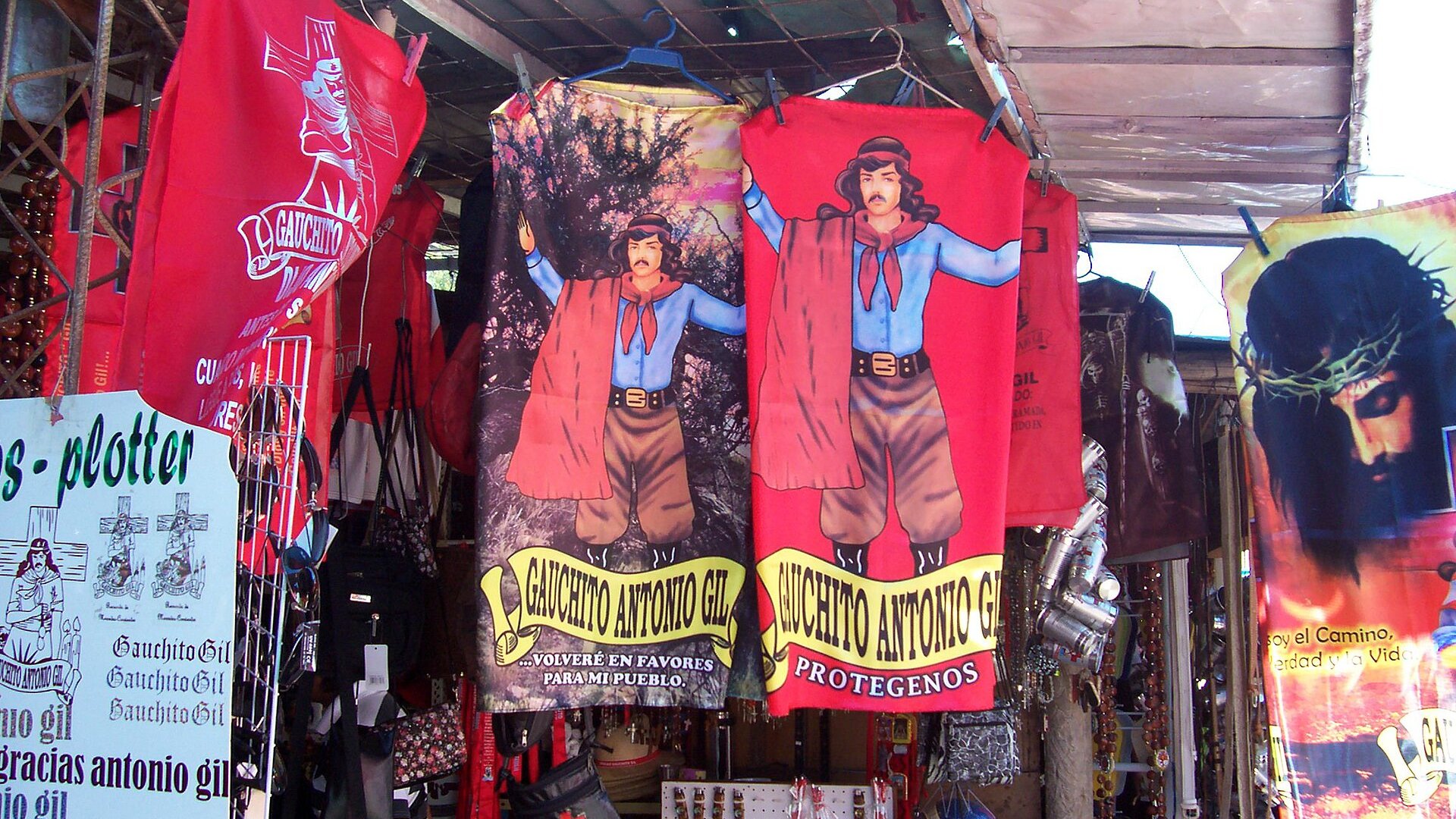
The bishop wrote that he blessed God for the sense of the sacred of the people who visit the cross where Gil is said to have died, yet urged them not to invent or exaggerate what is known. A booklet of novena prayers for the site was published with his approval.
Religion, Law and Politics
Argentina opened civil marriage to same-sex couples through Law 26,618 of 15 July 2010 and regulated access to abortion through Law 27,610, passed on 30 December 2020 and published on 15 January 2021. Between 2008 and 2019, the share of adults who said a woman should have the right to abortion whenever she decides rose from 14.1% to 27.3%, while the share who said it should never be allowed edged up from 16.9% to 18.7%.
Eight in ten Catholics and six in ten evangelicals said abortion should not be banned in all cases, the survey team found. On religion in public schools, the idea that only Catholicism should be taught was a minority view even among devout Catholics, at little more than 10%.
What It Means for US Readers
A US traveller will meet a country that is Catholic by tradition and calendar but mostly private in practice, as the attendance figures as of October 2026 show. Public offices and businesses follow the holidays in Law 27,399, so Good Friday, 8 December and 25 December are national holidays and Holy Thursday is a non-working day.
Anyone planning to be in Buenos Aires, Córdoba or Luján between 8 and 11 November 2026 should expect crowds around the scheduled papal visit. The programme includes a welcome ceremony at the Casa Rosada, the presidential palace, on 8 November and a meeting with leaders of Christian communities and other religious traditions in Buenos Aires on 9 November.
Related guides cover Argentina’s population and ethnic groups, its history and the key figures of its culture. Separate reports cover the fall in Mass attendance and the holiday decree for the papal visit.
What Is Not Known
The latest national survey of religion cited here dates from 2019, and no newer national count has been found, so the Catholic share today may be lower than just under 63%. The survey covered 2,421 household interviews rather than a full census, so each percentage is an estimate.
Estimates of the Muslim community range from a small part of the 1.2% grouped as other religions to 800,000 to 1 million from a community body, and no official count settles the gap. Whether the long case over the 1994 AMIA bombing will end in verdicts is also not known.
The Holy See’s programme for Pope Leo XIV’s visit does not say how many people will attend or which roads will close. It is also not known whether the visit will change church attendance, which has fallen over decades.
Frequently Asked Questions
What is the main religion in Argentina?
Catholicism is the main religion, with just under 63% of adults calling themselves Catholic in the 2019 national survey. Evangelicals were 15.3% of adults and people with no religion 18.9%.
Is Argentina an official Catholic country?
Not exactly. Article 2 of the constitution says the federal government supports Roman Catholic worship, but Article 14 protects the right of every inhabitant to profess any faith.
Was Pope Francis from Argentina?
Yes, Pope Francis was born in Buenos Aires on 17 December 1936. He was elected pope on 13 March 2013 and died on 21 April 2025.
Is Pope Leo XIV visiting Argentina?
Pope Leo XIV is scheduled to visit Buenos Aires, Córdoba and Luján from 8 to 11 November 2026, according to the Holy See’s programme. He is due to celebrate Mass in each place, ending at the Basilica of Our Lady of Luján on 11 November.
How many Jews and Muslims live in Argentina?
A 2021 estimate puts the Jewish population at 175,000. A community body estimates 800,000 to 1 million Muslims, while the 2019 survey put all other religions together at 1.2% of adults.
Who is Gauchito Gil?
Gauchito Gil, or Antonio Gil, is a folk figure venerated in Corrientes province, where his cross site lies in the diocese of Goya. The local Catholic bishop wrote in 2012 that very few historical data exist about him.
Sources: CONICET, survey of beliefs and attitudes, 29 January 2020; CONICET, 2008 survey results, 2 October 2012; CONICET, interview with Fortunato Mallimaci, 26 July 2013; Argentine Constitution, Articles 2, 14, 89 and 93, Infoleg; Law 27,399 on holidays, Infoleg; Law 26,618, Infoleg; Law 27,610, Infoleg; Holy See Press Office, programme of the journey, 21 September 2026; Holy See Press Office, 5 August 2026; Holy See Press Office, 21 April 2025; Vatican, biography of Pope Francis; Vatican, biography of Pope Leo XIV; Vatican, canonisation Mass of 16 October 2016; Vatican, canonisation Mass of 11 February 2024; Argentine Episcopal Conference; Archdiocese of Buenos Aires; US State Department, 2023 Report on International Religious Freedom, Argentina; Argentine prosecutors, AMIA case unit; DAIA.
This article was produced by The Rio Times’ automated newsroom system. How we use AI · Report an error · Editorial responsibility: Matthias Camenzind, Editor-in-Chief
Expat Guide to Argentina
What The Rio Times publishes for foreigners who live in or move to Argentina.
Start here
- Argentina Security and Crime Explained 2026
- Argentina Money Guide for US Travelers
- Best Places to Live in Argentina for Expats 2026
- How to Open a Bank Account in Argentina as a Foreigner in 2026: Tax ID, Dollars, Apps
City guides
Coming up in Argentina
- Mendoza Things to Do, 9 to 31 October 2026 31 Oct
- IRONMAN San Juan in Argentina on 1 November 2026 1 Nov
- Mar del Plata Film Festival 2026: 5 to 15 November 5 Nov
- Primavera Sound Buenos Aires 2026: Gorillaz, The Strokes to Headline 28 Nov
Understand Argentina