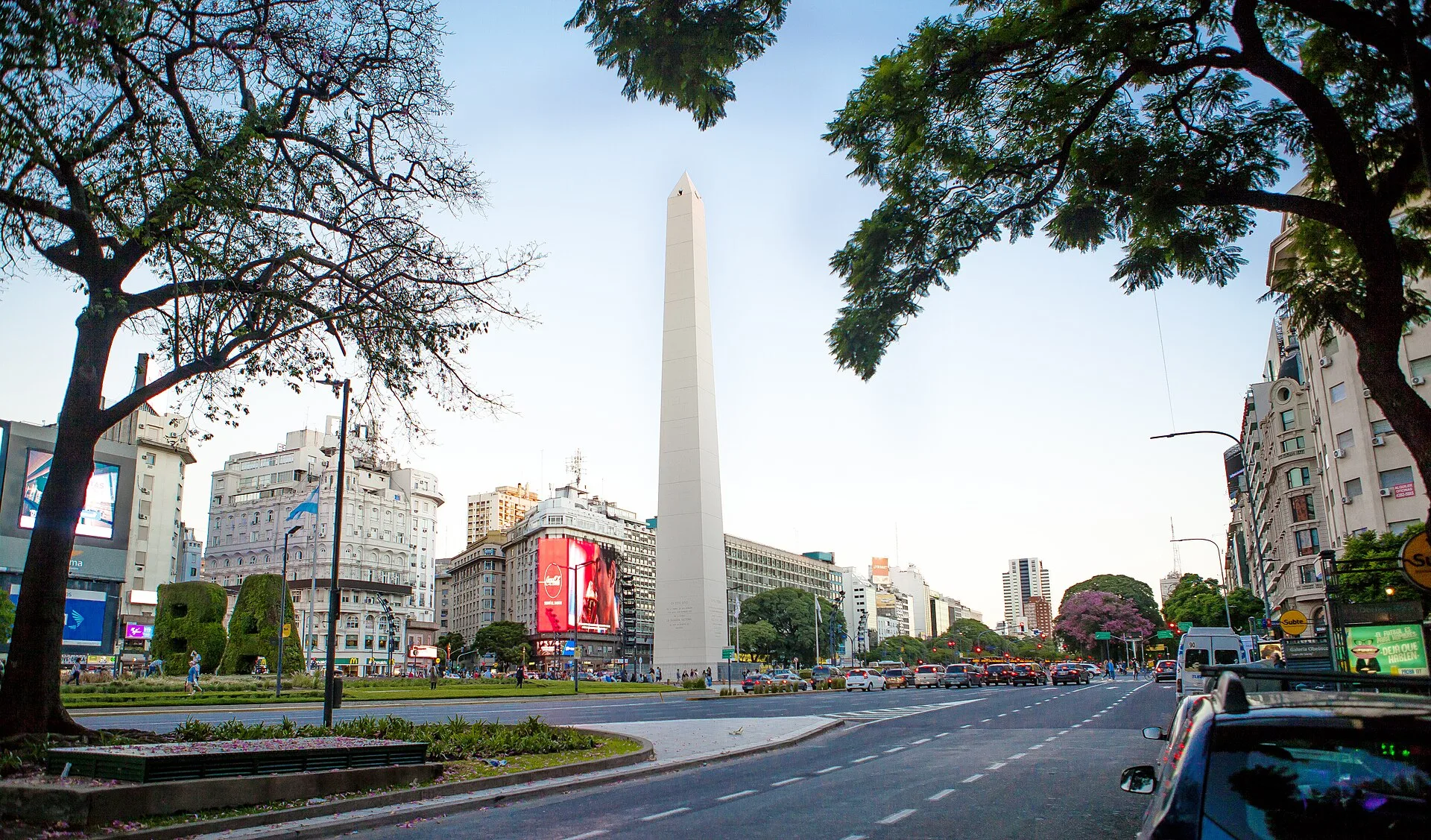
ARGENTINA · CITY GUIDE
Key Facts
- What is happening The capital has about 3.07 million residents, and its economy grew 0.3% in the year to June 2026.
- Why it matters The city sets the tone for Argentina’s politics and markets, inside a conurbation with 24 neighbouring districts.
- The numbers 21.9% of residents lived in poverty in mid-2026; a family of four needed ARS 1,687,299 (US$1,088) a month.
- Who is who Jorge Macri is head of government; President Milei’s party holds 14 of 60 Legislature seats.
- What to watch Watch the next city output and poverty data, the Legislature’s budget deals and the 2027 presidential race.
- What it means for you Americans need no visa for 90 days; street crime is the main risk in tourist areas.
- Power Index Argentina ranks 4th of 14 in The Rio Times Latin America Power Index, with 61.2 points (October 2026 edition).
- Prediction markets Betting platform Polymarket gives Javier Milei a 45.5% chance of winning Argentina’s 2027 presidential election and Axel Kicillof 30.5% (4 November, 9:40 a.m. ET).
Buenos Aires is Argentina’s capital, its financial hub and a city under economic strain. This guide explains how it works in late 2026.
This Buenos Aires city guide explains Argentina’s capital, a self-governing city of about 3.07 million people in 2026. It covers the economy, neighbourhoods, government, safety and daily costs, with US$ values as of 4 November 2026.
The Rio Times Argentina page covers the country daily, and the Argentina Explained guide profiles the national government. For the power map behind it, read the Argentina power structure explainer.
Buenos Aires City Guide: Role in Argentina
The Autonomous City of Buenos Aires, known by its initials CABA, is the national capital and a district of its own. It sits inside a larger urban area, because the city and 24 neighbouring districts form one conurbation, the city’s statistics institute says.
The institute, called IDECBA, is the city’s official statistics office. Peso figures here convert at the central bank’s official rate of ARS 1,551 per US$1 on 3 November 2026.
Population and the 15 Comunas
Argentina’s national statistics office, INDEC, projects 3,065,991 residents for 2026, down from 3,121,189 in 2022. That is a fall of 55,198 people, or 1.8%, over four years.
The city law of 1 September 2005, Law 1,777, divides the city into 15 comunas. Comunas are the local districts the institute uses for its neighbourhood statistics.

Comuna 1, which covers the old centre and the port district, is the largest with a projected 250,968 residents in 2026. Comuna 7 follows with 245,736, then Comuna 13 with 240,823 and Comuna 4 with 239,104.
Comuna 14, the Palermo area, and Comuna 8, in the far south, each hold about 235,000. The smallest is Comuna 2, centred on Recoleta, with 150,090.
Only Comunas 1, 8 and 14 grow in the projection, while the other 12 shrink. INDEC builds it from the 2022 census with assumed birth, death and migration rates.
The Economy of Buenos Aires
The city’s gross geographic product, its local GDP, grew 0.3% in the second quarter of 2026 against a year earlier. Seasonally adjusted, it fell 0.2% from the first quarter, the city statistics institute says.
The first quarter of 2026 had risen only 0.8% on a year earlier, and the second quarter of 2025 had grown 5.9%. The institute describes a slowdown that began in the third quarter of 2025.
Financial services grew 7.7% in the second quarter of 2026 from a year earlier and were the largest positive contributor. Transport, storage and communications added 0.9%.
Commerce shrank 2.2% and manufacturing 1.8%, the institute says. Weaker wholesale trade in medicines and lower output of clothing, chemicals and plastics explain much of that.
Poverty, Incomes and Daily Costs
In the second quarter of 2026, 21.9% of the city’s residents lived below the poverty line, about 675,000 people. That compares with 21.1% a year earlier, and 6.3% were in extreme poverty, up from 6.0%.
By household, 17.3% were poor (239,000 households) and 4.5% were in extreme poverty (63,000). The institute’s middle class, earning 1.25 to 4 times its total basket cost, held 53.5% of households (737,000).
In September 2026 the poverty line for a homeowning couple with two children was ARS 1,687,299 a month (about US$1,088). A year earlier it was ARS 1,255,934 (about US$810), a rise of 34.3%.
For one adult who owns his home, the line was ARS 615,282 (about US$397). The institute’s full consumption basket for that adult cost ARS 775,948 (about US$500).
Who Governs the City
The city elects its own head of government, Jorge Macri, who runs the executive branch. The 60-member Legislature writes the city’s laws and budget, and Clara Muzzio presides over it.
As of 4 November 2026, the Legislature’s own site lists seven blocs. Fuerza por Buenos Aires holds 20 seats and La Libertad Avanza, President Javier Milei’s party, holds 14.
The bloc Vamos por más holds 12 seats, Confianza y Desarrollo six and Ciudadanos Unidos with the Radical Civic Union (UCR) five. The Trotskyist-led Frente de Izquierda has two seats and Transformación one.
No bloc holds a majority of 31, so every budget needs deals across blocs. The next ordinary session is listed for Thursday, 5 November 2026.
Local politics matter nationally because the city votes in the 2027 presidential race like every other district. Its bloc deals also show how far national parties can cooperate.
Security and Safety in Buenos Aires
The US State Department tells travellers to exercise normal precautions in Argentina, noting that some areas carry more risk. Its Buenos Aires warnings name street crime in San Telmo, La Boca, Retiro and on Florida Street.
It lists pickpockets, bag snatchers and thieves on motorcycles who work in pairs. It also warns of taxi scams around the airport, express kidnappings, ATM robberies and frequent demonstrations.
The advisory page shows an update date of 11 April 2024, so check the current version before you travel. The Rio Times Argentina security guide covers the national picture.
No confirmed city-wide homicide or theft rate for 2025 or 2026 was found at a primary source for this guide. Crime figures by comuna are therefore left out.
Getting There and Getting Around
Private US citizens need no visa for tourism or business stays of up to 90 days in Argentina, the State Department says. Your passport must be valid on entry, with one blank page.
Visitors may not bring in undeclared cash above US$10,000, and the limit is US$5,000 for children under 16. Use pre-arranged rides or radio taxis, as the State Department advises.
The city shares its commuter belt with the 24 districts around it, so daily transport crosses jurisdictions. Subway, airport and bus data were not checked at a primary source for this guide.
For events and neighbourhood tips, read the Rio Times guide to what to do in Buenos Aires in November 2026. The Buenos Aires expat city page covers moving there.
What It Means for US Readers
Americans can visit for up to 90 days without a visa. Keep valuables out of sight in San Telmo, La Boca and Retiro, and avoid street protests.
Investors should watch the city’s slowdown, with output up only 0.3% in the second quarter of 2026, and poverty near 22%. Both feed into national politics and the 2027 vote.
Residents and expats should budget for rapid price rises, since the poverty line, which tracks local prices, rose 34.3% in a year. The Rio Times guide to Argentina and the United States explains trade and visas.
What Prediction Markets Say
Polymarket, where users bet real money, runs a market on who wins Argentina’s 2027 presidential election. On 4 November at 9:40 a.m. ET it priced Javier Milei, the sitting president, at 45.5%.
Axel Kicillof, the governor of Buenos Aires Province, stood at 30.5%, and Sergio Massa, a former economy minister, at 14.3%. About US$1.26 million has traded on the whole market.
The city of Buenos Aires votes in that race like every other district. Its slowdown and 21.9% poverty rate feed the national argument over Milei’s economic policy.
Why we show this: prediction markets turn real-money bets into a live probability that moves within minutes of the news, which is why investors, campaigns and newsrooms in the United States now follow them closely. We show them next to polls and official results, never instead of them.
What Is Not Known
The parties behind the blocs Fuerza por Buenos Aires, Vamos por más, Confianza y Desarrollo and Transformación were not verified. The party ties of individual legislators were not checked either.
The city’s 2022 census count, foreign-born share, income per head, tourism numbers and budget were not confirmed at primary sources. Neighbourhood-level crime, subway, airport and bus figures are also missing.
How the city’s slowdown will play out in the 2027 election is not known. Population projections beyond 2026 may be revised when INDEC publishes new estimates.
Frequently Asked Questions
What is Buenos Aires known for?
Buenos Aires is Argentina’s capital and its main political, financial and cultural centre. The city had a projected 3,065,991 residents in 2026.
How many people live in Buenos Aires?
INDEC projects 3,065,991 residents for the city in 2026. Together with 24 neighbouring districts it forms one much larger conurbation.
Who governs Buenos Aires?
The city elects a head of government, Jorge Macri, and a 60-seat Legislature presided over by Clara Muzzio. Fuerza por Buenos Aires is the largest bloc with 20 seats.
Is Buenos Aires safe for tourists?
The State Department advises normal precautions but warns of street crime in San Telmo, La Boca and Retiro. Pickpockets, motorcycle thieves and taxi scams are the main risks.
How is the economy of Buenos Aires doing?
City output grew 0.3% in the second quarter of 2026 from a year earlier and fell 0.2% from the first quarter. Financial services grew 7.7%, while commerce and manufacturing shrank.
How high is poverty in Buenos Aires?
In the second quarter of 2026, 21.9% of residents, about 675,000 people, lived below the poverty line. Extreme poverty affected 6.3%.
Do US citizens need a visa for Buenos Aires?
No, private US citizens can visit Argentina for tourism or business for up to 90 days without a visa. Check the State Department page before you go.
Sources: Instituto de Estadística y Censos de la Ciudad de Buenos Aires (IDECBA), GDP estimate for the second quarter of 2026 (report 2061); IDECBA, poverty and income strata for the second quarter of 2026 (report 2060); IDECBA, poverty lines and consumption baskets for September 2026 (report 2065); IDECBA, population projections by sex and comuna 2022-2035 (INDEC, Demographic Analysis Series 42); Legislature of the City of Buenos Aires, composition and authorities (4 November 2026); US State Department, Argentina travel information; Central Bank of Argentina (BCRA), official exchange rate of 3 November 2026; Polymarket, Argentina Presidential Election Winner (4 November 2026, 9:40 a.m. ET).
This article was produced by The Rio Times’ automated newsroom system. How we use AI · Report an error · Editorial responsibility: Matthias Camenzind, Editor-in-Chief
The Buenos Aires Guide
What The Rio Times publishes for foreigners in Buenos Aires, Argentina.
This month
Coming up in Buenos Aires
- Alex Ubago Buenos Aires: Last Tickets for 7 November Gran Rex Show 7 Nov
- JetSMART Buenos Aires Medellín: Five Flights a Week From 12 November 2026, Leaving Ezeiza at 02:45 12 Nov
- María Becerra in Buenos Aires, Argentina: 360-Degree Homecoming Show at the Movistar Arena on November 13, 2026 13 Nov
- Creamfields Buenos Aires 2026 in Argentina: Charlotte de Witte Headlines at the Parque de la Ciudad on November 14 14 Nov
Living in Buenos Aires
- Buenos Aires Tango Festival 2027: Dates, Mundial, Guide
- Milei Peso Policy Reshapes Cost of Living Buenos Aires for Expats
- Best Buenos Aires Neighborhoods for Expats
- Argentina's Dollar Hits a 2026 High: What It Means for Your Buenos Aires Budget
Understand Argentina