
PILLAR · ARGENTINA · BANKING
Argentina’s official exchange rate was 1,545.50 pesos per US dollar on Thursday 5 November 2026, and the central bank (the BCRA) lets it float inside a band, a range that moves with inflation. This guide explains how the peso, the banks and the dollar rules fit together, from opening an account to buying dollars.
Key Facts
- The rate The central bank’s official rate was 1,545.50 pesos per US$ on 5 November 2026.
- The path One US$ cost 800.50 pesos in December 2023, 1,198 in April 2025 and 1,545.50 now.
- The prices Consumer prices rose 33.4% in the 12 months to September, far faster than the dollar.
- The rules Individuals can buy dollars without a set cap but pledge not to buy dollar securities for 90 days.
- The safety net Bank deposits are insured up to 50 million pesos (about US$32,350) per person.
- Prediction markets Polymarket, a betting market, puts 54% on October inflation of 1.9% to 2.1% (7 November, 10:31 a.m. ET).
- Power Index Argentina ranks 4th of 14 in The Rio Times Latin America Power Index, with 60.2 points (November 2026 edition).
The Peso and Its Path Against the Dollar
For years Argentina kept two prices for the dollar, an official one set by the state and a market one that people paid on the street. In December 2023 the new government of Javier Milei, Argentina’s libertarian president, moved the official reference rate, the wholesale price the central bank publishes daily, from 366.45 pesos per US dollar on 12 December to 800.50 on 14 December.
The rate then crept up on a controlled schedule and stood at 1,032 pesos on 30 December 2024. Between Friday 11 April and Monday 14 April 2025, when most dollar limits for individuals ended, it jumped from 1,078 to 1,198 pesos.
Official Rate in Pesos per US$
- 12 December 2023: 366.45
- 14 December 2023: 800.50
- 30 December 2024: 1,032
- 14 April 2025: 1,198
- 30 December 2025: 1,455
- 5 November 2026: 1,545.50
Since the end of 2025 the peso has been steady: the dollar rose 6.2% from 30 December 2025 to 5 November 2026, and 6.4% from 1,452 pesos on 5 November 2025. Over the 12 months to September consumer prices rose 33.4%, according to INDEC, the national statistics office.
Prices climbed far faster than the dollar, so on average a US dollar now buys noticeably less in Argentina than a year ago. The monthly pace was 1.9% in September, up from 1.7% in August.
Official Rate, Retail Rate and the Informal Dollar
The wholesale official rate is what banks and companies trade among themselves, and the central bank publishes it every business day. At banks and exchange houses individuals pay more, and the bank’s survey of retail selling prices averaged 1,571.84 pesos per dollar on 5 November.
The informal “blue” dollar is cash traded outside the banks, and the central bank does not publish its price. Financial media quote it daily, and it moves with demand for cash dollars.
Two legal “financial” dollars, called MEP and CCL, come from buying a bond in pesos and selling it for dollars, at home or abroad. They matter because the dollar rules below tie the two markets together.
How the Exchange-Rate Band Works
The peso is not fixed: it floats inside a band whose ceiling and floor the central bank moves every month. Since 1 January 2026 the edges follow the latest monthly inflation figure from INDEC with a two-month lag, replacing the fixed 1% monthly widening used after April 2025.
The central bank’s stated aim is to limit extreme and abrupt moves in the rate. Day to day, the market sets the price inside the band.
The Central Bank and What It Does
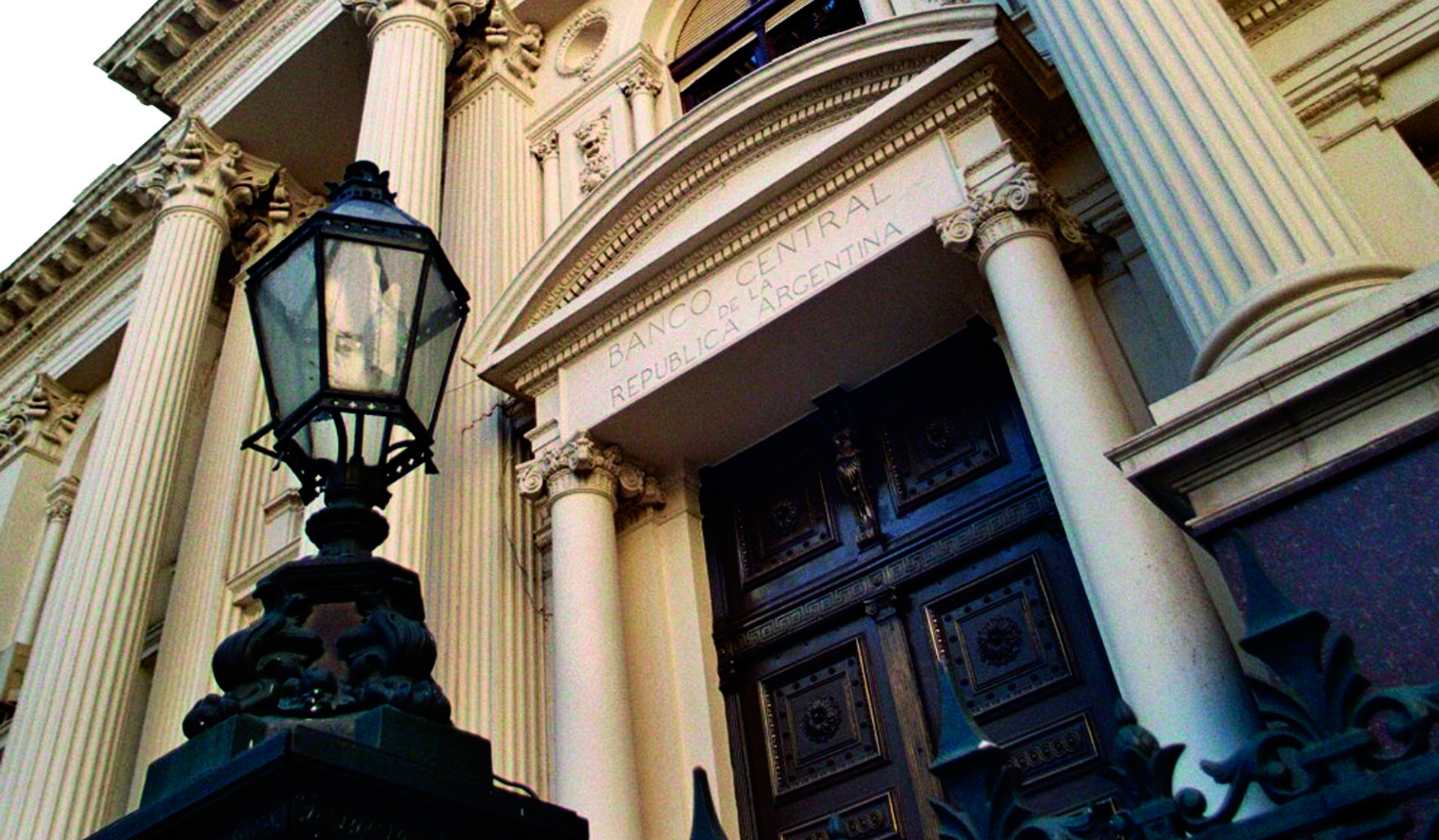
The Banco Central de la República Argentina, known as the BCRA, issues the peso, supervises the banks and writes the foreign-exchange rules in numbered notices called Communications A. It also publishes the daily reference rate and monthly data on deposits, reserves and credit.
On 1 January 2026 it began a programme to buy dollars for its reserves, starting at 5% of daily trading volume in the foreign-exchange market. Its gross international reserves, meaning all foreign assets before debts, stood at about US$50.3 billion on 3 November 2026, according to the bank’s own series.
Argentina’s loan programme with the International Monetary Fund (IMF) also tracks reserves, and we explain it in our guide to the IMF deal. The people who run the economy are profiled in our key players page.
Pesos, Savings and Interest Rates
Banks paid an average of 21.18% a year on 30-day peso deposits on 4 November, the BCRA reports. With prices up 33.4% in 12 months, that rate still lags inflation, which is why many savers hold dollars.
The TAMAR rate, a benchmark for large deposits at private banks, was 23.56% on the same day, the BCRA data show. Inflation drivers in the capital are covered in our explainer on Buenos Aires inflation.
The Biggest Banks
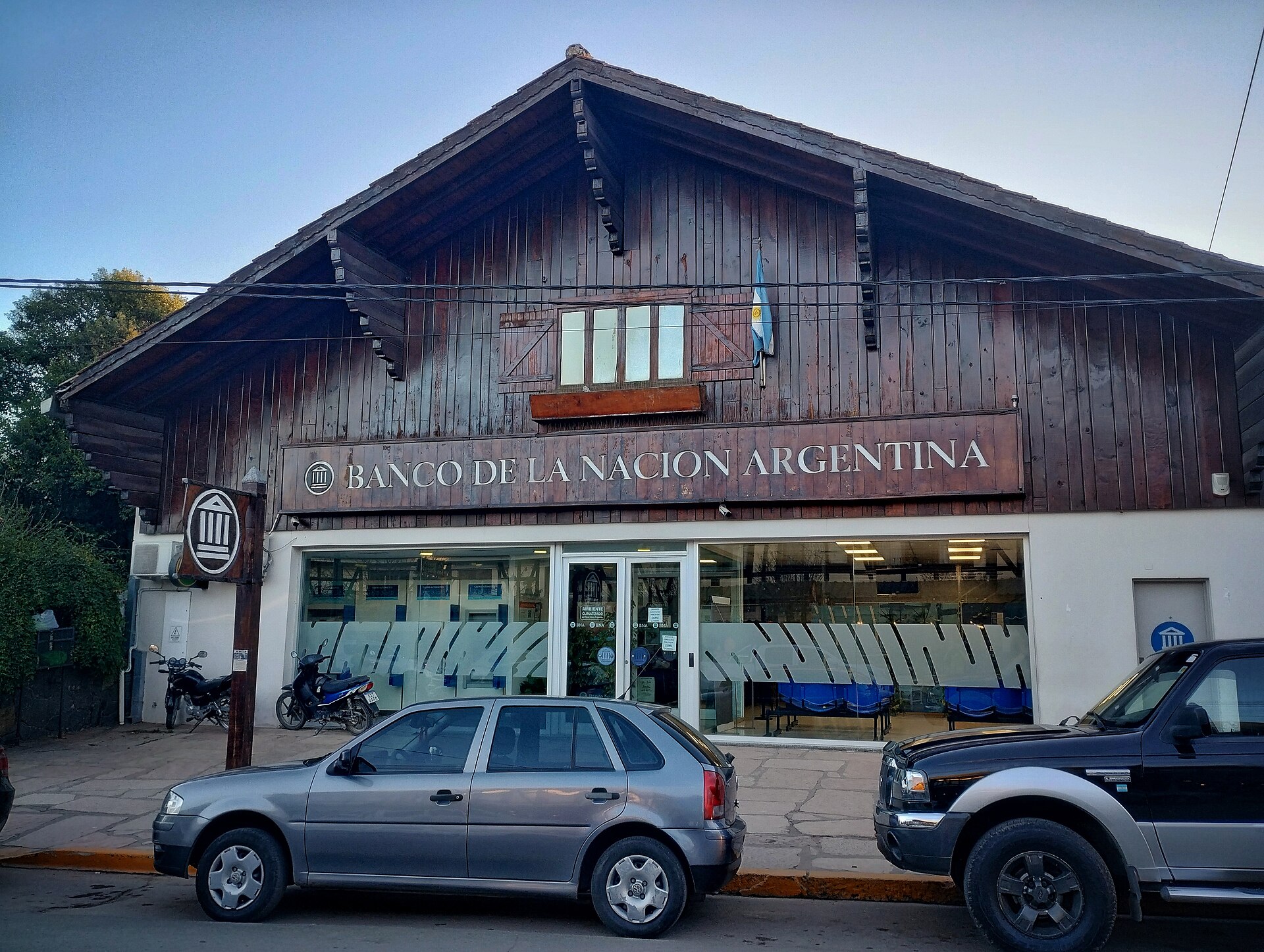
Banco de la Nación Argentina, owned by the state, is the country’s largest bank and has the widest branch network, reaching towns where private banks have no office. Large private lenders include Banco Galicia, Santander Argentina, BBVA Argentina and Banco Macro.
Banco Provincia is the Buenos Aires provincial state bank. Dollar lending to companies has opened up, as our report on banks, dollar lending and bonds explains.
How Foreigners Open Accounts and Receive Money
Most banks ask a foreigner for an Argentine tax number, issued by ARCA, the national tax agency, plus a passport or residence document. Whether a bank or app accepts a passport alone varies by institution, so ask before you travel.
Money arrives by international transfer to a peso or dollar account, or through money-transfer firms such as Wise and Western Union that operate in Argentina. The paperwork is covered step by step in our banking guide for foreigners, and short visits in our money guide for US travelers.
Newcomers planning a longer stay will find residency, rent and health steps in our moving guide. Monthly budgets are compared in our cost of living report for Buenos Aires.
Cards, Cash and Digital Wallets
Digital finance firms such as Mercado Pago, Ualá and Brubank run wallets and cards that locals use for QR payments and transfers. Many want a local ID, so tourists often rely on foreign cards and cash.
Foreign Visa and Mastercard cards work at many shops and cash machines, though machines charge fees and set daily limits that differ by bank. Carry some pesos for small shops and taxis, and ask your card issuer which exchange rate it applies.
Dollar Purchases and Capital Controls Today
Since 14 April 2025, individuals can buy dollars through their bank accounts without the old monthly cap, under Communication A 8226 of 11 April 2025. There is no set nominal limit, but the buyer signs a declaration under oath.
Since 26 September 2025, Communication A 8336 has required every individual who buys dollars this way to pledge not to buy securities settled in foreign currency, such as the MEP or CCL dollar, for 90 days, with limited exceptions. The central bank kept adjusting these rules in 2026, including Communication A 8417 of 9 April 2026 on dollar transfers abroad.
Companies face separate and tighter rules on buying dollars and on sending profits abroad. The central bank changes them often, so businesses should check the latest consolidated text.
What Changed Since 2025
The Turning Points
- 14 April 2025: most limits on individual dollar purchases end (Communication A 8226).
- 26 September 2025: the 90-day pledge reaches every individual (Communication A 8336).
- 1 January 2026: band edges follow INDEC inflation and dollar purchases for reserves begin.
- 1 April 2026: deposit insurance, run by SEDESA, the deposit insurer, rises to 50 million pesos (Communication A 8407).
- 9 April 2026: new rules for dollar transfers abroad (Communication A 8417).
Together these steps moved Argentina from a rationed dollar market toward a floating peso with a few rules left at the edges. The remaining restrictions mostly aim to stop savers and investors from arbitraging between the official and financial dollars.
What Prediction Markets Say
Polymarket, a crypto-based prediction market, shows 54% for Argentina’s October monthly inflation landing between 1.9% and 2.1%, and 28% for 1.6% to 1.8%, with US$35,857 traded as of 10:31 a.m. ET on 7 November. Its separate market on 2026 annual inflation gives 85% to a reading between 30.0% and 34.9%, with US$92,443 traded.
These prices are bets, not polls or forecasts, and they can move quickly. INDEC’s October monthly inflation figure will settle the monthly market.
Why we show this: prediction markets turn real-money bets into a live probability that moves within minutes of the news, which is why investors, campaigns and newsrooms in the United States now follow them closely. We show them next to polls and official results, never instead of them.
What It Means for US Readers
Several Argentine banks, including Galicia, BBVA Argentina and Macro, have shares traded in New York as American depositary receipts (ADRs, shares of foreign companies traded in New York), so changes in the peso and in central bank rules reach US portfolios quickly. A steady peso helps their earnings planning, while high inflation squeezes real incomes.
Travelers and remote workers should plan around a peso that is no longer cheap: prices rose 33.4% in a year while the dollar rose 6.4% in pesos. Check the retail rate rather than the wholesale one, and use the guides linked above before moving money.
What Is Not Known
No official source publishes the blue rate, so today’s gap with the official price cannot be stated from central bank data. We found no announcement that the 90-day dollar pledge will end.
Public reports describe the 30% tax advance on foreign-currency card spending differently for 2026, so cardholders should ask their issuer before relying on it. INDEC’s October inflation figure will show whether the 1.9% monthly pace holds.
In Plain English
Terms Used in This Guide
- BCRA: Argentina’s central bank.
- INDEC: the national statistics office that measures inflation.
- ARCA: the national tax agency that issues tax numbers.
- Band: the range inside which the peso may float.
- Blue dollar: the informal cash dollar traded outside banks.
- MEP and CCL: legal dollars obtained by trading bonds.
Frequently Asked Questions
What is the official dollar rate in Argentina?
The central bank’s official rate was 1,545.50 pesos per US dollar on 5 November 2026. Retail selling prices at banks averaged 1,571.84 pesos that day.
Can foreigners open a bank account in Argentina?
Yes, but most banks ask for an Argentine tax number from ARCA, the tax agency, plus identity documents, and rules differ by bank. Our banking guide for foreigners covers the steps.
Is there still a limit on buying dollars in Argentina?
Individuals face no set nominal cap, but they sign a pledge not to buy dollar-settled securities for 90 days. Companies face separate, tighter rules.
Are bank deposits insured in Argentina?
Yes, up to 50 million pesos (about US$32,350) per person from 1 April 2026, under central bank Communication A 8407. The guarantee is run by SEDESA, the deposit insurer.
What is the blue dollar?
It is the informal cash dollar traded outside banks, and the central bank does not publish its price. Its price comes from financial media quotes.
Sources: BCRA, exchange rate statistics, read 7 November 2026; BCRA, monetary statistics series (reserves, deposit rates, inflation), read 7 November 2026; BCRA, Objectives and plans 2026, 29 December 2025; SEDESA, deposit guarantee system and Communication A 8407; INDEC, consumer price index, September 2026; Polymarket, Argentina inflation markets, read 7 November 2026.
Editorial responsibility: Matthias Camenzind, Editor-in-Chief · Editorial standards · Report an error
Expat Guide to Argentina
What The Rio Times publishes for foreigners who live in or move to Argentina.
Start here
- Argentina Security and Crime Explained 2026
- Argentina Money Guide for US Travelers
- Best Places to Live in Argentina for Expats 2026
- Banking in Argentina Explained for Foreigners and Expats in 2026
City guides
Coming up in Argentina
- Córdoba City Guide 2026 With the Pope's 10 November Visit 10 Nov
- Primavera Sound Buenos Aires 2026: Gorillaz, The Strokes to Headline 28 Nov
- Colombian Star Karol G Plays Buenos Aires on 5 February 5 Feb
- U2 Buenos Aires Concerts Sold Out for 23, 25 and 27 March 23 Mar
Understand Argentina