Best Places to Live in Argentina for Expats 2026

Expats · Argentina
For most American expats, Buenos Aires is the best place to live in Argentina, followed by Córdoba and Mendoza. The trade-off is cost. A two-room rental runs from about US$455 a month in Rosario to about US$875 in Bariloche, and prices still rise by roughly 1.7% a month.
Key Facts
—Who. US retirees, remote workers and families choosing a base in Argentina. Dollar budgets matter more than peso budgets.
—What. Six places ranked on rent, safety and residency rules. In September 2026 two-room rents ran from 692,730 pesos (about US$455) in Rosario to 1,328,335 pesos (about US$875) in Bariloche, per La Nación.
—Why it matters. Argentina’s official homicide rates differ by a factor of more than two between provinces, and rent differs by almost a factor of two between cities.
—Watch. INDEC publishes September inflation on Tuesday 13 October 2026 at 16:00 Buenos Aires time (19:00 UTC). The EODHD calendar consensus is 2.0%, against 1.7% in August.
—Prediction markets. Polymarket traders put 57.6% on 2026 inflation ending between 30% and 34.9%, and 39.5% on 25% to 29.9% (US$74,319 traded). Bets, not forecasts. Read 6 October 2026, 07:09 ET.
The Short Answer: Buenos Aires First, Córdoba for Value
Buenos Aires ranks first because it offers the widest choice of barrios and the lowest city homicide rate we could document. Córdoba ranks second because it is cheaper and, by provincial data, safer than most. Mendoza, Salta, Rosario and Bariloche follow, each for a clear reason.
This ranking is our editorial judgement. It is not a statistical index. We weighed three measured things (rent, homicide rates and residency rules) and one unmeasured thing, which is how easy daily life is for a foreigner.
| Rank | Place | Two-room rent, Sept 2026 | 2025 homicides per 100,000 | Main drawback |
|---|---|---|---|---|
| 1 | Buenos Aires | 886,527 pesos (about US$585) | 2.5 (city) | Highest-priced barrios |
| 2 | Córdoba | 771,665 pesos (about US$510) | 2.28 (province) | No official barrio rent data found |
| 3 | Mendoza | 833,330 pesos (about US$550) | 3.2 (province) | Highest earthquake hazard class |
| 4 | Salta | 845,000 pesos (about US$555) | 3.2 (province) | Far from Buenos Aires (about 1,600 km) |
| 5 | Rosario | 692,730 pesos (about US$455) | 5.6 (Santa Fe province) | Highest homicide rate of the six |
| 6 | Bariloche | 1,328,335 pesos (about US$875) | 3.2 (Río Negro province) | Highest rent of the six |
Rents are averages for two-room flats (“dos ambientes”) reported by La Nación on 19 September 2026. The Buenos Aires figure, a January–August average, comes from Zonaprop and the other cities from Reporte Inmobiliario, so compare them with care. Homicide rates come from the national crime-statistics system (SNIC) for 2025.
How We Ranked, and Which Dollar Rate We Use
Argentina has several exchange rates. For every conversion in this guide we use 1,520 pesos per US dollar, the official rate quoted by EODHD at the 5 October 2026 close (1,520.25). The street and stock-market rates sit close to it, so the choice changes little.
We rank on rent first, because it is the largest bill for newcomers. Safety comes second, then services. Where a province rate stands in for a city, the table says so.
1. Buenos Aires: Palermo, Belgrano and Recoleta
The capital has the lowest homicide rate here. The city government counted 78 homicides in 2025, or 2.5 per 100,000 people, the lowest since 1995. Those figures are preliminary and come from the city itself.
Within the city, price follows the barrio (neighbourhood). The city statistics institute (Idecba) reported first-quarter 2026 asking rents for used two-room flats. Palermo averaged 804,543 pesos (about US$530) and Belgrano 808,484 pesos (about US$530). Recoleta was 739,911 pesos (about US$485) and San Telmó 664,248 pesos (about US$435).
| Barrio | Q1 2026 asking rent, two rooms | Character |
|---|---|---|
| Palermo | 804,543 pesos (about US$530) | Our view: lively, with cafes and nightlife |
| Belgrano | 808,484 pesos (about US$530) | Residential, green, family-friendly |
| Recoleta | 739,911 pesos (about US$485) | Our view: quiet and traditional |
| San Telmó | 664,248 pesos (about US$435) | Historic, tourist-heavy |
Those first-quarter pesos are converted at today’s rate, so they understate current prices. Idecba found that rents rose 33.6% over the year, faster than the city’s 32.1% inflation. Our wider barrio guide is here.
2. Córdoba: The Value Pick
Córdoba is Argentina’s student capital. Its national university dates from 1613 (Córdoba tourism office). The city hall said more than 250 exchange students arrived for the first semester of 2026. Americans are among the nationalities listed.
A two-room flat averages 771,665 pesos (about US$510) a month, a saving of about 13% on Buenos Aires, on these two sources. The province recorded 2.28 homicides per 100,000 in 2025, the lowest of the provinces we checked. The provincial government itself reported 90 homicides and a rate of 2.28, its lowest in 25 years.
Inflation in the Pampeana region, which includes Córdoba and Rosario, was 1.6% in August, according to INDEC. That matches Greater Buenos Aires.
3. Mendoza: Wine, Mountains and Earthquake Rules
Mendoza costs a little more than Córdoba, at 833,330 pesos (about US$550) for two rooms. Its province recorded 3.2 homicides per 100,000 in 2025, down from 3.5 in 2024.
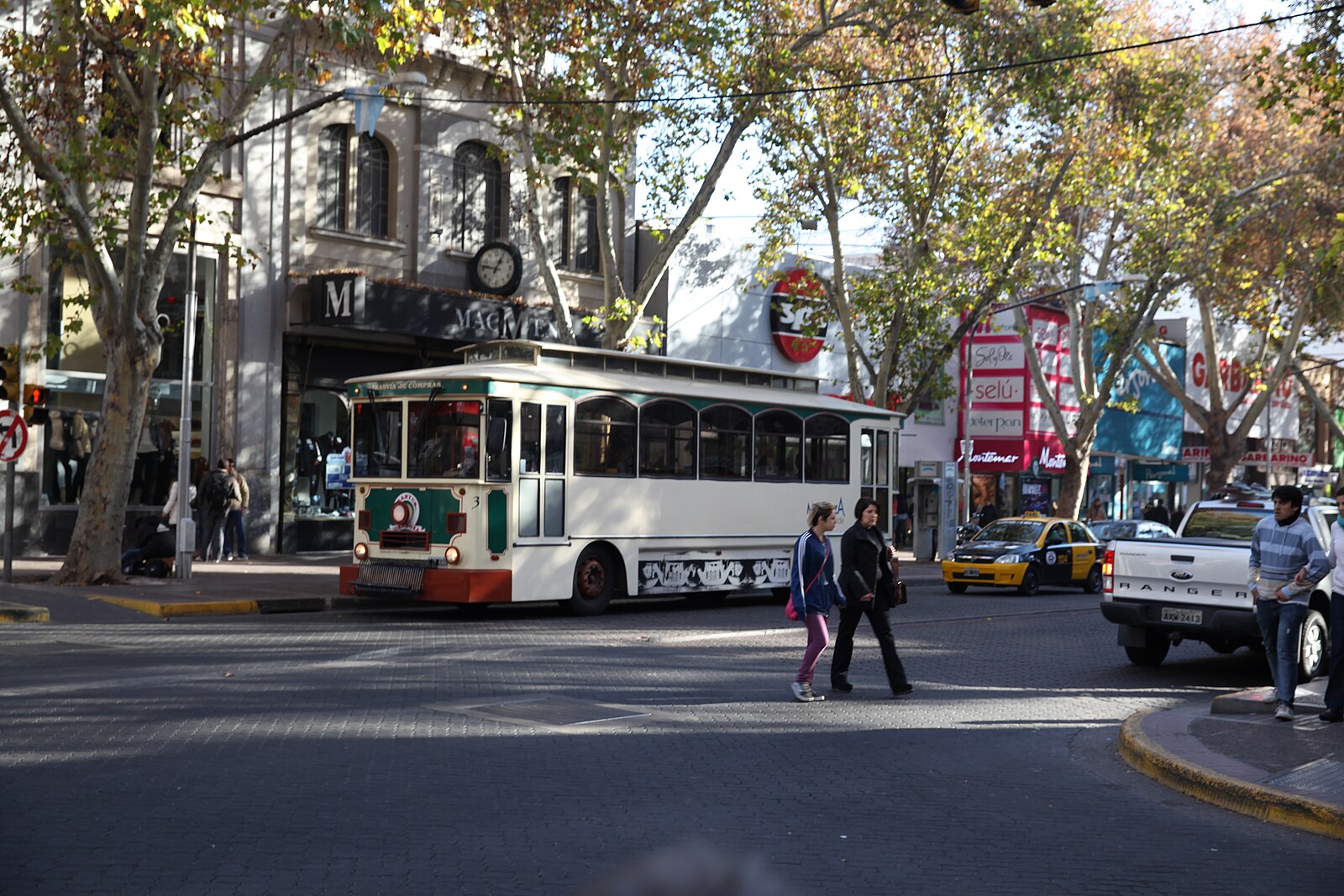
The honest drawback is geology. The national seismic institute (INPRES) places the north of the province, including the capital, in Zone 4, the highest hazard class. Local authorities promote evacuation drills.
Mendoza sits in the Cuyo region, where INDEC recorded 1.7% monthly inflation in August and 33.4% over twelve months.
4. Salta: The Andean North
Salta lies in the Lerma Valley at about 1,187 metres above sea level. A two-room flat averages 845,000 pesos (about US$555) a month. The province recorded 3.2 homicides per 100,000 in 2025, down from 4.6.
The city is about 1,600 km from Buenos Aires, so most visitors fly. It suits remote workers who want colonial streets and mountains more than a large international community. INDEC put August inflation in the northwest, Salta’s region, at 1.8%, with 34.0% over twelve months.
5. Rosario: Cheapest Rent, Hardest Safety Question
Rosario has the lowest two-room rent of the six, at 692,730 pesos (about US$455). That is about 22% below Buenos Aires. Santa Fe province, however, recorded 5.6 homicides per 100,000 in 2025, up 16% on 2024.
Rosario department counted about 113 homicide victims in 2025, against 90 in 2024, according to local press reports of official data. That is still far below the 260 recorded in 2023. Expats who choose Rosario should research the specific barrio, not the average.
6. Bariloche: Beautiful and Expensive
Bariloche has the highest two-room rent of the six, at 1,328,335 pesos (about US$875) a month. That is almost double Rosario. Three-room flats average 1,733,330 pesos (about US$1,140).
Río Negro province recorded 3.2 homicides per 100,000 in 2025, down from 4.5. We could not verify winter heating costs or seasonal rental pressure from an official source, so we do not rank on them. INDEC put August inflation in Patagonia at 1.8%.
Costs That Rent Averages Hide
INDEC measured national inflation of 1.7% in August 2026, the lowest in 14 months. Prices were 33.5% higher than a year earlier and 21.3% higher than in December 2025. Pesos you hold lose value every month, so keep your budget in dollars.
Argentina set its minimum monthly wage at 383,800 pesos (about US$253) from September 2026, and the next steps are published through April 2027. That wage also sets the income test for one residency route, covered below. Our cost-of-living guide adds food, transport and utilities.
Visas and Residency for US Citizens
Two routes suit most Americans: the rentista category and the digital-nomad stay.
A rentista must show regular income from assets, such as investments or property, equal to at least five minimum wages. At September’s wage that is 1,919,000 pesos a month (about US$1,260), rising to 1,956,000 pesos (about US$1,285) from October. The permit lasts one year and can be renewed. Work income does not count.
The digital-nomad route allows up to 180 days for remote workers. Applications go through the electronic TIE 24H system or a consulate. Our residency guide covers the routes in full.
Health Cover and Taxes
Under decree 366/2025, permanent residents get public-system access on equal terms with Argentines. Temporary residents and other foreigners must show health insurance or pay. Emergencies are treated without delay.
A resolution published on 11 August 2026 (Resolution 1066/2026) lets national hospitals charge uninsured non-residents the full tariff in advance for scheduled care. Medicare generally does not pay for care outside the United States, according to Medicare.gov. Read our healthcare guide before you choose a plan.
US citizens must report worldwide income to the IRS wherever they live. Argentina taxes residents too. Ask a cross-border adviser about credits and exclusions, and see our tax guide.
What Prediction Markets Say
Prices are the implied probability of each outcome. They are bets, not polls. Read on 6 October 2026 at 07:09 ET.
- Polymarket, 2026 annual inflation (December on December, INDEC), US$74,319 traded: 30% to 34.9% at 57.6%; 25% to 29.9% at 39.5%.
- Polymarket, September monthly inflation, US$24,543 traded: 1.9% to 2.1% at 55.0%; 1.6% to 1.8% at 26.5%; 2.2% to 2.4% at 14.7%.
- Kalshi (regulated in the US by the CFTC), September monthly inflation, 10,134 contracts traded: above 1.8% at 75%; above 2.0% at 17%.
- Polymarket, official rate at end-2026, US$11,750 traded: 1,600 pesos or more per dollar at 45.0%.
Why we show this: prediction markets turn real-money bets into a live probability that moves within minutes of the news, which is why investors, campaigns and newsrooms in the United States now follow them closely. We show them next to polls and official results, never instead of them.
What to Watch
INDEC releases September consumer prices on Tuesday 13 October 2026 and October prices on Thursday 12 November. The EODHD calendar shows a consensus of 2.0% for September, against 1.7% in August. A figure above 1.7% would show monthly inflation rising again.
What It Means for You
US retirees should start with Buenos Aires or Córdoba and check the rentista income test. Pensions have their own category, whose income test we did not verify. If you work remotely for a US employer, test life in one city on the 180-day nomad stay before you sign a long lease.
Budget in dollars, expect peso rents to rise month by month, and buy health insurance before you land. If safety is your first filter, Buenos Aires and Córdoba have the lowest recorded rates; if rent is, look at Rosario and Córdoba and research the barrio.
What Is Not Known
We could not open the US State Department’s Argentina advisory, so we do not quote its level. Rents by barrio for September 2026 are not published by an official source, and the Buenos Aires barrio figures are from the first quarter. We did not verify the pensionado income test, nomad-visa extension rules, or winter heating costs in Bariloche.
Homicide rates are provincial, not city-level, except for Buenos Aires. We found no official per-barrio ranking of petty theft. Inflation in September, and where the peso ends 2026, are not yet known.
More: Argentina news in English, every day from The Rio Times.
Frequently Asked Questions
What is the best city to live in Argentina for expats?
Buenos Aires ranks first in our editorial ranking for its choice of barrios and its low city homicide rate. Córdoba ranks second for lower rent and a low provincial homicide rate. The ranking is a judgement, not an official index.
How much does a two-room flat cost in Argentina?
In September 2026 the average ranged from 692,730 pesos (about US$455) in Rosario to 1,328,335 pesos (about US$875) in Bariloche. Buenos Aires averaged 886,527 pesos (about US$585) on Zonaprop data.
Is Argentina safe for American expats?
Official 2025 homicide rates were 2.5 per 100,000 in Buenos Aires city, 2.4 in Córdoba and 5.6 in Santa Fe province. Official figures cover homicides only, and we found no official per-barrio theft ranking.
Can a US citizen get residency in Argentina?
Yes. The rentista route requires income from assets of at least five minimum wages, about 1,919,000 pesos (about US$1,260) a month at September 2026 levels. It gives a one-year renewable permit.
Is there a digital-nomad visa for Argentina?
Yes. It allows up to 180 days for remote workers, applied for online through TIE 24H or at a consulate. Confirm extension rules with the migration office.
Will Medicare pay for care in Argentina?
Generally no. Medicare.gov says it usually does not cover health care outside the United States, apart from narrow exceptions. Temporary residents in Argentina must show health insurance or pay for public care.
When is Argentina’s next inflation report?
INDEC publishes September inflation on Tuesday 13 October 2026 and October inflation on Thursday 12 November. August inflation was 1.7%.
Sources
- La Nación, two-room rents by city (Reporte Inmobiliario, Zonaprop), 19 September 2026
- Infobae, Idecba barrio rents, first quarter 2026
- INDEC, consumer price index, August 2026
- Argentina.gob.ar, temporary residency as rentista
- Argentine consulate in Toronto, digital-nomad visa
- Ministry of Labour, minimum wage council (Resolution 4/2026)
- Decree 366/2025, official text
- Infobae, charging non-residents in national hospitals, 11 August 2026
- La Nación, homicide map by province (SNIC), June 2026
- Infobae, Buenos Aires Crime Map 2025, 24 February 2026
- Government of Córdoba, 2025 homicide rate
- La Capital (Rosario), homicides in 2025
- Municipality of Córdoba, exchange students 2026
- Mendoza Today, INPRES seismic hazard map
- Salta tourism board, city of Salta
- Medicare.gov, travel outside the US
- Polymarket, Argentina annual inflation 2026
- Kalshi, Argentina monthly inflation, September
- EODHD, USD/ARS close 5 October 2026 and economic calendar
This article was produced by The Rio Times’ automated newsroom system. How we use AI · Report an error · Editorial responsibility: Matthias Camenzind, Editor-in-Chief