ARGENTINA · TRAVEL MONEY
Key Facts
- —The country Argentina uses the peso, and US citizens need no visa for tourist stays of up to 90 days, according to the US State Department.
- —The rate The central bank’s official wholesale rate was 1,515.88 pesos per US dollar on 9 October 2026, about 4% more pesos than a year earlier.
- —Why it is easier now Argentina money is simpler now: the official, stock-market (MEP) and informal ‘blue’ rates sat within about 2% of each other on 9 October 2026.
- —Prices Consumer prices rose 1.7% in August 2026 and 33.5% over twelve months, according to INDEC, Argentina’s statistics institute.
- —Cards and hotels Cards are widely accepted, and foreign tourists paying a VAT-registered hotel with a foreign card do not pay the 21% VAT, says Argentina’s official tourism site.
- —Cash rules Cash of US$10,000 or more must be declared on arrival, and changing money requires a passport.
- —Prediction markets Polymarket gives a 61% chance that Argentina’s 2026 annual inflation lands between 30% and 34.9% (10 October 2026, 9:10 a.m. ET).
Argentina money no longer works the way older travel guides describe, and US visitors carrying bricks of cash gain little from it. In October 2026, the official, stock-market and street rates for the dollar sat within about 2% of each other.
Changing cash at Banco Nación gave 1,485 pesos per US dollar on 9 October 2026, though rising prices mean each peso buys less.

The Peso Against the Dollar in October 2026
The Central Bank of the Argentine Republic (BCRA) sets monetary policy and publishes the country’s reference exchange rate. On 9 October 2026, that wholesale rate, known locally as ‘Communication A 3500’, stood at 1,515.88 pesos per US dollar.
A year earlier, on 9 October 2025, the same rate was 1,451.75 pesos per US dollar. The dollar therefore bought about 4% more pesos than twelve months before.
The peso floats inside a band, and the central bank has said it will sell dollars above the ceiling. On 9 October 2026, the floor stood at 720.68 and the ceiling at 1,928.82 pesos per US dollar.
The wholesale rate therefore traded about 21% below the ceiling. That leaves room for the peso to weaken further before the central bank would sell dollars.
Since January 2026, the band has widened each month in line with INDEC’s latest monthly inflation figure, according to Ámbito. The same December 2025 announcement included a plan to buy up to US$17 billion in 2026 to rebuild reserves.
The Rio Times’ report on the peso band follows how close the rate sits to its limits.
For a traveler, the band matters because it limits sudden jumps. Budget at about 1,500 pesos per dollar, and check the rate again shortly before departure.
Argentina Money Rates, From the Official Dollar to the Blue
Argentina money talk revolves around several dollar rates, and Argentine financial sites such as Ámbito list them side by side. For a US visitor, four of them matter.
- Official wholesale rate: 1,515.88 pesos per US dollar on 9 October 2026, the BCRA benchmark for the official market.
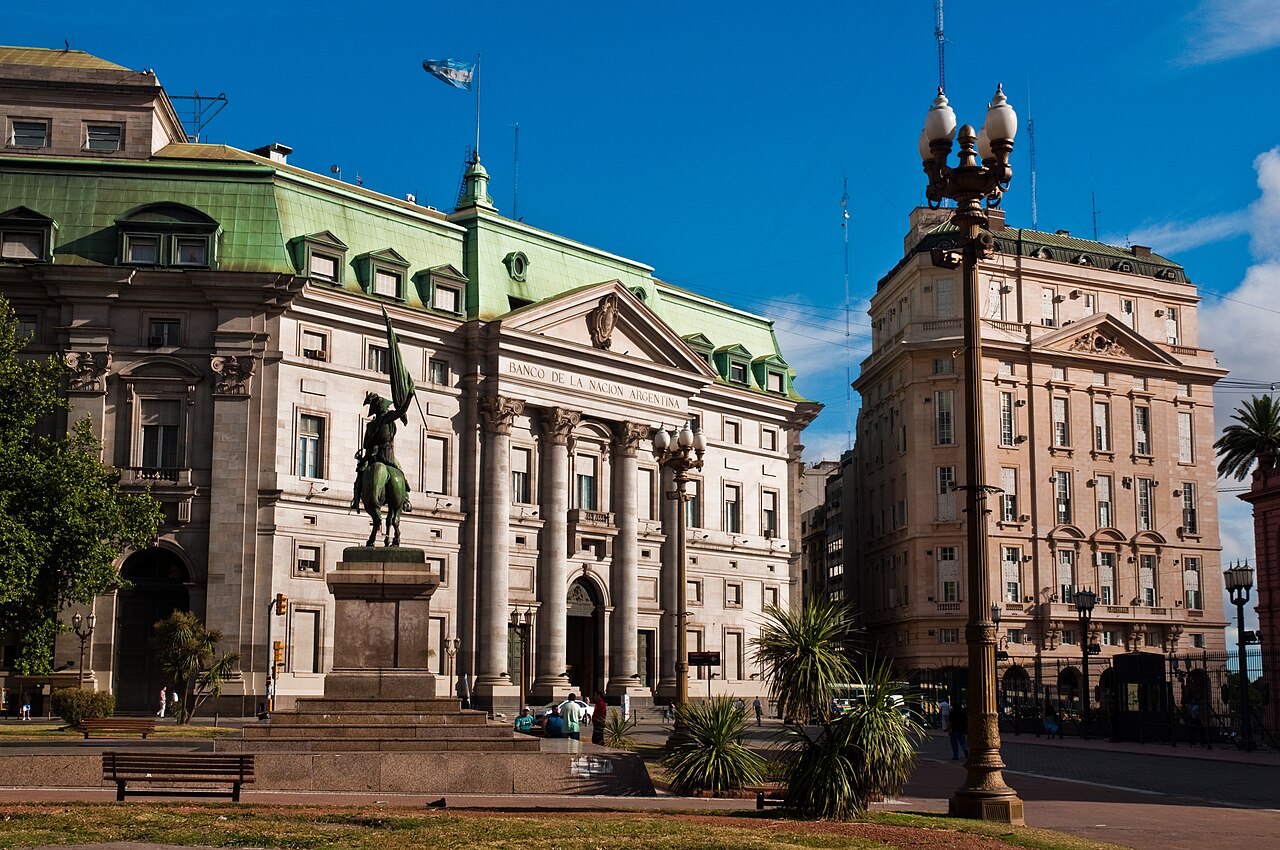
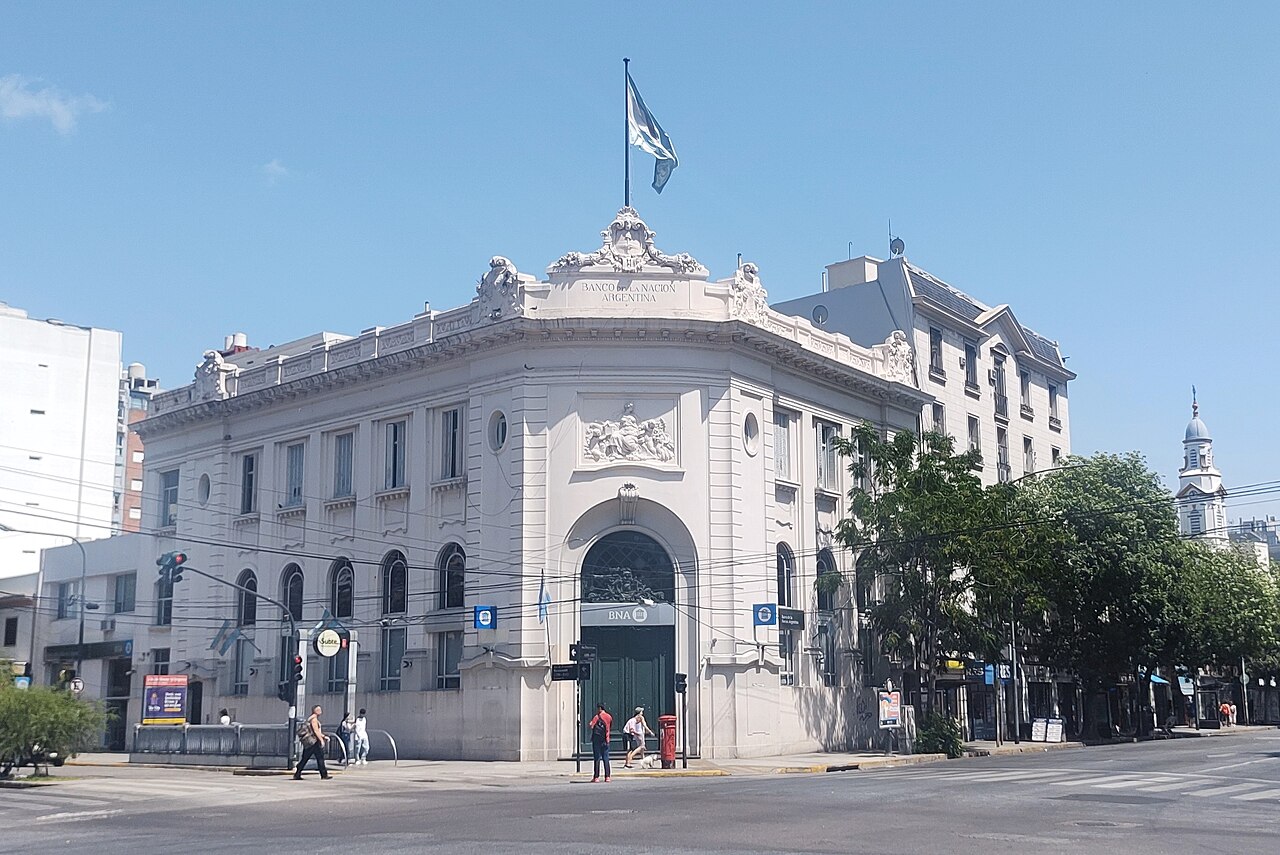
- Banco Nación cash rate: the state-owned Banco de la Nación Argentina bought cash dollars at 1,485 and sold them at 1,535 pesos per US dollar on 9 October 2026.
- MEP rate: a legal dollar bought and sold through Argentine bonds, which closed at 1,539.28 pesos per US dollar on 9 October 2026, according to Ámbito.
- Blue rate: the informal street market, where dealers paid 1,520 and asked 1,540 pesos per US dollar on 9 October 2026, according to Ámbito.
Why the Blue Dollar Lost Its Edge
During the years of tight currency controls, the gap between these rates was huge. From December 2022, card networks settled foreign tourists’ purchases near 322 pesos per US dollar, according to El Economista.
The official retail rate was then 178 pesos per US dollar. The card networks used the better MEP rate under central bank Communication A 7630.
In April 2025, the BCRA reopened the official dollar market to Argentine individuals through Communication A 8226. By October 2026, the official, MEP and blue rates had moved much closer together.
Changing US$100 in cash at Banco Nación on 9 October 2026 gave 148,500 pesos (about US$98). A street dealer paying the blue rate would have handed over 152,000 pesos (about US$100), a difference of about US$2.
By October 2026, the street premium was that small, and it comes with the risk of counterfeit notes and no receipt. The Rio Times has tracked the convergence of the blue and official dollar through 2026.
Paying by Card in Argentina
Credit cards are widely accepted in Argentina, according to the US State Department’s country page for travelers. With the main dollar rates this close, the rate a card network uses matters far less than before.
When a card terminal offers to charge you in US dollars, choose pesos instead. The conversion is then done by your card network and bank on terms you can check, not by the shop’s terminal.
Before departure, ask your US bank about its foreign transaction fee and its charge for foreign ATM withdrawals. With exchange rates this close together, those fees matter more than the choice of rate.
The Hotel VAT Break for Foreign Visitors
Hotel bills in Argentina normally carry 21% value added tax (VAT). Foreign tourists who pay with a card issued abroad, or by international transfer, do not pay it, says argentina.travel, the official tourism site.
The exemption covers the room and breakfast if it is included in the price. It applies at lodgings registered for VAT with the tax agency, not at small or informal providers such as Airbnb hosts.
Guests show a passport and the entry record issued by the National Migration Directorate, which can be obtained online. The discount appears directly on the bill, so there is nothing to claim later.
Shoppers can also reclaim VAT on Argentine-made goods at departure. ARCA, the federal tax and customs agency, made that check digital under General Resolution 5843/2026, published in May 2026.
ATMs, Banknotes and Cash Limits
US visitors can withdraw pesos at bank ATMs, but the State Department warns that daily limits may be lower than at home. If a US card fails at one machine, it advises trying another or changing cash at an exchange house.
Visitors planning longer stays can compare local banks in the Rio Times’ guide to cash withdrawal limits. Where fees are charged per withdrawal, fewer and larger withdrawals cost less than many small ones.
Argentina money in cash adds up quickly. The central bank put a 20,000-peso note (about US$13) into circulation in November 2024, according to Página|12.
A 300,000-peso cash budget (about US$198) is 15 of those notes. Split cash between a wallet and a hotel safe, and avoid counting money in the street.
Carrying Dollars Into Argentina
Under ARCA General Resolution 5659/2025, travelers must declare cash of US$10,000 or more to customs on arrival. Leaving the country, they may carry foreign cash only below US$10,000; larger sums must go through an authorised financial institution.
The limits also cover bearer instruments and precious-metal coins. For travelers under 16, the State Department puts the threshold at US$5,000.
You must show your passport to exchange money, and the State Department advises keeping every exchange receipt until departure. It recommends changing money only at banks, hotels and exchange houses with real storefronts.
The US embassy in Buenos Aires does not exchange money. A modest reserve of clean, undamaged US$100 notes still helps if cards or ATMs fail.
- Bring a card without foreign transaction fees and a second card from another network.
- Carry a cash reserve in US dollars for emergencies, not for the whole trip.
- Withdraw pesos from ATMs inside bank branches, in daylight.
- Change cash only at a bank or licensed exchange house, with your passport.
Prices, Inflation and Tipping
INDEC, Argentina’s national statistics institute, reported consumer price inflation of 1.7% for August 2026. Prices rose 33.5% over the twelve months to August, and 21.3% in the first eight months of 2026.
From the end of August 2025 to the end of August 2026, the official wholesale dollar rose only about 14%. It went from 1,323.83 to 1,509.47 pesos per US dollar, so many prices cost noticeably more in dollars than a year earlier.
Argentine shops and newspapers write peso prices with the same dollar sign used in the United States. A menu price of 30,000 means 30,000 pesos (about US$20), not thirty thousand US dollars.
When a seller quotes in US dollars, ask for the peso price as well. Comparing the two at the day’s bank rate shows quickly which one is cheaper.
Tips are voluntary in Argentina, and restaurants cannot make a fixed percentage compulsory, El Cronista reported in May 2026. It cited consumer-protection law, under which extra charges cannot be imposed on customers.
Under Decree 731/2024, published in August 2024, restaurants, hotels and similar businesses must offer an electronic way to tip staff. The customer still decides how and how much to tip.
Carry small notes for tips in case a card terminal has no tip option.
The Rio Times guide to the cost of living in Argentina sets out rents and monthly budgets for longer stays. More coverage of the peso and the economy is on the Argentina page.

What Prediction Markets Say
Bets on Polymarket give a 61.1% chance that Argentina’s 2026 annual inflation lands between 30% and 34.9% (10 October 2026, 9:10 a.m. ET). The range of 25% to 29.9% trades at 36.5%, in a market with about US$78,000 in bets.
A second Polymarket market, on September’s monthly figure, gives 60% to a reading of 1.9% to 2.1%, with about US$31,600 traded. The next most likely range, 1.6% to 1.8%, trades at 29.5%.
For travelers, these bets matter because inflation feeds directly into menu and hotel prices. It also sets how fast the peso band widens from one month to the next.
Why we show this: prediction markets turn real-money bets into a live probability that moves within minutes of the news, which is why investors, campaigns and newsrooms in the United States now follow them closely. We show them next to polls and official results, never instead of them.
What It Means for US Readers
For a US traveler, Argentina money is now mostly a question of bank fees rather than exchange tricks. A card without foreign transaction fees, plus a few ATM withdrawals, covers most needs.
Budget at about 1,500 pesos per US dollar, and expect dollar prices noticeably higher than a year earlier. Paying a VAT-registered hotel with a US card removes the 21% VAT from the room rate.
US investors in Argentine shares and bonds follow the same numbers. A steady peso inside its band helps both investors and visitors plan ahead.
What Is Not Known
INDEC is due to publish the September 2026 inflation figure on 13 October 2026, and bets point to a reading near 2%. A higher figure would widen the band faster and could weaken the peso.
It is not known whether the peso will stay well inside its band through the southern summer, from December to March. Rules on card settlement, tax refunds and cash also change often, so check them before each trip.
Frequently Asked Questions
What is the exchange rate in Argentina for US dollars?
On 9 October 2026, Argentina’s central bank published an official wholesale rate of 1,515.88 pesos per US dollar. For Argentina money in cash, Banco Nación paid 1,485 and the informal blue market about 1,520 pesos per US dollar.
Is it better to bring cash or use a card in Argentina?
For most US visitors in 2026, a card is the simpler way to handle Argentina money, because the official, stock-market and street rates sit within about 2% of each other. Keep a small reserve of clean US$100 notes for emergencies.
What is the blue dollar in Argentina?
The blue dollar is the informal street rate for US dollars. In Argentina money terms, it paid 1,520 pesos per US dollar on 9 October 2026, barely above the bank rate.
Can I use a US debit card at ATMs in Argentina?
Yes. Bank ATMs are a simple source of Argentina money in pesos, but daily limits may be lower than in the United States, and your US bank may charge a foreign ATM fee.
How much cash can I bring into Argentina?
Cash of US$10,000 or more must be declared to customs on arrival. On departure, foreign cash must stay below US$10,000; larger sums must go through an authorised financial institution.
Do you tip in Argentina?
Tipping is voluntary in Argentina, and restaurants cannot make a fixed percentage compulsory. Tips can be left in cash or, where businesses offer it, by card or payment app.
Do foreign tourists pay VAT on hotels in Argentina?
Not if they pay a VAT-registered hotel with a card issued abroad or an international transfer. The 21% VAT is then removed from the room and any included breakfast.
Sources: BCRA, statistics API (wholesale A 3500 rate, retail rate, band limits, inflation), 9 October 2026; Banco de la Nación Argentina, exchange rates, 9 October 2026; Ámbito, dollar quotes (blue, MEP), 9 October 2026; INDEC consumer price index series (datos.gob.ar), August 2026 data; US State Department, Argentina country information, accessed 10 October 2026; Boletín Oficial, ARCA General Resolution 5659/2025 (cash on entry and exit), 10 March 2025; Argentina.travel (official tourism site), VAT discount on accommodation for foreign tourists, 4 November 2024; BCRA, Communication A 8226, 11 April 2025; iProfesional, how the band limits move, 14 April 2026; El Economista, MEP rate for foreign tourists’ cards, 14 December 2022; El Cronista, tips in cafés and restaurants, 13 May 2026; Página|12, 20,000-peso note enters circulation, 13 November 2024; Ámbito, bands to move with inflation from 2026 and reserve purchase plan, 15 December 2025; Argentina.travel, tax incentives for foreign tourists (hotel VAT and tax free), 25 July 2025; Boletín Oficial, ARCA General Resolution 5843/2026 (VAT refund on goods for foreign tourists), 6 May 2026; Boletín Oficial, Decree 731/2024 (tips and electronic tipping), 14 August 2024; INDEC, release calendar (September 2026 CPI on 13 October 2026), accessed 10 October 2026.
This article was produced by The Rio Times’ automated newsroom system. How we use AI · Report an error · Editorial responsibility: Matthias Camenzind, Editor-in-Chief
Rotate for Best Experience
This report is optimized for landscape viewing. Rotate your phone for the full experience.
You've reached your free article limit
Subscribe to The Rio Times for unlimited access to our news, expat and nomad guides and market intelligence on Latin America and Africa.