The Bahamas Explained 2026: The Islands, the Economy, the Politics and What to Watch
GUIDES · BAHAMAS
Key Facts
- —Capital Nassau, on the island of New Providence. The 2022 census counted 296,732 people on New Providence, three in every four residents of the country.
- —Population 398,165 at the April 2022 census; the World Bank estimates 403,033 for 2025. That is roughly the population of Iceland, spread across 19 inhabited islands.
- —Currency The Bahamian dollar, fixed at one to one with the US dollar since 1973. B$1 equals US$1; the Central Bank of The Bahamas quoted par on 26 September 2026.
- —Language English, the language of government, the courts, business and schools. Visitors from North America and Britain need no other.
- —GDP US$15.8 billion in 2024, according to the World Bank, or about US$39,500 per person. That is less than half the US level of about US$86,000.
- —Government A parliamentary democracy with King Charles III as head of state. Prime Minister Philip Davis won a second term on 12 May 2026 with 33 of 41 seats.
The Bahamas explained for outsiders: an English-speaking island nation of about 400,000 people, some 80 kilometres off Florida at its closest point. It lives on American visitors, charges no income tax and ties its money to the US dollar.
The Bahamas explained in one line: a stable Westminster-style democracy whose economy is, above all, a holiday business. For Americans and Europeans it is a beach, a financial centre and a place to retire. Each of those roles depends on tourism, the peg and the weather.
What kind of country is this?
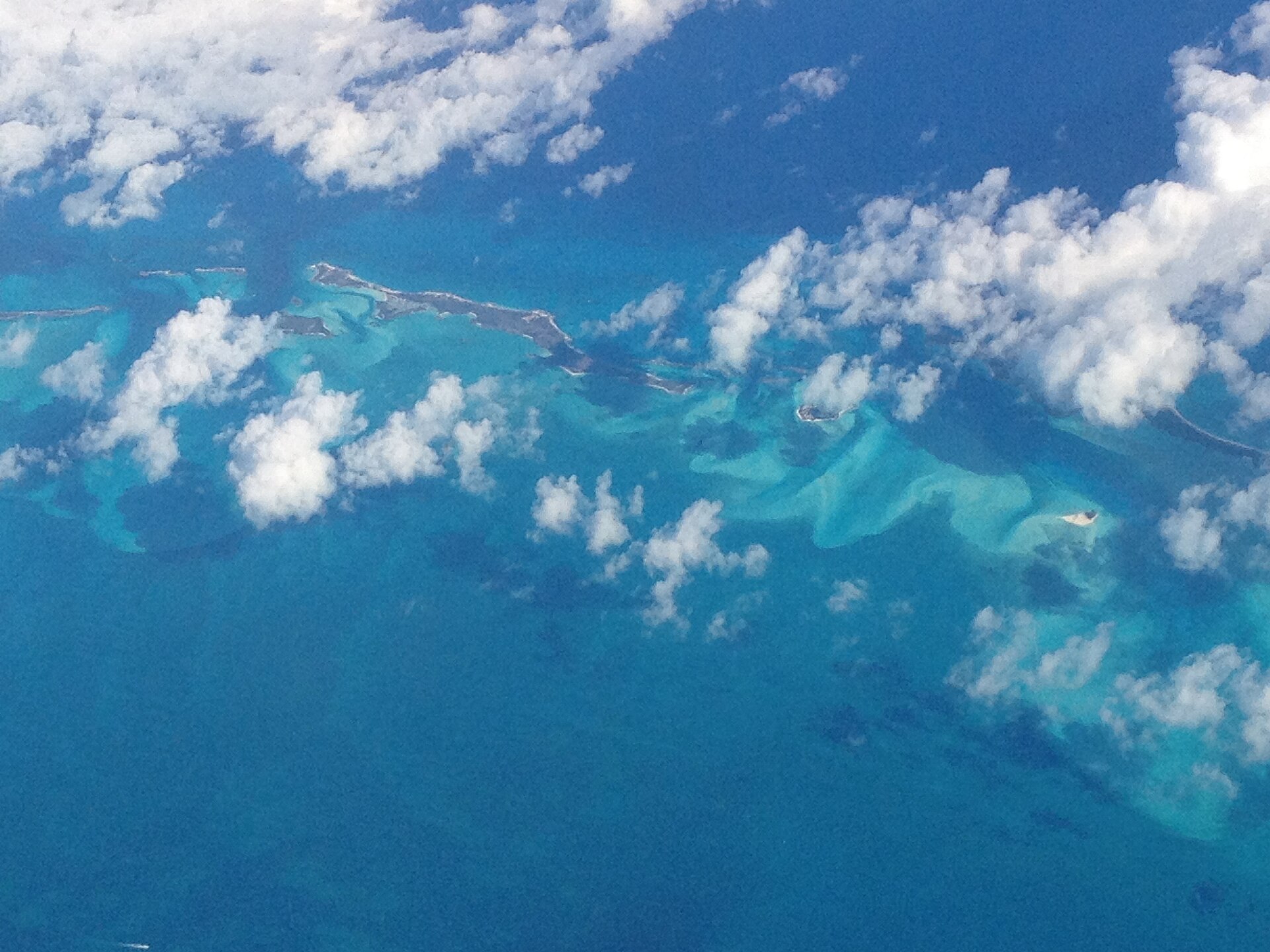
The Bahamas is an archipelago that runs south-east from just off Florida towards Cuba and Haiti. Its land area is 10,010 square kilometres, less than Connecticut, scattered across a far larger stretch of shallow sea. The 2022 census found people living on 19 islands.
Almost everyone lives in two places. The census counted 398,165 residents in April 2022, and 296,732 of them, or 74.5 percent, lived on New Providence. Grand Bahama, home to the port city of Freeport, had 46,740 people and Abaco 16,695.
Bahamians call the rest the Family Islands or Out Islands: Exuma, Eleuthera, Andros, Cat Island and many smaller cays. They carry little of the population but much of the scenery. The Ministry of Tourism says nearly 30 percent of overnight visitors in 2025 travelled to them.
The islands were a British colony until independence on 10 July 1973, under Lynden Pindling of the Progressive Liberal Party. The country stayed a Commonwealth realm, so the British monarch remains head of state. English common law applies, and the final court of appeal is the Judicial Committee of the Privy Council in London.
Who runs The Bahamas and how
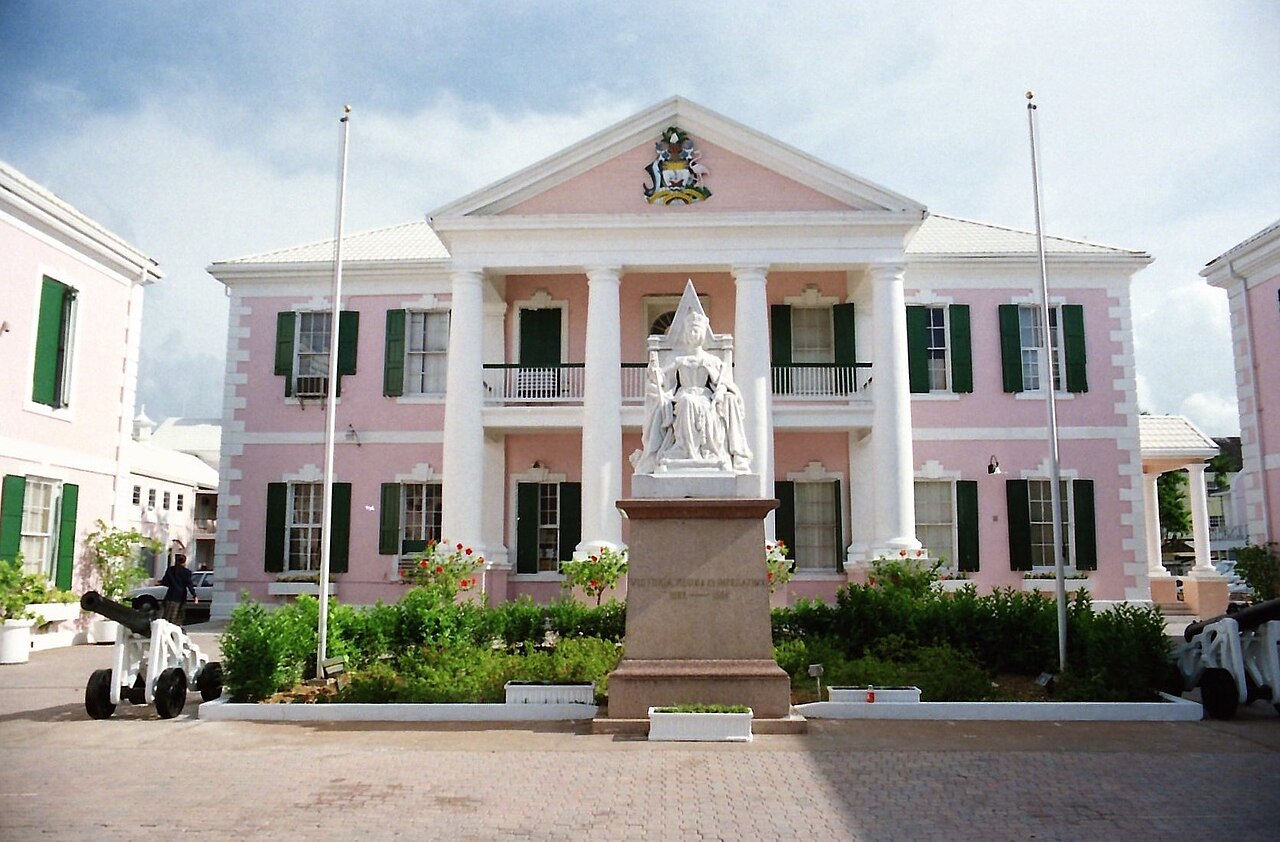
The system copies Westminster. The prime minister is whoever commands a majority in the elected House of Assembly. The Governor-General, Dame Cynthia Pratt since 1 September 2023, represents King Charles III and acts on the government’s advice.
The House of Assembly has 41 members, each elected in a single-seat constituency by first-past-the-post; two seats were added before the 2026 vote. The Senate has 16 appointed members. A parliament lasts at most five years, but the prime minister can call an election early.
Two parties dominate: the Progressive Liberal Party (PLP), founded in 1953, and the Free National Movement (FNM), founded in 1971. For almost thirty years voters removed every government after a single term. The last incumbent re-elected before 2026 was Hubert Ingraham of the FNM in 1997.
That pattern broke on Tuesday 12 May 2026. Davis announced the date on 1 April and Parliament was dissolved on 8 April, although the IMF had noted elections were due only by September 2026. It was an early election, not a September one.
The PLP won 33 of the 41 seats on 51 percent of the vote, the Parliamentary Registration Department reported. The FNM won 8 seats on 35 percent, and the Coalition of Independents 12 percent and none. Turnout was 66.4 percent of 209,264 registered voters.
Philip Davis, prime minister since 17 September 2021, is now in his second term, with Michael Halkitis as finance minister. Michael Pintard leads the FNM opposition. Former prime minister Hubert Minnis, running as an independent, lost the Killarney seat he had held for two decades.
How the economy works
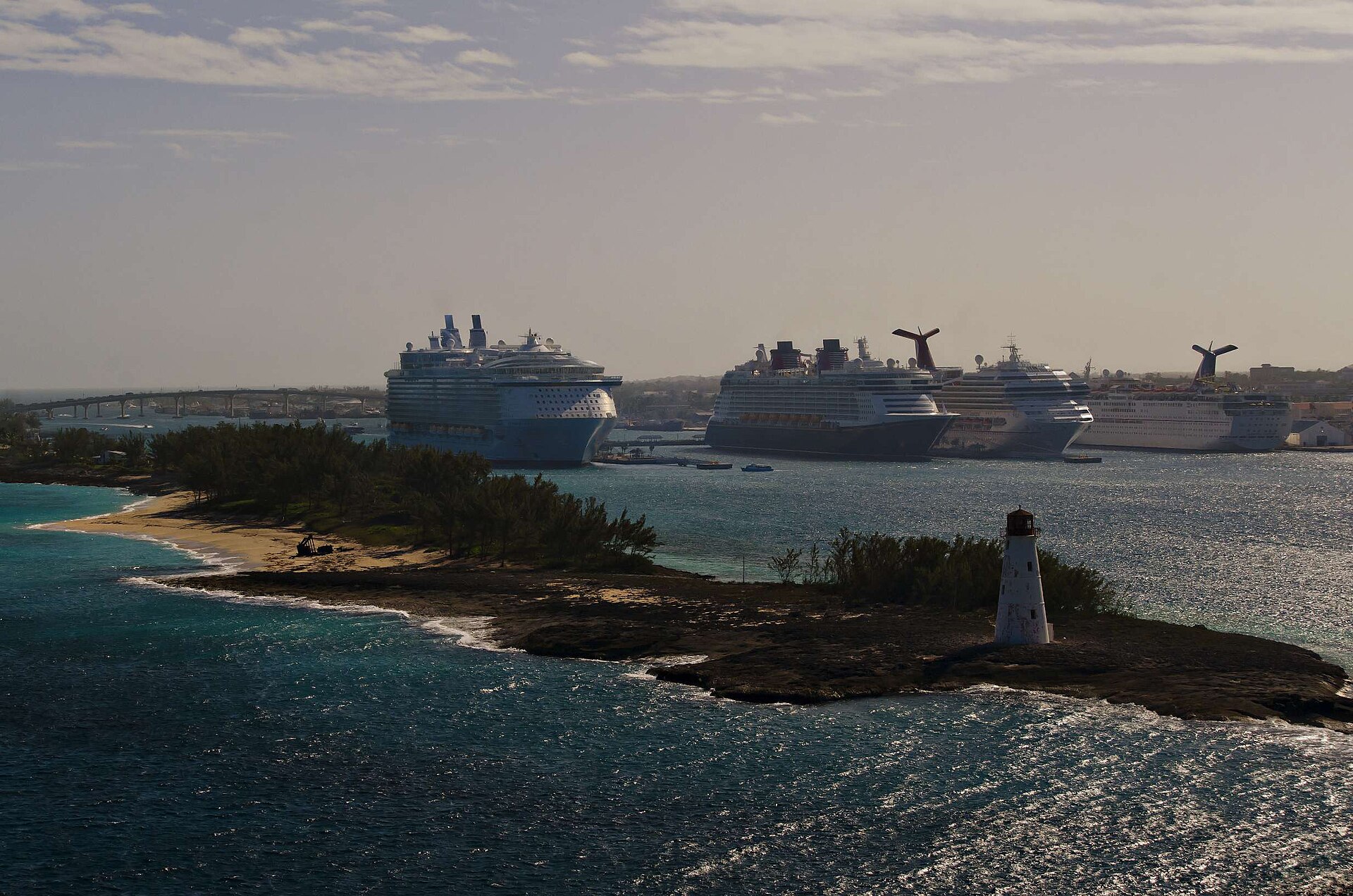
Tourism is the engine. The central bank counted a record 12.5 million visitors in 2025, up 11.4 percent on 2024 and over thirty per resident. Cruise passengers made up 86.5 percent of the total.
That headline needs care. A cruise passenger stays hours; an overnight “stopover” visitor fills a hotel room, which the central bank calls the high value-added segment. Stopovers numbered 1,821,076 in 2025, only slightly above the 1,806,908 of 2019.
Government figures are published in Bahamian dollars. Because the two currencies trade at par, each amount converts one for one and is written here as US$.
There is no personal income tax and no general corporate income tax. The state relies on value-added tax (VAT), at 10 percent since 1 January 2022, plus import duties, departure taxes, licence fees and property tax. A new 15 percent minimum tax on large multinational groups was budgeted to raise US$130 million, about 0.7 percent of output.
Growth has been solid but is slowing. The International Monetary Fund (IMF) put real growth at 3.4 percent in 2024 and about 2.8 percent in 2025. It expects a gradual slowdown towards 1.5 percent, which it judges to be the economy’s potential rate as hotel capacity runs short.
Unemployment was 8.7 percent in the fourth quarter of 2025, the national statistics institute found, but 18.2 percent among young people. Average consumer price inflation was 2.1 percent in the twelve months to April 2026. Restaurant and hotel prices rose 14.9 percent, which visitors notice.
The peg holds because the central bank keeps enough foreign currency to defend it: US$3.23 billion at the end of July 2026. The IMF called reserves adequate. It estimated a 2025 current account deficit of 7.8 percent of output, as tourism earnings only partly offset a large goods deficit.
Public debt is the weak point. The central bank puts national debt, including state guarantees, at 74.7 percent of output at the end of June 2026. The government’s budget projects 59.9 percent by June 2027 on a different measure. The IMF advises introducing corporate and personal income taxes and raising VAT, and the government has adopted neither.
What is happening right now
As of 26 September 2026, the Davis government is four months into its second term, and the argument is about debt. The central bank reported that national debt, including state guarantees, rose US$1.071 billion in the year to June 2026. It reached US$13.17 billion, roughly US$33,000 for every resident.
The difficulty is that the government reported a deficit of only US$121.2 million for the ten months to April. It was still forecasting a small surplus of US$32.7 million for the full year. Economists and bankers quoted by the Nassau Tribune have called the gap a “disconnect” that needs explaining.
Part of it runs through the National Investment Fund, a state fund set up under a 2022 law. Halkitis told Parliament in September that US$310.9 million had been drawn from it for roads, buildings, water systems and courts. The opposition calls this off-the-books spending; the minister says the government acted within the law.
Central Bank governor John Rolle has confirmed the fund’s board was never properly convened. Halkitis has promised regulations and an investment committee “definitely before the end of the year”. On 17 September Davis said there was “no alarm”, pointing to growth and a falling debt ratio.
The budget for the fiscal year that began on 1 July 2026 projects revenue of US$4.4 billion and spending of US$4.1 billion. That would leave a surplus of US$223.1 million. The budget also raises money from large businesses, foreign-owned property and immigration applicants.
Abroad, Davis addressed the United Nations General Assembly on Friday 25 September. In New York the same day he committed US$25 million to a blue carbon programme to map and measure seagrass, though no carbon credits are yet on sale. He also said The Bahamas will seek a Security Council seat for 2032 to 2033.
Relations with Washington have a sore spot. On 18 September the foreign ministry complained to the US Embassy about Drug Enforcement Administration (DEA) operations it says ran without Bahamian consent. The US ambassador, Herschel Walker, has questioned the complaint.
Tourism, meanwhile, keeps growing. Arrivals in the first five months of 2026 rose 14.2 percent to 6.1 million, the central bank says. Its July report still flagged higher fuel and import costs and a US$67.7 million fall in reserves that month.
What to watch
Monday 28 September 2026 brings the central bank’s monthly report for August. Later releases fall on Monday 2 November, Monday 30 November and Monday 28 December. Each one updates tourism, credit and reserves; the reference point is US$3.23 billion of reserves at the end of July.
The Atlantic hurricane season runs until 30 November. Hurricane Dorian struck Abaco and Grand Bahama in 2019, and the Davis government cites it as one cause of the debt it inherited. A direct hit on Nassau or Grand Bahama would move every number in this guide.
On Wednesday 30 September the UN Security Council meets on renewing the Haiti mandate under Resolution 2793. Davis urged renewal; Haiti lies just beyond the southern end of the Bahamian chain.
Before the end of 2026, the government has promised to put the National Investment Fund on a full legal footing. Watch whether its accounts are published and whether the opposition-led Public Accounts Committee opens an inquiry.
Further out, the IMF runs its review of The Bahamas on a twelve-month cycle; the last one concluded on 4 February 2026. Watch three other indicators: stopover arrivals, the new minimum tax take and the S&P credit rating, upgraded to BB- in 2025.
What this means for foreigners
Entry is easy for most Western visitors. US citizens need a passport but no visa, and immigration officers may allow a genuine visitor up to eight months. Canadian, British and most European Union citizens are also visa-exempt, and visitors may not work.
Americans flying home from Nassau clear US immigration and customs before boarding. US Customs and Border Protection runs preclearance at Lynden Pindling International Airport, so flights land in the United States as domestic arrivals.
There is no currency risk: a US dollar buys one Bahamian dollar. Prices are another matter, because almost everything is imported and carries duty and 10 percent VAT. Whole-home holiday rentals averaged US$749 a night in July 2026, central bank data show.
No income tax is the draw for retirees and the wealthy, but it is not guaranteed forever. The IMF has recommended income taxes as a way to cut debt, and a future government could listen. Anyone planning a long stay should read the residency, tax and property guides linked below.
Hurricanes and health care are the practical risks. The healthcare guide linked below sets out the limits of public cover and the cost of medical evacuation. Insurance that covers evacuation and storm damage is standard advice, not an extra.
Connected Coverage
Investing in the Bahamas as a Foreigner: Property, Funds and the Zero-Tax Frame
Moving to the Bahamas: Residency, Costs and Island Life for Foreigners
Bahamas Healthcare: Public Cover Stops at Family Doctor, Evacuation Costs Thousands
Retire in the Bahamas: Annual Permit US$3,000, Permanent Residence US$1 Million in Property
Buying Property in the Bahamas for Foreign Buyers in 2026
Bahamas Has No Income Tax, but a 10% Value-Added Tax Applies
Bahamas Visa and Residency 2026 — Entry, Permits, Property and Tax
Cost of Living Nassau Bahamas 2026: Where the Bills Bite Hardest
Philip Davis Wins Early Election as Bahamas Economy Rides Record 12.5 Million Visitors
Sources: Population from the Bahamas National Statistical Institute and the World Bank, money, prices, reserves and arrivals from the Central Bank of The Bahamas, growth and debt from the IMF, the budget from the Ministry of Finance, entry rules from the Department of Immigration, and election results from the Parliamentary Registration Department. All accessed 26 September 2026.
- International Monetary Fund — The Bahamas: 2025 Article IV Consultation, staff report (February 2026)
- Central Bank of The Bahamas — Monthly Economic and Financial Developments, July 2026
- Central Bank of The Bahamas — Monthly Economic and Financial Developments, June 2026 (labour market, prices, arrivals)
- Central Bank of The Bahamas — Monthly Economic and Financial Developments, December 2025 (2025 arrivals)
- Central Bank of The Bahamas — exchange control and the fixed parity since 1973
- Bahamas National Statistical Institute — 2022 Census of Population and Housing, first release
- World Bank — population, GDP and land area, The Bahamas
- 2026 general election results, citing the Parliamentary Registration Department
- Associated Press — Davis declares victory in the 12 May 2026 election
- Ministry of Tourism, Investments and Aviation — 12.5 million visitors in 2025
- Ministry of Finance — Budget Communication, fiscal year 2026/2027
- Department of Inland Revenue — VAT standard rate
- Department of Immigration — entry requirements
- US Embassy Nassau — CBP preclearance in The Bahamas
- The Tribune — central bank second-quarter debt figures
- The Tribune — National Investment Fund statement to Parliament
- The Tribune — blue carbon programme announced at the UN
What Is Not Known
How the debt and the deficit reconcile. National debt rose more than US$1 billion in 2025/26 while the reported deficit was a fraction of that. Borrowed money parked in the National Investment Fund explains some of it, but no full accounting of the fund has been published.
Whether income tax ever arrives. The IMF recommends it and the government has not proposed it. Anyone who moves for the tax regime is betting on a policy nobody has promised to keep forever.
How far tourism can keep growing. Hotel rooms are short, and the IMF expects growth to slow towards 1.5 percent. Whether cruise arrivals keep rising, and whether new hotels open on time, will decide the next few years.
Where the next hurricane lands. Nobody can forecast that months ahead, and one storm can undo a year of fiscal progress, as Dorian showed in 2019.
How the dispute with Washington over DEA operations ends. The Bahamas has asked for an investigation and a new understanding on anti-narcotics cooperation. No US reply beyond the ambassador’s public comments has been reported.
Frequently Asked Questions
Who is the prime minister of The Bahamas in 2026?
Philip Davis of the Progressive Liberal Party, in office since 17 September 2021. He won a second consecutive term in the early election of 12 May 2026. His party took 33 of the 41 seats in the House of Assembly.
When was the last Bahamian general election?
On Tuesday 12 May 2026, called early, months before the September 2026 deadline. The Progressive Liberal Party won 33 seats on 51 percent of the vote. The Free National Movement won 8 on 35 percent.
Is the Bahamian dollar the same as the US dollar?
In value, yes. The Bahamian dollar has been fixed at one to one with the US dollar since 1973, and the central bank buys and sells US dollars at par. Visitors face no exchange-rate risk.
Does The Bahamas have income tax?
No. There is no personal or general corporate income tax; the government relies on a 10 percent value-added tax, import duties, departure taxes, fees and property tax. A new 15 percent minimum tax applies to large multinational groups.
Do Americans need a visa to visit The Bahamas?
No. US citizens need a valid passport but no visa, and immigration officers may allow a genuine visitor up to eight months. Canadian, British and most EU citizens are also visa-exempt.
How many tourists visit The Bahamas?
A record 12.5 million in 2025, more than thirty for every resident. Cruise passengers made up 86.5 percent of arrivals, and about 1.8 million were overnight stopover visitors.
This article was produced by The Rio Times’ automated newsroom system. How we use AI · Report an error
Read More from The Rio Times