Taxes in the Bahamas for Expats 2026: No Income Tax, but VAT Adds Up
Guides · Bahamas
—The headline. No personal income, capital gains or inheritance tax. The state relies on VAT, import duty, property tax and payroll contributions instead.
—The VAT. Standard rate 10%. Unprepared food sold by food stores has been exempt since 1 April 2026; medicines and hygiene products carry 5%.
—The property. Foreign buyers pay a flat 10% transfer VAT, customarily split with the seller. Annual property tax depends on how the home is used and who owns it.
—The payroll. Employees pay 4.65% of wages to the National Insurance Board and employers 6.65%, up to a weekly wage ceiling.
—The catch. US citizens stay taxable on worldwide income and must file with the IRS; the 2026 foreign earned income exclusion is US$132,900.
The Bahamas levies no income tax on individuals, but a 10% VAT, import duties and property taxes shape what foreign residents really pay. These are the rules as of September 2026.
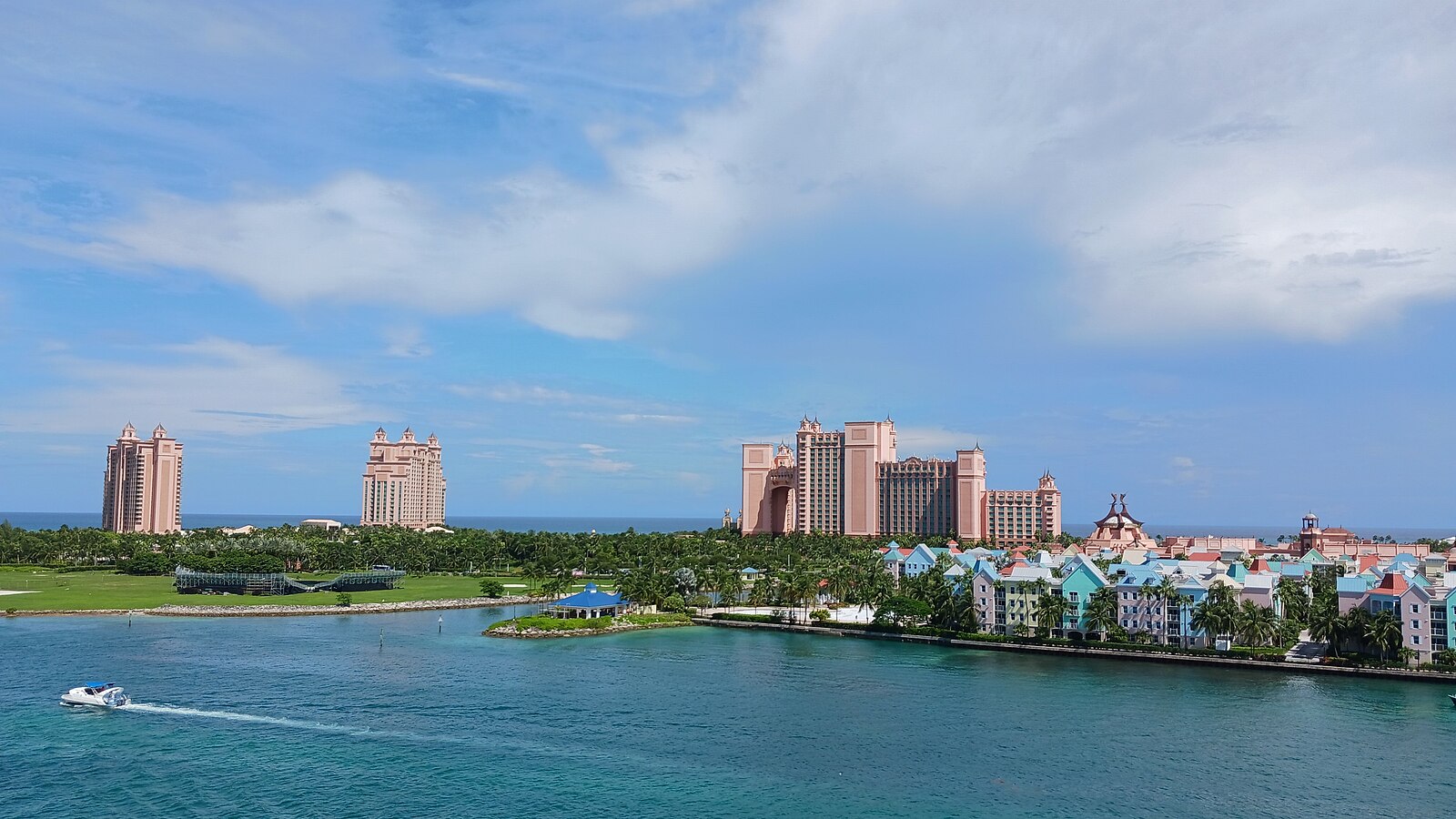
Taxes in the Bahamas start from a simple fact: the country levies no personal income tax, no capital gains tax and no inheritance tax. The state instead raises its money from consumption, property, imports and payroll contributions. For a foreign resident, those charges decide the real cost of living and owning a home.
This guide sets out the rules as of September 2026. It draws on the Department of Inland Revenue (DIR), the national revenue authority, and current law-firm and Big Four summaries.
The Bahamian dollar is pegged at par, at a rate of 1.0000 to the US dollar per the Central Bank of The Bahamas on 22 September 2026. All figures below are therefore in US dollars.
What the Bahamas does not tax
PwC’s tax summary, reviewed in July 2026, states that there is no personal income tax in the Bahamas. Salaries, pensions, dividends, interest and rent received by an individual are not taxed as income. There is also no capital gains tax, no net wealth tax and no inheritance, estate or gift tax.
Residence in Nassau does not by itself end what your home country claims. Many countries tax people who remain resident there, so a move only helps if you genuinely leave under your home rules. The United States taxes by citizenship, a special case covered further below.
Companies face a narrow exception. Since a law passed in November 2024, the Domestic Minimum Top-up Tax applies a 15% effective rate to Bahamian units of the largest multinational groups. Those are the groups covered by the global minimum tax agreed at the Organisation for Economic Co-operation and Development (OECD).
VAT at 10%, with unprepared food now exempt
Value added tax (VAT), a tax on the sale of goods and services, is the charge an expat meets every day. It arrived at 7.5% in 2015, rose to 12% in 2018 and was cut back to 10% in 2022. The 10% standard rate applies to most shop purchases, restaurant meals, professional fees, construction work and imports.
The largest recent change took effect on 1 April 2026. Unprepared food sold by food stores, such as fresh meat, fish, fruit, vegetables, frozen goods and baby food, became exempt from VAT. It had previously carried a reduced rate of 5%.
The exemption is narrower than it sounds. According to law firm Higgs & Johnson, it covers unprepared food sold or imported by food stores, while food an individual imports personally still attracts 10% VAT. Restaurant and takeaway meals remain at the standard rate.
A second reduced rate of 5% covers diapers, feminine hygiene products, medications and medical supplies. Since 1 April 2026 it applies whoever sells or imports them, not only food stores and pharmacies. Sweets, chewing gum and soft drinks returned to the full 10% in 2025.
Businesses must register for VAT once taxable turnover reaches US$100,000 in any 12-month period. A small consultancy below that level does not have to charge VAT to its customers. Foreign owners who let a home as a vacation rental are the exception, because the VAT Act requires them to register whatever their turnover.
The transfer tax when you buy property
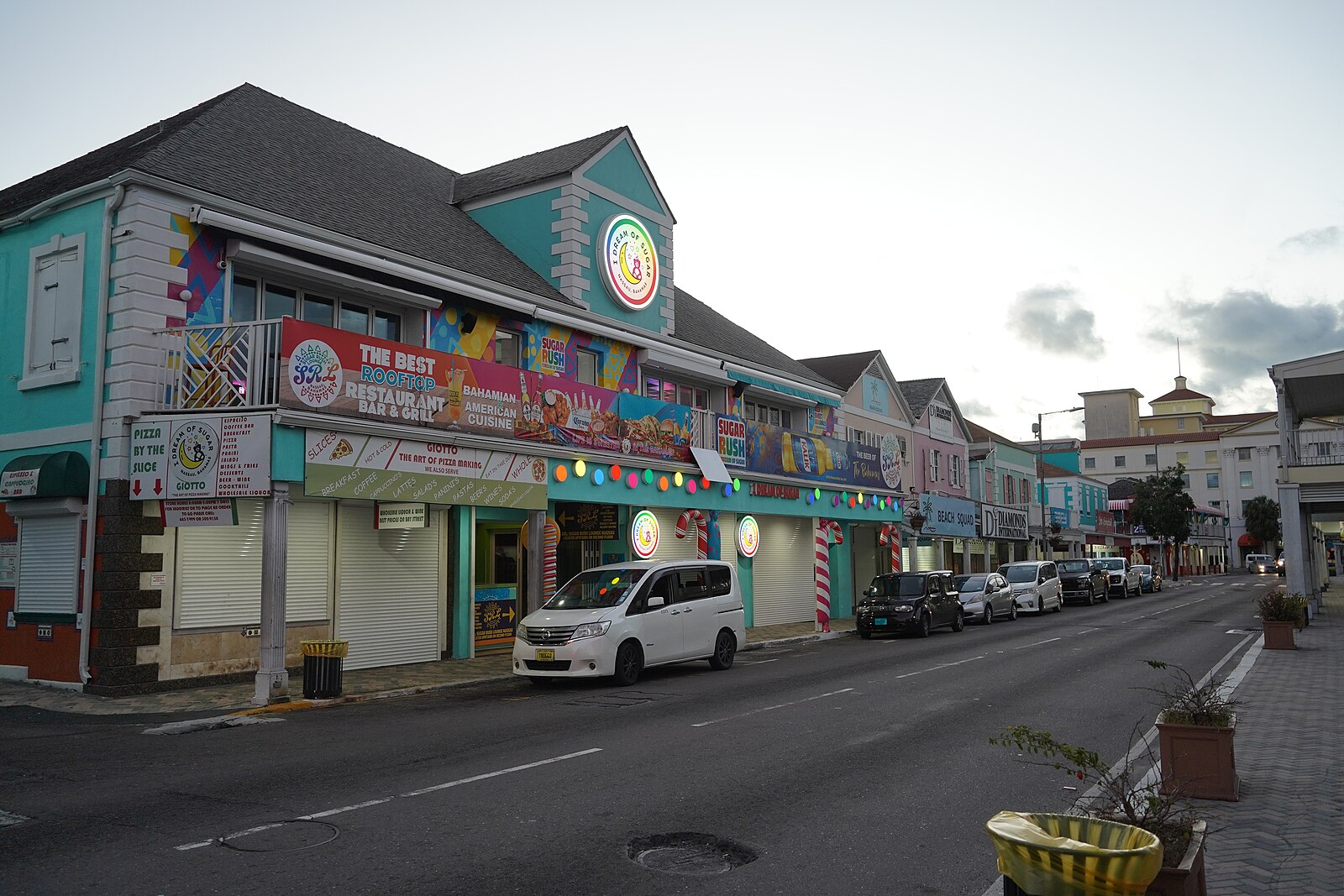
Buying a home triggers VAT on the conveyance, the deed that transfers ownership. Since 1 July 2023 the Value Added Tax Act has charged a flat 10% on any transfer to a foreign person, whatever the price.
A foreign person is anyone who is neither a citizen nor a permanent resident with the right to work. Companies with any non-Bahamian ownership also pay the flat 10%. Buyer and seller customarily split the tax equally unless the sale contract says otherwise.
Bahamian individuals pay a sliding scale: 2.5% up to US$100,000, 4% up to US$300,000 and 6% up to US$500,000. Above that it is 8%, then 9% from US$700,000 and 10% beyond US$1 million. Bahamian first-time buyers pay no transfer VAT up to US$300,000.
Since July 2025 the parties must obtain a provisional VAT invoice from the DIR before the conveyance is signed. The seller, or the real estate agent if one is used, must then file a declaration with the DIR within 30 days.
VAT on a property sale still unpaid 21 days after falling due bears interest at the prime rate plus 1%. The DIR has begun to enforce that rule. A mortgage carries stamp duty of 1% of the amount borrowed.
Annual real property tax and the 2026 foreign-owner rules
Real property tax is billed each year by the DIR on the assessed market value of land and buildings. Bills are due by 31 March, with a 10% discount for paying in full by then. A 5% surcharge is added on 1 January to any tax still unpaid.
An owner-occupied home is exempt on its first US$300,000 of value. The next US$200,000 is taxed at 0.625% and the rest at 1%, with the annual bill capped at US$150,000. Until 2026 a foreign owner who lived in the home could also use this scale, subject to minimum-occupancy rules.
The Real Property Tax (Amendment) Bill 2026, tabled with the 2026–27 budget and written to take effect on 1 July 2026, changes that. It limits the owner-occupied scale to Bahamians and permanent residents with the right to work, and moves foreign owner-occupiers into a separate class.
That class pays a flat 0.625% of full assessed value, with no US$300,000 exemption and an annual cap of US$200,000. As of September 2026 the DIR had not published the final Act or updated its rate guide, so confirm with the department which class your bill uses.
On a US$1 million home, both routes produce about US$6,250 a year. On a US$2 million home, the foreign bill of US$12,500 is lower than the US$16,250 a Bahamian owner-occupier pays. Realtors raised that gap with the government in June 2026.
Homes that are rented out are taxed differently. Foreign-owned rental property falls on the commercial scale: 0.75% on the first US$500,000, 1% on the next US$1.5 million and 1.5% on the balance.
Vacant land held by foreigners pays a US$100 flat fee on the first US$7,000 of value and 2% on the rest, while Bahamians pay nothing on vacant land. The DIR also says Bahamians on the Family Islands, the islands beyond the main population centres, are currently exempt, while foreign owners there are billed.
Customs duty on everything that arrives by ship or plane
Because the islands produce little, import duty shapes prices as much as VAT does. Duty is set by tariff heading in the Customs Tariff Schedule and charged on the cost, insurance and freight value of goods. Rates vary widely by item, so the Bahamas Customs Department points importers to its online tariff search.
VAT is then charged on top. Customs calculates it on the value of the goods plus the duty, processing fees, freight, insurance and any environmental levy, so the two taxes compound.

Bahamians and residents returning from a trip may bring in personal goods duty-free under two exemptions of US$500 each per calendar year, but only in accompanied baggage. Visitors are allowed US$100 per trip, and adults also receive fixed allowances of spirits, wine and tobacco.
Goods shipped by courier or freight do not qualify for those exemptions and pay full duty and VAT. Cars older than 10 years need prior approval from the Ministry of Finance and pay an environmental levy of 20% of landed cost.
Larger duty relief is written mainly for citizens and permanent residents. One returning after two years abroad may import household effects worth up to US$10,000 and a vehicle worth up to US$30,000 without duty, once every five years.
The 2026–27 budget also announced lower duties on some household plastics, paper goods, sanitary products and wigs for cancer and alopecia patients.
National Insurance and the business licence tax
Anyone employed in the Bahamas, including a work-permit holder, must contribute to the National Insurance Board (NIB), the state social security fund. PwC and Deloitte both list the employee share at 4.65% of wages, the employer share at 6.65% and the self-employed rate at 10.3%.
Contributions stop at a weekly insurable wage ceiling, which PwC puts at US$830 and Deloitte’s 2026 highlights at US$810. The board adjusts the ceiling from time to time, so confirm the current figure with NIB. Contributions are tied to local work, so a retiree living on foreign income has no payroll to declare.
Every business needs an annual business licence from the DIR, and foreign-owned firms first need approval from the Bahamas Investment Authority, the government’s investment agency. The licence tax is based on the previous year’s turnover: 0.5% from US$100,000 to US$500,000, 0.75% up to US$5 million and 1.25% above.
Deloitte lists turnover below US$100,000 at a 0% rate, and the DIR charges US$100 for a new licence. Banks, international business companies and some other sectors pay special rates. Renewals are filed by 31 January and paid by 31 March, with a 10% penalty for late payment.
Holiday-rental owners count as a business for this purpose and need a licence. A foreign owner must also register for VAT, whatever the rental turnover.

US citizens still answer to the IRS
The United States taxes its citizens and green-card holders on worldwide income wherever they live. An American in Nassau owes no Bahamian income tax but must still file a federal return with the Internal Revenue Service (IRS).
The foreign earned income exclusion can shelter salary or self-employment income earned while living abroad. The ceiling is US$130,000 for 2025 and US$132,900 for 2026, according to the IRS. It does not cover pensions, Social Security, dividends, interest or capital gains.
The foreign tax credit, the usual relief against double taxation, offers little here because there is almost no Bahamian income tax to credit. VAT, import duty and property tax are not income taxes and cannot be credited against a US income tax bill.
Reporting rules apply even when no tax is owed. If your foreign accounts together exceed US$10,000 at any point in the year, you must file a Report of Foreign Bank and Financial Accounts, known as the FBAR. It is due on 15 April, with an automatic extension to 15 October.
What this means for your money
For a retiree or remote worker, most taxes in the Bahamas are paid at the till rather than on a return. VAT at 10% and import duties are built into prices, which is why imported goods, cars and building materials cost more than their sticker price abroad.
The April 2026 food exemption lowers the tax on supermarket staples, but only on unprepared food and only if shops pass the saving on. Dining out, personal food shipments and most household goods still carry full VAT.
Property is where the large sums sit. A foreign buyer of a US$1.5 million house should expect transfer VAT of US$150,000 at the 10% rate, customarily split with the seller. Annual property tax would be about US$9,375 at the foreign owner-occupied rate in the 2026 bill, or US$13,750 if the house is rented out.
Anyone who works locally adds NIB contributions and, if self-employed, a business licence. Americans should keep filing with the IRS every year, because the absence of Bahamian income tax does not remove US liability.
Taxes in the Bahamas change with each budget, usually presented in late May and taking effect on 1 July. Check current DIR guidance and take advice from a Bahamian attorney before buying property or opening a business.
More: Latin America coverage from The Rio Times.
Sources: PwC Tax Summaries, Bahamas individual other taxes (reviewed July 2026), PwC Tax Summaries, Bahamas corporate other taxes, Deloitte, Bahamas tax highlights 2026, Government of The Bahamas on the removal of VAT from unprepared food, Higgs & Johnson, VAT update (March 2026), Higgs & Johnson, tax legislative updates 2025, Value Added Tax (Amendment) Act, 2023 on the 10% rate for foreign persons and vacation-rental registration, Value Added Tax (Amendment) (No. 2) Act, 2025 on conveyance declarations and interest, Department of Inland Revenue, real property tax guidance, Real Property Tax (Amendment) Bill 2026, The Tribune on the foreign owner-occupied rate, Department of Inland Revenue, business licence guidance, Bahamas Customs Department, traveller and import guidance, IRS on the foreign earned income exclusion, IRS on FBAR reporting
This article was produced by The Rio Times’ automated newsroom system. How we use AI · Report an error
Read More from The Rio Times