Investing in the Bahamas as a Foreigner 2026: Property, Funds and the Zero-Tax Frame
GUIDES · BAHAMAS
Key Facts
- —What it is A standing guide for non-Bahamians putting money into Bahamian property, funds or residence, and into the rules that govern each.
- —Who it’s for Home buyers, land investors, fund promoters and would-be residents, mostly from the US, Canada, the UK and Europe.
- —What it costs No income, capital-gains or inheritance tax, but 10% VAT on a foreigner’s property purchase and annual real property tax.
- —The rules Foreign buyers need an Investments Board certificate or permit, and the Central Bank records foreign money so it can leave again.
- —The catch Hurricanes, an economy tied to US visitors, and property-tax rules for foreign owners that changed on 1 July 2026.
- —What is still open Whether new taxes follow to cut public debt, and how strictly the new foreign-owner property tax is enforced.
Investing in the Bahamas means no tax on income or gains. The real costs come at the door: transfer VAT, property tax, permits and insurance.
Investing in the Bahamas starts with a simple promise: no personal income, capital-gains or inheritance tax. The price of entry is paid elsewhere, through transfer VAT, property tax, paperwork and exposure to hurricanes and American tourism.
The Bahamas is an archipelago of about 403,000 people, according to World Bank data for 2025. That is slightly more than Iceland’s 392,000 on the same data, spread across many islands.
Output per person was about US$39,455 in 2024, less than half the US level of about US$86,170. The whole economy measured about US$15.8 billion that year, on the same World Bank data.
The zero-tax frame, and what you still pay
The Bahamas levies no personal income, capital-gains, inheritance or gift tax, according to PwC’s tax summary reviewed in July 2026. There are no personal income tax returns to file.
The state lives instead on value added tax (VAT), a sales tax charged at each stage of supply. The Department of Inland Revenue sets the standard rate at 10%. A reduced 5% rate covers listed items such as some medicines.
Unprepared grocery food has been free of VAT since 1 April 2026, the government’s May 2026 budget statement said. In the 2025/26 period it reviewed, VAT raised about US$1.1 billion, or 43.8% of all government revenue.
The zero-tax frame covers Bahamian tax only. The United States taxes its citizens on worldwide income wherever they live. Other home countries apply their own residence and exit rules.
Large multinational groups are the main exception. The Domestic Minimum Top-Up Tax Act, 2024 sets a minimum effective tax rate of 15% for groups under the OECD’s global rules.
The low-tax model draws outside scrutiny. The Council of the European Union listed the Bahamas as a non-cooperative tax jurisdiction on 4 October 2022. The reason given was a failure to enforce economic-substance rules for zero-tax companies.
It was removed on 20 February 2024 after progress on enforcement. In the EU’s 17 February 2026 review, it sat among cooperative jurisdictions with no pending commitments. The next review is due in October 2026.
The Bahamian dollar peg and exchange control
The Bahamian dollar has been fixed at par with the US dollar since 1973, according to the Central Bank of The Bahamas. On 25 September 2026, open.er-api.com quoted exactly 1.00 Bahamian dollar per US dollar.
The central bank itself buys US dollars from commercial banks at the same one-for-one rate. Bahamian law sets fees and thresholds in Bahamian dollars, so this guide quotes them directly in US$.
The peg is protected by exchange control, run by the central bank’s Exchange Control Department. A non-resident who brings in foreign currency to buy property registers that investment, a status called Approved Investment Status.
That status guarantees the right, on application, to repatriate sale proceeds and rental income, the central bank says. The investor must document that the money came from abroad.
Since October 2019, residential deals involving non-residents no longer need prior central-bank approval. Commercial banks may sell foreign currency to repatriate residential sale proceeds, but non-resident-owned companies may not buy property with Bahamian-dollar loans.
From 1 April 2024, non-residents buying non-residential or mixed-use property with foreign money can also close without the central bank. Development projects and purchases using local financing still need its approval.
Buying property under the landholding law
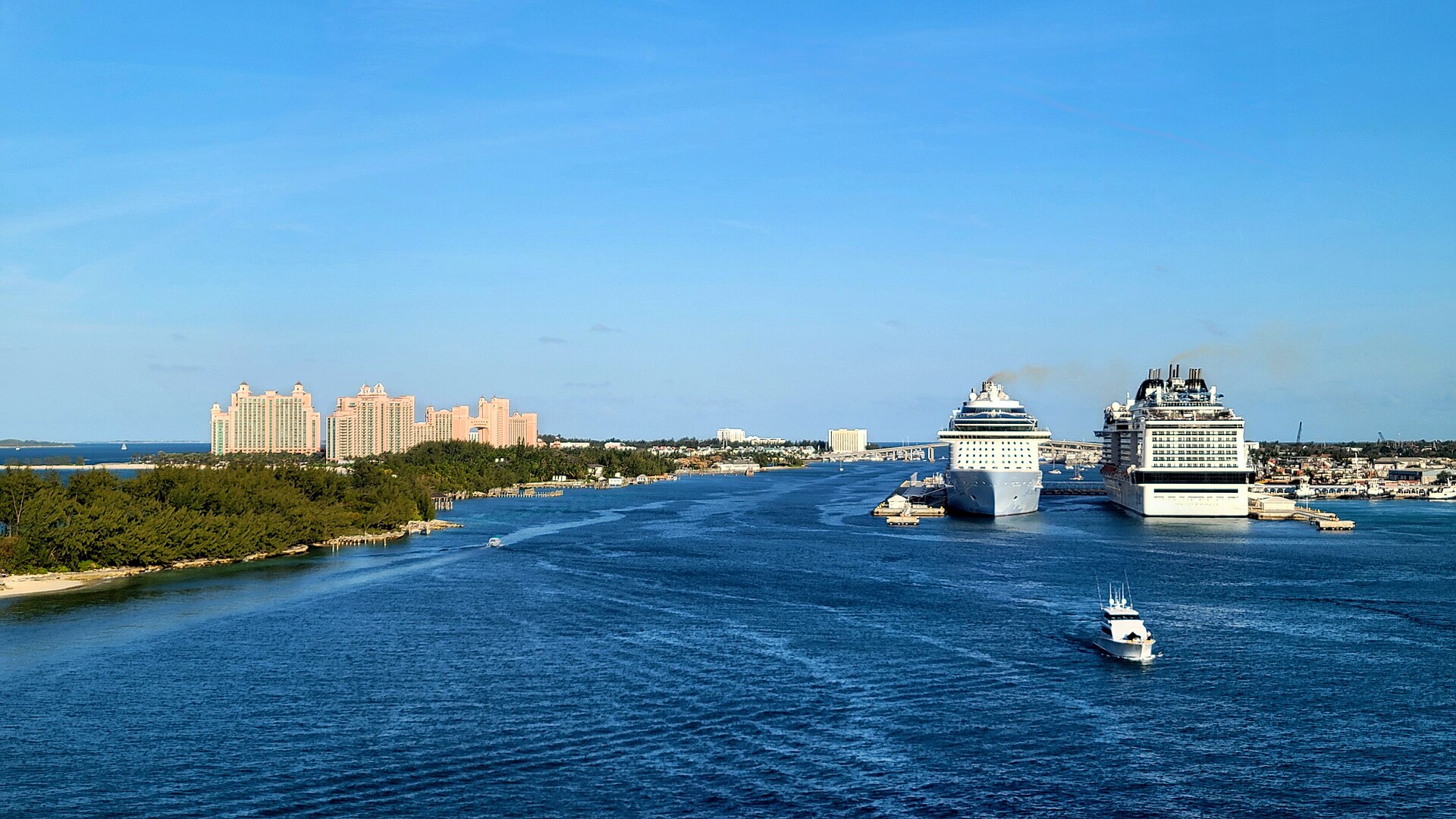
Foreign ownership of land is governed by the International Persons Landholding Act of 1993. The Investments Board of the Bahamas Investment Authority administers it through two routes: a Certificate of Registration or a permit.
A non-Bahamian buying a first home for personal use registers the purchase after closing. The exception is undeveloped land that would leave the buyer holding two or more contiguous acres, which needs a permit.
A permit is also required for a second property or any purchase for investment or commercial use. It must be granted before closing, or the purchase is void under the Act.
Each document costs US$1,000, according to law firm Lennox Paton’s chapter for the Legal 500 guide. Since July 2024, a permit lapses if the buyer misses a 180-day deadline. By then the VAT must be paid, the Chief Valuation Officer notified and property tax paid.
Since July 2025, an unused permit can be extended for 180 days, at most twice, by filing a notice and paying a fee. Large developments also go to the National Economic Council, usually made up of the prime minister, other ministers and senior officials.
Transfer VAT is the largest closing cost. Non-Bahamian buyers pay 10% of the value, so a US$1 million house carries US$100,000 in VAT. Mortgages attract 1% of the sum secured.
Bahamian buyers of homes pay tiered rates from 2.5% to 10%. Since 1 July 2025, a provisional VAT invoice from the Department of Inland Revenue must be obtained before any conveyance is signed.
The assessed VAT must be paid within 180 days of signing, and the deed recorded within the same period. Unpaid transfer VAT ranks ahead of mortgages and other claims on the property.
Real property tax after the July 2026 reform
Owners pay annual real property tax, based on market value, use and the owner’s status. Bahamians are exempt on vacant land and on property in the Family Islands, the islands outside New Providence.
On 1 July 2026, the Real Property Tax (Amendment) Act created a new class called foreign owner-occupied property. It covers non-Bahamians with a residence permit, annual work permit or Home Owner Resident Permit who live in the home.
The occupation can be permanent or seasonal. This replaced the old test of spending 180 days a year in the country, the May 2026 budget statement said.
That class pays 0.625% on value up to US$1 million and 1% above, capped at US$200,000 a year. On those rates, a US$2 million home would owe about US$16,250 a year.
Bahamians and permanent residents with the right to work pay the owner-occupied rate on the home they live in. The first US$300,000 of value is exempt, with 0.625% on the next US$200,000 and 1% above, capped at US$150,000 a year.
Most foreign-owned homes outside the new class, such as rentals, are treated as commercial property. The Department of Inland Revenue lists 0.75% on the first US$500,000, 1% on the next US$1.5 million and 1.5% above.
Foreign-owned vacant land pays US$100 on the first US$7,000 of value and 2% on the rest, on the same schedule. Bills must be paid by 31 December to avoid an extra 5% interest charge.
Arrears are costly. Under the 2026 amendment, the Treasurer may sell a property after more than 12 months of unpaid tax. The budget statement said foreign-owned collections had fallen short.
Investment funds, digital assets and the FTX episode
Funds and securities are supervised by the Securities Commission of The Bahamas (SCB), a statutory regulator set up in 1995. It administers the Investment Funds Act, 2019, the Securities Industry Act, 2024 and the digital-asset law.
Every fund operating in or from the Bahamas must be licensed or registered, as a professional, standard, SMART or master fund. A professional fund may be sold only to eligible investors.
Eligible individuals include those worth more than US$1 million, or those earning over US$200,000 in each of the last two years. Banks, insurers, regulated funds and securities firms also qualify.
SMART stands for Specific Mandate Alternative Regulatory Test. A financial institution or adviser proposes a fund structure for the SCB to approve. Funds built on that template must then follow its written rules.
Digital assets came under the Digital Assets and Registered Exchanges Act, 2020, known as the DARE Act. FTX Digital Markets, the Bahamian arm of the FTX crypto exchange, was incorporated in July 2021 and registered under it.
On 10 November 2022, the SCB froze FTX Digital Markets’ assets, suspended its registration and sought a court-appointed provisional liquidator. The regulator says this was the first action taken anywhere against an FTX entity.
Two days later, the SCB moved the firm’s digital assets into digital wallets under its exclusive control. FTX founder Sam Bankman-Fried was arrested in the Bahamas on 12 December 2022 at the request of the US government.
A New York jury convicted him of fraud and conspiracy in November 2023. On 28 March 2024, a US federal judge sentenced him to 25 years in prison.
Parliament replaced the law with DARE 2024, announced by the SCB on 30 July 2024. It adds rules for staking, advice and derivatives, sets reserve and redemption rules for stablecoins and bans algorithmic stablecoins.
The lesson for a foreign investor is that a licence is not a guarantee. Check a firm’s registration with the SCB and ask where client assets are held and by whom.
Residency by investment: the US$1 million threshold
Permanent residence lets a foreigner live in the Bahamas for life unless it is revoked, and may include the right to work. It does not include the right to vote, the government’s residency page says.
Since 1 January 2025, economic permanent residence requires an investment of at least US$1 million, up from US$750,000. It can be Bahamian real estate or zero-coupon bonds from the Central Bank, held for at least ten years.
The change came through the Immigration (Amendment) (No. 2) Act, 2024. Property received by deed of gift no longer counts. Applicants must prove the investment with a tax assessment number or central-bank confirmation.
Buying at the threshold opens an application, not an automatic right. Some government pages still cite an older US$1.5 million figure for faster review. Confirm the current rule with the Department of Immigration.
Permanent residents register property purchases instead of seeking a permit. Those with the right to work also qualify for the owner-occupied property-tax rate under the July 2026 amendment.
Politics, US tourism and hurricane risk
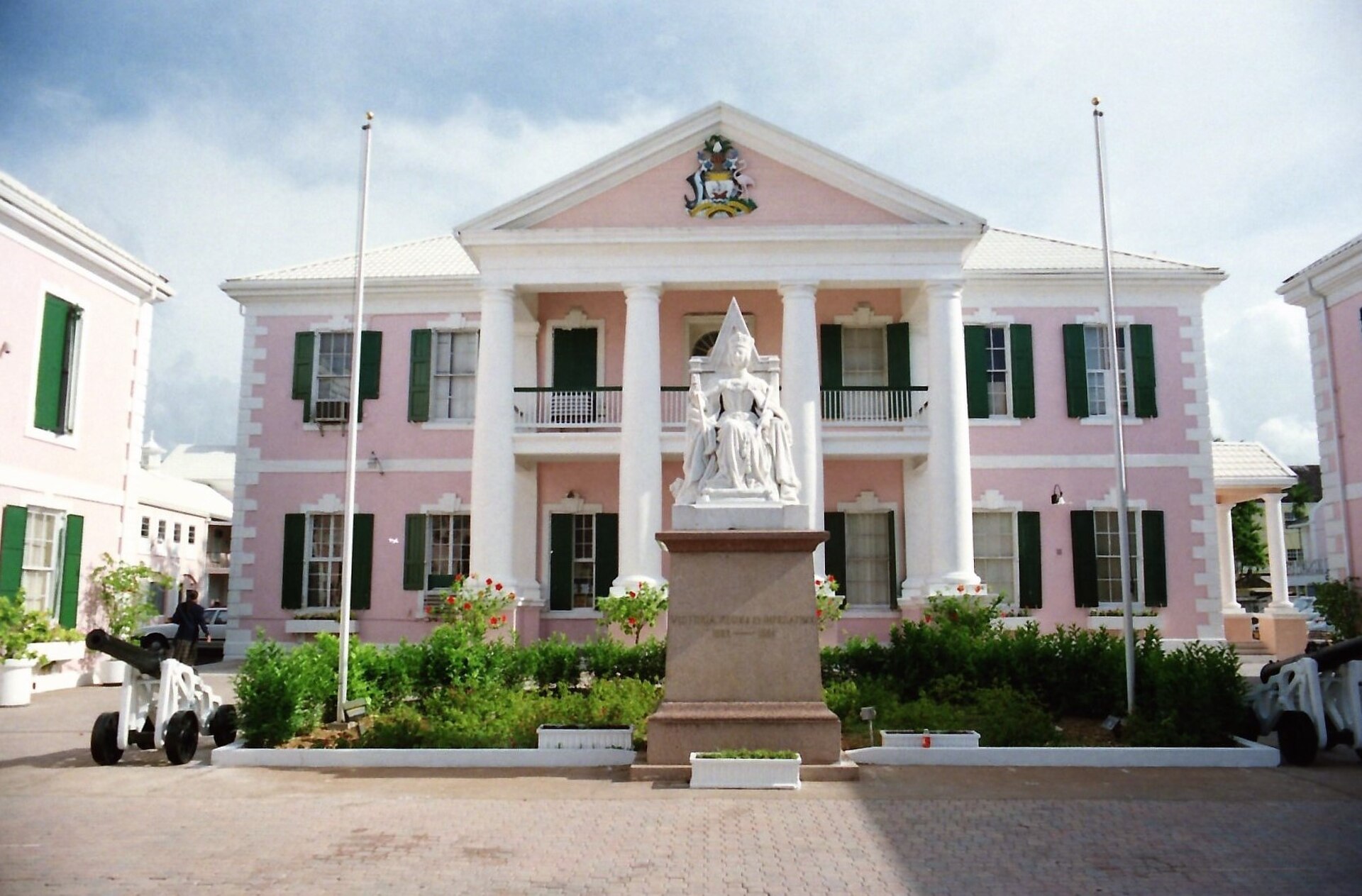
As of 25 September 2026, Prime Minister Philip Davis leads a second consecutive government of the Progressive Liberal Party (PLP). His party won 33 of 41 seats in the early general election of Tuesday, 12 May 2026.
The Free National Movement (FNM) took the other eight seats. Official results showed 139,026 votes counted and turnout of 66.4%, the Nassau Guardian reported, and Davis was sworn in on 14 May.
Finance Minister Michael Halkitis presented the first budget of the new term on 27 May 2026. It projects US$4.4 billion in revenue and a US$223.1 million surplus. It raises revenue from the largest businesses and immigration applicants, and it reforms property tax for foreign owners.
The economy runs on visitors. The Bahamas received a record 12.5 million visitors in 2025, about 31 per resident, the Ministry of Tourism reported. Cruise passengers made up 86.5% of arrivals.
The International Monetary Fund (IMF) counts around 80% of tourists as coming from the United States. Spending by overnight visitors alone equals about 28% of GDP, so a US slowdown quickly reaches rents and hotel values.
The IMF forecasts growth of 2.2% in 2026 after 2.8% in 2025, easing towards 1.5% later. It put central government debt near 74% of GDP and has suggested income taxes and a higher VAT to reduce it.
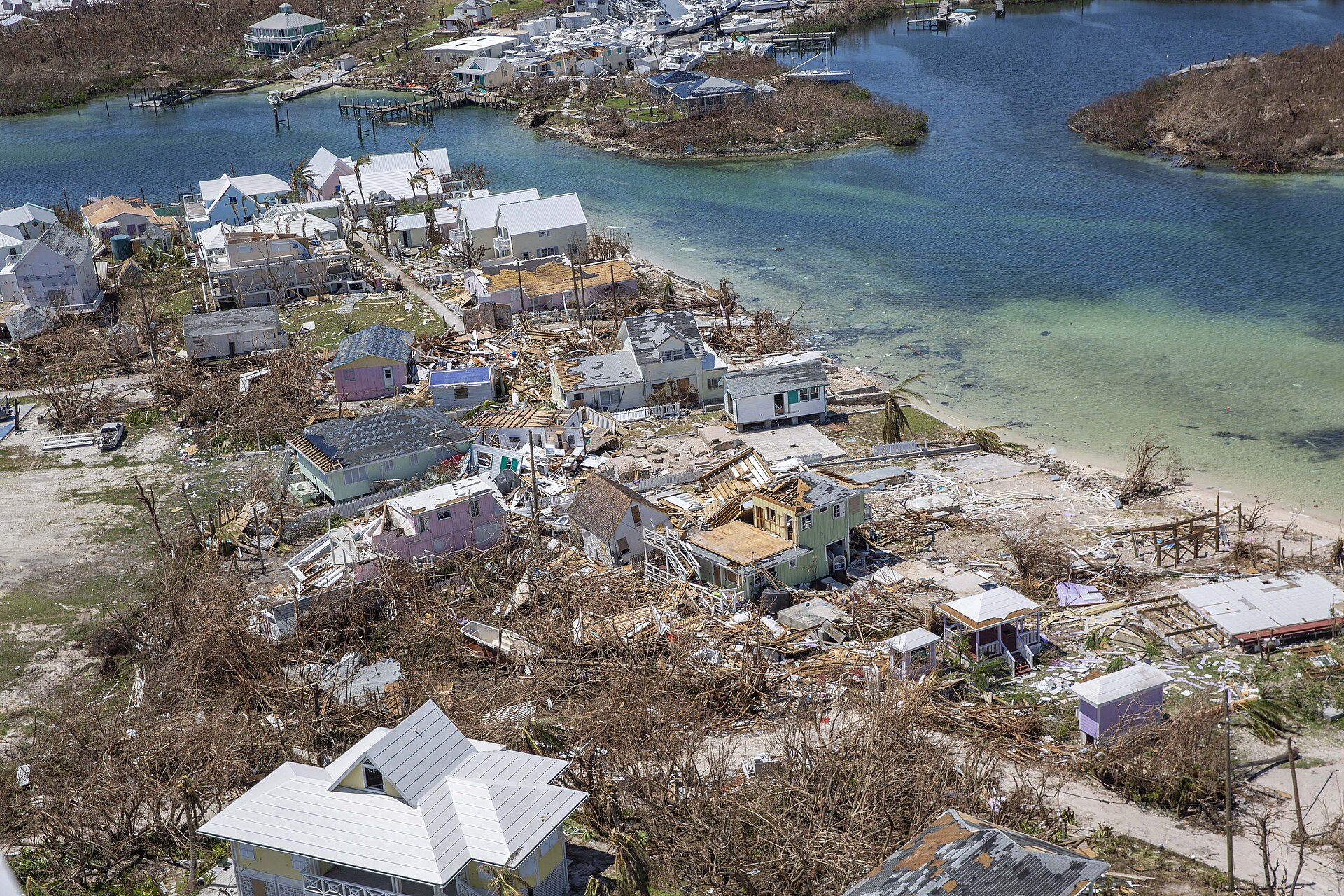
Hurricanes are the other structural risk. Hurricane Dorian struck Abaco and Grand Bahama as a Category 5 storm from 1 to 3 September 2019. It left 67 confirmed deaths, with 282 people still missing weeks later.
The Inter-American Development Bank (IDB) put the damage and losses at US$3.4 billion, over a quarter of GDP. It compared this to the US losing the combined output of California, Texas and Florida.
Housing alone suffered nearly US$1.5 billion in physical damage. In October 2025, Hurricane Melissa forced evacuations from some sparsely populated islands, though the IMF judged its economic impact modest.
Insure from the day you sign. Under English common-law rules, which the Bahamas follows, risk passes to the buyer at exchange of contracts, Lennox Paton notes. The buyer’s interest should be noted on the policy.
Practical steps before investing in the Bahamas
First, hire a Bahamian attorney before signing anything. Title must run in an unbroken chain to a good root. Deeds to foreign owners since November 1983 should carry their permits or certificates.
Second, wire the purchase money from abroad, ideally into your attorney’s foreign-currency client account. Keep the bank records, because they prove your right to take the money out again.
Third, decide whether you need a certificate or a permit, and obtain any permit before closing. Budget 10% of the price for VAT and agree in the contract who pays it.
Fourth, request the provisional VAT invoice, then pay the assessed VAT and record the deed within 180 days. Notify the Chief Valuation Officer promptly, and claim the foreign owner-occupied rate if you qualify.
Fifth, price insurance before you commit, including the hurricane deductible and cover for storm surge and flooding. Finally, take tax advice at home, because investing in the Bahamas does not end tax duties elsewhere.
Connected Coverage
Buying Property in the Bahamas for Foreign Buyers in 2026
Bahamas Has No Income Tax, but a 10% Value-Added Tax Applies
Bahamas Visa and Residency 2026 — Entry, Permits, Property and Tax
Philip Davis Wins Early Election as Bahamas Economy Rides Record 12.5 Million Visitors
Sources: Tax rules from the Department of Inland Revenue, the Official Gazette and PwC; exchange control and the peg from the Central Bank of The Bahamas; landholding and residency law from the Bahamas statute database, UNCTAD and the Legal 500; funds and digital assets from the Securities Commission; election, budget, tourism, growth, hurricane and tax-list facts from the Nassau Guardian, the Tribune, the Ministry of Tourism, the IMF, the IDB, the World Bank and the Council of the EU. All accessed 25 September 2026.
- inlandrevenue.finance.gov.bs
- inlandrevenue.finance.gov.bs
- laws.bahamas.gov.bs
- laws.bahamas.gov.bs
- centralbankbahamas.com
- centralbankbahamas.com
- immigration.gov.bs
- scb.gov.bs
- imf.org
- consilium.europa.eu
- iadb.org
- thenassauguardian.com
What Is Not Known
Whether new taxes will follow is not known. The IMF says the government needs extra measures to cut debt to its 50%-of-GDP target by 2030/31. No personal income tax has been announced.
How the July 2026 property-tax reform will work in practice is not yet clear. The first bills under the foreign owner-occupied class are still to come. It is not known how disputed classifications will be settled, or how often the new power of sale will be used.
The published commercial property-tax schedule and older consolidated versions of the statute do not match on the top rate. Owners of foreign-held rental homes should ask the Department of Inland Revenue for their own assessment rather than rely on a table.
The outcome of the EU’s October 2026 review of its tax list is not known. Nor can anyone forecast the next major hurricane, or how insurance premiums in the islands will move after it.
Frequently Asked Questions
Do foreigners pay income tax when investing in the Bahamas?
No. The Bahamas levies no personal income tax, no capital-gains tax and no inheritance or gift tax. It relies instead on VAT, charged at a standard rate of 10%, and on property tax. Home countries may still tax their residents or citizens, as the United States does on worldwide income.
How much VAT does a foreigner pay when buying property in the Bahamas?
Non-Bahamian buyers pay VAT of 10% of the property’s value, so a US$1 million house carries US$100,000. A provisional VAT invoice must be obtained before signing, and the assessed VAT must be paid within 180 days. Mortgages attract VAT of 1% of the amount secured.
Do foreigners need a permit to buy property in the Bahamas?
A first home for personal use needs only a Certificate of Registration from the Investments Board, obtained after closing. A permit is needed before closing for a second property or an investment or commercial purchase. It is also needed for undeveloped land giving two or more contiguous acres, and each document costs US$1,000.
How much property tax does a foreign homeowner pay in the Bahamas?
From 1 July 2026, permit-holding foreigners who live in their home pay 0.625% on value up to US$1 million. Above that the rate is 1%, capped at US$200,000 a year. Most other foreign-owned homes are taxed as commercial property, listed at 0.75% to 1.5%.
How much must I invest for permanent residence in the Bahamas?
Since 1 January 2025, economic permanent residence requires at least US$1 million, held for at least ten years. It can be Bahamian real estate or Central Bank zero-coupon bonds, and the earlier minimum was US$750,000. Buying at the threshold opens an application, not an automatic right.
Can I take my money out of the Bahamas when I sell?
Yes, if the purchase was funded with foreign currency and documented. The Central Bank grants Approved Investment Status, which guarantees the right to repatriate sale proceeds and rental income on application. Since 2019, commercial banks can sell foreign currency to repatriate residential sale proceeds.
This article was produced by The Rio Times’ automated newsroom system. How we use AI · Report an error
LatAm Markets: Live Signals → — real-time movers, turnover leaders and FX across Latin America.
Read More from The Rio Times