Philip Davis Wins Early Election as Bahamas Economy Rides Record 12.5 Million Visitors
Economy · Bahamas
—The stakes. The Bahamas economy is expanding on record tourism, but high public debt and a thin cruise-revenue base leave the next government with hard fiscal choices.
—The date. Prime Minister Philip Davis moved the general election up from October 2026 to 12 May 2026 and won a second term.
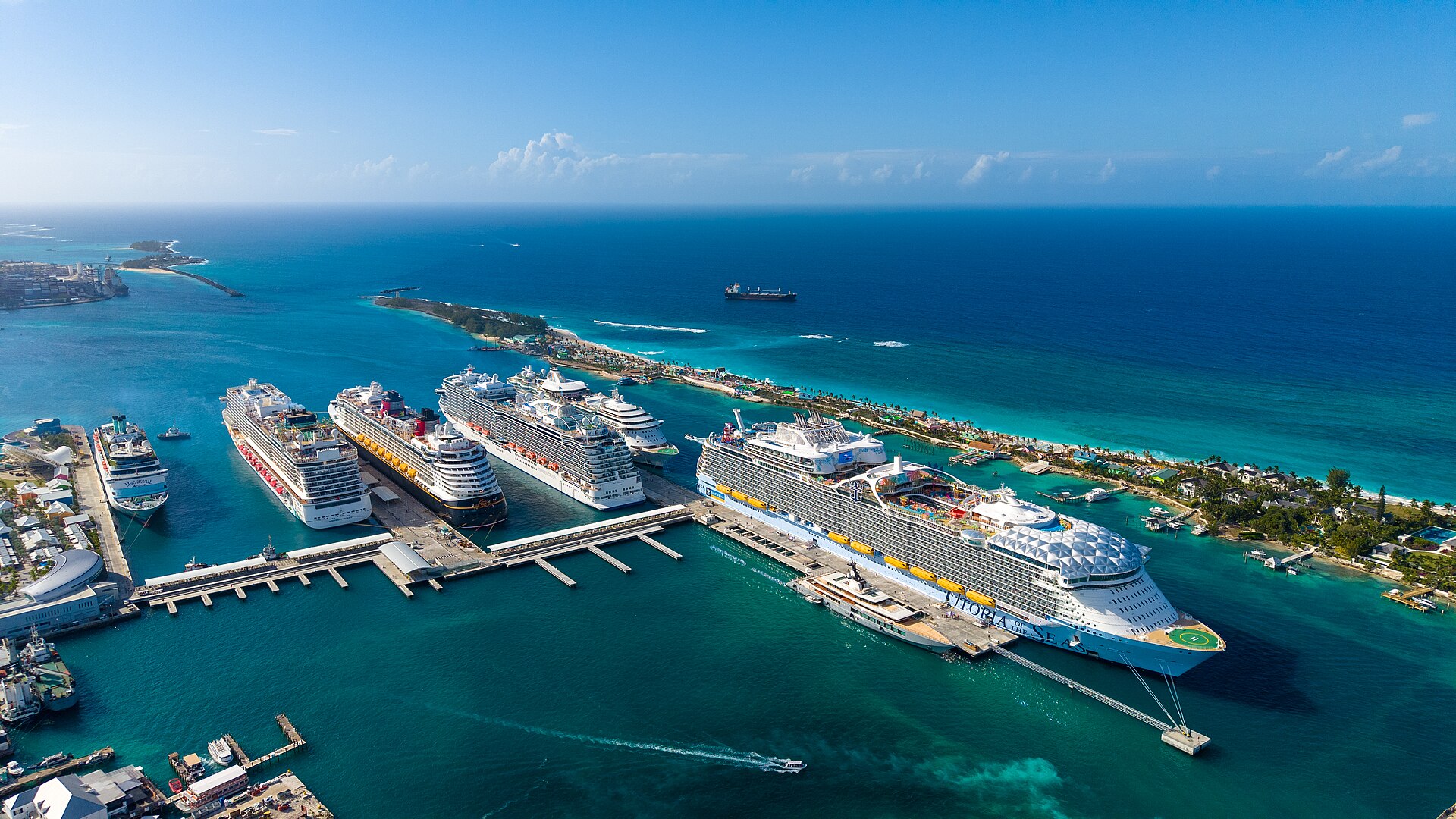
—The tourism engine. Total visitor arrivals reached 12.5 million in 2025, with sea arrivals at 86.5 percent of the total and cruise passengers far outnumbering stayover visitors.
—The debt overhang. Central government debt hit $12.4 billion, or 75.1 percent of GDP, at end December 2025, with the bulk of it owed to private creditors.
—The external pressure. Offshore finance remains under global tax strain while Chinese and US interest in the archipelago is driven mainly by geography and infrastructure needs.
Bahamas Prime Minister Philip Davis secured a rare second term in a snap 12 May 2026 election called to avoid Atlantic hurricane season disruption. He now governs an economy expanding on record cruise arrivals but carrying central government debt of 75.1 percent of GDP at end December 2025, with bondholders watching whether the boom can outpace reconstruction costs and global tax pressure.
Davis Moves the Election Clock Forward
Under the constitution, the general election was due by October 2026 if Parliament had not been dissolved earlier. Prime Minister Philip Davis announced on 1 April 2026 that Parliament would dissolve on 8 April 2026.
The vote was set for 12 May 2026. Reuters reported that officials linked the early date to avoiding disruption from the Atlantic hurricane season.
Davis was reelected on 12 May 2026. The opposition described the contest as constitutionally due by October before Davis advanced the timetable.
The early timing keeps policy continuity during the hurricane season. It also avoids a campaign colliding with storm reconstruction spending.
A Tourism Boom Built on Cruise Passengers
Total visitor arrivals rose 11.4 percent to 12.5 million in 2025. That included 1.7 million air arrivals and 10.8 million sea arrivals.
Sea arrivals accounted for 86.5 percent of total visitors in 2025.
The Central Bank of The Bahamas said first-quarter 2026 tourist arrivals expanded 17.5 percent to 3.9 million. Sea visitors rose 19.6 percent to 3.3 million while air travel increased 5.2 percent to 0.5 million.
The cruise surge is historic but narrow.
The Stayover Spending Problem
The Prime Minister’s mid-year budget statement said cruise passenger arrivals rose 10.9 percent to a record 7.67 million in the first nine months of 2025. Stayover arrivals fell 2.8 percent over the same period.
Most visitor volume does not translate into most visitor spending. Cruise passengers arrive in large numbers but stayover visitors generate nearly all tourism expenditure.
The IMF expects Bahamian GDP growth of 2.8 percent in 2025, easing to 2.2 percent in 2026. The growth pattern is now tied to the cruise calendar rather than hotel occupancy.
For investors, the split matters. A cruise-heavy recovery creates jobs and port fees but leaves the economy exposed to itinerary changes by foreign cruise lines.
Public Debt at 75 Percent of GDP
Central government debt increased by $637.6 million to $12.4 billion, equal to 75.1 percent of GDP at end December 2025. The IMF put debt at around 74 percent of GDP using revised historical data.
The debt load is high for a small island economy dependent on tourism. Coface says the government targets reducing the public debt ratio to 50 percent of GDP by fiscal year 2030-31.
Interest costs remain heavy. Coface said the interest burden is around 4 percent of GDP and accounted for 21 percent of public expenditure in 2024-25.
Public entities add hidden pressure. Short-term loans to public entities rose from $441.7 million at end June 2024 to $632.8 million by end March 2026.
Hurricane Reconstruction and Fiscal Risk
The election’s early timing was partly designed to protect the government from campaigning during the Atlantic hurricane season. Reconstruction spending creates fiscal and political exposure.
Public borrowing pressures extend beyond the central government. Electricity utility loans now dominate short-term public entity debt.
Hurricane risk is a recurring fiscal event for The Bahamas. Any major storm can quickly widen deficits and delay debt reduction.
For creditors, election continuity offers near-term policy stability. The next government still faces difficult choices between rebuilding, electricity subsidies and debt targets.
Offshore Finance Under Global Tax Pressure
The Bahamas remains a significant financial jurisdiction, but Coface says its debt and fiscal position are strained. The country operates in a high-interest-burden environment.
Private creditors, mainly bondholders, hold the bulk of that debt. At end 2024, 45 percent of total public debt was external and foreign-currency debt.
The authorities completed a debt-for-nature swap in November 2024. A USD 300 million loan from Standard Chartered backed the buyback of USD 300 million in external debt, including USD 218 million of Eurobonds and USD 81 million of commercial bank loans.
Global corporate tax changes continue to squeeze offshore financial centres. The Bahamas must diversify revenue while managing a large foreign-currency debt stock.
The Debt-for-Nature Experiment
The November 2024 swap was a rare emerging-market operation. It used new commercial financing to retire Eurobonds and bank loans.
Debt swaps can lower near-term refinancing risk. They also tie budget policy to environmental commitments that may constrain spending.
For The Bahamas, the swap signals openness to innovative debt management. It does not resolve the broader 75 percent of GDP debt burden.
International investors are watching whether such tools can be scaled. The archipelago’s blue economy and hurricane exposure make it a candidate for more nature-linked finance.
Chinese and US Interest in the Archipelago
The Bahamas is strategically important to external actors as a tourism hub and a US-linked financial and transport neighbour. It also carries large external debt and infrastructure needs.
Verified 2026 sources do not quantify a new surge in Chinese lending or investment with hard numbers. The claim of rising Chinese interest should be treated cautiously.
US interest remains structural rather than a new quantified surge. Tourism dependence, debt structure and close economic ties anchor Washington’s longstanding attention.
The archipelago’s geography attracts both powers, but current public data centre on fiscal and tourism metrics rather than new investment deals.
What the IMF Sees in 2026
The IMF said stayover visitors account for around 90 percent of tourism expenditure, or 28 percent of GDP. That makes hotel and vacation rental performance more important than raw arrival counts.
The Fund expected Bahamian GDP growth of 2.8 percent in 2025 and 2.2 percent in 2026. The moderation reflects the limits of cruise-led expansion.
The snap vote held polling day before the storm season, which begins on 1 June.
The central bank’s first-quarter 2026 data confirm the growth momentum but also the air-sea divergence. Air arrivals grew just 5.2 percent while sea arrivals jumped 19.6 percent.
Credit Risk and the Private Creditor Base
Coface highlights the exposure to private creditors as a core vulnerability. Bondholders can demand refinancing terms that constrain fiscal policy.
Foreign-currency debt at 45 percent of total public debt leaves The Bahamas sensitive to US dollar interest rates. A stronger dollar raises local debt service costs.
The debt-for-nature swap reduced some Eurobond exposure. Yet the overall stock of commercial debt remains large relative to GDP.
For investors, the Bahamas offers tourism growth but also a high-interest-burden balance sheet. Election continuity does not remove the need for credible medium-term fiscal consolidation.
Davis’s Second-Term Fiscal Test
Philip Davis won a rare second term on 12 May 2026. His government now faces the same debt trajectory that shaped the first term.
Record visitor arrivals do not automatically solve the fiscal problem. Cruise volume adds fees but does not generate the high-spending stayover base needed to cut debt faster.
Hurricane reconstruction remains a permanent budget overhang. The early election avoided campaign disruption but did not remove storm risk.
Offshore finance and strategic geography give The Bahamas options. Converting those options into durable revenue and debt reduction is the core challenge of Davis’s new mandate.
The Big Picture
Correction, 27 September 2026: An earlier version of this article said the snap vote moved the political calendar inside the hurricane season. Polling day, 12 May 2026, fell before the season began on 1 June. The debt figures have also been aligned with the government’s mid-year budget statement.
Editorial responsibility: Matthias Camenzind, Editor-in-Chief · Editorial standards · Report an error
LatAm Markets: Live Signals → — real-time movers, turnover leaders and FX across Latin America.