
BAHAMAS · ECONOMY
Key Facts
- The country A tourism-led island nation whose dollar is pegged one to one to the US dollar.
- Why it matters US visitors drive its economy, so their return and rising travel costs shape the winter season.
- Why now The Central Bank published its quarterly briefing remarks and its September report on 29 October 2026.
- What happened The bank expects growth above 3.0% in 2026 while import-driven inflation firms and reserves ease.
- What it means for you Trips cost more, yet the one-to-one peg keeps dollar spending free of exchange-rate swings.
The Central Bank of The Bahamas, the country’s currency issuer and banking regulator, forecast on Thursday, 29 October 2026 that the economy will grow by more than 3.0% this year, even as the cost of imports pushes inflation higher. Governor John Rolle, who heads the bank, credited a recovery in US visitors and steady foreign investment, and warned that wars, oil prices and trade policy keep the risks elevated.
For US travellers the briefing carries good and bad news: demand from the United States is recovering while the price of a trip is rising. The Bahamian dollar is pegged one to one to the US dollar, so every amount here is the same in both currencies.
The governor’s remarks for the bank’s quarterly press briefing were published the same day as its Monthly Economic and Financial Developments report for September 2026. Related coverage includes the guide to who runs the Bahamas economy and the Bahamas country page.
What the Central Bank Said
Rolle said the economy expanded at a healthy pace in the first three quarters of 2026 and remained above the potential growth rate expected over the medium term. The bank still expects growth above 3.0% for the full year, driven by stopover tourism, investment in residential real estate and new hotel and cruise capacity.
External reserves, the foreign currency that backs the peg, stood at US$2,953.5 million at the end of September after falling US$149.0 million in that month. The governor put them at US$2.8 billion for October, slightly below the US$2.9 billion of a year earlier, and expects a stable to mildly lower year-end position.
Tourism and the US Visitor
The governor singled out a recovery in demand from the United States, which he called the most important visitor market, alongside strong growth from other countries led by Canada. The Ministry of Tourism’s figures, which the bank cites, show total visitor arrivals up 14.5% to 9.6 million in the eight months to August, with sea arrivals up 16.1% to 8.3 million and air arrivals up 5.6% to 1.3 million.
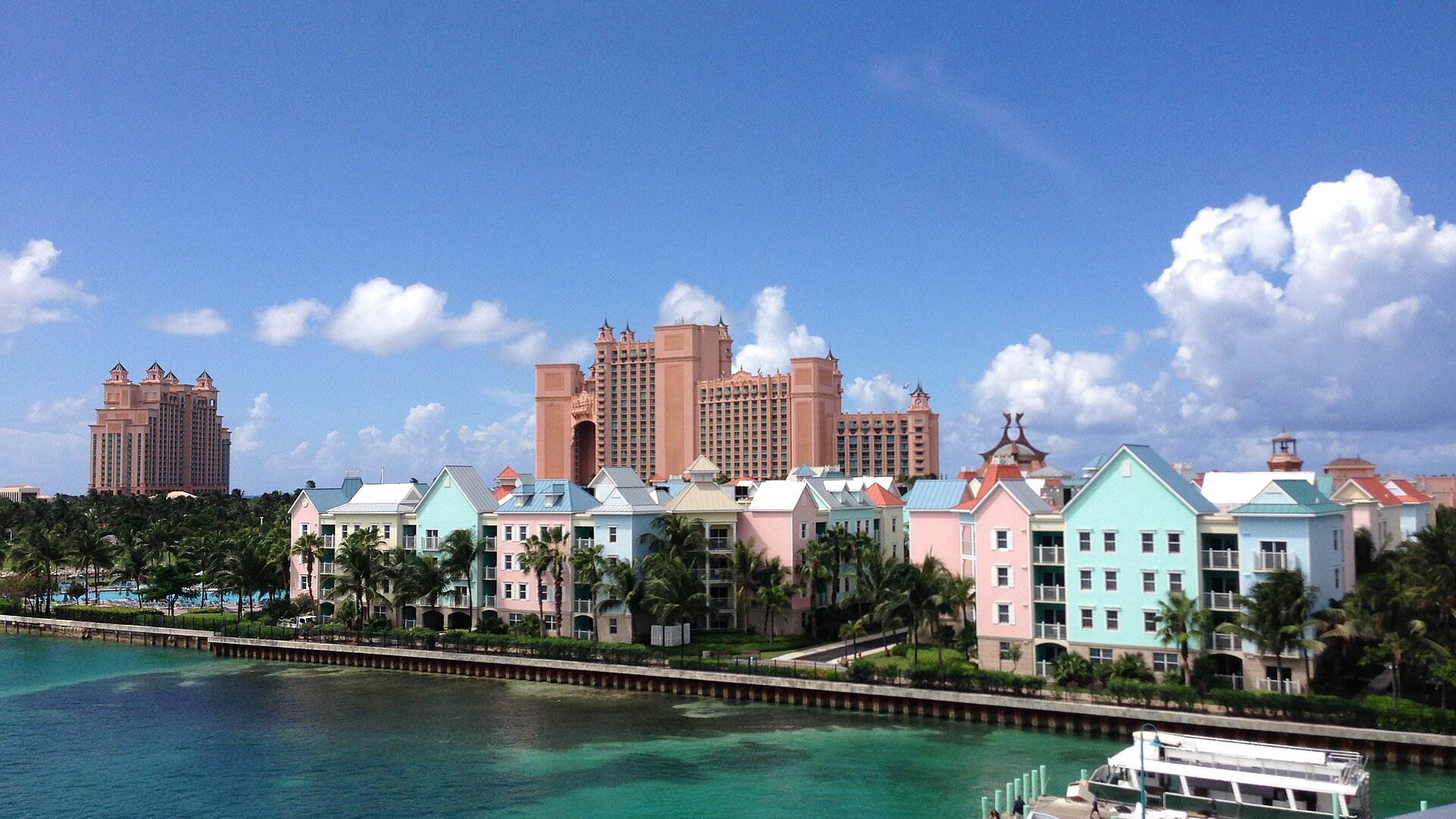
In August alone arrivals rose 13.0% to 1.2 million, with New Providence, the island that holds Nassau, up 21.6%. Grand Bahama, home to Freeport, gained only 0.6%, and its air arrivals fell 14.8%.
Departures through Nassau’s international airport, counted by the Nassau Airport Development Company, the airport company, rose 11.1% to 82,784 in September, including 66,481 US departures, up 10.4%. Over nine months total outbound traffic rose 6.0% to 1.3 million, while US traffic gained only 1.8%.
Prices, Rates and the Peg
Inflation firmed during 2026 as imported goods, fuel and energy cost more, the governor said, citing the wars in the Middle East and Ukraine and the continuing effects of higher tariffs on imported items. The bank’s quarterly report puts annual inflation at 2.7% for the 12 months to June 2026, with restaurants and hotels up 17.3%, housing and utilities up 3.1% and transport up 2.0%.
A table in the bank’s monthly report that cites the International Monetary Fund (IMF), the global lender, lists 2026 growth of 2.5% and inflation of 3.8% for the Bahamas, below the bank’s own growth forecast. The governor said the bank will let price effects pass through to consumers and will take proactive measures to protect the currency if necessary.
He added that foreign interest rates, which are rising or no longer falling, keep borrowing costs for foreign-funded projects above what was expected. Higher travel costs and relatively subdued US consumer confidence also weigh on the visitor market.
Jobs and Public Finances
The unemployment rate fell to 8.1% in the first quarter of 2026 from 10.8% a year earlier, according to provisional estimates from the Bahamas National Statistical Institute, the official statistics agency. Employed persons rose to 228,785 from 214,725.
Provisional government accounts for the 2025/26 fiscal year show a surplus of US$39.3 million, against a deficit of US$84.8 million a year earlier. Revenue rose 16.6% to US$3,964.0 million, helped by US$68.6 million from the new domestic minimum top-up tax, while spending rose 12.6% to US$3,924.7 million.
What It Means for You
Visitors should expect to pay more, because short-term rentals of entire homes averaged US$580.78 a night in September, up 24.2%, according to data in the bank’s report. Rentals comparable to hotel rooms averaged US$142.19, up 7.0%, and restaurant and hotel prices rose 17.3% in the 12 months to June.
Lenders and investors in Bahamian projects face financing costs that stay higher for longer, but the bank calls its reserves more than adequate for the peg. US exporters, whose goods the islands rely on as the report on US goods sent to the Bahamas shows, should expect import prices to stay in focus.
What Is Not Known
The briefing gives no inflation figure for the months since June, saying only that the rate firmed and could rise further. The bank’s growth forecast also sits above the 2.5% in the IMF table, and the documents do not explain the gap.
The bank expects reserves to finish the year stable to mildly lower but gives no end-year figure. It is also not known how much of the US demand recovery will hold if travel costs keep climbing into the winter season.
Frequently Asked Questions
Is the Bahamian dollar the same as the US dollar?
The Bahamian dollar is pegged one to one: the Central Bank buys US dollars from commercial banks at US$1.00 = B$1.00 and sells them at B$1.0025. Cash transactions are at par.
How fast is the Bahamian economy growing in 2026?
The Central Bank expects growth above 3.0% for 2026, led by tourism and investment. A table in its report that cites the IMF’s October 2026 outlook shows 2.5%.
Are prices rising in the Bahamas?
Yes, annual inflation reached 2.7% in the 12 months to June 2026, with restaurants and hotels up 17.3%. The Central Bank says inflation could rise further.
Are US visitors returning to the Bahamas?
The governor reported a recovery in demand from the United States, the islands’ most important visitor market. Total arrivals rose 14.5% to 9.6 million in the eight months to August, mostly by sea.
Sources: Central Bank of The Bahamas, Remarks by Governor John Rolle, Quarterly Press Briefing, 29 October 2026; Central Bank of The Bahamas, Monthly Economic and Financial Developments, September 2026, published 29 October 2026; Central Bank of The Bahamas, Quarterly Economic and Financial Developments Report, September 2026; Central Bank of The Bahamas, exchange rate page, accessed 30 October 2026.
This article was produced by The Rio Times’ automated newsroom system. How we use AI · Report an error · Editorial responsibility: Matthias Camenzind, Editor-in-Chief