Moving to the Bahamas 2026: Residency, Costs and Island Life for Foreigners
GUIDES · BAHAMAS
Key Facts
- —What it is A guide to what living in the Bahamas actually costs and what daily life looks like across Nassau, Freeport and the Family Islands, with the permit rules in summary.
- —Who it’s for Remote workers, retirees and families weighing a no-income-tax archipelago against Portugal, Panama or the Cayman Islands.
- —What it costs Petrol was gazetted at US$7.34 a gallon in New Providence and US$7.55 on the outer Family Islands in mid-2026. International school runs from US$13,325 to US$35,600 a year at the main international school.
- —Why it matters There is no income tax, but almost everything is imported and taxed twice: customs duty first, then 10 percent value added tax on the duty-inclusive landed cost.
- —The catch The United States embassy says a medical evacuation to Florida may cost in excess of US$50,000, and that payment may be demanded in advance.
Which numbers are gazetted and which are guesswork, what changed for foreign property owners on 1 July 2026, and why the electricity bill depends on which island you pick.
Moving to the Bahamas trades one kind of tax for another. There is no income tax, no capital gains tax and no inheritance tax, and the Bahamian dollar has been pegged one to one with the US dollar since 1973. In exchange, a 700-island country imports almost everything it consumes, taxes those imports at rates Washington calls among the highest in the region, and then charges value added tax on the duty-inclusive cost.
Residency, in summary
Anyone moving to the Bahamas needs authorisation from the immigration department first. The ordinary route for financially independent people and retirees is an annual residence permit, renewable each year, which does not permit work. Paid employment needs a separate work permit.
Permanent residence on economic grounds now requires a minimum investment of B$1,000,000, either in Bahamian real estate or in zero coupon bonds issued by the central bank, held for at least ten years. That figure rose from B$750,000 on 1 January 2025, and older guides still quote the old number.
A second threshold is separately misreported. Accelerated consideration, sometimes called speedy consideration, applies to buyers of a residence worth B$1,500,000 or more. It is not B$750,000, whatever the relocation sites say.
The remote work permit is the open question. The Bahamas Extended Access Travel Stay, launched in 2020, is still marketed as live on the tourism ministry’s campaign site with unchanged terms. It is a one-year permit at US$1,025 for a professional and US$525 per dependant, renewable annually to a maximum of three years. No local employment is allowed and proof of medical insurance is required. But it does not appear among the permit categories on the immigration department’s own page, and the application portal did not resolve when checked on 24 September 2026. Confirm before you rely on it.
What the islands are actually like
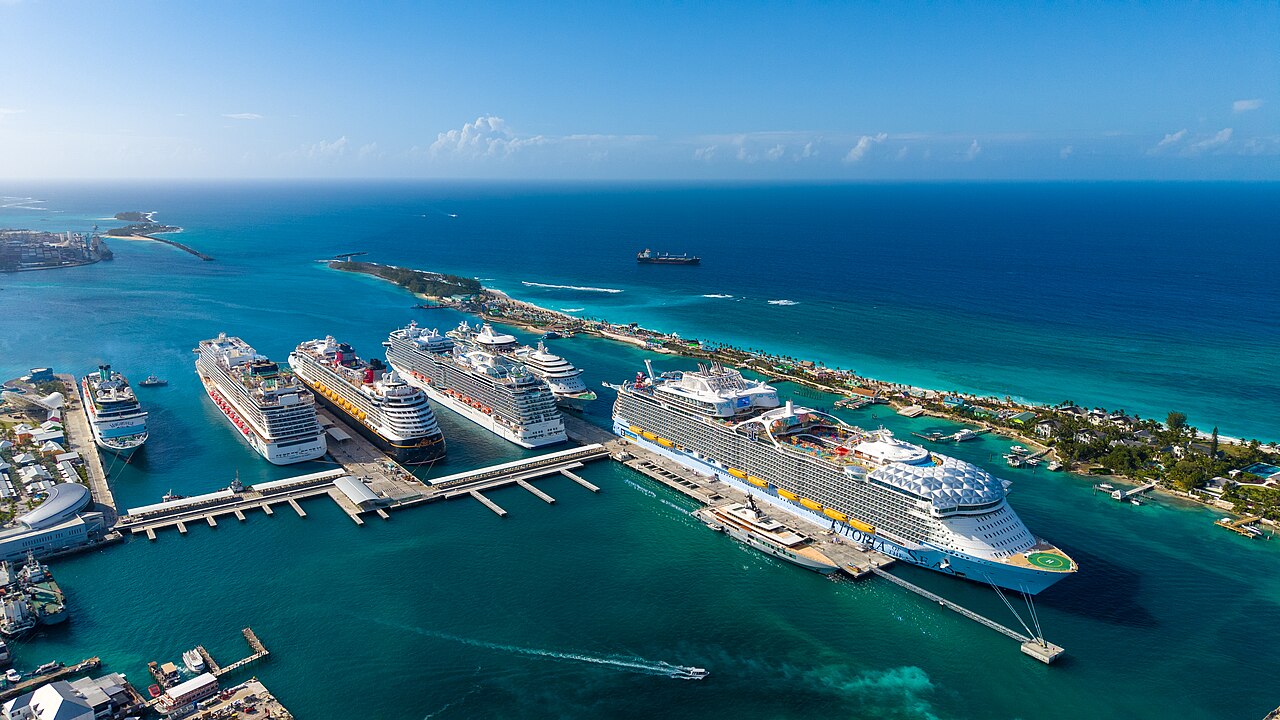
Three islands hold 91 percent of the population and the rest is thinly spread. New Providence, which is Nassau, holds 296,732 people, about three-quarters of the country, and effectively all of the specialist healthcare, international schooling, banking and professional services. The western end, around Lyford Cay and Old Fort Bay, is the traditional wealthy expatriate belt.
Grand Bahama, which is Freeport, has 46,740 people and is the only island whose population fell between the 2010 and 2022 censuses, down by 4,628. It also had 4,306 empty dwellings out of 22,127. That is a buyer’s market and a thin one.
The Family Islands are quieter still. Abaco has 16,695 people, Eleuthera 9,104 and Exuma and its cays 7,287. Eleuthera recorded 41 percent of its dwellings vacant at the census. Anyone moving to the Bahamas for an outer island should read that number as both an opportunity and a warning about services.
One change is coming that specifically affects the outer islands. New Providence has historically cross-subsidised Family Island electricity to keep one national tariff, and the current reform explicitly ends that. Family Island residents will move towards paying the true cost of their power.
What things cost
The cost of moving to the Bahamas starts with an inflation rate that is running hot. The statistics institute recorded 4.3 percent in the year to June 2026, easing from 4.5 percent in May and near a three-year peak. The trajectory through the year ran 2.1 percent in January, 3.1 in March, 3.8 in April and 4.5 in May, driven by fuel. Restaurants and hotels were the fastest-rising category all year.
Two other institutions give different numbers for different reasons, and it is worth knowing which you are reading. The central bank reported average inflation of 2.1 percent over the twelve months to April 2026, because it uses a trailing twelve-month average. The International Monetary Fund forecast 1.2 percent for 2026 in January, well below what the monthly series has since delivered.
Value added tax is 10 percent, down from 12 since January 2022, with a reduced 5 percent rate on specified essentials. The cost-of-living change that matters most came on 1 April 2026, when unprepared food sold or imported by a food store became fully exempt: meats, dairy, vegetables, fruit, grains and certain coffee and tea. They had been on the reduced rate since April 2025.
Fuel prices are gazetted under a price control order rather than set by the market, and they carry an explicit island premium. One supplier’s maximum retail price for lead-free petrol was US$7.34 a gallon in New Providence, US$7.39 in Grand Bahama, US$7.52 in Abaco, Andros and Eleuthera and US$7.55 everywhere else, effective 1 June 2026.
The minimum wage is US$6.50 an hour, US$260 for a 40-hour week, and has not moved since January 2023. A review was requested by the national tripartite council on 31 August 2026 and is with the cabinet.
Rent, and the missing index
There is no official rent index in the Bahamas, and this is not an oversight anyone is hiding. The International Monetary Fund’s most recent review of the country says plainly that operationalising real estate price indices is still needed.
So every rent figure in circulation is crowd-sourced, and the samples are thin enough to produce nonsense. One well-known aggregator puts a Nassau one-bedroom at about US$1,490 in the city centre and US$2,000 outside it, which is the wrong way round and a clear sign of a small sample. Another gives US$1,366 and US$970 for the same two categories. A third openly states that Nassau has no independently measured rent baseline.
For Freeport and the Family Islands there is no usable data at all, from any official body, brokerage index or crowd-sourced site. The census vacancy rates are the closest thing to a signal: Grand Bahama 19 percent of dwellings empty, Abaco 27 percent, Eleuthera 41 percent.
The practical advice follows from that. Budget from listings you can see and viewings you make, not from an online average, and expect the range within Nassau to be very wide.
Electricity, water and internet
An electricity bill has a base tariff and a fuel charge. On New Providence and most Family Islands the residential base tariff is free for the first 200 units, then 11.95 cents a unit to 800 and 14.95 cents above that. The fuel charge is a monthly pass-through, and the utility’s own published table shows 17.4 cents below 800 units and 21.4 cents above.
That table appears to stop in February 2026. Bahamian press reporting in June 2026 put fuel above 21 cents and the all-in cost at 33 to 39 cents a unit. The regulator has also found that billed fuel charges never matched actual fuel costs over an 18-month period to March 2024, leaving about US$37.6 million under-recovered. New tariffs are due in 2027, so any figure quoted now carries a known expiry date.
Freeport is the exception and it changed in 2026. Grand Bahama was regulated separately and cost roughly double: the prime minister told Parliament that households using 351 to 800 units paid 22.87 cents there against 11.95 in New Providence. After the government moved to acquire the Grand Bahama utility, rates were cut sharply from the June 2026 billing cycle and the storm recovery charge was abolished.
Water on New Providence is billed from a quarterly minimum of US$36 covering the first 3,000 gallons, then US$12.10 per thousand gallons to 13,000. Family Island residential water starts from a US$18 quarterly minimum.
Internet is published and reveals the island premium again. In Nassau and Abaco, 100 megabits costs US$54.50 a month and a gigabit US$110.50. On the Family Islands the legacy brand offers 30 megabits for US$49.50 — roughly the Nassau price for a fifth of the speed.
Healthcare and hurricanes
Princess Margaret Hospital in Nassau is the main public facility, a teaching hospital with more than 400 beds, the country’s trauma centre and the place where most emergency surgery happens. Rand Memorial serves Freeport. Out Island clinics handle basic outpatient work only.
Doctors Hospital on Collins Avenue is the leading private facility and the only hospital in the country accredited by Joint Commission International, with roughly 70 beds, a 24-hour emergency room, an eight-bed intensive care unit and three theatres.
National health insurance is more generous to foreigners than most such schemes. Under the 2025 act, eligibility extends to anyone ordinarily resident, meaning the Bahamas has been home for at least six months. That person must be either a citizen or a lawful resident under the immigration law, and registered with the national insurance board. Cover is primary care rather than hospital care.
The number that should shape your insurance decision comes from the United States embassy. A medical evacuation to the United States may cost in excess of US$50,000. The patient is responsible for all of it and payment may be demanded in advance, while American public health programmes pay nothing outside the country. On an Out Island that can mean two flights, first to Nassau and then to Florida.
Hurricanes are the other structural risk, and the season runs from 1 June to 30 November. Dorian hit Abaco and Grand Bahama in September 2019 with sustained winds of 185 miles an hour. It caused about US$3.4 billion of economic loss and US$1.5 to 2 billion of insured loss, the largest payout event in Bahamian history. No insurer publishes a rate card, but the industry association said catastrophe premiums rose 30 to 40 percent over the following three to five years.
Tax, banking and safety
There is no income tax, no capital gains tax and no inheritance tax. What there is instead is consumption tax, property tax, stamp duty and business licence fees.
One change on 1 July 2026 matters directly to foreign buyers and is not yet in most guides. The real property tax amendment created a new class, foreign-owned owner-occupied property, taxed at 0.625 percent of assessed value with no exemption on the first US$300,000 and a cap of US$200,000 a year. The exemption and the lower cap are now reserved for Bahamians and for permanent residents with the right to work.
At the other end of the scale, a domestic minimum top-up tax of 15 percent is in force for multinational groups with revenue of 750 million euros or more, enacted in late 2024 and deemed effective from 1 January 2024. It has no bearing on an individual moving over.
Banking is the practical friction. The central bank administers exchange control and applies strict anti-money-laundering rules requiring institutions to know at all times who ultimately benefits from or controls funds in an account. Expect a heavy documentation burden and a slow process.
On safety, Washington keeps the Bahamas at level two, exercise increased caution, renewed on 28 July 2026 with no change to the level. Its language is specific: violent crime can occur anywhere, most of it happens in Nassau and Freeport, and travellers should stay alert in the Over the Hill area of Nassau, south of Shirley Street, where gangs have killed residents. Traffic congestion in Nassau is described as severe, and Bahamians drive on the left.
Connected Coverage
Bahamas Visa and Residency 2026 — Entry, Permits, Property and Tax
Cost of Living in Barbados 2026
Retire in the Bahamas in 2026: Permits and Property Thresholds
Sources: Population and inflation from the Bahamas National Statistical Institute, the peg and exchange control from the Central Bank of The Bahamas, residency thresholds from the Department of Immigration, tariffs from Bahamas Power and Light and the Water and Sewerage Corporation, gazetted fuel prices from the price control orders, tax from the Department of Inland Revenue, and the evacuation and safety warnings from the United States embassy and State Department.
- Bahamas National Statistical Institute — 2022 census, first release
- Bahamas National Statistical Institute — consumer price index series
- Central Bank of The Bahamas — the peg and exchange control
- Bahamas Department of Immigration — permanent residence requirements
- Government of The Bahamas — residency and the accelerated consideration threshold
- Department of Inland Revenue — value added tax rates and amendments
- United States State Department — Bahamas country information and travel advisory
- United States Department of Commerce — Bahamas import tariffs
What Is Not Known
What rent costs anywhere in the country. There is no official rent or house price index, and the International Monetary Fund’s own review says such indices still need to be built. The crowd-sourced figures for Nassau contradict each other, including one that puts a one-bedroom outside the centre above one in the centre. For Freeport and the Family Islands there is no usable data at all.
What the electricity fuel charge is right now. The utility’s own published table appears to stop in February 2026 at 17.4 and 21.4 cents a unit, while Bahamian press reporting in June 2026 put fuel above 21 cents and the all-in cost at 33 to 39 cents. New tariffs are due in 2027 in any case.
Whether the remote work permit is still operating. It is still marketed on the tourism ministry’s campaign site with unchanged terms, but it is absent from the immigration department’s own list of permit categories and the application portal did not resolve when checked. No official notice discontinuing or reinstating it could be found.
What property insurance costs. No insurer publishes a rate as a percentage of value or a current deductible schedule. The only figures on the record are the industry association’s statement that catastrophe premiums rose 30 to 40 percent over three to five years, and post-Dorian projections of 15 to 20 percent increases.
The size of the economy. Four official or semi-official figures disagree: a headline nominal GDP of B$17.22 billion for 2025, press-reported advance estimates of B$15.2 billion, a basic prices figure of B$13.83 billion for 2024, and a World Bank market-prices figure of US$15.83 billion for 2024. These are almost certainly different measures and none of them has been reconciled publicly.
Frequently Asked Questions
Is there income tax in the Bahamas?
No. There is no income tax, no capital gains tax and no inheritance tax. The state raises revenue through customs and excise duty on imports, 10 percent value added tax, real property tax, stamp duty and business licence fees, which is why the cost of living is high despite the absence of income tax.
How much money do I need for permanent residence in the Bahamas?
A minimum investment of B$1,000,000, held for at least ten years, either in Bahamian real estate or in zero coupon bonds issued by the central bank. That threshold rose from B$750,000 on 1 January 2025. A separate, higher figure of B$1,500,000 buys accelerated consideration of the application.
Does the Bahamas still have a remote work visa?
Its status is unclear and you should check before relying on it. The Bahamas Extended Access Travel Stay is still marketed on the tourism ministry’s campaign site at US$1,025 for a professional and US$525 per dependant, renewable to three years. But it does not appear on the immigration department’s own list of permits, and its application portal did not resolve in late September 2026.
Is healthcare good in the Bahamas?
Nassau is well served by regional standards. Princess Margaret Hospital is the public teaching hospital and trauma centre with more than 400 beds, and Doctors Hospital is the only internationally accredited private hospital in the country. National health insurance covers lawful residents as well as citizens for primary care after six months of residence. The Out Islands have outpatient clinics only.
How much is a medical evacuation from the Bahamas?
The United States embassy says an evacuation to the United States may cost in excess of US$50,000. The patient or their representative is responsible for the whole cost, payment may be required in advance, and American public health programmes pay nothing outside the country. From an Out Island it can mean two flights, first to Nassau.
Where do most foreigners live in the Bahamas?
Overwhelmingly on New Providence, which holds 296,732 people, about three-quarters of the country, and all the specialist healthcare, international schooling and professional services. The western end around Lyford Cay is the traditional expatriate belt. Grand Bahama and the Family Islands are cheaper and far thinner on services, with vacancy rates reaching 41 percent of dwellings on Eleuthera.
This article was produced by The Rio Times’ automated newsroom system. How we use AI · Report an error
Read More from The Rio Times