Who Is Abelardo de la Espriella? Colombia’s President Explained: His Agenda and What to Watch
GUIDES · COLOMBIA
Key Facts
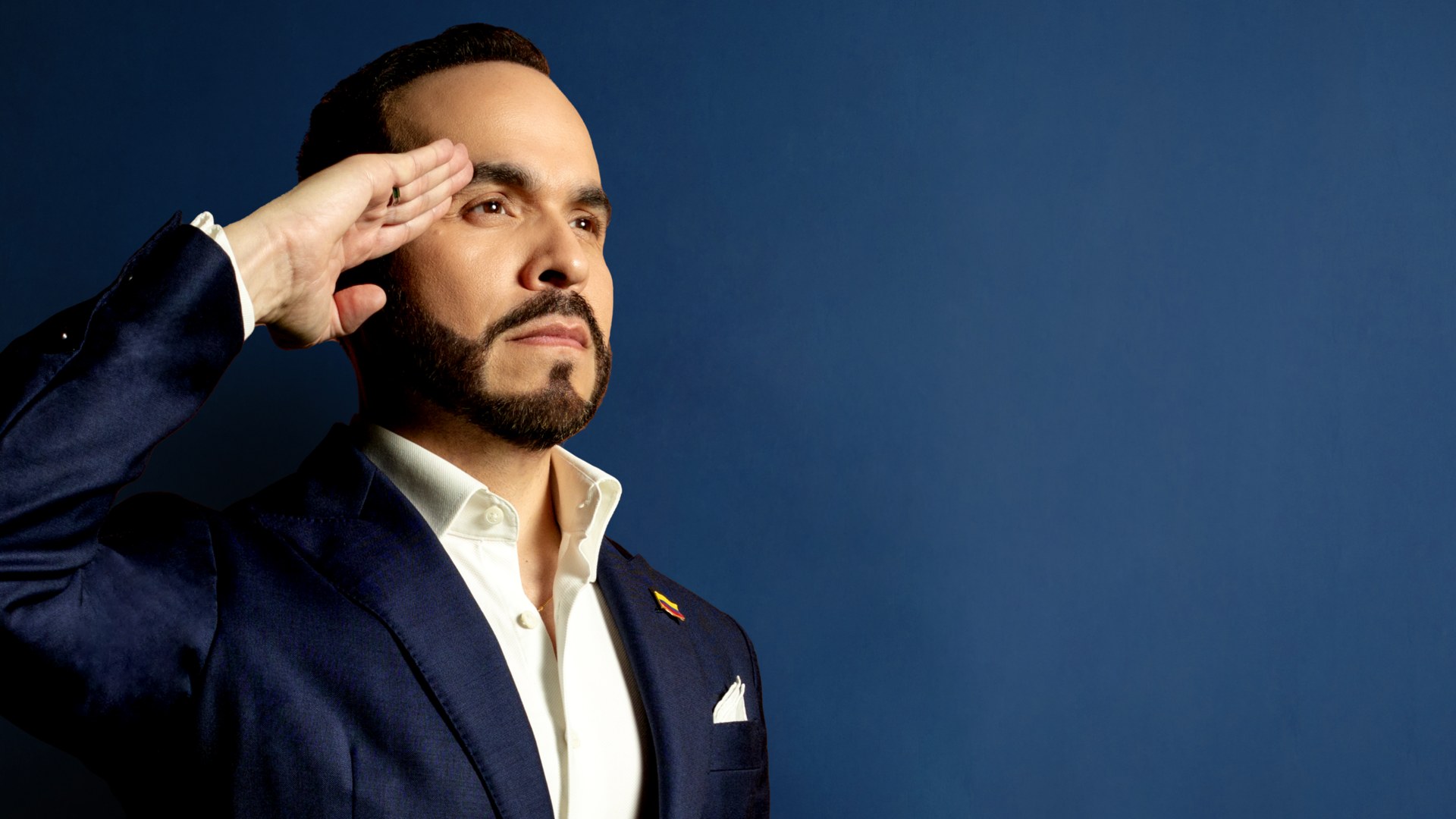
- —The person Abelardo Gabriel de la Espriella Otero, born in Bogotá on 31 July 1978. He grew up in Montería, near the Caribbean coast. A criminal lawyer and businessman, he is known as “El Tigre”.
- —The office President of Colombia since 7 August 2026. The constitution allows one four-year term with no re-election, so his mandate ends on 7 August 2030.
- —The mandate He won the runoff of 21 June 2026 with 49.66 percent against 48.70 percent for the left’s Iván Cepeda. The gap of 251,854 votes was under one percent of ballots cast.
- —The movement Defensores de la Patria (Defenders of the Homeland), his own vehicle. He reached the ballot through signatures rather than a party, and has no majority in Congress.
- —The team Vice-president José Manuel Restrepo, a former finance minister, coordinates economic policy. Miguel Gómez Martínez is finance minister and Omar Bula Escobar foreign minister.
- —What comes next Talks with the International Monetary Fund, ordered on 27 September 2026. A union march is set for 14 October 2026, and regional elections follow in October 2027.
Who Abelardo de la Espriella is and how a courtroom lawyer became Colombia’s president. His first weeks in office, explained for readers abroad.
Abelardo de la Espriella is the defence lawyer who ran without a party and won by the narrowest margin in Colombian history. This profile is about the man: his path, his ideas, his team and his critics. For the country itself, read our companion guide, Colombia Explained: The Country, Its Politics, Its Economy and What to Watch.
Early life and path to power
De la Espriella was born in Bogotá on 31 July 1978. His family moved to Montería, the capital of Córdoba department, when he was a small child. Córdoba is cattle country in the Caribbean lowlands, and he still presents himself as a man of the coast.
He studied law at Sergio Arboleda University, a private university in Bogotá. In 2002 he founded his own practice, De la Espriella Lawyers. It became known for high-profile criminal cases.
His reputation came from difficult clients. He represented politicians accused of ties to paramilitary groups. He also defended David Murcia Guzmán, founder of DMG, a pyramid scheme that collapsed in 2008. From 2013 to 2019 he represented Alex Saab. Saab was later charged in the United States with laundering money linked to Venezuela’s government.
Alongside the law he built a business brand. He sells wine, rum and clothing under his own name. In 2022 he launched a rum, Ron Defensor, with the vallenato singer Silvestre Dangond. The Argentine daily La Nación counted 35 companies linked to him in Colombia, Panama and the United States.
He lived in Miami for more than a decade and holds United States and Italian citizenship alongside his Colombian nationality. The constitution requires a president to be Colombian by birth, which he is. Dual nationality therefore did not bar him from office.
He entered politics as an outsider. Rather than seek a party ticket, he submitted about 4.8 million signatures to the electoral registry. He registered under Defensores de la Patria. That route let him run against the traditional right as well as the left.
The first round on 31 May 2026 gave him 43.75 percent, ahead of Cepeda on 40.90 percent. Donald Trump endorsed him before the runoff. On 21 June he won 12,960,166 votes, more than any Colombian presidential candidate before him. Gustavo Petro had won with 11.3 million in 2022.
The current office
Colombia’s president is head of state, head of government and commander of the armed forces. There is no prime minister. The president cannot dissolve Congress, and every emergency decree goes automatically to the Constitutional Court for review.
He was sworn in on 7 August 2026 at an arena in Cali, the first inauguration held outside Bogotá since 1898. Gustavo Petro, the country’s first left-wing president, did not attend. Petro had called the result fraudulent. An international audit by CAPEL, part of the Inter-American Institute of Human Rights, found no manipulation. Our report on the audit has the detail.
His vice-president, José Manuel Restrepo, is an economist who served as trade and then finance minister under President Iván Duque. De la Espriella has handed him the coordination of economic policy. The finance minister is Miguel Gómez Martínez, the interior minister Rodrigo Lara Restrepo, and the defence minister Jorge Eduardo Mora López. Our cabinet guide lists the full team.
His first crisis came three days in. A magnitude 7.4 earthquake struck Chocó department on 10 August, and the official toll reached 331 dead. The government declared an economic emergency on 19 August, which the Constitutional Court must still review. Our report on the emergency decree explains what it covers.
The bigger problem is money. As of September 2026, the government expects a deficit of 7.2 percent of gross domestic product (GDP) in 2026 and 9.4 percent in 2027. For scale, the European Union asks its members to stay under 3 percent. The draft 2027 budget is 634.9 trillion pesos (about US$189 billion), and close to half of it is borrowed.
On 27 September 2026 he told the finance minister to open talks with the International Monetary Fund (IMF). Three weeks earlier, that minister had ruled an IMF deal out. Our IMF report explains what kind of arrangement is possible.
The political model
De la Espriella describes his programme as security first, a smaller state and closeness to Washington. Colombian and foreign commentators often summarise it as Bukele on crime and Milei on the economy. That shorthand refers to El Salvador’s and Argentina’s presidents, and he has embraced both comparisons.
On security, he ended “Total Peace”, Petro’s policy of negotiating with armed groups. His government closed the remaining negotiating tables in late August 2026 and replaced the whole military high command. He said he had signed 85 extradition orders in his first six weeks. How Total Peace was dismantled traces each step.
He has also promised ten high-security prisons, a return to aerial spraying of coca crops and looser gun rules. A decree restoring gun permits took effect in September 2026. The prison plan, however, still named no sites and no price as of September 2026.
On the economy he promises to cut spending, scrap the wealth tax and revive oil, gas and fracking. He announced an austerity package of 17.4 trillion pesos (about US$5.2 billion). The government is studying a cut from eighteen ministries to thirteen, which needs powers from Congress. What he has promised on tax separates pledges from law.
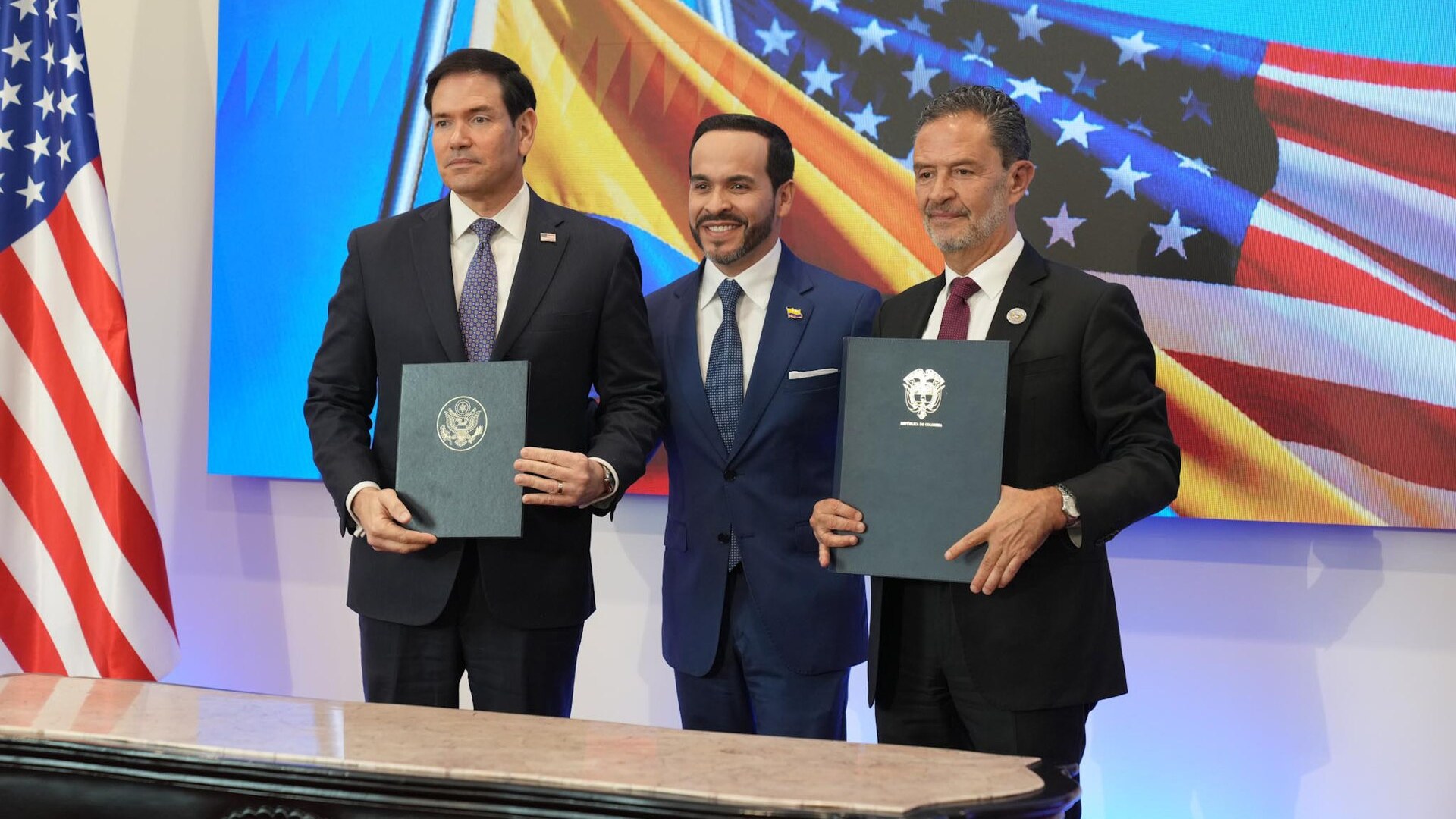
Abroad, he has turned Colombia back towards the United States and Israel. He restored relations with Israel, cut them with Iran in September 2026 and recalled several ambassadors. On 8 September the US Secretary of State, Marco Rubio, came to Barranquilla. He signed two memoranda on critical minerals and civil nuclear power.
He governs with a Sunday-night television address, much as Petro governed through his X account. What this does not mean: an address is not a decree. Policy changes when a decree appears in the official gazette or Congress passes a law.
Controversies and critics
The Saab file follows him most. He says he ended the relationship in 2019, when Washington sanctioned Saab. He also says that defending a client is not complicity. In May 2026 El País reported that money from companies linked to Saab reached accounts connected to him. No court has found wrongdoing by him.
His record with journalists is the second line of criticism. Reporters Without Borders (RSF) spoke out in June 2026. It cited prosecutors’ records of 109 defamation and insult complaints he filed from 2008 to 2019. It warned that using lawsuits as pressure weakens the public’s right to information.
Campaign money is the third. The investigative outlet La Silla Vacía reported a loan to his runoff campaign. GNB Sudameris, a Gilinski family bank, lent it 17,500 million pesos (about US$5.2 million). The same family owns Semana, a leading news magazine. What the record shows separates the documented from the rumoured.
Bank loans to campaigns are legal in Colombia, and no authority has made any finding on this one. His campaign declined to answer the outlet’s questions. Semana and the president’s lawyer demanded a correction.
The DMG case is weaker than it once looked. In September 2026 David Murcia wrote to prosecutors withdrawing earlier claims that De la Espriella had offered bribes on his behalf. That retraction settles Murcia’s accusation, not every question about the case.
Constitutional lawyers add a practical criticism. His plans to abolish the peace tribunal, reverse the decriminalisation of abortion and introduce life imprisonment collide with earlier Constitutional Court rulings. Our analysis of that agenda explains why most of it would not survive the court.
The opposition is organised. Iván Cepeda holds the Senate seat reserved for the runner-up, and the left has set up a shadow cabinet. Unions plan a national march on 14 October 2026. The protest calendar is in our report.
What to watch
The IMF talks come first. Watch whether Colombia seeks a precautionary credit line, which signals confidence. The alternative is a full programme, with conditions on spending and tax. Colombia cancelled its previous IMF credit line in October 2025.
The 2027 budget is the second test. As of late September 2026, the joint economic committees had approved the total. Both chambers must still vote in plenary. If Congress does not pass it by 20 October 2026, the government’s draft takes effect by decree.
The street is the third. Unions have called a national march for 14 October 2026 and talk of a general strike in November. His approval stood at 51.8 percent, against 43.2 percent disapproval, in an AtlasIntel poll taken from 30 August to 3 September 2026.
Then come the courts. The Constitutional Court must rule on the earthquake emergency decree and will hear challenges to his security package. In October 2027 Colombians elect governors and mayors, the first nationwide test of his movement.
What this means for foreigners and investors
For investors, the direction is clear and the execution is not. Oil, gas, mining, private security and infrastructure are favoured. Renewable projects and peace-programme contractors face more uncertainty. As of September 2026, S&P (BB-) and Fitch (BB) rate Colombia below investment grade. Moody’s still has it at Baa3, the lowest investment-grade step.
The peso moves with fiscal news. It traded at 3,356.68 to the US dollar on 25 September 2026, according to market data, against 3,208.66 two days earlier. A dollar budget made in September can be out by a few percent within a week. Our investing guide covers stocks and government bonds.
For residents, the rules on visas and tax have not changed because of him. The residency and visa guide and the tax guide remain the reference. If the wealth tax is abolished, wealthy foreign residents would benefit from 2027 at the earliest.
On safety, his posture is harder, but the security map still changes department by department. A September 2026 armed strike in Santa Marta showed how fast a region can close. Check our safety guide before travelling to a specific area.
What this does not mean: a presidential speech is not law, and an announced investment is not a signed one. Wait for the gazette, the Congress vote or the company’s own statement.
Connected Coverage
Colombia Explained: The Country, Its Politics, Its Economy and What to Watch
Colombia Residency and Visa Guide 2026: Routes, Costs and an October Deadline
Moving to Colombia: 90-Day Visa-to-Cédula Plan
Taxes in Colombia for Expats: The 183-Day Residency Rule Explained
Investing in Colombia for Foreigners: Stocks and Government Bonds Explained
Banking in Colombia for Expats: Cédula Rules
Colombia Healthcare for Foreigners: EPS and Private Plans
Buying Property in Colombia as a Foreigner
Is Colombia Safe for Foreigners? Guide
Cost of Living in Colombia: A Realistic 2026 Budget
Retire in Colombia 2026: Pensionado Visa and Costs
Why Colombia’s New Deals With Washington Are Smaller Than Billed
De la Espriella Tells Colombia the Money Is Gone
Colombia Severs Diplomatic Relations with Iran Over Terrorism Links
Sources: Election results from the National Registry (Registraduría) as aggregated in the press and the Wikipedia results tables, checked on 28 September 2026; the audit from CAPEL via the Registraduría; the Barranquilla memoranda from the US State Department; press-freedom data from Reporters Without Borders; approval from AtlasIntel via Valora Analitik; budget and deficit figures from the finance ministry as reported by La República and Portafolio.
- 2026 Colombian presidential election — first-round and runoff results tables
- US News / Reuters — Trump endorses De la Espriella, 2 June 2026
- Bloomberg Línea — biographical summary: birth, studies, law firm
- La Nación — how De la Espriella made his fortune, 22 June 2026
- La República — the Ron Defensor launch with Silvestre Dangond
- El Colombiano — US citizenship and the constitution
- Reporters Without Borders — statement of 26 June 2026
- Semana — David Murcia retracts his accusations, September 2026
- El País — the vice-president’s economic coordination role, 16 September 2026
- Valora Analitik — AtlasIntel approval poll, 10 September 2026
- La República — 2027 budget passes first debate
What Is Not Known
What the IMF talks will produce. The president gave an instruction on 27 September 2026, but no amount, type of arrangement or timetable has been published. The Fund had not commented as of September 2026.
How large his congressional coalition really is. His own movement is small, and support from the traditional right and centre shifts vote by vote. Seat counts by party differ between sources citing the same electoral resolution.
How much of his legal agenda will survive. Abolishing the peace tribunal, reversing the abortion ruling and life imprisonment all face Constitutional Court precedent. No bill on these points had become law as of September 2026.
The full extent of his business interests. Company registries in three countries list firms linked to him. No complete public statement of his holdings, or of how they are run while he is in office, has been published.
Whether the security figures hold. The government reported steep falls in kidnapping and extortion for August 2026. These are its own single-month numbers and have not been independently verified.
Frequently Asked Questions
Who is the president of Colombia in 2026?
Abelardo de la Espriella, a right-wing criminal lawyer and businessman, who took office on 7 August 2026. He succeeded Gustavo Petro and will serve a single four-year term ending on 7 August 2030.
How did De la Espriella win the election?
He led the first round on 31 May 2026 with 43.75 percent. He then beat the left’s Iván Cepeda in the runoff on 21 June by 49.66 percent to 48.70 percent. The margin of 251,854 votes was the narrowest in Colombian history.
Why is he called El Tigre?
“El Tigre” (the Tiger) is the nickname he uses in his campaign branding and merchandise. It reflects the combative image he built as a courtroom lawyer and television presence.
Was De la Espriella Alex Saab’s lawyer?
Yes. He represented the businessman Alex Saab from 2013 to 2019. He says he ended the relationship when the United States sanctioned Saab. No court has found wrongdoing by De la Espriella.
Is De la Espriella a US citizen?
Yes. He lived in Miami for more than a decade and holds US and Italian citizenship as well as Colombian nationality. The constitution requires the president to be Colombian by birth, which he is.
What does his presidency mean for foreigners in Colombia?
Visa and tax rules have not changed because of him. His government favours oil, mining and security investment and plans to scrap the wealth tax. The peso and public finances are the risks to watch, including talks with the IMF.
This article was produced by The Rio Times’ automated newsroom system. How we use AI · Report an error
Read More from The Rio Times