49.7% Win Passes Audit as Colombia Swears in New President
Politics: Cali
Key Facts
—Audit. An international audit by CAPEL, a program of the Inter-American Institute of Human Rights (IIDH), concluded that Colombia’s June 21 presidential runoff had “appropriate” technical and operational conditions.
—No fraud. The forensic review found no evidence of systematic data manipulation or unauthorized changes, countering fraud allegations made by outgoing President Gustavo Petro.
—Result. Abelardo de la Espriella won the runoff narrowly over Iván Cepeda, taking about 49.7% to 48.7% — the tightest runoff margin in Colombia’s history.
—Inauguration. De la Espriella is sworn in on Friday, August 7, in Cali — the first presidential inauguration held outside Bogotá in the country’s republican history.
—Logistics. Cali ordered a dry law (ley seca) from 6 a.m. to 8 p.m. and deployed 11,100 security personnel; leaders including Argentina’s Javier Milei and Ecuador’s Daniel Noboa are expected.
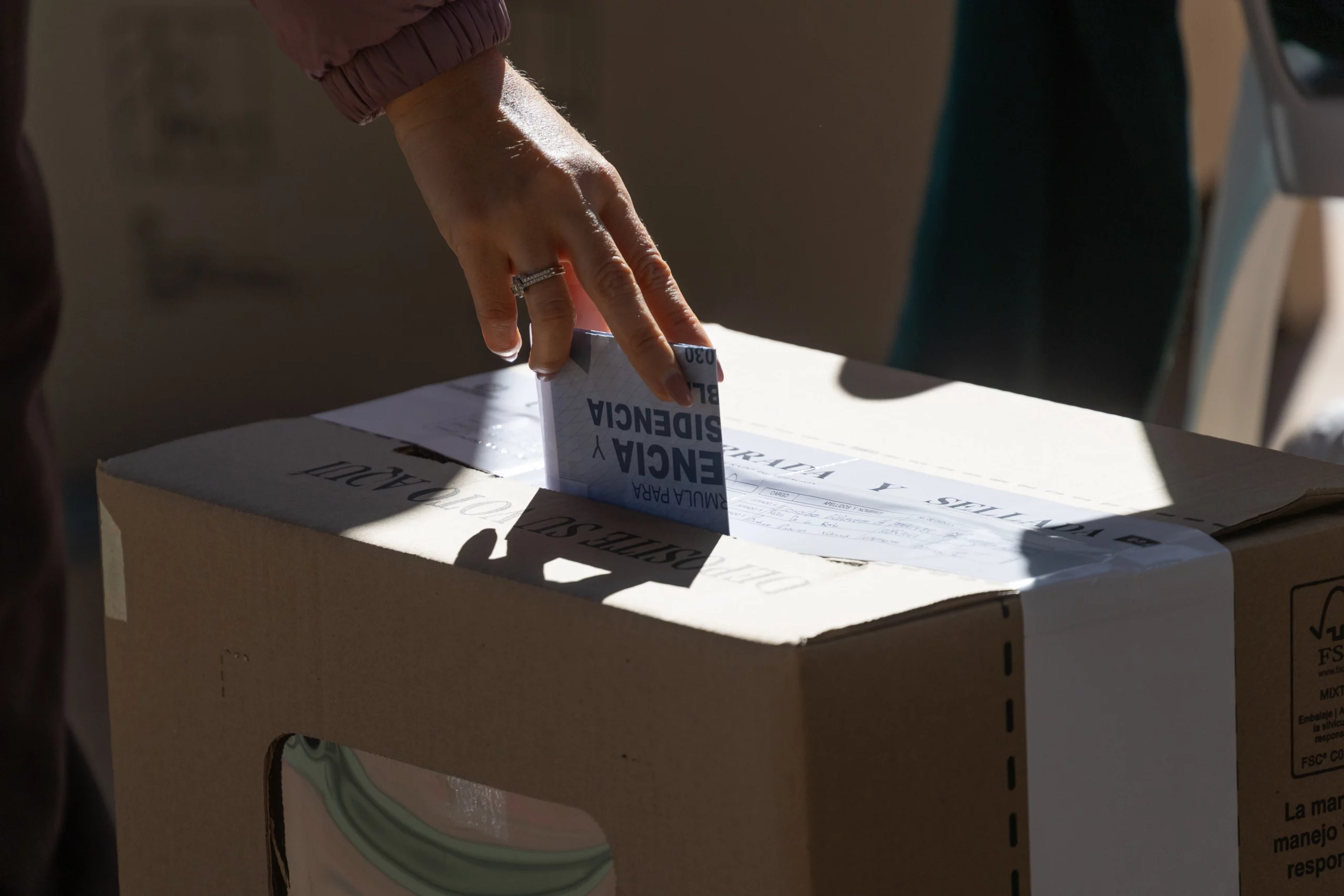
An international runoff audit has concluded there was no fraud in Colombia’s presidential election, finding “appropriate” conditions, as president-elect Abelardo de la Espriella prepares to be sworn in Friday in Cali.
What the Audit Found
An international audit concluded that the technical operation of Colombia’s 2026 presidential runoff “had appropriate technical and operational conditions” and that its components worked according to established procedures. The findings were reported on August 4 by the Registraduría, the national electoral authority.
The independent review was carried out by the Center for Electoral Assistance and Promotion (CAPEL), a specialized program of the Inter-American Institute of Human Rights (IIDH). It covered the pre-electoral, electoral and post-electoral stages and examined ten components of the process, from logistics to the release of results.
One of the central findings concerned the integrity of the data. The forensic audit did not identify evidence of systematic manipulation or unauthorized modifications, and reported consistency and statistical coherence in the information reviewed. The auditors said controls and traceability mechanisms functioned as expected.
The Claims It Counters
The audit lands directly against a fraud narrative pushed by outgoing President Gustavo Petro, who in the final days of his term escalated his allegations and called the president-elect “illegitimate.” Petro has not presented evidence to support the claims, and Colombian and international bodies have rejected them.
Runner-up Iván Cepeda and the leftist Pacto Histórico coalition also questioned the count. Earlier in the cycle, observation missions from the Organization of American States and the European Union said they had detected no irregularities, with the OAS mission chief describing election day as “civic, calm and participatory.”
The Rio Times attributes the fraud allegations to Mr. Petro and his allies; no electoral or judicial authority has upheld them. Colombian tribunals have also dismissed legal challenges seeking to overturn the result that confirmed de la Espriella’s victory.
A Razor-Thin Result
De la Espriella won the June 21 runoff with roughly 49.7% of the vote to Cepeda’s 48.7%, a gap of about 250,830 ballots, or 0.96 percentage points. Analysts have described it as the narrowest runoff margin in Colombia’s electoral history.
The tight result helps explain why scrutiny of the count has been so intense. Observers noted that the election was among the most closely watched in the country’s history, with more than 15,000 national and international monitors deployed across the two rounds.
For foreign readers, the contest pitted de la Espriella, a right-wing lawyer, against Cepeda, a veteran leftist senator, in a polarized race to succeed Petro. De la Espriella will govern for the 2026–2030 term.
Why Cali, Not Bogotá
In a break with tradition, the ceremony will take place at the Arena of the Universidad Santiago de Cali rather than in the capital. It is the first time in Colombia’s republican history that a presidential inauguration is held outside Bogotá, a move the president-elect has cast as a gesture of decentralization.
Congress approved the transfer, with lawmakers voting to move the session to Cali. De la Espriella had initially favored the department of Cauca but dropped that plan, citing airport closures in Popayán linked to activity at the Puracé volcano, as well as security concerns.
The change was not without friction. Outgoing President Petro declined to authorize the use of a military garrison for the event, arguing that he remains commander of the armed forces until the handover, a dispute that briefly raised questions over chain of command.
Security and City Measures
Authorities plan a security ring of 11,100 members of the public forces, made up of about 6,000 military personnel and 5,100 police officers, supported by land, air and maritime operations. The Colombian Aerospace Force is to deploy more than 15 aircraft, and a drone ban takes effect from August 6.
The city of Cali ordered a dry law (ley seca) banning alcohol sales on Friday from 6 a.m. to 8 p.m., and officials weighed a car-free day (día sin carro) to ease movement for delegations. Authorities also offered a reward of up to 500 million pesos (about US$123,000) for information to prevent disruptions.
De la Espriella has said the Cali ceremony will cost roughly 50% less than the 2022 inauguration. His first security council is scheduled for August 8 at the Marco Fidel Suárez air base in the city.
Who Is Attending and What Comes Next
Confirmed guests include Argentine President Javier Milei, Ecuador’s Daniel Noboa, Chile’s president-elect José Antonio Kast, Paraguay’s Santiago Peña, Bolivia’s Rodrigo Paz and Spain’s King Felipe VI. A U.S. delegation named by President Donald Trump is expected, potentially including Secretary of State Marco Rubio.
The guest list has also drawn attention for who was left off it: former presidents Juan Manuel Santos and Ernesto Samper said they were not invited. The exclusions underscore the sharp break the incoming government is signaling with parts of Colombia’s political establishment.
Once sworn in, de la Espriella takes over a country still processing a bruising, closely contested election. The audit’s conclusion gives the transition a measure of institutional cover, even as political tensions over the handover remain high.
More: Colombia news in English, every day from The Rio Times.
Frequently Asked Questions
Who conducted the audit and what did it find?
The audit was carried out by CAPEL, a program of the Inter-American Institute of Human Rights (IIDH). It concluded that Colombia’s June 21 presidential runoff had “appropriate” conditions and found no evidence of systematic data manipulation.
When and where is the inauguration?
Abelardo de la Espriella is sworn in on Friday, August 7, 2026, at the Arena of the Universidad Santiago de Cali. It is the first Colombian presidential inauguration held outside Bogotá in the country’s republican history.
What measures are in place in Cali?
Cali ordered a dry law from 6 a.m. to 8 p.m. on August 7, deployed 11,100 security personnel and banned drones from August 6. Leaders including Argentina’s Javier Milei and Ecuador’s Daniel Noboa are expected to attend.
Sources
Portafolio · El País (Cali) · El Tiempo · El País: ley seca · AS/COA
Sources: Portafolio, El País (Cali), El Tiempo, AS/COA.
This article was produced by The Rio Times’ automated newsroom system. How we use AI · Report an error
Read More from The Rio Times