Colombia’s Election Runner-Up Backs Union Protests Against New President
Key Facts
Colombia’s new right-wing government is six weeks old and already faces a union protest calendar. On 18 September, the runner-up in June’s election pledged his backing to the coming protests.
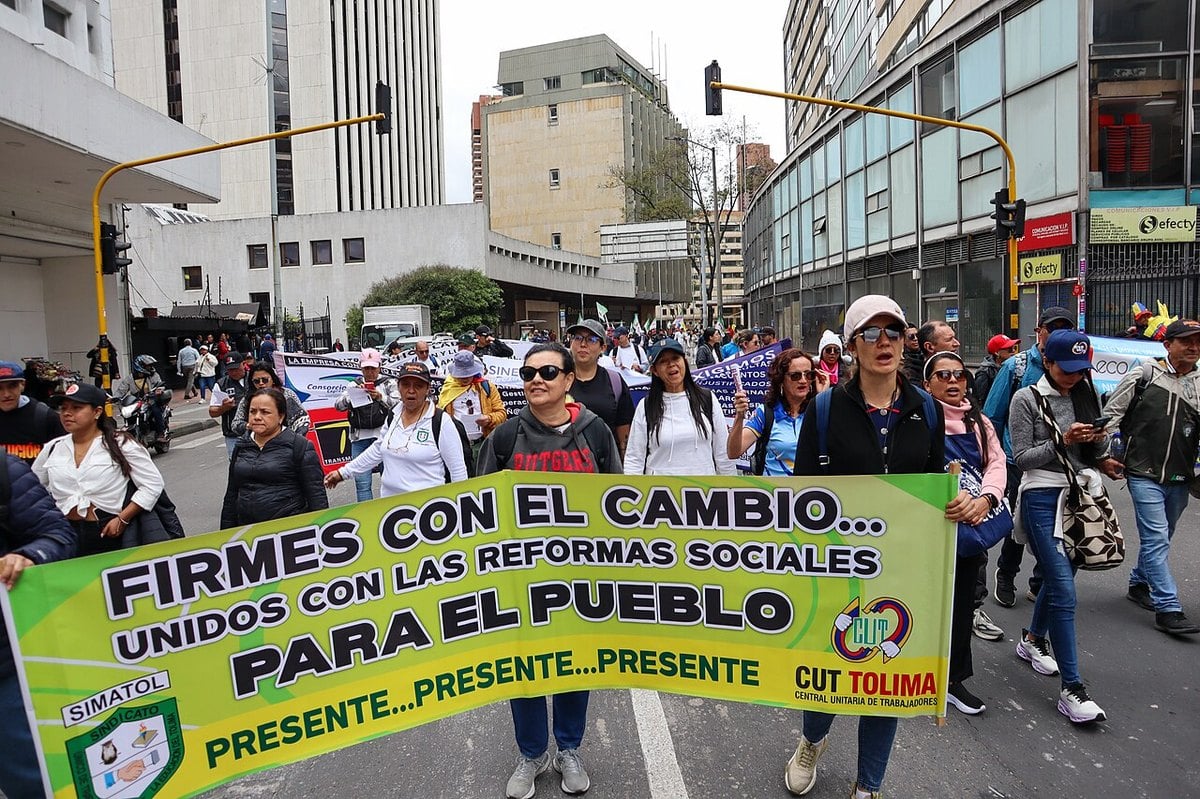
Ivan Cepeda, the left-wing senator who lost Colombia’s presidential runoff, said on 18 September that social protests are being prepared. He wrote on X that the mobilisations would have his party’s “decided support” against President Abelardo de la Espriella.
Why This Matters
Street protest has shaped Colombian politics before, most recently in a 2021 national strike against a tax reform. Abelardo de la Espriella, a right-wing lawyer and businessman, took office as president on 7 August 2026.
He beat Cepeda in the runoff on 21 June with 49.66% of the vote against 48.70%. That narrow margin means close to half of runoff voters backed the candidate now supporting protests.
Cepeda holds the opposition seat in the Senate, reserved by law for the presidential runner-up. His running mate, indigenous leader Aida Quilcue, took a matching seat in the House of Representatives.
The unions say they are defending reforms of left-wing ex-president Gustavo Petro against the new government. For investors, the calendar of marches and a possible national strike adds a new domestic risk to watch.
What Cepeda Said
Cepeda posted his message on X on 18 September, Semana, a national news magazine, reported. “Comienzan a prepararse ya las movilizaciones sociales que contarán con nuestro respaldo decidido,” he wrote.
That translates as “social mobilisations are now being prepared, and they will have our decided support”. He said that, a month into the new government, many sectors feel their rights are severely affected, Infobae reported.
He listed earthquake survivors, peasant farmers, conflict victims, teachers, students and public-sector workers. He also named indigenous and Afro-Colombian communities, young people, former guerrillas in reintegration and LGBTIQ+ people.
Judges, artists and critical journalists were on the list as well, according to Infobae. Semana and El Universal, a Cartagena daily, both noted that the post named no date or city.
The Protest Calendar Set by the Unions
The dates come from a gathering held in Bogota on 11 and 12 September, before Cepeda spoke. More than 1,500 delegates from unions, social movements, peasant groups, ethnic organisations and parties attended, Vanguardia reported.
The main organisers are Fecode, the national teachers’ union, and the CUT, Colombia’s largest trade union federation. They defined Wednesday 14 October as a national day of mobilisation against the De la Espriella government, Semana reported.
A national strike is planned for November, with 11 or 20 November under discussion. El Tiempo, a Bogota newspaper, reported that the exact strike date had not yet been confirmed.
Petro’s coalition, the Historic Pact, also joined the call, according to Infobae. Routes and meeting points for the October march have not been announced, Vanguardia reported.
What the Protesters Want
The declaration names eight themes, including sovereignty, democracy, peace, labour rights, public education and public health. The groups also defend Petro-era reforms on labour, land for peasant farmers and negotiated peace, Infobae reported.
They oppose what they describe as plans to privatise state assets, including oil company Ecopetrol and pipeline operator Cenit. Minuto60, a news site, reported that Grupo Bicentenario, the state holding company, and Inpec, the prison service, were also named.
The CUT also cited the economic and social emergency after the 10 August earthquake, El Tiempo reported. The magnitude 7.4 quake, centred in the western department of Choco, killed 331 people, according to La Republica.
The Labour Bill Behind the Anger
A specific trigger is a new Labour Statute bill, presented by Labour Minister Natalia Lopez on 10 September. It would compile the 1950 labour code, later reforms and case law into a single law, El Tiempo reported.
The government says it settles a “historic debt” owed since the 1991 constitution required such a statute. It says the bill covers rural work, domestic work, delivery platforms and the self-employed.
Informal work stood at 54.5% of employment in April to June 2026, Infobae reported. The CUT says the bill was filed without the tripartite wage and labour commission, which brings together government, employers and unions.
“We cannot talk about dialogue while decisions that directly affect workers’ rights are taken unilaterally,” said CUT president Fabio Arias. The bill needs four debates in Congress before it can become law.
How Street Protest Works in Colombia
Peaceful protest is a constitutional right in Colombia, but national strikes have turned violent before. In 2021, weeks of road blockades caused shortages; the government counted 26 deaths, NGOs about 75.
Petro later replaced the riot police unit, known as ESMAD, with a unit focused on dialogue called UNDMO. In July, De la Espriella’s defence minister-designate, Jorge Eduardo Mora, announced that ESMAD would return.
Mora said the Petro-era rules had “tied the hands” of the security forces, El Colombiano reported. He added that the force would respect human rights and that peaceful protest would be protected.
On 11 September, masked people damaged a university library during a march towards the US embassy in Bogota. La FM, a radio network, reported four staff needed attention and the Universidad Nacional evacuated its campus.
The Government’s Side
De la Espriella responded to that unrest with a security package announced on 13 September. It would let police enter public universities during violent protests, and he said autonomy “is not a licence for impunity”.
Analisis Urbano, a Medellin outlet, reported that the government says it respects peaceful protest. The same report said the government promised action against violence or disruption of public order.
The Rio Times found no direct government reply to Cepeda‘s post by the morning of 19 September. Neither Semana nor Vanguardia reported any government response to the union calendar.
Cepeda Under Scrutiny Himself
Cepeda makes his call while facing a preliminary inquiry by the Supreme Court, Colombia’s top criminal court for lawmakers. The court opened it on 14 September into the financing of the Historic Pact primary held on 26 October 2025.
El Espectador cited a complaint that a Barranquilla firm with zero capital gave 600 million pesos (US$190,000) in services. Dollar figures use Colombia’s official market rate of 3,151.73 pesos per US dollar on 18 September 2026.
The firm’s owner denied any link to Cepeda, and the Historic Pact denied any irregularity. A preliminary inquiry establishes no responsibility, and Cepeda has not been charged with any offence.
What It Means If You Live, Travel or Invest in Colombia
Residents and visitors in Bogota should expect road closures and slower transport around 14 October. The 11 September march in Bogota already forced a campus evacuation, a sign that marches can disrupt normal routines.
Businesses should plan for a possible national strike on 11 or 20 November and watch for a final date. Investors should note the protests target what unions call privatisation plans at Ecopetrol, the state-controlled oil company.
Fecode represents public-school teachers, so parents should watch for school closures on protest days. Travellers should check local news and embassy alerts before moving between cities on those dates.
What Is Not Yet Known
It is not known how many people will join the 14 October march or which cities will see the largest crowds. The exact date of the November national strike has not been confirmed.
It is unclear whether ESMAD will be back in service by October, and under which rules. The government has not said whether it will negotiate on the labour bill before the protests.
Frequently Asked Questions
Why does Cepeda’s announcement matter?
He won 48.70% in June’s runoff and now leads the opposition in the Senate. His backing gives the union protests the support of the main opposition figure.
When are the protests?
Unions have called a national march for 14 October 2026. A national strike is planned for November, on the 11th or the 20th.
What do the protesters want?
They defend Petro-era reforms and oppose privatisations and the new Labour Statute bill. They also cite rights and public services.
Is Cepeda under investigation?
The Supreme Court opened a preliminary inquiry on 14 September into financing of his party’s 2025 primary. He has not been charged, and his coalition denies wrongdoing.
Sources: Semana, Cepeda announces the mobilisations, Infobae, Cepeda’s list of affected sectors and the calendar, El Universal, Cepeda’s post, Minuto60, the privatisation list, Semana, Fecode and unions set 14 October, Vanguardia, the Bogota gathering and strike plan, El Tiempo, what is known about the protests, Infobae, unions announce marches and strike, El Tiempo, the Labour Statute bill, Infobae, the CUT rejects the Labour Statute, Infobae, Cepeda takes the opposition seat, El Colombiano, the return of ESMAD, La FM, the 11 September unrest at the Universidad Nacional, The Rio Times, the security package for campuses, Analisis Urbano, the government’s stance on protest, El Espectador, Supreme Court inquiry into Cepeda, Servicio Geologico Colombiano, the earthquake epicentre, La Republica, the earthquake toll, Wikipedia, the 2021 Colombian protests, Wikipedia, the 2026 Colombian presidential election, RTA Noticias, market rate for 18 September 2026
This article was produced by The Rio Times’ automated newsroom system. How we use AI · Report an error
Read More from The Rio Times