Why Most of De la Espriella’s Legal Agenda Would Not Survive the Court
COLOMBIA · ANALYSIS
Key Facts
- —The proposals Eliminating the transitional-justice tribunal, reversing abortion decriminalisation, and introducing life imprisonment.
- —Also raised A ban on same-sex adoption and changes to the school curriculum.
- —The verdict Constitutional lawyers see almost none of it as legally viable in its stated form.
- —The JEP Entrenched by the 2016 peace accord; a repeal would be vulnerable to annulment by the Constitutional Court.
- —Abortion Decriminalised through week 24 by Ruling C-055 of 2022, protected by the finality of constitutional judgments.
- —Life imprisonment Already struck down once, by Ruling C-294 of 2021.
A president may propose anything. In Colombia the Constitutional Court decides what survives, and it has already ruled on most of this list.

Constitutional lawyers assessing President Abelardo De la Espriella’s flagship legal proposals conclude that almost none of them can be enacted in the form he has described, because the Colombian Constitutional Court has already ruled on the questions they reopen.
The Transitional-Justice Tribunal
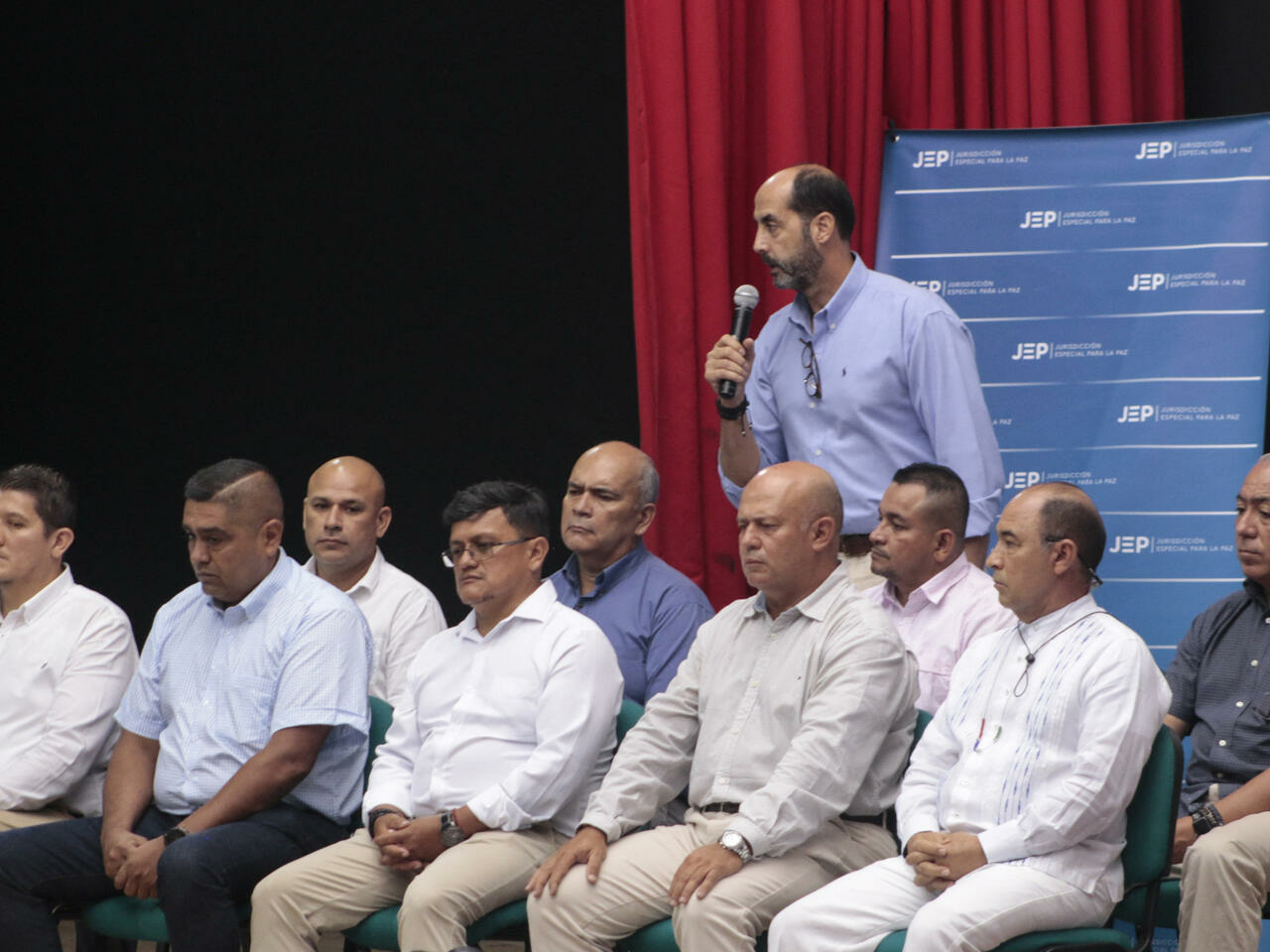
Eliminating the Jurisdicción Especial para la Paz would require a constitutional reform passed through a special congressional procedure, and it would run into the 2016 peace accord that created it.
Douglas Lorduy, a constitutional lawyer at the Universidad del Rosario, frames the obstacle as one of good faith. Abolishing the tribunal would defraud the agreement and break the state’s word, which makes any reform vulnerable to annulment by the Constitutional Court.
Francisco Bernate, who teaches criminal law at the same university, points at an alternative that would not require a reform at all: the tribunal was created with a transitory character and a defined lifespan, and enforcing that strictly achieves much of the same end.
Abortion
The target is the decriminalisation of abortion through week 24, established by the Constitutional Court in Ruling C-055 of 2022. Reversing it faces two obstacles rather than one.
The first is cosa juzgada constitucional, the finality of a constitutional judgment, which prevents the same question being relitigated. Lorduy says he does not see the conditions necessary to lift it.
The second is that the ruling recognised a fundamental right, and Bernate’s assessment is that no legal avenue exists to strip a recognised fundamental right once the court has established it.
Life Imprisonment
Colombia has been here recently. Legislative Act 01 of 2020 introduced life sentences for the rape and murder of children, and the Constitutional Court voided it in Ruling C-294 of 2021 on grounds of human dignity.
Re-promoting an identical reform is not viable, in Lorduy’s assessment, because the court has already stated why the earlier version failed.
That is the pattern across this agenda. These are not untested proposals meeting an uncertain court; they are proposals the court has already examined.
The Two Others in the Same Analysis
A ban on same-sex adoption is blocked by the finality of Ruling C-683 of 2015, reinforced by Inter-American Court jurisprudence that Colombia is bound by.
Changes to the school curriculum are the one item with genuine executive room, according to Bernate, though he notes the limits: the executive cannot censor sexual diversity or impose religious doctrine through curriculum policy.

What This Means in Practice
A programme that cannot be enacted is not necessarily a programme without effect. Proposing constitutional reforms sets the terms of political argument for a four-year term whether or not they pass, and it forces the court into the position of blocking an elected president.
That confrontation is itself a political instrument, and Colombian presidents of both persuasions have used it. The question is whether the government pursues reforms it expects to lose or converts them into the narrower measures that would survive.
A Note on Sourcing
This assessment comes from a single Infobae Colombia analysis published on 13 September 2026, quoting two jurists from one university, and syndicated by other outlets.
The Rio Times reports it as the view of those two lawyers rather than as a settled professional consensus, and notes that the constitutional rulings they cite are matters of public record that can be checked independently.
More: Colombia news in English, every day from The Rio Times.
Frequently Asked Questions
What are the proposals?
Eliminating the JEP transitional-justice tribunal, reversing abortion decriminalisation, introducing life imprisonment, banning same-sex adoption and changing the school curriculum.
Can the JEP be eliminated?
It would need a constitutional reform and would be vulnerable to annulment, because the tribunal is entrenched by the 2016 peace accord.
Can abortion decriminalisation be reversed?
The lawyers quoted say no, because of the finality of Ruling C-055 of 2022 and because a recognised fundamental right cannot be stripped.
Has life imprisonment been tried before?
Yes. Legislative Act 01 of 2020 was voided by Ruling C-294 of 2021 on human-dignity grounds.
Which proposal is viable?
Curriculum changes, within limits. The executive cannot censor sexual diversity or impose religious doctrine.
Sources: Infobae Colombia, El Diario.
This article was drafted with automated assistance and reviewed before publication. How we use AI · Report an error
Read More from The Rio Times