COLOMBIA · CITY GUIDE
Key Facts
- The city Colombia’s capital, with a projected 7,945,996 residents in 2026 and 20 localities, as of October 2026.
- The economy 25.4 percent of Colombia’s output in 2025, COP 471.2 trillion (US$148.8 billion), growing 3.5 percent against 2.6 percent nationally.
- Who runs it Mayor Carlos Fernando Galán as of October 2026, with the national government of President Abelardo De La Espriella based in the capital.
- Jobs Unemployment was 7.9 percent in June to August 2026, against 8.5 percent nationally.
- Getting around Metro Line 1 was 83.73 percent built at 30 September 2026, and commercial service is planned for March 2028.
- Security The US travel advisory for Colombia is Level 3, reconsider travel, dated 31 March 2026; Bogotá is not on the do not travel list.
- For visitors US citizens need no visa for stays of 90 days or less, and the passport must be valid for the whole stay.

Bogotá, the capital of Colombia, has a projected 7,945,996 residents in 2026 and produced 25.4 percent of the national output in 2025, according to DANE, the national statistics department. As of October 2026 the city is led by Mayor Carlos Fernando Galán, its first metro line was 83.73 percent built at the end of September, and the capital is the seat of the Presidency and the Congress.
Why Bogotá Matters
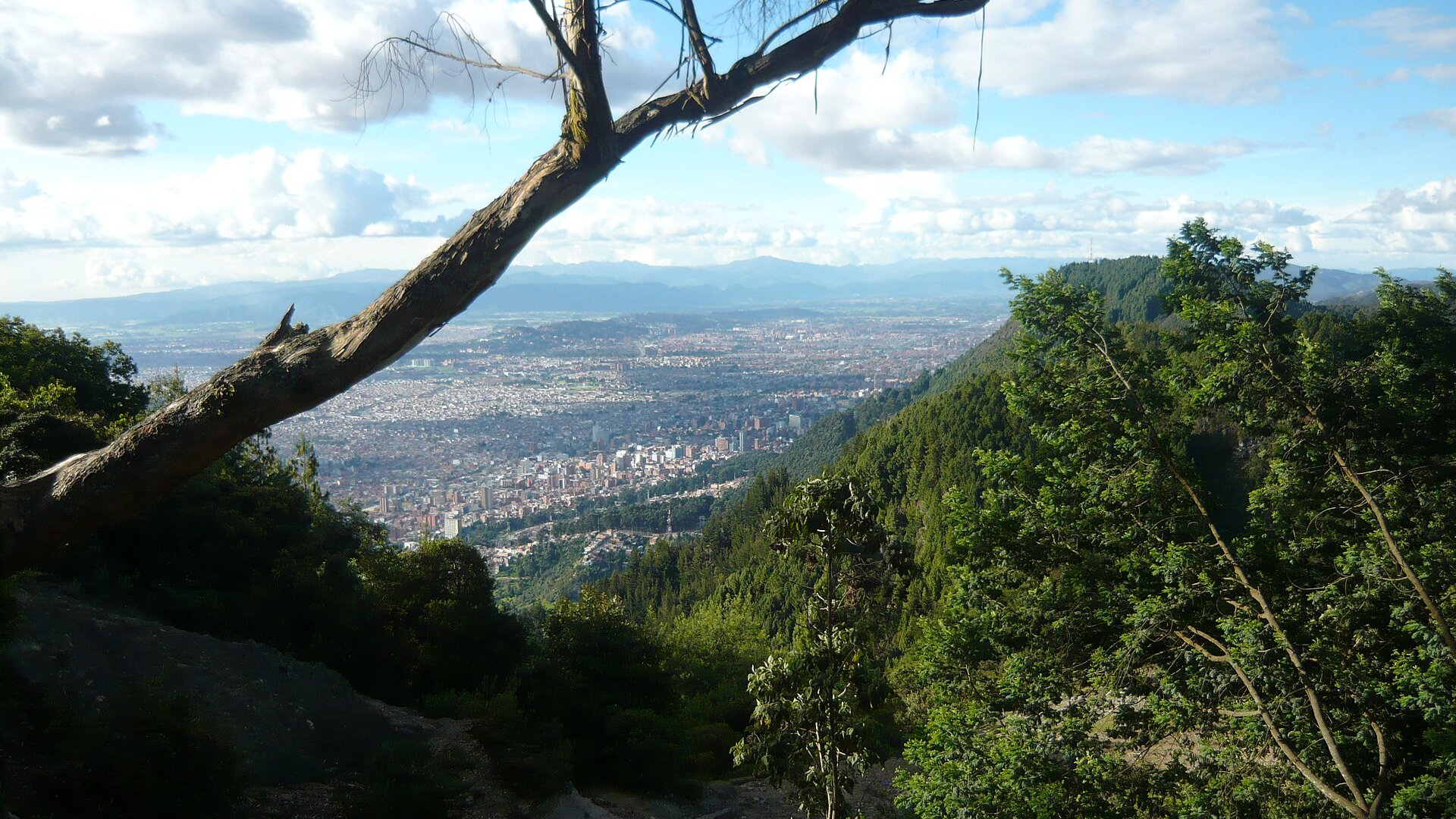
Bogotá celebrates its birthday every 6 August, marking its founding in 1538, which made 2026 the city’s 488th anniversary, the city government says. The founding took place in what is now La Candelaria, the historic center that holds the Plaza de Bolívar and the Primate Cathedral of Colombia.
DANE projects 7,945,996 residents for Bogotá in 2026, up from 7,391,056 in 2018, the year of the last national census. The same projection series shows the city peaking in 2026 and then shrinking slowly to 7,112,442 residents in 2050.
DANE counts Bogotá as a unit of its own beside the 32 departments, which are Colombia’s regional divisions, and the city shares a metropolitan region with the department of Cundinamarca. The 2025 Multipurpose Survey covered the capital and 21 Cundinamarca municipalities, among them Soacha, a neighboring city of about 870,000 people.
La Candelaria also houses the seats of national power, because the city government lists the Presidency, the Congress, the Palace of Justice and the mayor’s office there. Readers who follow the country can find more in the Colombia coverage.
How Bogotá Is Governed
Carlos Fernando Galán is the mayor of Bogotá as of October 2026, and the city government calls the office the Alcalde Mayor, the top local post. He presented the city’s results on 26 October 2026 at a regional meeting held to draft the National Development Plan 2026 to 2030, the roadmap of President Abelardo De La Espriella’s four year term, which the National Planning Department, known as DNP, is preparing.
Below the mayor the city is divided into 20 localities, each with its own local mayor’s office, from La Candelaria in the center to the rural locality of Sumapaz in the far south. The city government’s pages list Sumapaz at 78,095 hectares with 3,275 residents, while La Candelaria covers 1,830 hectares and has 18,143 residents.
The city negotiates its biggest projects with the national government, and Galán said on 28 October 2026 that the money for Metro Line 1 and for the New Calle 13 road in the west of the capital is assured. He added that President De La Espriella has stated that the Line 1 funds will be delivered as agreed with the city, after the national government announced budget adjustments.
The Economy of Bogotá
DANE puts Bogotá’s gross domestic product in 2025 at COP 471.2 trillion (US$148.8 billion), which is 25.4 percent of the national total, in its preliminary departmental accounts of 3 July 2026. Dollar figures in this guide use the official exchange rate, the TRM, of COP 3,166.91 per US$1 for 30 October 2026, so the dollar value is a conversion at that rate and not at the 2025 average.
The capital’s economy grew 3.5 percent in 2025 in volume terms, faster than the 2.6 percent national growth, and DANE says trade, transport, lodging and food services, public administration, education, health, arts and finance explain the result. Bogotá, Antioquia and Valle del Cauca together hold nearly half of Colombia’s output, and the six biggest economies account for 67.3 percent.
DANE counts 52,695,952 people in Colombia in 2025, so Bogotá’s 7,942,867 residents are about 15 percent of the population while the city produces 25.4 percent of the output. DANE also lists Bogotá among the departments whose output per inhabitant is above the national figure of COP 34.9 million (US$11,020).
In the June to August 2026 quarter DANE counted 4,339,900 employed people in Bogotá and 373,000 unemployed people, which put the unemployment rate at 7.9 percent against 8.2 percent a year earlier and 8.5 percent nationally. The participation rate of the working age population was 70.0 percent in the capital against 64.2 percent nationally, and the underemployment rate, which counts people who want to work more hours, fell from 7.5 to 6.0 percent.
The 2025 Multipurpose Survey, presented by the district planning secretariat, the metropolitan region and DANE from a sample of more than 80,000 households, found that monetary poverty in Bogotá fell to 22 of every 100 people, beating the city’s own 2027 target. Multidimensional poverty, which measures lack of access to education, health, work and housing, fell from 5.6 percent to 3 percent.
The same survey shows that 55.1 percent of Bogotá households rent, up from 43.6 percent in 2017, and that the average household has 2.71 people. The average age of residents rose from 34 years in 2017 to 36 years in 2025, and 80.2 percent of households have an internet connection.
Getting Around Bogotá
Metro Line 1 will run 23.9 kilometers with 16 stations from Bosa in the south to Calle 72 on Avenida Caracas, and 10 of the stations will connect directly to TransMilenio stations. The city’s metro company, Empresa Metro de Bogotá, reported on 28 October 2026 that the project was 83.73 percent complete at 30 September 2026.
The elevated viaduct is 93.02 percent built, with 18,836 meters done, while the stations and access buildings are 49.26 percent complete and the Bosa depot is 95.10 percent complete. Of the 30 trains, 22 had arrived in Colombia by late October 2026, 21 were running dynamic tests on the depot tracks and the viaduct, and the company expects all 30 to be built and shipped from China before the end of 2026.
The tests are required for commercial operation, which the company plans for March 2028, and the city also plans to extend Line 1 to Calle 100 and to build lines 2, 3 and 4. Readers can follow the project in the coverage of the Metro.
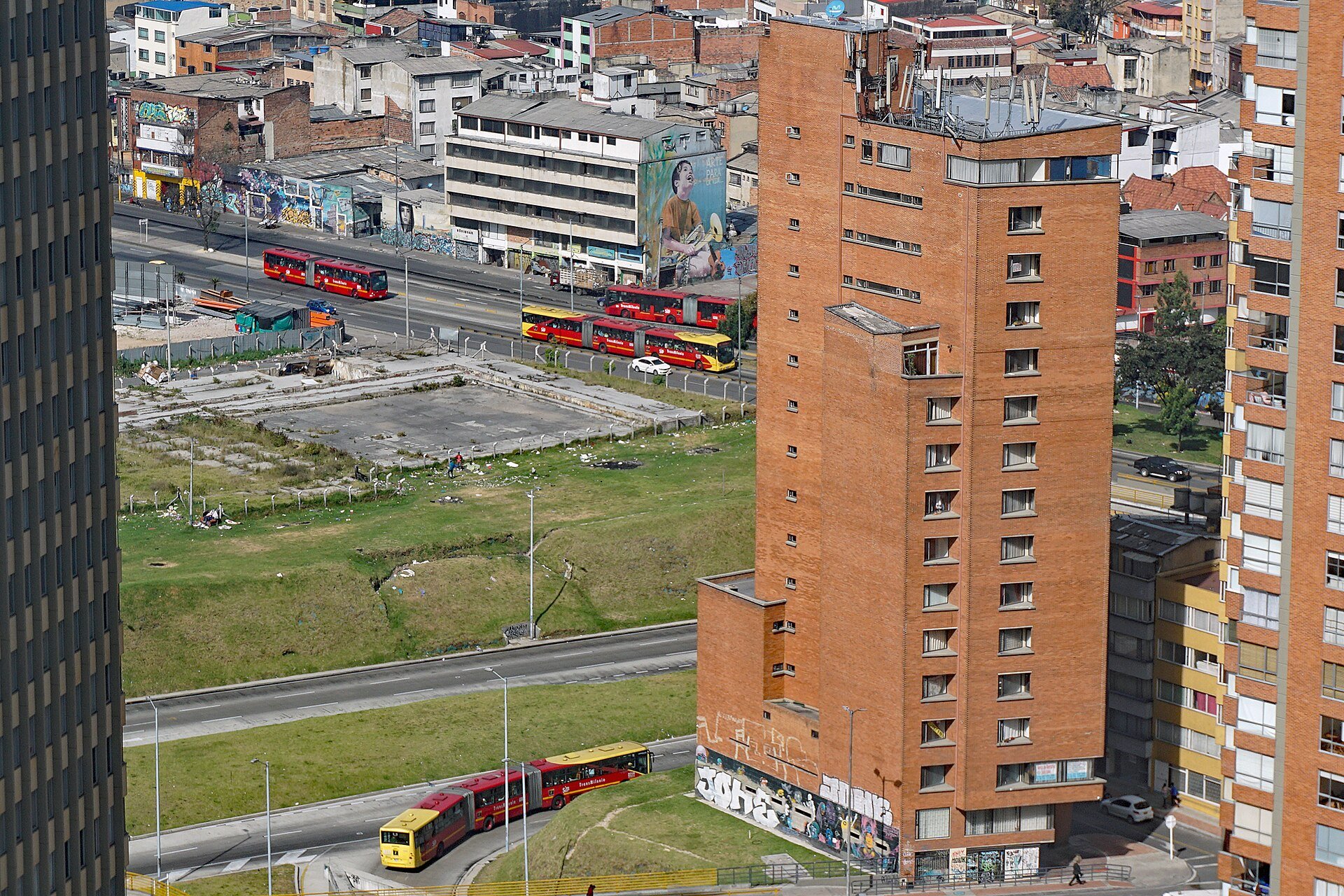
TransMilenio is the city’s bus rapid transit system, and passengers use the TuLlave card, which can be recharged through the TransMiApp and through digital wallets with NFC on a phone. Temporary stations on the Caracas Centro trunk line have changed as Metro works advance, so the city asks riders to learn which station and platform serve their route at peak hours.
Private cars face the pico y placa driving restriction from Monday to Friday between 6:00 a.m. and 9:00 p.m., and the plates allowed on the road alternate by day. The city publishes a calendar for each week, and in the one for 26 to 31 October 2026 cars with plates ending in 1 to 5 could run on odd numbered days and those ending in 6 to 9 and 0 on even numbered days, with no restriction on Saturday.
Bogotá received 119,463 regular flights and 15.3 million air passengers from January to August 2026, which is 5.2 percent more flights and 3.7 percent more passengers than a year earlier, according to the city’s tourism institute. A total of 36 airlines linked the capital with 57 cities in 29 countries, and Colombia as a whole moved 39.4 million air passengers in the eight months, up 4.6 percent, the civil aviation authority Aerocivil says.
The three intercity bus terminals moved 10,645,040 passengers from January to September 2026, 0.3 percent more than a year earlier, and the Salitre Central Terminal handled 53.7 percent of them. The Northern Terminal handled 31.2 percent and the Southern Terminal 15.1 percent.
Neighborhoods and Localities
La Candelaria, where the city was founded, has 18,143 residents and holds the historic center around the Plaza de Bolívar. Santa Fe, which the city describes as part of the traditional center, includes the Centro Internacional business area, the Avenida Jiménez commercial strip, El Rosario University and the San Victorino market district.
Chapinero, in the center north, is known for its music culture, its restaurants and its nightlife, and it also has a rural area in the eastern hills. Teusaquillo, in the center west, is known for Victorian style architecture, the Simón Bolívar park, the National University campus and the El Campín stadium.
Usaquén, in the far northeast, is called the land of the sun by the city government and is known for wood carving, weaving and a weekend flea market near its founding plaza. The city’s pages list about 502,000 residents there, against 1,348,372 in Suba, a large locality with wetlands and an Indigenous council, and more than 1,250,000 in Kennedy in the southwest.
In the south, Ciudad Bolívar is one of the city’s largest localities and has the city’s first TransMiCable, a cable car line. Kennedy grew along main avenues such as Las Américas, where the capital’s first airport, the Techo aerodrome, operated from 1930 to 1959.
Security and Public Order
The Bogotá police, the Attorney General’s Office and the district security secretariat work together on operations against homicide, sexual crimes, theft and drug trafficking, and the city government publishes the results. It asks residents to report emergencies on the 123 line.
President De La Espriella and Mayor Galán led Operation Kratos on the night of 27 October and the early hours of 28 October 2026, a joint action with the city police, the Attorney General’s Office and the Army’s 13th Brigade that produced 172 arrests and 114 raids in Bosa, Los Mártires, Santa Fe, Usme and other localities. The city government says 10 criminal gangs involved in extortion, homicide, drug trafficking, kidnapping and theft were dismantled, and the people arrested will be handed to prosecutors.
Galán said he believed no operation of that size had been carried out in Bogotá before, and he credited the coordination between the national government, the city, the judiciary, the police and the Attorney General’s Office. Further security in Bogotá is covered in a separate report.
The US State Department rates Colombia at Level 3, reconsider travel, because of crime, terrorism, civil unrest, kidnapping and natural disasters, in an advisory dated 31 March 2026. It names Arauca, parts of Cauca and Valle del Cauca, Norte de Santander and the border strip with Venezuela as do not travel areas, and Bogotá is not on that list.
The advisory warns that street crime occurs throughout Colombia and can quickly become violent, and it tells victims not to resist. It also names landslides as a risk in mountain cities such as Bogotá and Medellín, so travelers should read the full advisory before they go.
Bogotá in 2026
Bogotá received 1,334,279 foreign travelers from January to September 2026, 5.5 percent fewer than in the same months of 2025, and 53.9 percent of them gave tourism as the reason for the trip. Venezuela, the United States, Mexico, Spain and Ecuador were the main origins and together made up 53 percent, based on records of Colombia’s immigration authority analyzed by the city’s tourism observatory.
Hotel occupancy in the capital reached 57.5 percent in August 2026, 8.3 points above the national average of 49.2 percent, and tourism supported an average of 132,096 jobs a month from June to August, up 17.4 percent. The city’s tourism institute says Bogotá has beaten the national occupancy rate in 95 percent of the months measured since February 2022, helped by business trips, congresses and fairs.
On 27 October 2026 the city’s water utility opened the tender for the Canoas wastewater treatment plant, which the mayor calls the largest in Colombia and the answer to a promise that is 30 years old. Four prequalified bidders are in the race, and the utility expects to award the contract around the middle of 2027.
Events fill the city calendar, and a separate guide lists what to do in Bogotá in November 2026 with venues. The city government also publishes a cultural agenda and a daily mobility report on its website.
What It Means for US Readers
The State Department’s Colombia page lists no visa requirement for stays of 90 days or less, and it says the passport must be valid at the time of entry and for the whole stay. The US Embassy is in Bogotá at Calle 24 Bis, number 48 to 50, according to the department.
Prices are in pesos, and the official rate of COP 3,166.91 per US$1 on 30 October 2026 means COP 1,000 is worth US$0.32. The United States is one of the five main source countries of foreign visitors to the capital, with Venezuela, Mexico, Spain and Ecuador.
For US companies the draw is scale, because one quarter of Colombian output is produced in Bogotá, while the risks are crime and congestion. Background on the country is in the explainer on Colombia’s history, and the Metro, the tourism data and the security operations above are the items to watch.
What Is Not Known
March 2028 is the company’s plan for commercial operation of Metro Line 1, and it is not known whether the remaining 16.27 percent of the work, including stations that are 49.26 percent complete, will be finished on time. The mayor says the money is assured and the national budget adjustments do not affect it, but it is not known whether later budget decisions will change that.
DANE’s population figure is a projection built on the 2018 census, so the true size of the city is an estimate, and DANE’s own labor survey uses a larger base of 8,137,200 residents for June to August 2026. The projection also has the city peaking in 2026, which later data may change.
Foreign arrivals in Bogotá were 5.5 percent lower from January to September 2026 than a year earlier, and it is not known whether the September gains in event and business travel will last. The Canoas plant contract is not expected before the middle of 2027, so the benefit for the river is not known yet.
Frequently Asked Questions
How many people live in Bogotá?
DANE projects 7,945,996 residents for 2026, the latest official projection as of October 2026. That is up from 7,391,056 in 2018, and the projection shows the city peaking in 2026.
Is Bogotá safe for US tourists?
The State Department rates Colombia at Level 3, reconsider travel, and Bogotá is not on its do not travel list. Street crime occurs throughout the country and can quickly become violent, so the department tells victims not to resist.
Who is the mayor of Bogotá?
Carlos Fernando Galán is the mayor as of October 2026, and the city government calls the office the Alcalde Mayor. The mayor’s office is in La Candelaria, the historic center, where the city government also lists the Presidency, the Congress and the Palace of Justice.
Do US citizens need a visa for Bogotá?
The State Department’s Colombia page lists no visa requirement for stays of 90 days or less. The passport must be valid at entry and for the whole stay.
When will the Bogotá Metro open?
The Empresa Metro de Bogotá plans commercial operation of Line 1 in March 2028. The line was 83.73 percent complete at 30 September 2026.
How big is the Bogotá economy?
DANE puts Bogotá’s 2025 output at COP 471.2 trillion (US$148.8 billion), or 25.4 percent of the national total. The city’s economy grew 3.5 percent that year, against 2.6 percent nationally.
Sources: Bogotá city government, anniversary page; Bogotá city government, locality pages; DANE, population projections by department, 2018 to 2050; DANE, home page, total population 2025; DANE, departmental GDP 2025 preliminary, 3 July 2026; DANE, labor market bulletin, 30 September 2026; DANE, labor market annex, August 2026; Bogotá city government, Multipurpose Survey 2025, 29 October 2026; Bogotá city government, results presented to the national government, 26 October 2026; National Planning Department, National Development Plan 2026 to 2030; Bogotá city government, Metro Line 1 progress, 28 October 2026; Bogotá city government, Metro funding statement, 28 October 2026; Bogotá city government, TransMilenio Calle 57 station, 30 October 2026; Bogotá city government, pico y placa calendar, 25 October 2026; Bogotá city government, tourism figures, 28 October 2026; Bogotá city government, weekly security results, 25 October 2026; Bogotá city government, Operation Kratos, 28 October 2026; Bogotá city government, Canoas treatment plant tender, 27 October 2026; Aerocivil, air passengers, 29 September 2026; US State Department, travel advisory feed; US State Department, Colombia country page; Colombia open data portal, official TRM exchange rate, 30 October 2026.
Editorial responsibility: Matthias Camenzind, Editor-in-Chief · Editorial standards · Report an error
The Bogotá Guide
What The Rio Times publishes for foreigners in Bogotá, Colombia.
This month
Coming up in Bogotá
- Def Leppard in Bogotá, Colombia: Movistar Arena on November 2, 2026 — Tickets from COP 279,000 (US$70) 2 Nov
- Cypress Hill in Bogotá: Colombia Opens the South America Tour on 5 November, from COP 120,000 5 Nov
- Reykon Adds Second Bogotá Show at Movistar Arena After November 6 Sell-Out 6 Nov
- Los Tigres del Norte Play Bogotá's El Campín Stadium on 7 November 7 Nov
Living in Bogotá
- Cost of Living in Bogotá for Expats in
- Bogotá Studio Apartment Rent: US$400–US$525 in 2026
- Living in Bogotá as an Expat, From US$1,200 a Month
Understand Colombia