Colombia’s New President Says The Wealth Tax Will Go — What That Means If You Live There
Colombia · Taxes
Key Facts
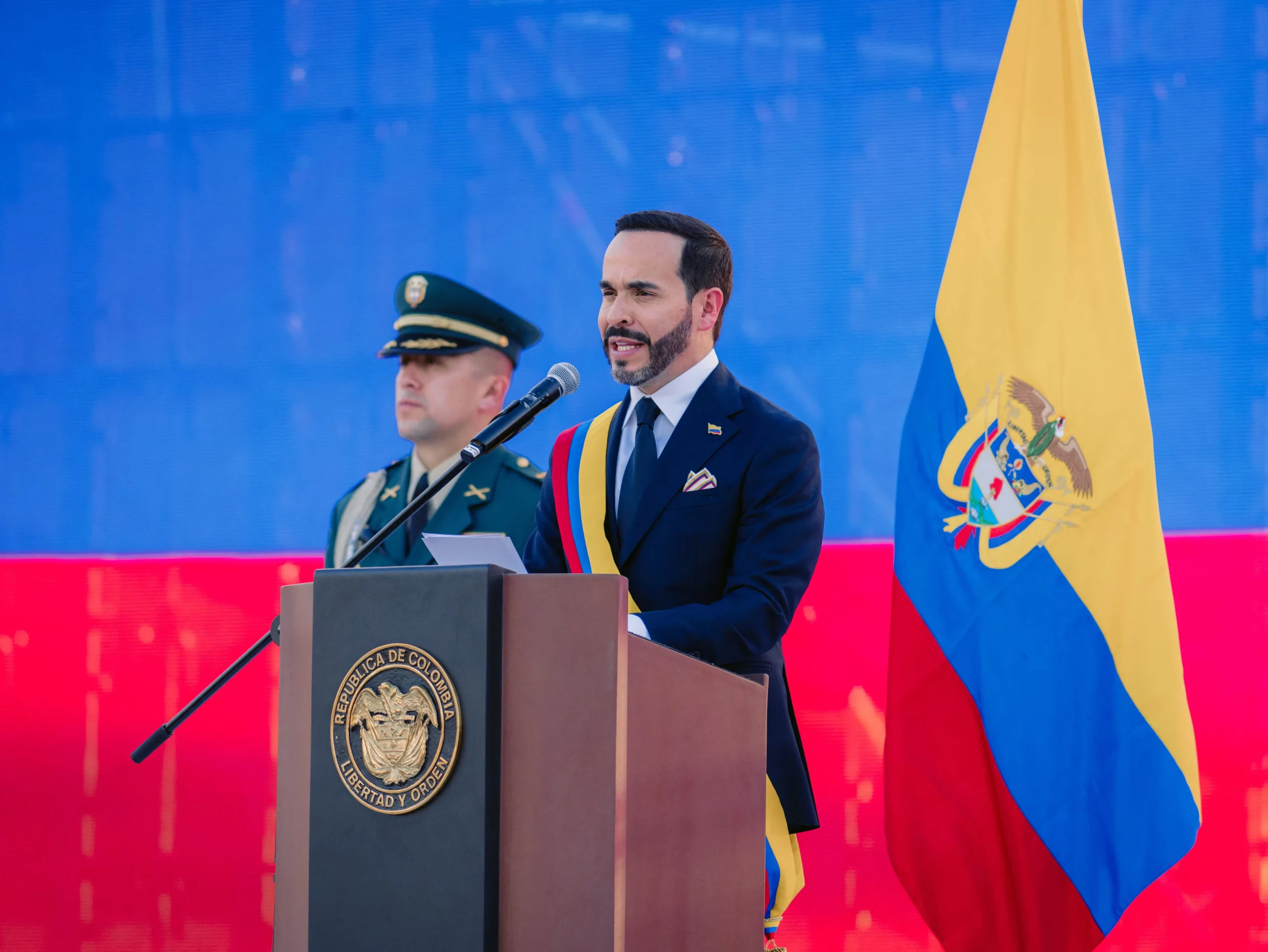
- The pledge. President Abelardo De La Espriella said in his inaugural address on 7 August that the wealth tax will be abolished: “we must stop punishing those who invest and generate wealth.”
- Not law. It is an announcement. Abolition requires a structural tax reform passed by Congress, and no bill has been filed.
- Also announced. A decree freezing public spending, the recovery of Ecopetrol as a priority, and the re-authorisation of fracking.
- Why it matters to you. The impuesto al patrimonio is the levy that reaches foreign tax residents in Colombia on their worldwide assets above the threshold.
- The setting. He gave the address from the Cantón Militar Pichincha, a military garrison, rather than from Bogotá.
Colombia’s new president says the wealth tax will go. It is the levy that reaches foreign residents’ worldwide assets — and it is an announcement, not a law.
The Colombia wealth tax is the first thing the new government named. In his inaugural address on Friday, Abelardo De La Espriella said the impuesto al patrimonio would be abolished as the centrepiece of a structural tax reform, because the country “must stop punishing those who invest and generate wealth”. For foreigners weighing Colombian tax residency, no other line in that speech matters as much — and none is further from being law.
What the Colombia wealth tax pledge actually is
De La Espriella took the oath at 3 p.m. on Friday at the Universidad Santiago de Cali, then delivered his first address from a military garrison. The economic content was the part that matters to anyone with assets in Colombia. He named a structural tax reform, and named its headline measure: the wealth tax goes.
Alongside it he said he would sign a decree freezing public spending “in the coming hours”, called the recovery of Ecopetrol an absolute priority, and confirmed that Colombia will re-authorise fracking under what he called responsible and sustainable technical standards.
Be clear about what this is. Abolishing the impuesto al patrimonio is not something a president can decree. It requires a tax reform bill through both chambers of Congress, and the previous government’s own tax reform died there in July. No bill has been filed. What exists today is a stated intention from a president on his first day.
Why the wealth tax matters to foreign residents specifically
Colombia taxes its tax residents on worldwide income and worldwide assets. You become a tax resident by spending more than 183 days in the country across any rolling 365-day period, and the clock does not reset at the calendar year.
For most foreigners the income side is manageable, because Colombia gives credit for tax paid abroad. The asset side is the one that catches people out. The wealth tax applies to net worth above the threshold, wherever in the world that wealth sits — a house in Europe, a pension pot, a brokerage account. For a retiree or a remote worker with accumulated savings, it can turn a comfortable cost-of-living arbitrage into an expensive one.
That is why this announcement is worth more attention than a typical tax headline. It is not a rate tweak. It is the specific provision that most often decides whether someone lets the 183-day clock run out or leaves before it does.
Colombians have already had one scare on this. In December the outgoing government used emergency powers to cut the entry threshold from 72,000 UVT to 40,000 UVT, a change that would have brought the total number of people liable to around 105,000, including plenty of foreign residents who had never expected to file. The Constitutional Court suspended the decree in January and struck it down in April, and the threshold reverted. That episode is worth remembering for two reasons: the wealth tax is the lever Colombian governments reach for first, and the court is the backstop that decides how far they get.
What to do about it, which is mostly nothing
Do not restructure anything on the strength of an inaugural speech. Between an announcement and a promulgated law sit a filed bill, two chambers, committee stages and, in Colombia, a reasonable chance of a Constitutional Court challenge. The previous administration’s reform cleared none of that.
What is worth doing now is knowing your own position. Count your days honestly across the rolling year, not the calendar year. Know whether your net worth would sit above or below the current threshold. For 2026 that line is 72,000 UVT, and with the UVT fixed at COP 52,374 for the year it works out to about COP 3.77 billion, or roughly US$1.19 million at Friday’s rate. Above it the rate starts at 0.5 percent and rises in bands. The threshold is written in UVT rather than pesos precisely so that it moves with inflation every January, which means a portfolio that sits comfortably below the line one year can cross it the next without you doing anything at all. If you are close to either line, that is a conversation with a Colombian accountant, not a decision to take from a news story.
The other thing worth watching is the offset. A government that removes a tax and freezes spending in the same week has to find the money somewhere, and the same speech promised mega-prisons and a harder security posture, neither of which is cheap. What replaces the wealth tax in the reform bill will tell you more than its removal does.
The wider signal
Read this alongside what the outgoing government did in its final fortnight. On 4 August the environment ministry signed a resolution closing 42 percent of the country to new mining and oil contracts. On 20 July it filed a bill to ban fracking outright. Within three weeks Colombia has produced both of those and a new president promising the opposite on both counts.
For anyone modelling Colombian exposure, the lesson is not which side wins. It is that Colombian tax and resource policy now changes with the political cycle rather than through settled law, and that instruments made by decree or resolution can be unmade the same way. Price the volatility, not the position. This is general information, not tax or legal advice.
More: Colombia news in English, every day from The Rio Times.
Frequently Asked Questions
Has Colombia abolished the wealth tax?
No. President Abelardo De La Espriella said on 7 August that it will be abolished as part of a structural tax reform. No bill has been filed and abolition requires Congress.
Who pays Colombia’s wealth tax?
Colombian tax residents, on net worth above the threshold, including assets held outside Colombia. You become a tax resident after more than 183 days in the country within any rolling 365-day period.
Should I change my plans because of this?
Not on an announcement. Between a speech and a law sit a filed bill, two chambers of Congress and a likely court challenge. The previous government’s tax reform cleared none of those.
What else did the new president announce?
A decree freezing public spending, the recovery of Ecopetrol as a priority, the re-authorisation of fracking, a formal list of designated narcoterrorist groups and the construction of mega-prisons.
When would any change take effect?
Unknown. A tax reform would have to pass both chambers and survive constitutional review, and no timetable has been given.
This article was produced by The Rio Times’ automated newsroom system. How we use AI · Report an error
Read More from The Rio Times