De la Espriella’s Arrest Figure Does Not Match His Own Bulletin
COLOMBIA · GOVERNMENT
Key Facts
- —What happened President Abelardo De la Espriella addressed the nation on Sunday 13 September.
- —The claim He said the Petro government left Colombia, in his words, on the edge of the abyss.
- —The number 17,147 arrests in his first 36 days in office.
- —The catch His own security bulletin that morning said 18,750. The two figures do not reconcile.
- —The universities He announced a protocol allowing police onto public campuses. Nothing has been enacted.
- —The budget The 2027 draft is COP 634.9 trillion, about US$159 billion, and 44.2% of it is borrowed.
The arrest figure in Sunday’s address is lower than the one the presidency published that morning. Neither number has been explained, and the gap is larger than a rounding error.
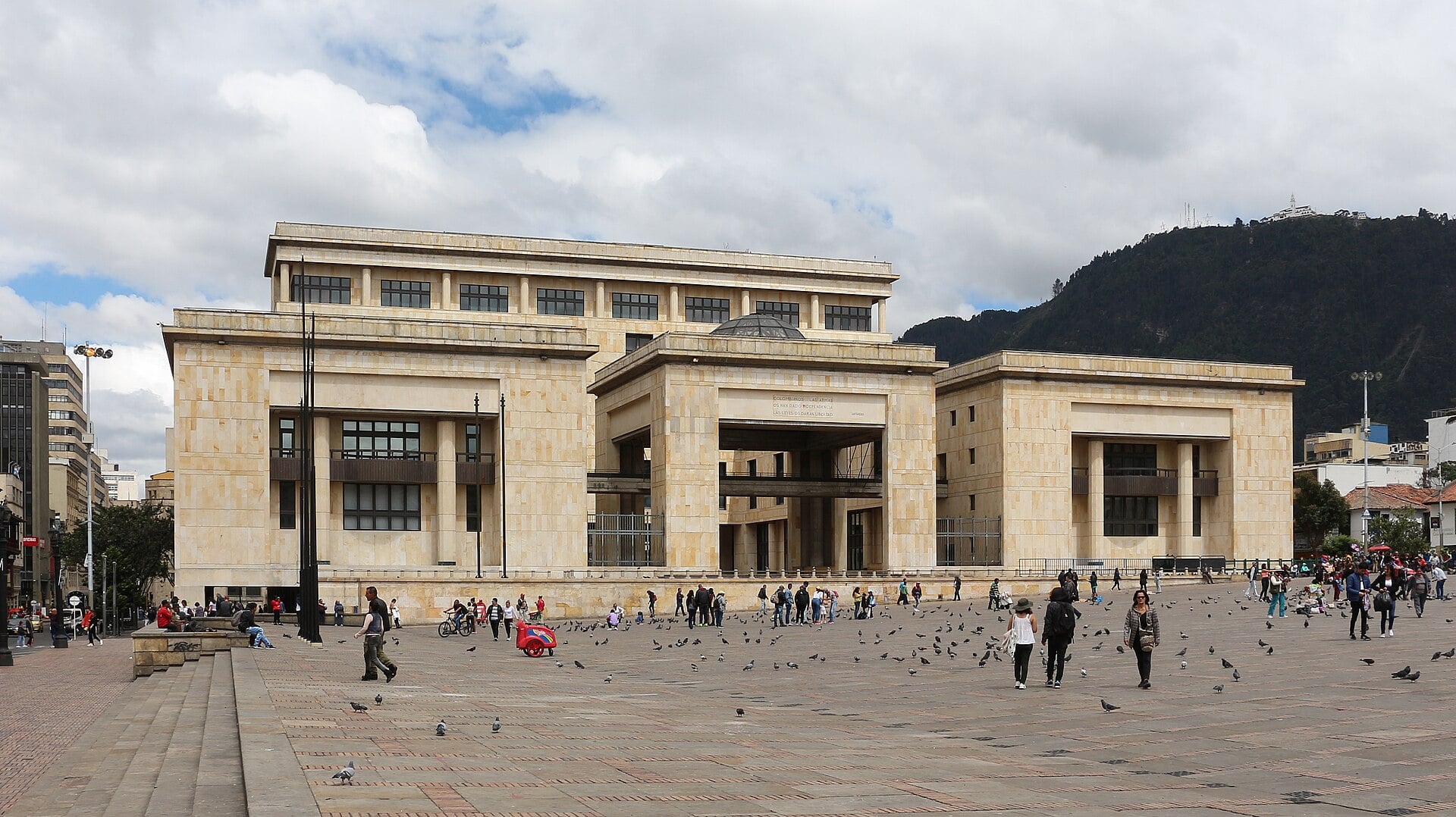
Colombia’s president gave a national address on Sunday evening. It set out a fiscal indictment of his predecessor, a security tally and a plan for policing universities.
What He Said About the Budget
De la Espriella put the fiscal position at the centre of the address. He blamed his predecessor Gustavo Petro directly.
His words were that the crisis is not an accident and not the result of external factors. He called it exclusively the responsibility of Petro and his government.
The figures he gave are checkable. The 2027 draft budget is COP 634.9 trillion, about US$159 billion at current rates.
Of that, COP 281 trillion, roughly US$70 billion, is funded by debt. That is 44.2% of the total. Debt service alone is COP 155.4 trillion, about US$39 billion.
He put it in simpler terms as well. Of every 100 pesos the state spends, 24 go to debt service and 14 to investment.
He announced an austerity package worth COP 17.4 trillion, about US$4.4 billion. The Pacto Histórico bloc has formally requested a right of reply.
The Arrest Figure, and the Problem With It
The president said his government had made 17,147 arrests in 36 days. El Tiempo and El Espectador both carry that number from the address.
El Tiempo’s own summary piece gives 17,014 instead. Semana rounds to more than 17,000. That is three renderings of one figure.
The larger problem came earlier the same day. The presidency’s security bulletin 035 put arrests at 18,750 since 7 August.
The same bulletin gave 1,940 firearms seized and 1,746.5 hectares of coca cleared. The evening address gave 1,761 firearms and 1,506 hectares.
All three cumulative series therefore fell between the morning and the evening. A cumulative total cannot fall. One of the two counts is wrong, and neither has been corrected.
Is 17,000 Arrests in 36 Days a Lot?
It reads as a large number. Set against Colombia’s ordinary policing volume, it is not clearly above trend.
Bogotá alone recorded 2,837 arrests in August 2026, on the city government’s own figures. It recorded 2,780 in May.
Scale that share across the country and the national run rate is roughly 17,000 to 19,000 arrests a month. That is for all crimes.
El Tiempo headlined the figure as arrests against illegal groups. That framing does not hold. It would exceed credible estimates of the total membership of Colombia’s armed groups.
Semana’s wording, arrests nationally, is the defensible one. Read as a national all-crime total, the number is unremarkable.
The Universities Announcement
This drew the loudest reaction, and it is the part most often misdescribed. He announced a national protocol. He did not sign a decree or a law.
No outlet has identified the issuing ministry, the instrument or a timeline. Nothing is in force, and police have not been authorised to do anything new.
The protocol as described would allow police onto public campuses during violence, danger or extraordinary disorder. It also covers flagrancy and the storage of dangerous materials.
His line was that university autonomy does not mean autonomy in matters of public order. He also said he would not allow public universities to remain sanctuaries of violence.
What the Universities Said Back
Guillermo Murillo, rector of Universidad del Valle, said the violence happens outside campuses rather than inside them. He denied that explosives are made in university laboratories.
Ismael Peña, rector of Universidad Nacional, said police entry has produced no results. He proposed intelligence work and access control instead.
Universidad Pedagógica Nacional issued an institutional statement. The legal scholar Laura Espinosa Macías said a president cannot dismantle university autonomy by decree.
The constitutional anchor is Article 69 and Law 30 of 1992. Representatives Carol Borda supported the measure; Isabel Vera and Ana Erazo opposed it.
The Earthquake Ledger
The address also carried relief figures from the 10 August earthquake. It measured magnitude 7.4, with its epicentre near San José del Palmar in Chocó.
The president gave a toll of 289 dead in his August address. Reconstruction is estimated at COP 30 trillion, about US$7.5 billion, under a plan announced on 18 August.
Sunday’s new figures were regional. Quindío households receive COP 787,907 a month, roughly US$198, for three months.
He listed 369 housing repairs, 160 finished apartments in Quindío and 110 homes in Buga. More than COP 40 billion in credit, about US$10 million, goes to 1,800 merchants.
One distinction matters here. These are Quindío and Valle del Cauca packages. The Chocó reconstruction line is separate and should not be added to them.
What Is Not Known
Neither arrest count has been reconciled by the presidency. No breakdown by crime type has been published for either.
The universities protocol has no published text, no issuing body and no date. Until one appears, there is nothing to assess beyond the president’s description of it.
For a foreign resident or investor, the practical reading is simple. The fiscal figures are checkable and serious. The security figures are, for now, an assertion.
More: Colombia news and analysis, every day from The Rio Times.
Frequently Asked Questions
When was the address?
Sunday 13 September 2026, at 8 p.m. Bogotá time, on government channels. It was not his first address.
How many arrests did he claim?
17,147 in 36 days. The presidency’s own bulletin that morning said 18,750, and the two have not been reconciled.
Can police now enter universities?
No. A protocol was announced, not enacted. No instrument, issuing ministry or date has been published.
What did he say about the budget?
That the 2027 draft is COP 634.9 trillion, about US$159 billion, with 44.2% funded by debt.
What is the austerity package?
COP 17.4 trillion, roughly US$4.4 billion, in cuts to goods, services and non-priority investment.
Did the opposition respond?
The Pacto Histórico formally requested a right of reply to the fiscal accusations.
Sources: Presidencia de Colombia, El Tiempo, El Espectador, La República, Semana, Pulzo, Alcaldía de Bogotá, Minuto30.
This article was produced by The Rio Times’ automated newsroom system. How we use AI · Report an error
Read More from The Rio Times