
CHILE · PORTS
Key Facts
- The country Chile is a long Pacific-coast country whose ports face Asia, and Puerto Coronel is a multipurpose port in the Biobío Region about 30 kilometers south of Concepción.
- Why it matters Argentina’s Vaca Muerta shale basin in Neuquén province drives the country’s oil boom, and Chevron, a US major, holds large interests there.
- Why now The plan became public on 26 October 2026, days after the Argentina Oil and Gas Patagonia fair held in Neuquén from 19 to 22 October.
- What happened Puerto Coronel is pursuing machinery, equipment and supplies from Asia that would arrive through its terminal and continue overland to Neuquén to serve Vaca Muerta.
- The numbers The port moved more than 3,000 containers of Argentine farm goods last season, and Vaca Muerta supplied 643,000 of the 916,000 barrels of oil a day recorded for the Argentine basin in July.
- What it means for you For US energy investors, a shorter Pacific supply line could change where Vaca Muerta operators buy equipment, but no cargo contract has been named.
- Still open No volumes, customers or investment amounts have been published, and the second mountain crossing, Pichachén, is still a planned route.
- Power Index Chile ranks 3rd of 14 in The Rio Times Latin America Power Index, with 63.6 points (October 2026 edition).
In Plain English
Puerto Coronel is a multipurpose port for containers, general cargo and bulk on the bay of Coronel in Chile’s Biobío Region. Vaca Muerta is the shale oil and gas formation in Argentina’s Neuquén province, and AOG Patagonia is the oil and gas trade fair held in the city of Neuquén.
A paso, or mountain pass, is a border crossing through the Andes between Chile and Argentina, and Pino Hachado is one that is already operating. Pichachén is a second pass that the plan treats as a future route.
Puerto Coronel, a container and cargo port in Chile’s Biobío Region, wants to capture the machinery, equipment and supplies that Asian suppliers ship to Argentina’s Vaca Muerta shale basin, Diario Financiero reported on 26 October 2026. The plan would bring the cargo across the Pacific to Coronel and then overland to Neuquén province, where Argentina’s shale oil and gas are produced.
The plan became public days after the Argentina Oil and Gas Patagonia fair in Neuquén, which ran from 19 to 22 October 2026, and no volumes, contracts or investment amounts have been announced. For US energy investors the story matters because Vaca Muerta is where Chevron holds large interests, and Chilean ports are trying to shorten the supply line.
What Puerto Coronel Plans
General manager Patricio Román told Diario Financiero that the port has a concrete relationship with Neuquén and wants to grow it. That relationship rests mainly on agribusiness exports today, with more than 3,000 containers of Argentine farm products moved in the last season.
Commercial manager Javier Lobo said the opportunity is to add the imports that the growth of Vaca Muerta requires, which would give the port cargo moving in the opposite direction. Those imports would be machinery, equipment and supplies from Asia that arrive across the Pacific and continue by land to Neuquén.
The port used the Patagonia fair in Neuquén to promote the Biobío Region as a connection to Pacific markets. Alejandro Gibbons, Chile’s consul general in Neuquén, said that Neuquén needs a closer connection to the Pacific Ocean because the Atlantic ports are quite far away.
In the long term the port also wants to study joining the Pacific Gas Pipeline network to export Argentine gas. That would need investments, technical studies, commercial agreements and authorizations, and no amounts have been given.
What the Port Offers
Puerto Coronel’s website describes a terminal 30 kilometers south of Concepción with nine berths for ships of up to 15 meters of draft, about 101,000 square meters of warehouses and 100,000 square meters of yards. It lists five gantry cranes, 1,800 meters of internal rail track and an average of 100 containers moved per hour.
The company calls itself the main multipurpose port of the Biobío Region and handles containers, general cargo and bulk. Road and rail links run north and south through the region, which the port says favors the logistics of import and export cargo.
The Vaca Muerta Demand
Diario Financiero reported 916,000 barrels of oil a day for the Argentine basin in July, of which 643,000 came from Vaca Muerta. It added that the formation accounts for 61% of Argentina’s gas production.
Chevron’s website says it holds a non-operated 50% interest with YPF in the Loma Campana and Narambuena concessions in the Neuquén basin and operates the El Trapial block. It describes Loma Campana as the largest shale development in Argentina, producing about 100,000 barrels of oil equivalent per day.
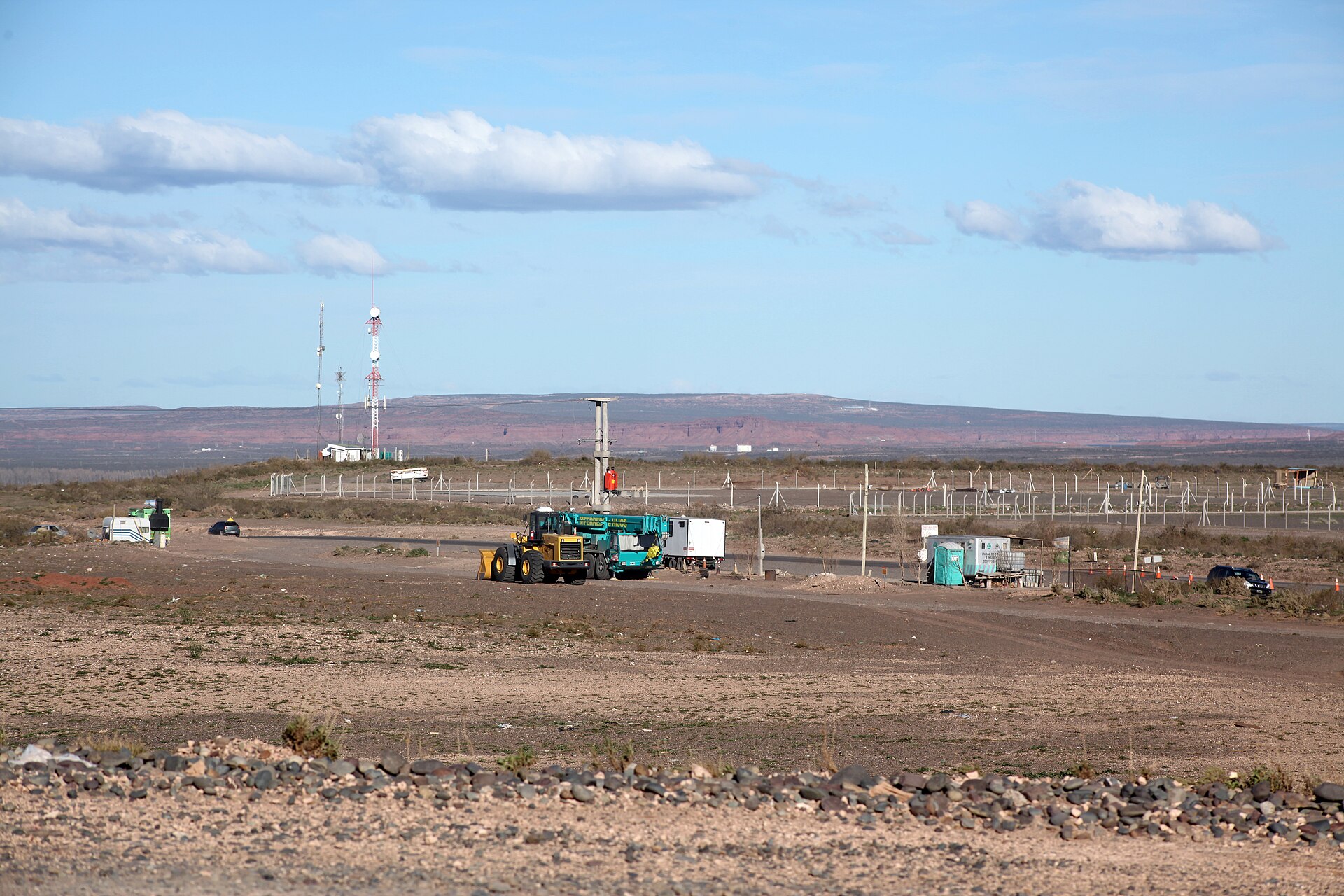
Reviewing the fair on Saturday 24 October, Governor Rolando Figueroa said that Neuquén is attractive to foreign investors because of its social peace, according to a provincial government statement published on 25 October. The same statement says Neuquén business chambers met to expand the share of local companies in Vaca Muerta work and that YPF chief Horacio Marín committed to follow the Compre Neuquino law, which favors local purchasing.
The Routes Over the Andes
Gibbons told Diario Financiero that the operating Pino Hachado pass and the planned Pichachén pass act as logistics axes. Román told the paper that entering by the Pacific and continuing overland to Neuquén could mean shorter transit times and competitive costs against the Atlantic routes.
The report gives no tonnage, no figures on costs or transit times and no word on rail, and it names no company that uses the Atlantic routes today. Earlier coverage looked at Neuquén’s plan for its Andean border crossings and how they could link the province to Chile.
What It Means for You
US energy investors and equipment suppliers should treat the plan as a logistics ambition and not a contract, since no volumes or customers were named. If Asian equipment does move through Coronel, it would add a Pacific option for Vaca Muerta operators such as YPF, Chevron’s partner in Loma Campana.
Related coverage looks at Neuquén’s road plan toward Chile and at the wider Vaca Muerta supply chain. More Chile business coverage tracks the ports and corridors that tie the country to Asia.
What Is Not Known
No volume, customer, price or investment figure has been published for the Asian import business, and the report gives no timetable. It is also unclear whether Asian suppliers, Vaca Muerta operators or Argentine customs and road rules would favor the Chilean route over Atlantic ports.
The Pacific Gas Pipeline idea is explicitly long term and would need studies, agreements and authorizations. The report does not say when the Pichachén crossing could carry freight, and the Neuquén government’s statement on the fair does not mention Chile.
Frequently Asked Questions
What is Puerto Coronel trying to do?
Puerto Coronel wants to capture machinery, equipment and supplies that Asian suppliers send to Argentina’s Vaca Muerta shale basin. The cargo would arrive across the Pacific and continue overland to Neuquén province.
Where is Puerto Coronel?
It is a multipurpose port on the bay of Coronel in Chile’s Biobío Region, about 30 kilometers south of Concepción. It handles containers, general cargo and bulk.
Which US company operates in Vaca Muerta?
Chevron says it holds a non-operated 50% interest with YPF in the Loma Campana and Narambuena concessions and operates the El Trapial block. It calls Loma Campana the largest shale development in Argentina.
How much oil does Vaca Muerta produce?
Diario Financiero reported 643,000 barrels a day from Vaca Muerta in July, out of 916,000 for the Argentine basin. The formation also accounts for 61% of Argentina’s gas production, the report says.
Has the Pacific route been confirmed?
No, the port has announced an aim and not a contract. No volumes, costs or start date have been published.
Sources: Diario Financiero, 26 October 2026; Puerto Coronel, terminal facts, accessed 27 October 2026; Puerto Coronel, company page and executives, accessed 27 October 2026; AOG Patagonia 2026, Instituto Argentino del Petróleo y del Gas, 19 to 22 October 2026; Chevron, Argentina operations page, accessed 27 October 2026; Neuquén provincial government, 25 October 2026.
This article was produced by The Rio Times’ automated newsroom system. How we use AI · Report an error · Editorial responsibility: Matthias Camenzind, Editor-in-Chief