
GUIDES · CHILE
Key Facts
- —The country Chile counted 18,480,432 people in its 2024 census. Of those aged 15 or over, 74.2% said they have a religion, down from 91.7% in 2002.
- —Catholics 54.0% of adults, or 8,168,978 people, in 2024, down from 70.1% in 2002.
- —Evangelicals 16.3% of adults, or 2,466,607 people, in 2024, up from 15.2% in 2002.
- —No religion 25.8% of adults, or 3,903,308 people, in 2024, up from 8.3% in 2002.
- —Church and state Chile has no state religion. Freedom of worship is guaranteed, and religion and the state are officially separate as of 2023.
- —Power Index Chile ranks 3rd of 14 in The Rio Times Latin America Power Index, with 63.6 points (October 2026 edition).
Chile religion in 2026: a Catholic majority that is shrinking, a growing evangelical minority and a quarter of adults with no faith. This guide covers the churches, the law, the festivals and what faith means for daily life.
Chile religion is changing fast, and the shift matters to US readers because it shapes a stable trade partner’s social debates. Catholics fell from 70.1% of people aged 15 or over in 2002 to 54.0% in the 2024 census.
Churches still lead national ceremonies, but they no longer decide elections. This guide maps the main faiths, the legal rules, the great festivals and the open questions as of October 2026.
How Chile Counts Faith
Chile asks about religion in its census, but only of people aged 15 or over. The 2024 census, run by the national statistics institute INE, covered 18,480,432 people in all.
Of those aged 15 or over who answered, 74.2% said they have a religion or creed, or 11,214,961 people. That is a fall of 17.5 points from 91.7% in 2002.
The share with no religion tripled, from 8.3% in 2002 to 25.8% in 2024. In numbers, 3,903,308 people said they follow no religion or creed.
- Catholic: 54.0%, or 8,168,978 people.
- Evangelical or Protestant: 16.3%, or 2,466,607.
- Other Christians and Christ-related traditions: 1.3%, or 199,426.
- Jehovah’s Witnesses: 0.8%, or 121,805.
- Church of Jesus Christ of Latter-day Saints: 0.6%, or 94,266.
- Jewish: 0.2%, or 28,153.
- Buddhist: 18,221. Orthodox: 10,912. Muslim: 10,197. Hindu: 4,530. Baháʼí: 2,010.
- Other religion or creed: 0.6%, or 89,856.
- No religion: 25.8%, or 3,903,308.
The census records what people say about themselves, not how often they pray or attend services. It is still the most complete count of faith in the country.
Religion varies by place. Maule (81.7%) and Ñuble (80.1%) have the highest shares with a religion, while Metropolitana de Santiago and Aysén both stand at 70.0%.
Women make up 54.5% of those with a religion, against 44.9% of those with none. Faith is therefore more common among women and, as shown below, among older Chileans.
The Catholic Church in 2026
Catholicism remains the largest faith, with 8,168,978 adults in the 2024 census. Its share of adults fell by about 16 points between 2002 and 2024.
The Archbishop of Santiago, Cardinal Fernando Chomali, is the church’s most visible voice. He was named archbishop in October 2023, and Pope Francis announced his elevation to cardinal in October 2024.
Chomali preached at the ecumenical Te Deum, a national thanksgiving service, in the Metropolitan Cathedral on Friday 18 September 2026. He called corruption “the evil of all evils” and described poverty and unemployment as an ethical urgency.
He also raised insecurity, violence, the demographic crisis and loneliness, and closed with a call for unity. President José Antonio Kast attended, alongside Senate president Paulina Núñez and Chamber of Deputies president Jorge Alessandri.
The scandals over sexual abuse damaged the church’s authority. In May 2018 Chile’s bishops gave written resignations to Pope Francis after a Vatican investigation into cover-ups.
Fernando Karadima, a Santiago priest, had been found guilty by the Vatican’s doctrinal office in 2011. Victims accused Bishop Juan Barros of Osorno of covering for him, and in June 2018 Pope Francis accepted Barros’s resignation along with two others.
A study by the Catholic University’s Centre for Law and Religion, commissioned by the bishops’ abuse-prevention council, counted 568 victims between 1960 and 2023. Of them, 320 were minors, and the study identified 225 accused perpetrators among clergy and other members of religious communities.
Pope Leo XIV had lung surgery in Rome on 13 October 2026 and left hospital on 17 October. His surgeon told Vatican media there is no clinical reason to cancel the November tour, which covers Uruguay, Argentina and Peru but not Chile.
Hundreds of people prayed for the Pope’s health at the Santiago cathedral on 18 October. Pope Francis had last visited Chile in January 2018, during the abuse crisis.
Evangelical Chile
Evangelical and Protestant churches are the second-largest group, with 16.3% of adults, or 2,466,607 people, in 2024. Their share rose from 15.2% in 2002, a slower gain than the rise of people with no religion.
The census puts all evangelical and Protestant churches in one category. It therefore does not split Pentecostal, Methodist and other denominations.
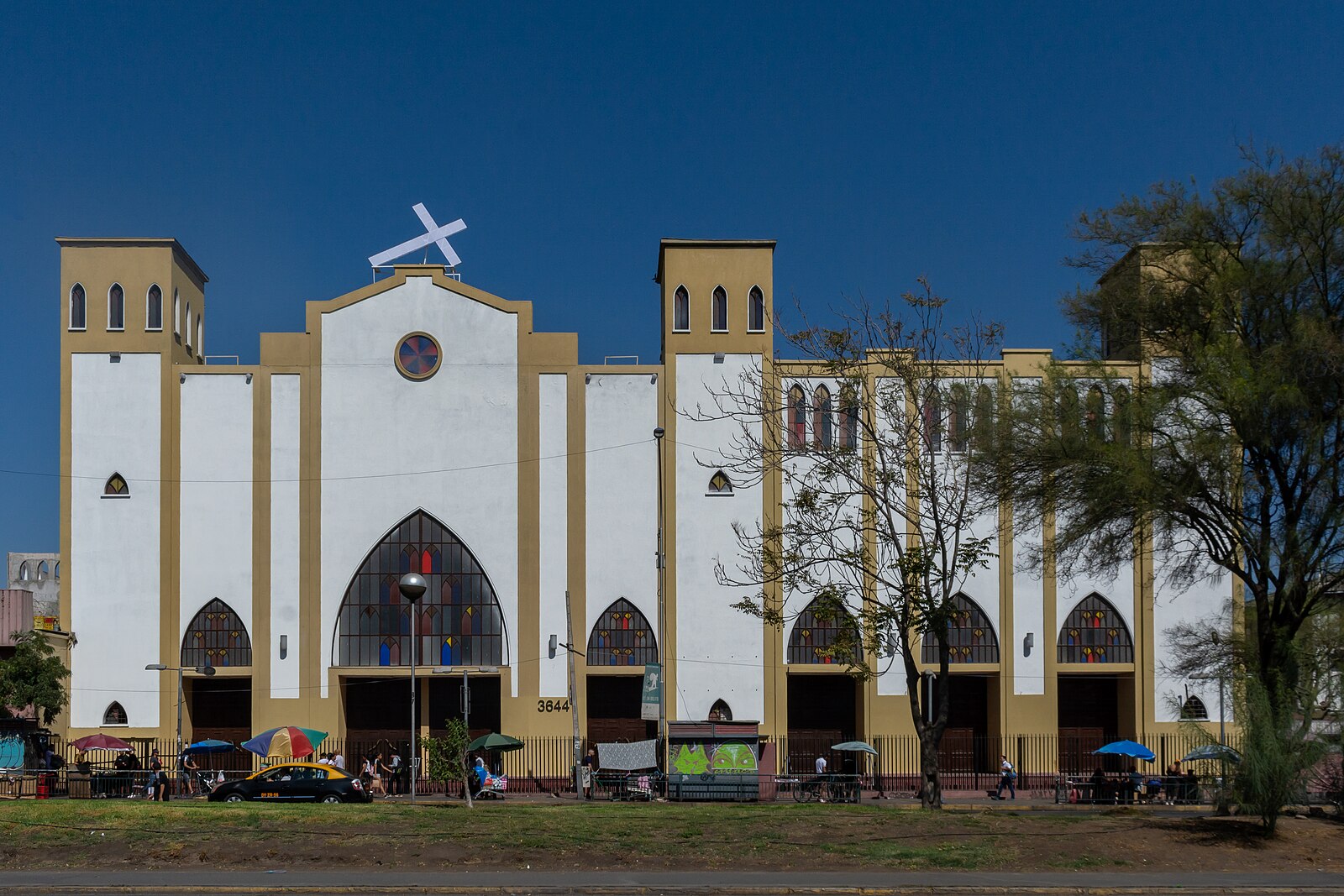
The Evangelical Cathedral in the Estación Central district of Santiago hosts the yearly evangelical Te Deum. President Kast attended on Sunday 13 September 2026, five days before the ecumenical service in the Metropolitan Cathedral.
Bishop Héctor Cancino, a senior evangelical church representative, spoke of public distrust in authorities. He said that rebuilding hope is possible.
The congregation included Senate vice-president Iván Moreira, Supreme Court president Gloria Ana Chevesich and cabinet ministers. Commanders of the armed forces and the police and members of the diplomatic corps were present too.
Since 2008 Chile has marked 31 October as the National Day of Evangelical and Protestant Churches under Law 20,299. In 2026 the date falls on a Saturday.
As deputies describe the law, the holiday moves to a Friday only when 31 October falls on a Tuesday or Wednesday. A bill filed in August 2024, number 17101-24, proposed to end that rule and fix the date.
Other Faiths and Indigenous Beliefs
Among named smaller faiths, Jehovah’s Witnesses lead with 121,805 adults, or 0.8%, followed by the Church of Jesus Christ of Latter-day Saints with 94,266. Another 28,153 adults are Jewish and 10,197 are Muslim.
Buddhists number 18,221 and Orthodox Christians 10,912, while Hindus (4,530) and Baháʼís (2,010) are smaller still. Another 89,856 adults named a different religion.
The Baháʼí community is tiny, yet it built one of the country’s best-known sacred buildings. Its House of Worship for South America in Peñalolén, in Santiago, has nine wings of translucent marble from Portugal set against the Andean foothills.
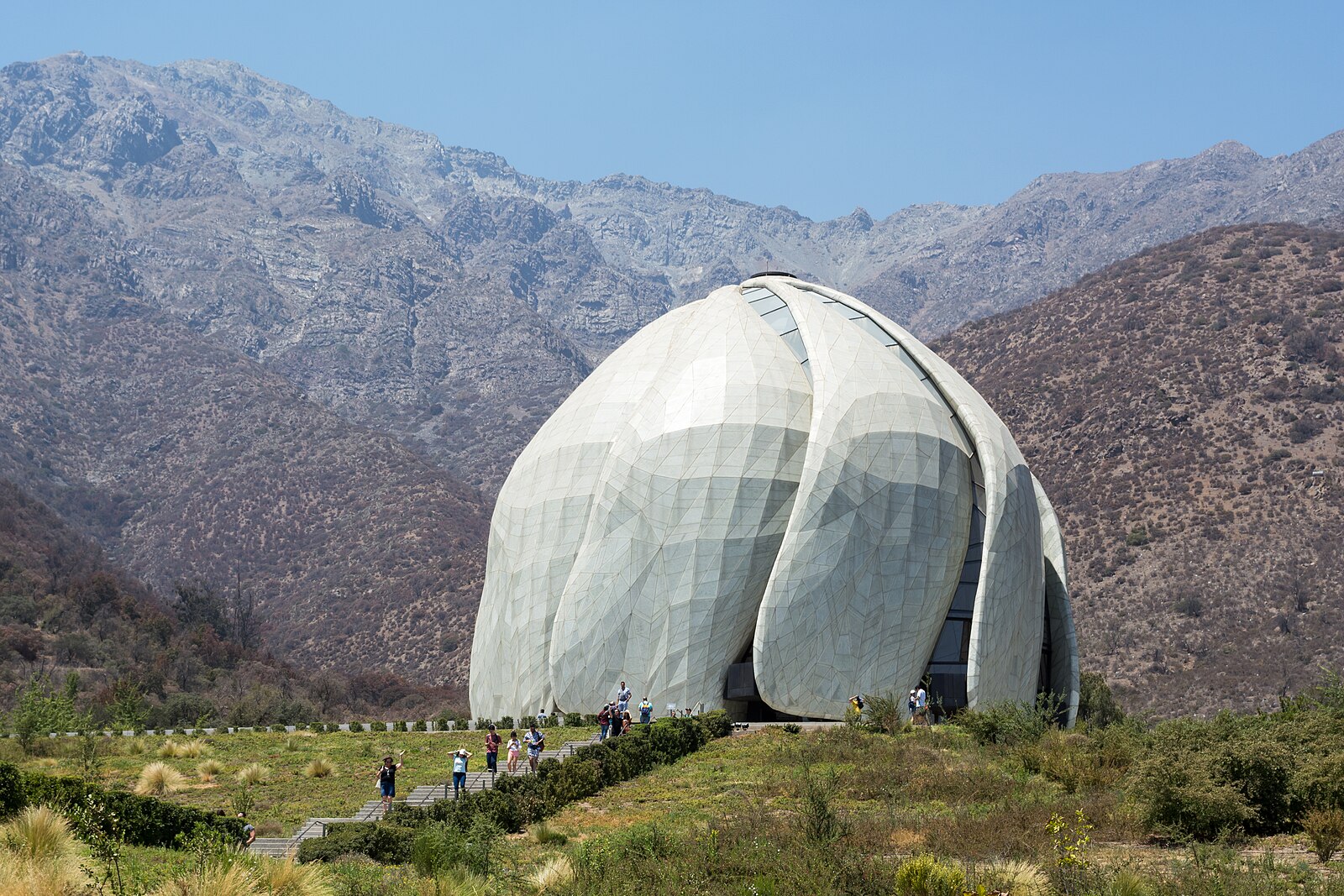
Entry is free for everyone, whatever their faith. The temple’s website lists a tenth-anniversary festival, “Luz en la Cordillera” (Light in the Mountains).
Indigenous Chileans follow a mix of faiths. A US State Department report for 2023 said most Indigenous Chileans identify as evangelical Protestant or Catholic, while about a quarter have no religious affiliation.
The same report noted arson attacks on churches in the Araucanía region for an eighth year in a row, by unidentified people reportedly linked to some Mapuche groups. Police investigations were still pending at the end of 2023.
Chile also has a large community of Palestinian descent, estimated at about 500,000, most of whom are Orthodox Christians. The report recorded that a Santiago synagogue was defaced on 22 December 2023, and that antisemitic feeling rose online after October 2023.
Church, State and the Law
Chile has no state religion. The constitution guarantees freedom of conscience and worship and states that religion and the state are officially separate, as the US State Department summarises it.
Religious groups are not required to register, but registration brings nonprofit status and tax benefits. The government recognised more than 5,900 religious organisations as legal entities in 2023.
The law has no provision for conscientious objection to conscription. Only clergy of registered groups are exempt from military service on religious grounds.
Public schools must offer religion classes as an elective. The Ministry of Education has approved curricula for 14 groups besides Catholicism.
Civil law is made by Congress, not by the churches. Law 21,400, published on 10 December 2021, opened marriage to same-sex couples and took effect 90 days later, on 10 March 2022.
Festivals, Holidays and Pilgrimages
The 2026 national calendar lists eight religious holidays, plus Christmas on Friday 25 December. They fall on the dates below.
- Good Friday: 3 April. Holy Saturday: 4 April.
- Saints Peter and Paul: Monday 29 June.
- Our Lady of Mount Carmel: Thursday 16 July.
- Assumption of the Virgin: Saturday 15 August.
- Evangelical and Protestant Churches Day: Saturday 31 October.
- All Saints: Sunday 1 November.
- Immaculate Conception: Tuesday 8 December.
Our Lady of Mount Carmel, the Virgen del Carmen, is honoured on 16 July. The most famous celebration is at La Tirana, a village in the northern Tarapacá region.
Dance brotherhoods led by caporales perform for the Virgin, and a 2006 anthropological study put attendance at no fewer than 100,000 people a year. The same study counted more than 4,000 active members in the federation of religious dance groups.
UNESCO added the baile chino, a dance of brotherhoods of musicians, to its intangible heritage list in 2014. Groups perform in two columns behind a flag bearer, and the tradition stretches from the Norte Chico to central Chile.
On the island of Chiloé, 16 wooden churches form a UNESCO World Heritage site, inscribed in 2000. Jesuit missionaries began the tradition in the 17th century, and Franciscans continued it in the 18th and 19th centuries.
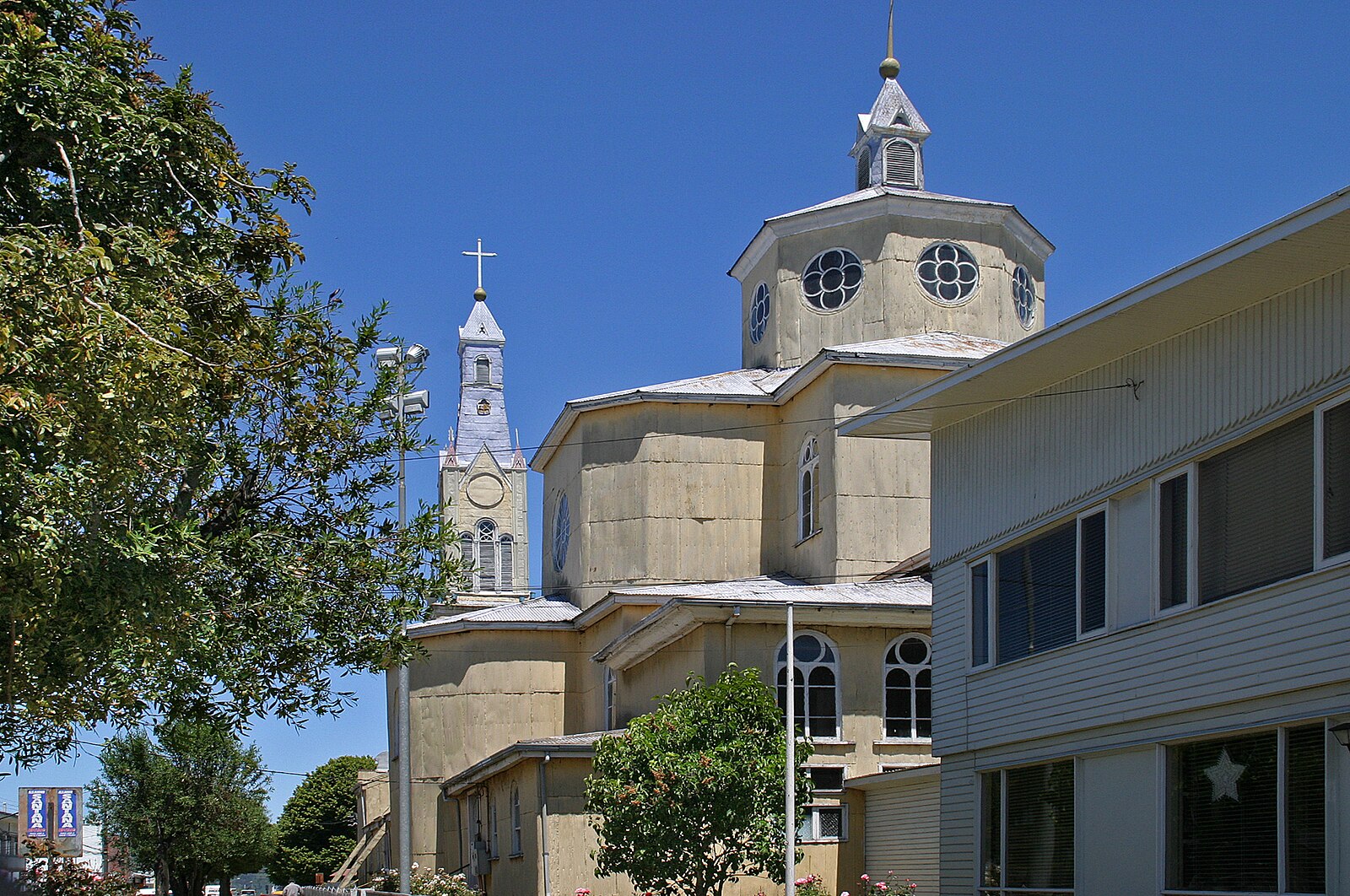
Carpenters used boat-building techniques for the towers and roofs, and the churches stand on hills where sailors could see them. Community practices such as the minga, a form of unpaid collective work, are part of this living heritage.
Santiago’s archdiocese launched its 2026 Sacred Heritage Day in October 2026. It marks 100 years since the coronation of the Virgen del Carmen.
Faith in Politics and Daily Life
Both Te Deum services put the head of state in church each September. Kast attended both in 2026, and Chilean media described each as his first as president.
He also attended a prayer for Chile and its new government at the Santiago cathedral in March 2026. Kast, a conservative, took office on 11 March.
Both preachers used the services to speak about trust. Chomali called for rebuilding trust and unity, while Cancino spoke of distrust in authorities.
Faith is stronger with age. People with a religion average 46.7 years in the census, against 38.8 for those with none.
Catholic institutions remain part of everyday life. The Archbishop of Santiago is also grand chancellor of the Pontifical Catholic University of Chile, a post tied to the archdiocese.
What It Means for US Readers
For investors, religion is a background social factor rather than a market driver in Chile. Its political weight shows mainly in national ceremonies and in debates over social law, which Congress and not the churches decides.
Visitors to La Tirana around 16 July should book early, because the village hosted at least 100,000 people on a 2006 count. The free Baháʼí temple in Peñalolén and the Chiloé churches are among the best-known sights.
Churches are active places of worship, so dress and conduct should respect services. Public offices close on the national holidays listed above.
Expats with children can expect religion classes in public schools to be optional. Faith groups of any kind can seek legal status through the Ministry of Justice, though registration is not required.
Americans following the Pope’s November trip should note that Chile is not on the announced route. Any crowd and travel effects will fall on Uruguay, Argentina and Peru, and the trip depends on the Pope’s recovery.
What Is Not Known
It is not known whether Pope Leo XIV will complete the November tour, or whether Chile will be added later. His surgeon sees no clinical obstacle, but his recovery will decide.
The census does not measure how often people attend services or pray. Nor does it count children under 15, so the full religious makeup of the country is unclear.
The census counted 10,912 adult Orthodox Christians, which sits uneasily with estimates that most of Chile’s roughly 500,000 people of Palestinian descent are Orthodox. The reason for the gap is not clear.
Current attendance at La Tirana is not confirmed, because the latest figure found is a 2006 estimate of at least 100,000. The outcome of the 2024 bill on the 31 October holiday is also unconfirmed.
The full scale of abuse in religious institutions is not known. The Catholic study covers 1960 to 2023 and counts only the cases it identified.
Connected Coverage
Frequently Asked Questions
What is the main religion in Chile?
Catholicism is the largest faith, at 54.0% of people aged 15 or over in the 2024 census. That is down from 70.1% in 2002.
How many evangelicals are there in Chile?
The 2024 census counted 2,466,607 evangelical or Protestant adults, or 16.3%. Their share was 15.2% in 2002.
How many Chileans have no religion?
About 25.8% of adults, or 3,903,308 people, said they follow no religion in the 2024 census. That share was 8.3% in 2002.
Is Chile a secular state?
Chile has no state religion, and religion and the state are officially separate. Freedom of conscience and worship is guaranteed, and religious groups may register for legal status.
Which religious holidays does Chile observe in 2026?
The national calendar lists eight religious holidays, from Good Friday on 3 April to the Immaculate Conception on Tuesday 8 December. Christmas falls on Friday 25 December.
Will Pope Leo XIV visit Chile in 2026?
No visit to Chile has been announced, and his planned November tour covers Uruguay, Argentina and Peru. His surgeon told Vatican media on 17 October that there is no clinical reason to cancel it after lung surgery.
What is the La Tirana festival?
It is a pilgrimage and dance festival for the Virgen del Carmen, held around 16 July in the northern Tarapacá region. A 2006 study put attendance at no fewer than 100,000 people a year.
Sources: INE, Censo 2024 síntesis de resultados, section 3.6 on religion; US Department of State, 2023 Report on International Religious Freedom: Chile; Senate of Chile, ecumenical Te Deum, 18 September 2026; Senate of Chile, evangelical Te Deum, 13 September 2026; Archdiocese of Santiago, news of October 2026; Pontificia Universidad Católica de Chile, study on abuse in the Church; EWTN News, Chilean bishops, May 2018; Vatican News, Pope’s surgeon on the South America trip, 17 October 2026; Diario Oficial, Ley 21.400, 10 December 2021; UNESCO, Churches of Chiloé; UNESCO, Baile Chino; González Miranda, Chungará 2006, La Tirana; Baháʼí Temple of South America; Bill 17101-24 on the 31 October holiday; 24horas, 2026 holiday calendar. Office-holders and events also from Prensa Presidencia, BioBioChile, Meganoticias, Teletrece and The Clinic reporting of September 2026 and March 2026. All accessed 19 October 2026.
Editorial responsibility: Matthias Camenzind, Editor-in-Chief · Editorial standards · Report an error
Expat Guide to Chile
What The Rio Times publishes for foreigners who live in or move to Chile.
Start here
- Chile Security and Crime Explained 2026
- Santiago Rent for Foreigners in 2026, US$422 to US$886
- Best Places to Live in Chile for Expats 2026
- Chile’s Rent Unit Rose 0.6% Before Inflation Data
City guides
Coming up in Chile
- Aitana in Santiago, Chile: Cuarto Azul World Tour at Movistar Arena on October 19, 2026 19 Oct
- Los Fabulosos Cadillacs Play Santiago on 29 October 29 Oct
- Foro de las Artes 2026 in Santiago, Chile: 30+ Free Events, 1–30 October 30 Oct
- Iron Maiden in Santiago, Chile: Two Estadio Nacional Nights, October 31 and November 1, 2026 31 Oct
Understand Chile