PERU · ECONOMY
Key Facts
- —The country Peru is an Andean nation of 34.2 million people (2025 census) and the world’s third-largest copper miner, by US Geological Survey estimates for 2024.
- —Who sets the rules Central bank chief Julio Velarde, in charge since 2006 and sworn in for a fifth term to 2031, and Economy Minister Elmer Cuba.
- —The money machine Mining exports were worth about US$62 billion in 2025, about two thirds of Peru’s goods exports, Peruvian trade data show.
- —On Wall Street Credicorp, Southern Copper, Buenaventura, Intercorp Financial Services, Cementos Pacasmayo and Nexa Resources all trade on the New York Stock Exchange.
- —The families The Romero, Brescia, Rodríguez-Pastor and Benavides families lead major Peruvian groups in banking, food, fishing, retail and mining.
- —What it means for you US investors can buy Peru’s banks and miners in New York, and US-Peru goods trade reached about US$22.8 billion in 2025.
- —Still open A court ruling on state oil firm Petroperú’s restructuring and an extraordinary El Niño forecast into 2027 cloud the outlook.
The Peru economy key players form a short list: a veteran central banker, foreign miners, four banks and a few family groups. They matter to Americans because Peru is a top copper supplier, and several companies with big Peruvian operations trade on Wall Street.
This guide sets out who controls the money, the mines and the brands, as of October 2026.

The Referees: Central Bank and Economy Ministry
At the centre of Peru’s economy sits Julio Velarde, president of the central bank, the Banco Central de Reserva del Perú (BCRP). He has led it since October 2006, according to El Peruano, the official state newspaper.
The Senate ratified him for a fifth term, running from 2026 to 2031, and he was sworn in on 24 September 2026. He has kept the job through years of turmoil, set out in the Rio Times guide to Peru’s political instability.
The BCRP sets the reference interest rate, which stood at 4.25% in September 2026, its own data show. It aims to keep annual inflation between 1% and 3%.
Fiscal policy sits with the Ministry of Economy and Finance (MEF), which drafts the budget and manages public debt. President Keiko Fujimori, a conservative, took office on 28 July 2026 for a five-year term.
She swore in economist Elmer Cuba Bustinza as economy minister the same day. Cuba sat on the central bank’s board from 2016 to 2021, El Peruano reported.
In early October 2026 he represented Peru at a board meeting of CAF, the Latin American development bank, state broadcaster TVPerú reported. Among the Peru economy key players, these two men set monetary and fiscal policy.
Mining Earns Most of Peru’s Dollars
Mining is Peru’s main source of foreign currency. Metals earned about US$62 billion in 2025, about two thirds of Peru’s goods exports, Peruvian trade data show.
Copper and gold were the two biggest single export products that year, together worth more than US$51 billion.
From January to July 2026, exports rose 37% on a year earlier to US$66.5 billion. Mining made up about three quarters of that total.
The US Geological Survey (USGS) estimates Peru mined about 2.7 million tonnes of copper in 2024. That puts it third in the world, behind Chile and the Democratic Republic of the Congo.
The USGS also ranks Peru second for silver, after Mexico, and second for zinc, after China. More detail is in the Rio Times guide to Peru copper mining.
Peruvian capital still has a seat at the table. Compañía de Minas Buenaventura, founded in 1953, called itself Peru’s largest listed precious-metals company by market value at the end of 2025.
Southern Copper’s Tía María project was 42% complete at the end of June 2026, and the company expects to start operations in the second half of 2027. It says the project has faced delays while it tries to resolve issues with community groups.
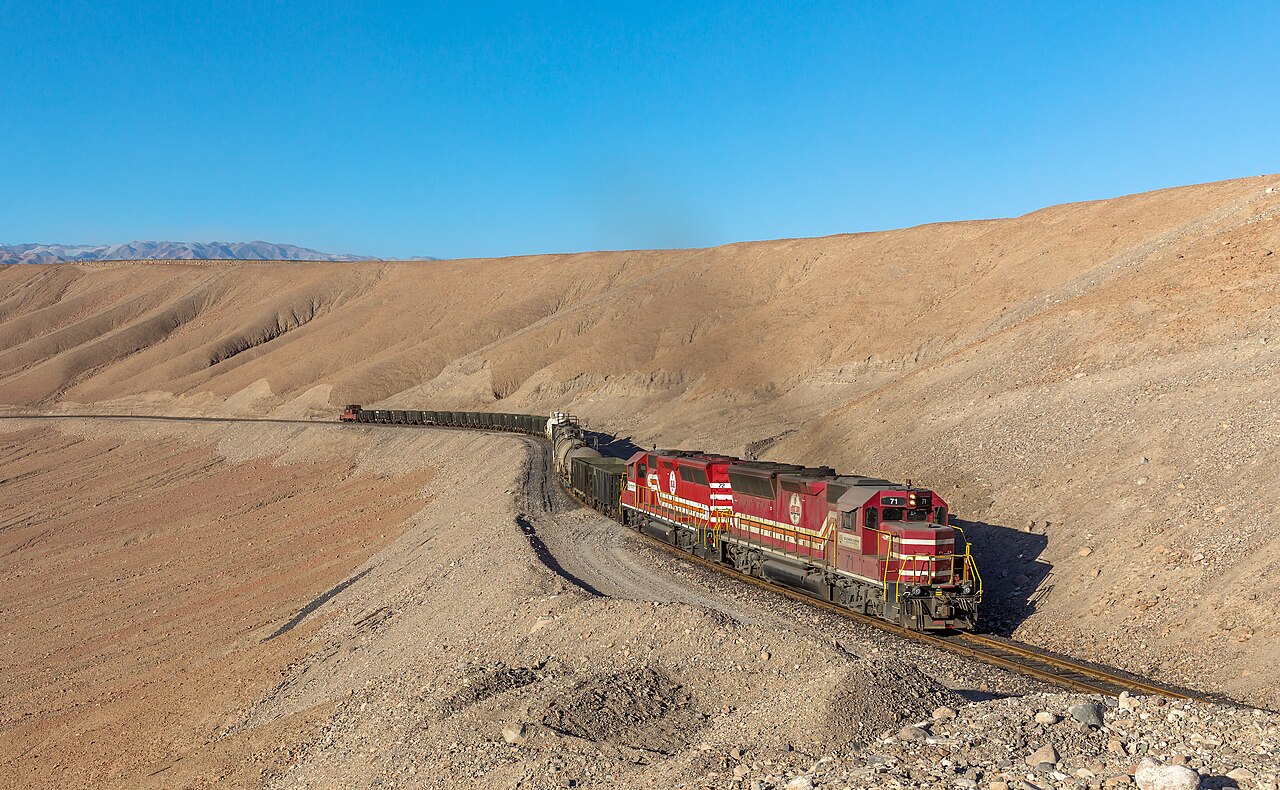
Still, foreign groups control each of the four big copper mines below, making them Peru economy key players in their own right:
- Cerro Verde, near Arequipa: US miner Freeport-McMoRan owns 55.08%, a vehicle of Japan’s Sumitomo group 21.0% and Buenaventura 19.58%.
- Antamina, in the Áncash region: global miners BHP and Glencore own 33.75% each, Teck 22.5% and Japan’s Mitsubishi 10%.
- Las Bambas, in Apurímac: Hong Kong-listed MMG holds 62.5%, with Guoxin International at 22.5% and CITIC Metal at 15%.
- Toquepala and Cuajone, in the southern Andes: run by Southern Copper, 88.9% owned by Mexico’s Grupo México at the end of 2025.
The Peruvian Companies Listed in New York
Six Peru-based or Peru-centred companies trade on the New York Stock Exchange (NYSE), US Securities and Exchange Commission data show. Four of them have a majority owner, which shapes how minority investors fare.
In Lima, retailer InRetail Perú trades under the symbol INRETC1, the IFS annual report shows. It controls the Plaza Vea supermarkets, the Inkafarma and MiFarma pharmacies and the Real Plaza malls.
The Peru economy key players on the stock market are therefore few. The six New York listings, with their tickers, are:
- Credicorp (BAP): parent of Banco de Crédito del Perú (BCP), microlender Mibanco, insurer Pacífico, pension fund Prima AFP and payments app Yape.
- Southern Copper (SCCO): copper miner listed in New York and Lima since 1996, 88.9% owned by Grupo México at end-2025.
- Buenaventura (BVN): gold, silver and copper miner whose San Gabriel gold mine poured its first gold in December 2025 and made its first commercial sales in the second quarter of 2026.
- Intercorp Financial Services (IFS): owner of Interbank and insurer Interseguro, 74.38% held by the Intercorp Peru group at the end of 2025.
- Cementos Pacasmayo (CPAC): cement maker focused on northern Peru, controlled since 30 March 2026 by Swiss group Holcim with 50.01%. Holcim must bid for the other shares and then plans to delist CPAC from the NYSE.
- Nexa Resources (NEXA): zinc miner and smelter in Peru and Brazil, 64.68% owned by Brazil’s Votorantim S.A. as of March 2026.
Four Banks Hold Most of the Credit
Banks are Peru economy key players because lending is concentrated in a few hands. The SBS is Peru’s regulator for banks, insurers and private pension funds.
BCP’s mobile wallet Yape had 15.9 million monthly active users in Peru at the end of 2025, Credicorp says. That equals close to half of Peru’s 34.2 million people.
Credicorp’s chairman is Luis Romero Belismelis, whose family held 12.29% of its shares at the end of 2025.
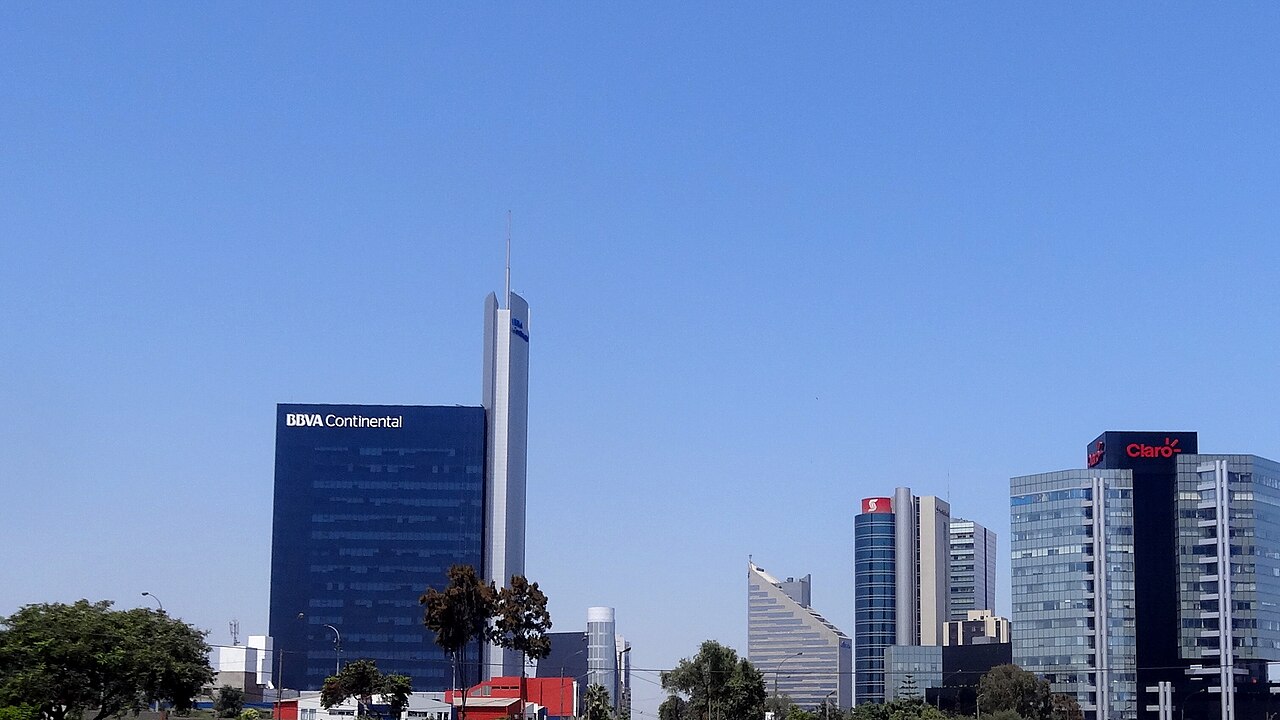
At the end of 2025, four banks held about 82% of all bank loans, SBS data cited by Credicorp show. Their shares were:
- BCP (Credicorp): 33.5%.
- BBVA Perú: 22.1%. Spain’s BBVA and the Brescia family’s Breca group each held 47.13% at the end of 2024, the bank’s annual report shows.
- Interbank (Intercorp): 13.6%.
- Scotiabank Perú: 13.1%. Canada’s Bank of Nova Scotia owns 99.31% through a holding company.
The Family Groups Behind the Brands
Beyond the foreign miners, a few Peruvian families own much of what consumers buy and where they bank. Five family names recur among the Peru economy key players, across banking, food, fishing, retail and mining.
Grupo Romero
Grupo Romero, a family conglomerate, has been led since January 2026 by Manuel Romero Valdez, Gestión reported. It keeps food maker Alicorp, logistics firm Ransa, power company Orygen Perú and charter airline ATSA Airlines.
In 2025 it sold fuel retailer Primax to Honduras’ UNO Corp and fishing firm Centinela to Exalmar. It also sold 80% of Agrícola del Chira, owner of the Caña Brava brand, to Guatemala’s Ingenio Magdalena.
Romero Valdez told a business forum the group is not leaving Peru, Gestión reported. He said it has more equity there than 10 or 12 years ago.
The Rio Times covered the Grupo Romero sales in September 2026.
The Brescia Family and Breca
Breca, controlled by the Brescia family, owns tin and copper miner Minsur and insurer Rímac, Gestión reported in 2023 and 2025. Its other businesses include fishing company TASA, property developer Urbanova and the Clínica Internacional clinics.
Carlos Rodríguez-Pastor and Intercorp
Carlos Rodríguez-Pastor Persivale has chaired Interbank since 1995 and also chairs Intercorp Peru, the group’s parent. Besides banking, the group runs supermarkets, pharmacies, malls, Oechsle department stores, Promart home centres and Innova Schools.
Its insurer Interseguro led Peru’s annuities market in 2025, with 25.5% of premiums, according to SBS data in the IFS annual report.
The Benavides Family and Buenaventura
Roque Benavides chairs Buenaventura, and his brother Raúl sits on its board. In March 2026, the Benavides family and copper miner Antofagasta plc together held about 35% of its share capital.
The Hochschild Family and Grupo Gloria
Eduardo Hochschild sold control of Cementos Pacasmayo to Holcim in March 2026. He still owned and controlled 38.27% of London-listed Hochschild Mining at the end of that month.
Grupo Gloria sells milk under the Gloria brand, cement through Yura, paper through Trupal and sugar through Casa Grande. Its website lists operations in Peru and five other South American countries.
Fishing and Farm Exports Beyond Mining
After metals, food is Peru’s next big export earner. Non-traditional farm exports reached US$12.6 billion in 2025, of which fruit made up US$7.6 billion, BCRP data show.
The sea matters too: Peru’s fleet catches anchoveta, a small fish ground into fishmeal for animal feed. Fishmeal exports earned US$1.86 billion in 2025.
Breca’s TASA is a big fishmeal producer, and rival Exalmar bought Grupo Romero’s Centinela. The Ministry of Production (PRODUCE) sets the anchoveta catch quota for each season.
Both sectors are exposed to El Niño, a warming of the Pacific that drives fish away and damages crops. Fishmeal exports fell to US$975 million in January to July 2026, down from US$1.34 billion a year earlier.
On 28 September 2026, ENFEN, the official commission that tracks El Niño, issued a coastal El Niño alert. It expects extraordinary sea warming off Peru until January 2027, easing towards the southern autumn of 2027.
Petroperú and the State’s Own Companies
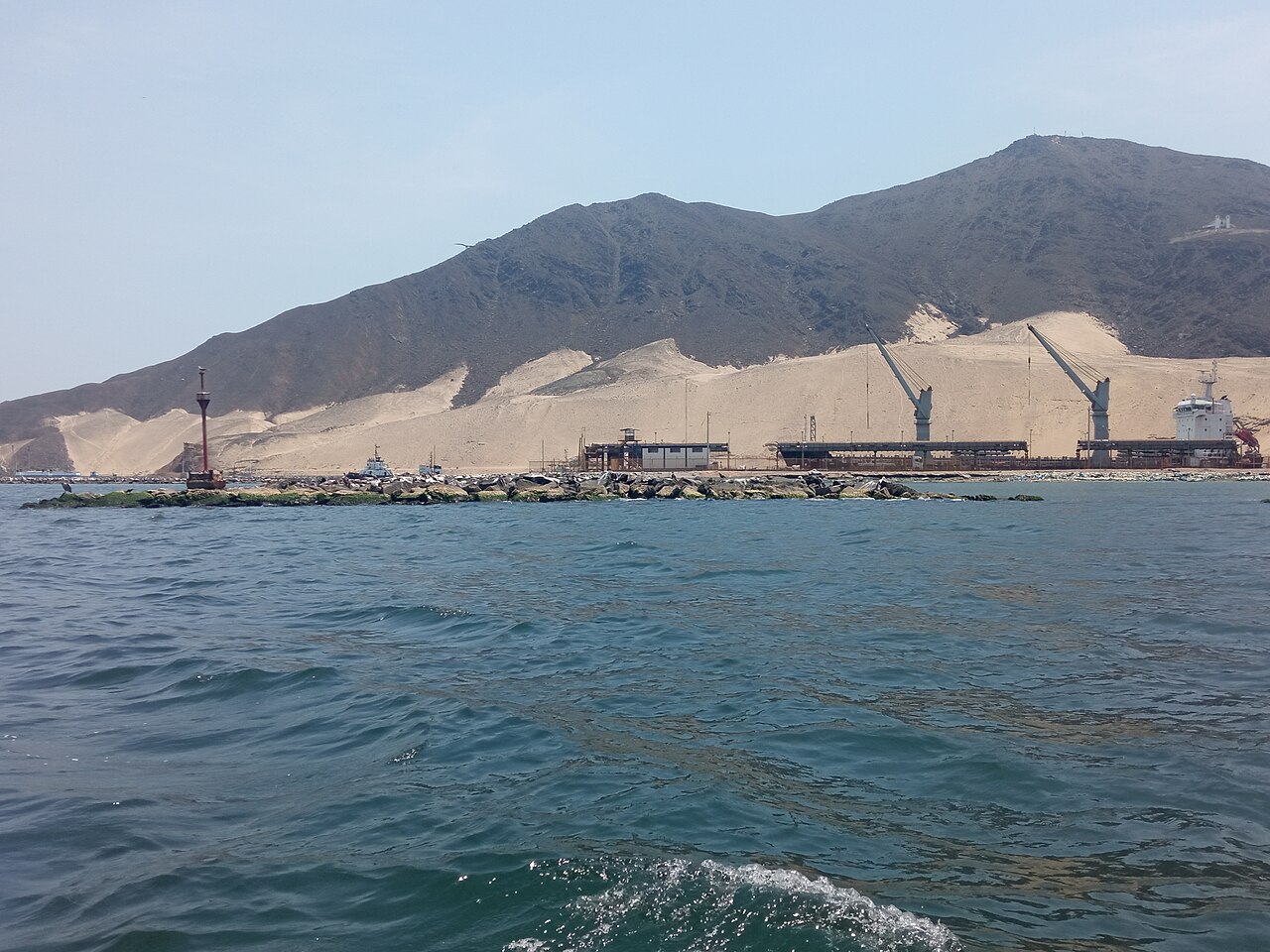
Peru’s state oil company, Petróleos del Perú (Petroperú), runs the Talara refinery on the north coast.
Under Emergency Decree 010-2025, Petroperú is going through a reorganisation of its assets, its website says. ProInversión, the state agency that promotes private investment, leads the process.
ProInversión plans to open seven blocks of Petroperú’s assets to private investment, starting in October 2026, Infobae reported. Ratings agency Moody’s raised the company’s credit outlook to positive in September 2026, Petroperú said.
The plan is contested. The Constitutional Tribunal, Peru’s top constitutional court, heard a challenge to the decree from the Ombudsman’s Office on 25 August 2026.
As of early October 2026, the court had not ruled. Fenpetrol, the oil workers’ federation, wants the government to put the company’s recovery first, La República reported.
What It Means for US Readers
For US investors, several Peru economy key players trade on the NYSE as BAP, SCCO, BVN, IFS, CPAC and NEXA. Most have a majority owner, so minority holders ride on decisions by Grupo México, Intercorp, Holcim or Votorantim.
CPAC holders should watch Holcim’s tender offer, since Holcim plans to delist the shares from New York afterwards, its SEC filing says. US miner Freeport-McMoRan (FCX), majority owner of Cerro Verde, offers another route into Peruvian copper.
Trade runs under the United States-Peru Trade Promotion Agreement, in force since 1 February 2009, says the US Trade Representative’s office. In 2025, US goods exports to Peru reached US$12.1 billion and imports US$10.7 billion.
That left the United States with a goods surplus of about US$1.4 billion, US Census Bureau data show. Peru’s copper also feeds global supply chains for power grids, electronics and cars.
For the wider picture, see the Rio Times Peru hub, the Peru economy guide and Peru explained. Peru’s place among its neighbours is covered in Peru’s role in Latin America.
What Is Not Known
Several questions still hang over the Peru economy key players. Nobody knows yet how the Constitutional Tribunal will rule on Petroperú’s reorganisation, or which private investors will bid for its asset blocks.
The cost of the extraordinary El Niño to fishing and farm exports in late 2026 and early 2027 is also unclear. ENFEN’s next forecasts will shape that picture.
Southern Copper still has to show that Tía María can start in 2027 as planned. The price of Holcim’s pending offer for the rest of Cementos Pacasmayo is not yet set.
Export earnings also depend on world copper and gold prices, which no Peruvian player controls.
Frequently Asked Questions
Who are the Peru economy key players?
The Peru economy key players are the central bank under Julio Velarde, the Economy Ministry under Elmer Cuba, foreign copper miners, four big banks and family groups such as Romero, Breca, Intercorp and the Benavides family.
Which Peruvian companies trade on the New York Stock Exchange?
Credicorp (BAP), Southern Copper (SCCO), Buenaventura (BVN), Intercorp Financial Services (IFS), Cementos Pacasmayo (CPAC) and Nexa Resources (NEXA) are listed on the NYSE, according to SEC listings as of October 2026. Holcim plans to delist Cementos Pacasmayo after a tender offer.
Who runs Peru’s central bank?
Julio Velarde has been president of the Banco Central de Reserva del Perú since October 2006. He was sworn in for a fifth term, running to 2031, on 24 September 2026.
What are Peru’s main exports?
Copper and gold, together worth more than US$51 billion, led Peru’s goods exports in 2025, Peruvian trade data show. Other big earners include fruit, oil and gas, zinc and fishmeal.
What are the biggest banks in Peru?
At the end of 2025, BCP held 33.5% of bank loans, BBVA Perú 22.1%, Interbank 13.6% and Scotiabank Perú 13.1%, according to SBS data cited by Credicorp.
Is Petroperú being privatised?
Not outright. Under Emergency Decree 010-2025, ProInversión is reorganising its assets into blocks to attract private investment, while the Constitutional Tribunal has yet to rule on challenges.
Sources: BCRP, BCRPData export and policy-rate series, accessed 5 October 2026; El Peruano, Velarde sworn in for fifth term, 24 September 2026; El Peruano, Elmer Cuba sworn in, 28 July 2026; El Peruano, Keiko Fujimori sworn in, 28 July 2026; USGS Mineral Commodity Summaries 2026, copper, 2026; Credicorp Form 20-F 2025, 27 April 2026; Southern Copper Form 10-K 2025, 27 February 2026; Buenaventura Form 20-F 2025, 30 April 2026; Intercorp Financial Services Form 20-F 2025, 24 April 2026; Freeport-McMoRan Form 10-K 2025, 13 February 2026; Cementos Pacasmayo Form 20-F 2025, 28 April 2026; Antamina, Quiénes somos, accessed 5 October 2026; MMG, Las Bambas, accessed 5 October 2026; ENFEN, Comunicado Oficial 17-2026, 28 September 2026; USTR, US-Peru Trade Promotion Agreement, accessed 5 October 2026; US Census Bureau, Trade in Goods with Peru, accessed 5 October 2026; Gestión, Grupo Romero interview, 30 September 2026; Petroperú, accessed 5 October 2026; INEI via Agencia Andina, 2025 census population, 9 July 2026; TVPerú, Elmer Cuba at CAF board in Montevideo, 1 October 2026; Nexa Resources Form 20-F 2025, 26 March 2026; Holcim and Inversiones ASPI, Schedule 13D on Cementos Pacasmayo, 6 April 2026; BBVA Form 20-F 2025 (BBVA Perú stake), 20 February 2026; Gestión, Minsur sells Rímac stake to Breca Banca, 14 March 2025; Infobae, ProInversión’s seven Petroperú blocks, 4 October 2026; La República, Fenpetrol on Petroperú, 4 October 2026; BBVA Perú, Memoria 2024, Datos generales, 2025.
This article was produced by The Rio Times’ automated newsroom system. How we use AI · Report an error · Editorial responsibility: Matthias Camenzind, Editor-in-Chief