Cost of Living Arequipa Peru 2026: Less Than Half of Lima
PERU · COST OF LIVING
Key Facts
- —What rent costs A one-bedroom in the centre averages about US$362 a month, and US$241 outside it.
- —Against the capital Lima charges about US$767 for the same flat, more than twice the Arequipa figure.
- —The catch The average net salary is about US$629, so central rent still takes nearly three-fifths of it.
- —What bills cost Basic utilities average about US$24 a month, the lowest figure in this series.
- —What eating out costs A meal at an inexpensive restaurant averages about US$3.56.
- —What comes next The figures rest on 23 contributors, so treat them as indicative rather than exact.
Cost of living arequipa peru is the cheapest entry in this series. The utility bill is where the gap becomes hard to believe.

Where This Fits
Cost of living arequipa peru produces the lowest figures in this series of city guides. That holds on rent, on bills and on eating out.
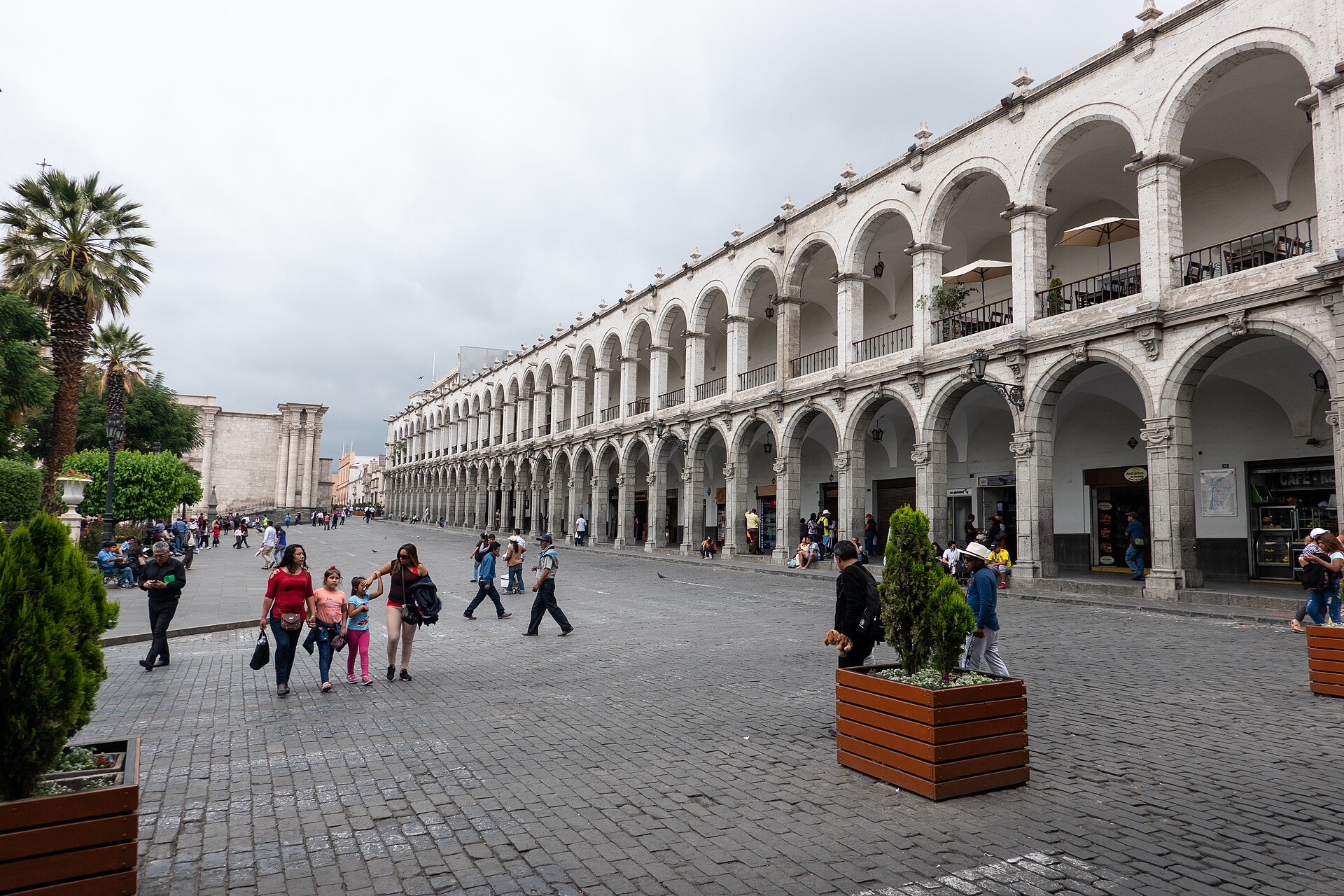
Arequipa is Peru’s second city, built in white volcanic stone at around 2,300 metres. It is not a small town or a resort.
The comparison that makes the point is with Lima rather than with anywhere abroad. The two cities sit in the same country under the same currency.
What follows sets out the figures, converts them, and then tests them against the local wage.
Less Than Half of Lima
A one-bedroom apartment in the centre of Arequipa averages 1,218 soles a month. That works out at about US$362.
All conversions here use a rate of 3.37 to the dollar, published by open.er-api.com on 18 September 2026. Sol prices move against the dollar, so the equivalents drift.
The same flat in central Lima averages about US$767. Arequipa is therefore cheaper by more than half on the single line most people check.
That is a wider internal gap than most countries show between their first and second cities. It is the practical case for looking beyond the capital.
The trade is not nothing. Lima has the international airport, the largest job market and the bulk of the country’s professional services.
Arequipa answers with climate and scale. It is large enough to have what a city needs and small enough to cross without planning around traffic.
The altitude is the other variable. At around 2,300 metres the air is thinner than most arrivals expect, and that is a health question rather than a cost one.
What Housing Costs
Outside the centre a one-bedroom averages 812.17 soles, about US$241. The discount for leaving the middle is roughly a third.
A three-bedroom in the centre averages 2,488 soles, close to US$739. Outside the centre it falls to 1,440 soles, about US$428.
A family-sized flat in central Arequipa therefore costs about what a one-bedroom costs in central Lima. That comparison is the one worth carrying.
The central premium here is real but moderate. It is narrower than Curitiba’s 42% and far narrower than the gap in the small expat towns covered earlier.
That suggests a housing market shaped mainly by local demand. Where foreign money dominates, the central premium tends to be much wider.
The Bills Are the Surprise
Basic utilities for a standard apartment average 81.67 soles a month. That is about US$24.
Set that against the same line elsewhere in this series. Nassau runs about US$397.50, Punta del Este about US$114 and Curitiba about US$99.
Arequipa therefore costs roughly a sixteenth of the Nassau figure. That is the widest single gap recorded across these guides.
Part of the explanation is the climate. At this altitude the city needs little heating and almost no air conditioning.
Broadband adds about 80 soles, close to US$23.75, and a mobile plan around 34.98 soles, about US$10.39. Connectivity costs roughly what the electricity does.
Food, Transport and Schooling
A meal at an inexpensive restaurant averages 12 soles, about US$3.56. That is the lowest figure in this series by a clear margin.
For comparison, the same line is US$6.50 in Boquete, US$6.81 in Antigua Guatemala and US$38.75 in Nassau. Arequipa is an order of magnitude below the island.
Local transport costs one sol a trip, roughly US$0.30. Petrol runs about 5.15 soles a litre, close to US$1.53.
Preschool is reported at about 257.50 soles a month, near US$76. For a family that is the kind of line that decides a city.
None of these figures is a rounding error against rent. Together they make the difference between the two Peruvian cities larger than rent alone suggests.
A single person eating out daily would spend about US$107 a month at that price. The same habit in Nassau would cost more than a thousand.
That is the kind of gap that changes how a person lives rather than only what they pay. Eating out stops being an occasion here.
Rent Against the Local Wage
The average monthly net salary in Arequipa is 2,117.60 soles, about US$629. A central one-bedroom averages about US$362.
Rent therefore takes close to three-fifths of the average net wage. That is a heavy share by any standard.
It is still a better ratio than most of this series. In Antigua Guatemala, Boquete and Punta del Este, central rent exceeds the average wage outright.
The difference matters for what kind of city this is. Arequipa is priced by people who live and work there, not by visitors or foreign buyers.
For someone arriving on a foreign income, that has a practical consequence. Your money goes further here than in places where foreign money has already set the price.
What We Could Not Price
Three items are not stated here because the source did not carry a dependable figure.
The first is the monthly transport pass, which the data lists as unavailable rather than free. The second is health cover, which varies by provider and age.
The third is altitude adjustment, which is not a cost but is a real factor at 2,300 metres. Some arrivals need weeks rather than days.
The first of those is the only one that changes a budget, and single fares suggest it would be modest.
What Cost of Living Arequipa Peru Comes Down To
This is the cheapest city covered in this series, and the margin is not narrow. Rent, bills and eating out are all the lowest recorded.
The utility line is the one that stands out. At about US$24 a month it is a sixteenth of what the same bill costs in Nassau.
Against Lima, the case is straightforward. A family-sized flat in the centre costs roughly what a single person pays in the capital.
The honest qualifier is the wage. Local salaries are low enough that rent still takes most of a typical pay packet.
That is also why the city stays affordable to outsiders. Nothing here has been repriced upward by foreign demand.
Read cost of living arequipa peru as Peru without the capital-city premium. What you give up is the airport and the job market, and what you gain is most of your budget.
This article was produced by The Rio Times’ automated newsroom system. How we use AI · Report an error
Read More from The Rio Times