Peru Copper Mining Explained: Output, Big Mines, Exports and Risks in 2026

GUIDES · PERU
Key Facts
- The country Peru is an Andean republic of about 34 million people. It is the world’s third-largest copper miner, behind Chile and Congo.
- What it is A handful of giant open-pit mines in the southern and central Andes, run mostly by foreign groups, that ship copper concentrate to smelters abroad.
- The numbers A record 2.77 million tonnes of copper in 2025, worth US$28.9 billion in exports, or about 31 percent of everything Peru sold abroad.
- Why it matters Copper is the biggest single source of Peru’s dollars and taxes, and a key input for power grids and electric cars worldwide.
- The catch Output has been roughly flat since 2023. Local conflicts, slow permits and a sprawling informal mining sector hold back new mines.
- What to watch The Ley MAPE bill due in Congress by 15 October 2026, the Reinfo register’s expiry on 31 December 2026, and first copper at Tía María.
Peru copper mining explained: where the metal comes from, who digs it, how much money it brings in, and why so few new mines get built.
If you own a phone, drive an electric car or invest in a mining fund, some of your copper probably came from Peru. The country is one of the three largest suppliers on earth, and its politics can move the metal’s price in London and New York.
As of 22 September 2026, the story has two sides. Prices are close to record highs and export revenue is surging.
Yet the volume of copper leaving Peru’s mines has hardly changed since 2023.
How Peru became a copper country
Copper has been worked in the Andes since before the Incas. Modern industrial mining began in the early twentieth century, when American companies opened large operations around Cerro de Pasco in the central highlands.
The real shift came with open-pit mining in the far south. Southern Peru opened Toquepala, in the Tacna region, in 1960.
Cuajone, in neighbouring Moquegua, followed in 1976.A second wave arrived after Peru reopened to foreign investors in the 1990s. Antamina in Áncash, the expansion of Cerro Verde near Arequipa, Las Bambas in Apurímac and Quellaveco in Moquegua turned Peru into a heavyweight.
Today the United States Geological Survey puts Peru’s 2025 mine output at about 2.7 million tonnes. That is more than a tenth of world mine output of about 23 million tonnes, behind Chile at 5.3 million and Congo at 3.2 million.
Peru also sits on large untapped deposits. The survey estimates its reserves at 85 million tonnes, close to a tenth of the world total of 980 million tonnes.
How the industry works: pit, concentrate, port
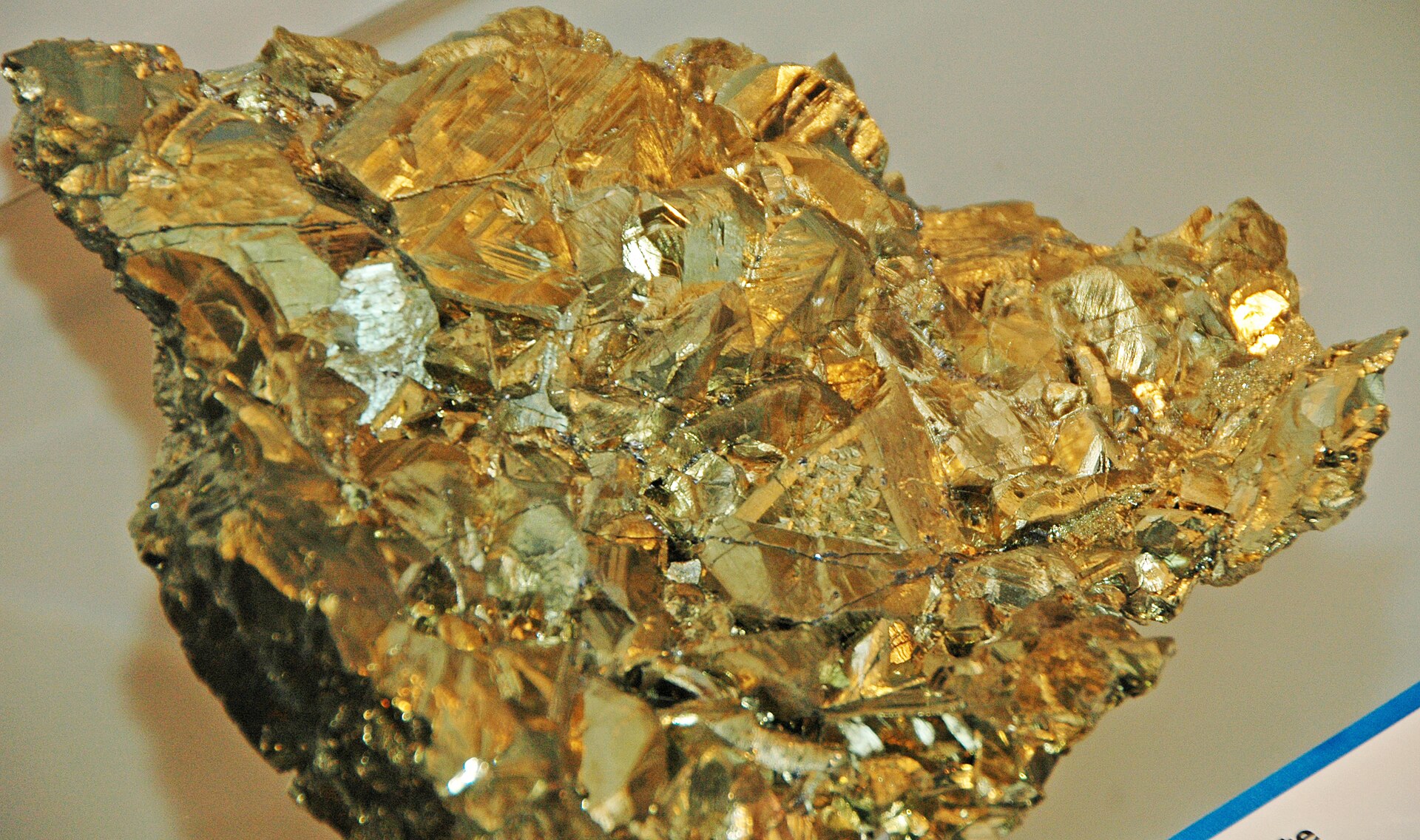
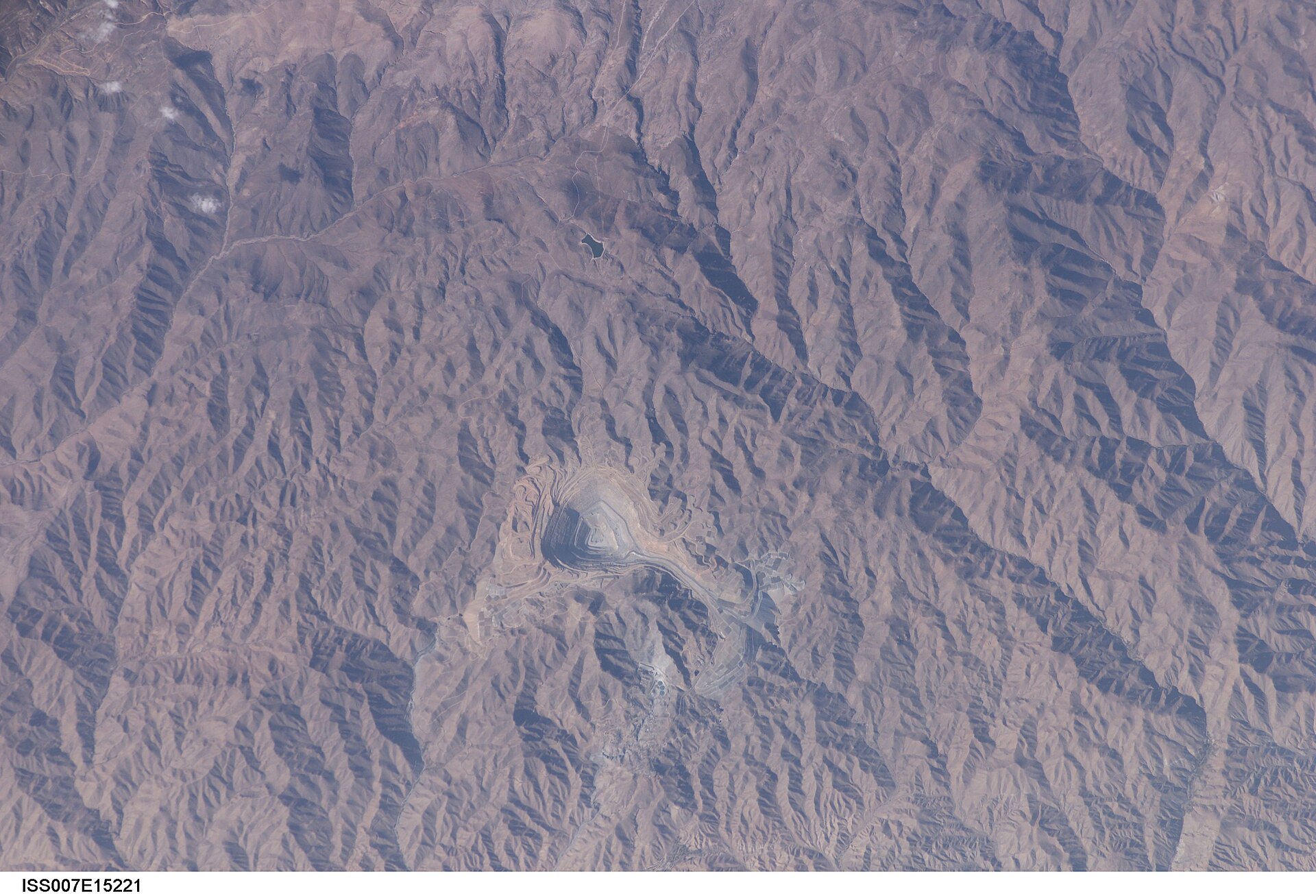
Most Peruvian copper comes from porphyry deposits. These are huge bodies of low-grade rock, often with less than one percent copper, dug from open pits high in the Andes.
The rock is crushed and ground at the mine. A flotation process then separates a concentrate, a grey powder that is typically around a quarter copper.
Trucks, pipelines or railways carry it to Pacific ports such as Matarani, Ilo and Callao. Here lies a structural weakness.
Peru mines about 2.7 million tonnes a year but refines only about 340,000 tonnes at home, according to the USGS. The rest is shipped as concentrate, mainly to smelters in Asia.
That means Peru captures the mining margin but not the smelting and refining margin. Plans to build more processing capacity at home come up regularly, but none has yet changed the pattern.
Copper also rarely comes alone. Peruvian mines produce valuable by-products such as molybdenum, silver, gold and zinc.
Antamina, for example, is one of the world’s larger zinc producers as well as a copper giant.
The numbers: output, exports and prices
Peru’s Ministry of Energy and Mines (MINEM) reported copper output of 2,769,794 tonnes in 2025. That was a record, but only 1.2 percent more than the 2,736,237 tonnes of 2024.
The trend has continued into 2026. MINEM data show about 1.6 million tonnes between January and July, up 2.2 percent on a year earlier.
July alone brought 236,515 tonnes, up 3.7 percent. The money tells a very different story.
According to the Central Reserve Bank of Peru (BCRP), copper exports rose from US$23.5 billion in 2024 to US$28.9 billion in 2025. Total exports reached about US$94 billion that year.
In the first seven months of 2026, copper exports hit US$22.8 billion, against US$14.8 billion in the same period of 2025. That is a rise of about 55 percent.
Copper made up about 34 percent of Peru’s US$66.5 billion in exports over those months. Almost all of that jump is price, not volume.
The BCRP’s average copper export price was about US$6.66 a pound from January to July 2026. A year earlier it averaged about US$4.49.
Gold is copper’s closest rival. Peru exported US$23.3 billion of gold in 2025, and gold and copper together carry most of the current export boom.
Mining as a whole brought in US$62.7 billion of exports in 2025, according to the BCRP.
The big mines and who owns them
Peruvian copper is highly concentrated. In 2025, according to MINEM, three producers supplied 44.4 percent of output: Southern Perú (14.84 percent), Las Bambas (14.83 percent) and Cerro Verde (14.7 percent).
Southern Perú runs Toquepala and Cuajone and belongs to Grupo México through its listed arm, Southern Copper. Las Bambas is controlled by MMG, a Hong Kong-listed miner backed by Chinese state capital.
Cerro Verde is run by the US group Freeport-McMoRan. Antamina, owned by BHP, Glencore, Teck and Mitsubishi, is the star of 2026.
Its output rose 54 percent in January to July and it produced 18.6 percent of Peru’s copper, according to MINEM figures. Nine of the ten largest producers produced less.
Other large names include Anglo American’s Quellaveco in Moquegua and the Chinese-owned Toromocho, run by Chinalco in the central Andes. Mid-sized mines such as Antapaccay, Marcobre and Hudbay’s Constancia complete the picture.
Geographically, the south dominates. Moquegua (17.2 percent), Arequipa (14.9 percent), Apurímac (14.8 percent) and Áncash (14.6 percent) together produced about 61.5 percent of the 2025 total.
Winners, losers and the money trail
The state is a clear winner when prices are high. Under Peru’s canon rules, half of the income tax paid by miners goes back to the regions, provinces and districts where they operate.
That can transform budgets in places such as Moquegua or Apurímac. It can also cause friction, because local governments often struggle to spend the money well, and nearby communities without a mine get little.
Workers gain too. Mining jobs pay well by Peruvian standards, and suppliers of trucks, tyres, explosives and engineering services depend on the big mines.
The losers are often farmers and herders near the pits. Their main worries are water, dust, land and the heavy trucks that carry concentrate along rural roads.
Conflict, water and the mining corridor
Social conflict is the single biggest brake on Peruvian copper. In its August 2026 report, the Ombudsman’s Office (Defensoría del Pueblo) counted 188 social conflicts nationwide, 138 of them active.
Of these, 92 were socio-environmental disputes, and mining accounted for 66.3 percent of that group. Puno, Loreto and Áncash had the most conflicts.
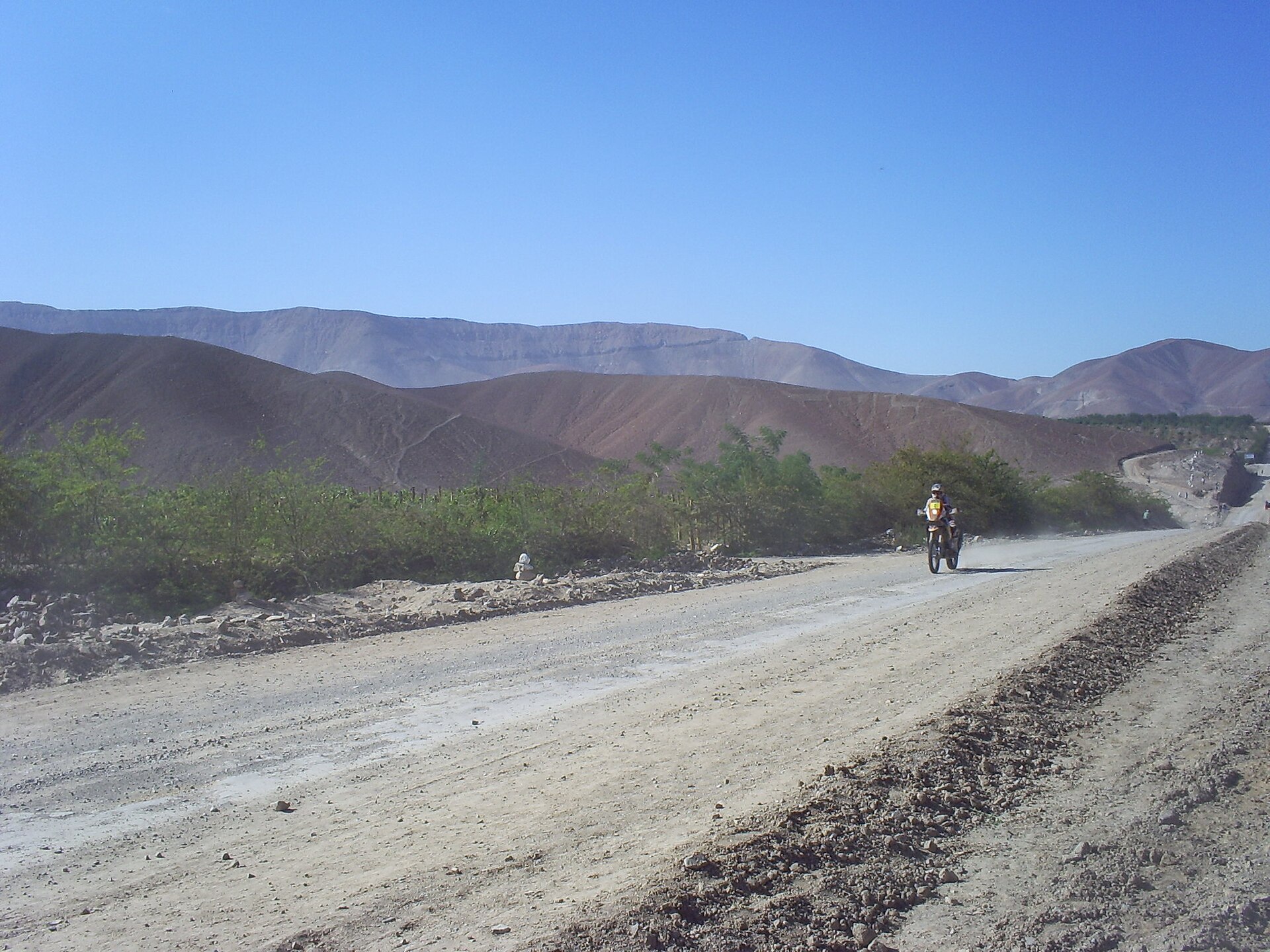
Las Bambas shows the risk. Communities along its road to the coast, the southern mining corridor, have blocked it many times over jobs, compensation and road use.
MMG says the mine produced 410,829 tonnes in 2025. In August 2026 Las Bambas stopped again, this time after an accident at a water pond killed two workers.
The labour inspectorate Sunafil opened an investigation, and MMG planned a gradual restart from 21 August.Tía María, in Arequipa’s Tambo valley, is the best-known conflict case. Farmers have opposed the US$1.8 billion Southern Copper project for well over a decade, fearing for their water.
In April 2026 the government revoked and then reauthorised the project’s permit within weeks. The company plans about 120,000 tonnes of copper a year.
It reported the project 42 percent complete at the end of June 2026 and expects operations to start in the second half of 2027.
Informal mining and the Reinfo register
Next to the giant mines sits a very different world: tens of thousands of small, informal operators. Most of the attention goes to gold, where illegal output is now thought to rival legal production.
But the rules matter for copper as well. Informal miners sometimes work inside concessions held by large companies, and disputes over them feed local tension.
The key tool is the Reinfo, a register meant to shield small miners while they formalise. In December 2025 Congress extended it once more, to 31 December 2026.
About 31,500 miners are on the register, of whom about 22,200 have an active entry and about 9,000 are suspended. Only about 2,300 have completed formalisation, according to Energy and Mines Minister Guillermo Shinno.
“As currently conceived, this formalisation process doesn’t work,” Shinno said in September 2026. President Keiko Fujimori took office on 28 July 2026.
Her government plans to send a new small-mining law, the Ley MAPE, to Congress by 15 October. Under the proposal, registered miners would move to a simplified formalisation process.
Critics of past extensions say the Reinfo has protected illegal mining rather than ended it.
The project pipeline: what could be built
On paper, Peru has plenty of room to grow. MINEM’s 2026 portfolio of mining investment projects, published in June, lists 66 projects worth more than US$64 billion across 19 regions.
Copper leads that list, followed by gold, iron, zinc and silver. The total is 1.7 percent above the October 2025 edition.
The San Gabriel gold mine left the list after starting production in December 2025. The gap between plans and shovels is the issue.
Many projects have been on the list for years, held up by permits, community talks or financing. MINEM itself expects national output of about 2.8 million tonnes in 2026, only slightly above 2025.
Tía María is the nearest test. In June 2026 Southern Copper raised US$1.25 billion in bonds, partly to fund the project.
If it starts smoothly, other stalled projects could look less risky to boards abroad.
What to watch
15 October 2026. The deadline the government set itself to send the Ley MAPE bill to Congress. Its content will show how hard Lima intends to push on informal mining.
31 December 2026. The Reinfo register expires unless Congress extends it again. Another extension would signal that little has changed.
Monthly MINEM bulletins. Watch whether output ends 2026 near the ministry’s 2.8 million tonne estimate, and whether Antamina’s surge offsets declines elsewhere.BCRP trade data. The central bank’s monthly export figures show how much of the boom is price.A fall in copper prices would hit exports and taxes quickly.Tía María and Las Bambas. First copper at Tía María, targeted for the second half of 2027, and a quiet year on the southern corridor would be the clearest signs of a steadier climate.
Connected Coverage
Peru Explained: The Country, Its Politics, Its Economy and What to Watch
Peru’s Economy: Mining, the Sol, Political Noise and the State of Play
Two Metals Are Carrying Peru’s 33 Percent Export Surge
Peru Mining Lobby Presses Government to Fast-Track Tía María
Peru’s Illegal Gold Set to Outsell Legal Gold, Worth Up to US$18 Billion
Sources: Production data from Peru’s Ministry of Energy and Mines, export values and prices from the Central Reserve Bank of Peru, world production and reserves from the US Geological Survey, conflict data from the Defensoría del Pueblo, and company figures from MMG and Southern Copper; all accessed 22 September 2026.
- BCRP — monthly export statistics, copper value, volume and price series
- USGS — Mineral Commodity Summaries 2026, Copper
- MINEM Boletín Estadístico Minero — 2025 copper output of 2.77 million tonnes
- Gestión — MINEM copper output January–July 2026
- Defensoría del Pueblo — social conflicts report, August 2026
- MINEM — Cartera de Proyectos de Inversión Minera 2026
- RPP — Ley MAPE and the Reinfo register
- Mining.com — Las Bambas halt, August 2026
- Mining.com — Tía María reauthorised, April 2026
What Is Not Known
How long high prices last. The export boom rests on a copper price about half higher than a year ago.
Forecasts differ widely, and no one can say where prices will stand in 2027. What the Ley MAPE will say.
The government has described a simplified process, but the text is not yet public, and Congress has repeatedly extended the Reinfo rather than replace it. When the pipeline turns into mines.
MINEM lists more than US$64 billion of projects, but there is no reliable timetable for most of them. Tía María’s start date has slipped before.
The true size of informal copper output. Official statistics cover formal producers.
How much copper comes from informal or illegal operators is not measured.
More: Peru news in English, every day from The Rio Times.
Frequently Asked Questions
How much copper does Peru produce?
Peru produced a record 2,769,794 tonnes of copper in 2025, according to the Ministry of Energy and Mines, 1.2 percent more than in 2024. From January to July 2026 output was about 1.6 million tonnes, up 2.2 percent.
Where does Peru rank among copper producers?
The US Geological Survey ranks Peru third in the world in 2025, with about 2.7 million tonnes, behind Chile with 5.3 million and the Democratic Republic of Congo with 3.2 million.
How important is copper for Peru’s exports?
Very. Copper exports were worth US$28.9 billion in 2025, about 31 percent of total exports, according to the central bank. In January to July 2026 they reached US$22.8 billion, about 34 percent of the total.
Which are Peru’s biggest copper mines?
In 2025 Southern Peru, Las Bambas and Cerro Verde each supplied close to 15 percent of national output. In 2026 Antamina has been the standout, with output up 54 percent and 18.6 percent of national production from January to July.
What is the Reinfo?
The Reinfo is a register that protects small miners while they formalise. It runs until 31 December 2026. About 31,500 miners are registered, but only about 2,300 have completed formalisation, and the government plans to replace it with a new process under the Ley MAPE.
This article was produced by The Rio Times’ automated AI newsroom. Editorial responsibility: Matthias Camenzind, Publisher and Editor-in-Chief. The Rio Times also runs Ask Rio Times, which answers from 100,000+ of our own articles, the daily Latin America Power Map, and prediction-market odds on elections and markets.. How we use AI · Report an error
Expat Guide to Peru
What The Rio Times publishes for foreigners who live in or move to Peru.
Start here
- Arequipa City Guide, Government, Projects and Safety
- Lima Rent for Foreigners in 2026 Averages US$979 a Month
- Peru Education and Healthcare Explained
- Peru’s New Crime Command and What It Means for Visitors
City guides
Coming up in Peru
- What to Do in Cusco in November 2026: Pope Visit 14 Nov
- Pope Leo Mass in Lima, 16 Nov 2026: Free Tickets 16 Nov
- Pope Leo XIV in Lima and Cusco, 11 to 16 November 2026 16 Nov
- Fado Singer Camane in Lima, 19 November 2026 19 Nov
Understand Peru
Copper in Latin America
- Copper in Latin America 2026: Mines, Prices and Politics
- Chile’s State Copper Giant Codelco Explained
- Peru Natural Resources Explained 2026
- Who Runs Chile’s Economy, the Key Players in 2026