Guatemala Explained 2026: The Country, Its Politics, Its Economy and What to Watch
GUIDES · GUATEMALA
Key Facts
- —Capital Guatemala City, in a highland valley in the south of the country. Guatemala is divided into 22 departments and 340 municipalities.
- —Population 18.7 million in 2025, according to the World Bank, slightly more than the Netherlands. In the 2018 census, 41.7 percent identified as Maya.
- —Currency The quetzal, written Q. The central bank’s reference rate on 26 September 2026 was Q7.64 per US dollar. Guatemala is not dollarised.
- —Language Spanish is the official language. The 2018 census recorded 22 Mayan languages plus Xinka and Garífuna, and 29.6 percent of people learned to speak in a Mayan language.
- —GDP US$123.3 billion in 2025 (World Bank), about 0.4 percent of the US economy. That is roughly US$6,600 per person, about one-fourteenth of the US figure.
- —Government A presidential republic under the 1985 constitution. The president serves one four-year term with no re-election, alongside a single-chamber Congress of 160 deputies.
Guatemala explained for readers in North America and Europe: the largest economy in Central America and a country with deep Maya roots. It is also a key partner of the United States on migration and trade.
Guatemala explained properly begins with one number: family remittances, mostly from the United States, equal about a fifth of the whole economy. That link to American jobs, American tariffs and American migration policy shapes almost every other story in the country.
What kind of country is this?
Guatemala covers about 108,900 square kilometres, close to the size of Tennessee. It borders Mexico to the north and west, Belize to the northeast, and Honduras and El Salvador to the southeast. It has coastlines on both the Pacific and the Caribbean.
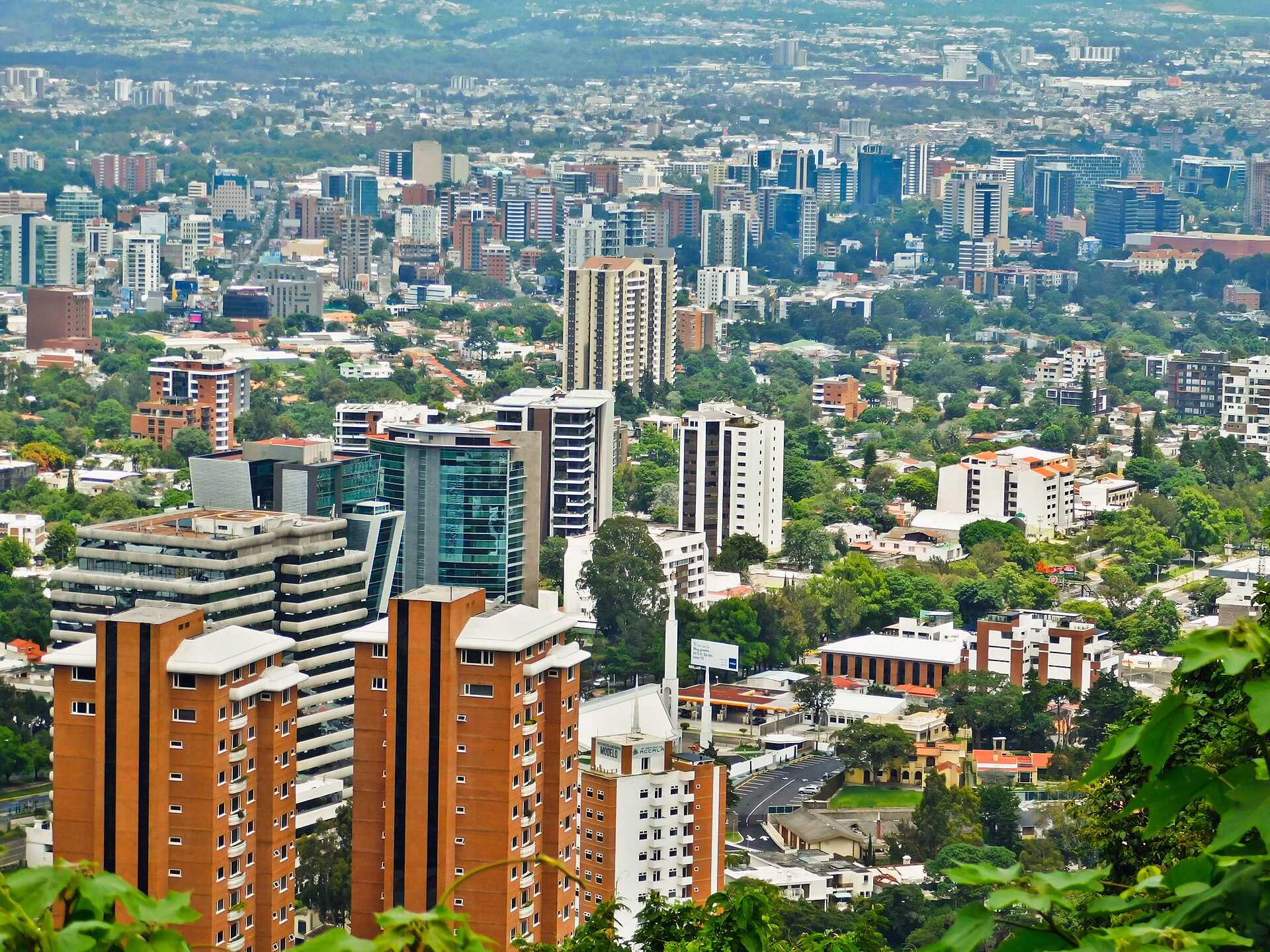
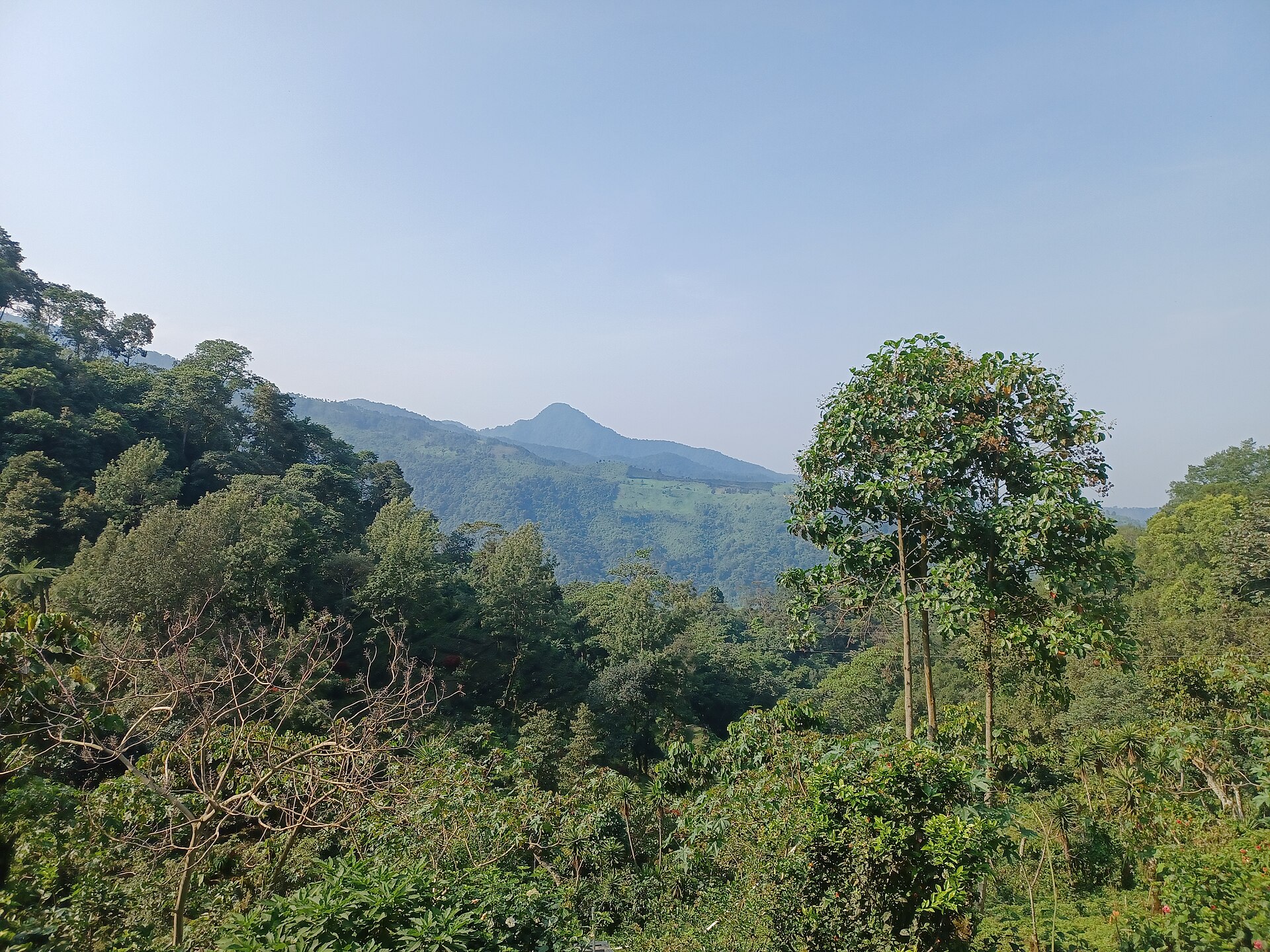
The land runs from a volcanic highland spine to lowland rainforest in the northern department of Petén. Most Maya communities live in the western and central highlands. Guatemala City, the capital, sits in a valley in that highland belt.
The population reached 18.7 million in 2025, according to the World Bank. That makes Guatemala the most populous country in Central America, and slightly larger than the Netherlands.
Identity matters more here than in most of Latin America. In the 2018 census, 41.7 percent of people identified as Maya, 1.8 percent as Xinka and 0.1 percent as Garífuna. Most of the rest identified as Ladino, the local term for people of mixed or Spanish-speaking heritage.
The census counted 22 Mayan languages. The largest are Q’eqchi’, with about 1.13 million speakers, and K’iche’, with about 1.05 million. A foreigner who only speaks Spanish will be understood almost everywhere, but not by everyone.
History explains much of the present. Guatemala went through a civil war from 1960 until peace accords were signed in December 1996. The army’s campaigns fell hardest on Maya communities in the highlands. That memory still colours politics, justice and relations between the capital and the provinces.
Who runs Guatemala and how
The president is head of state and head of government. The 1985 constitution allows a single four-year term, with no re-election. If no candidate wins an outright majority in the first round, the top two meet in a runoff.
Bernardo Arévalo, a sociologist and former diplomat, won the 2023 election for the anti-corruption Movimiento Semilla party. He took office in January 2024 after months of legal attempts to overturn the result. Peaceful protests led by Maya authorities lasted 106 days, according to The Atlantic. His term ends in January 2028.
Congress has one chamber of 160 deputies, elected every four years at the same time as the president. Arévalo has never had a governing majority there. On 24 March 2026 the Supreme Electoral Tribunal (TSE) confirmed the cancellation of Semilla as a party. Semilla is challenging the ruling, but without registration it cannot field candidates in 2027.
The most important institutions to understand are the ones that choose prosecutors and judges. The attorney general heads the Public Ministry, the prosecution service. The president picks the attorney general for four years from a six-name shortlist drawn up by a 15-member nominating commission.
For eight years that office was held by María Consuelo Porras. Her prosecutors pursued judges, journalists and Arévalo’s own party. More than 40 countries, including the United States, sanctioned her. Her term ended in May 2026. Arévalo swore in Gabriel García Luna on 15 May, and he took office on 17 May for a term running to May 2030.
The Constitutional Court is the final word on constitutional disputes. It has five judges who serve five-year terms, and a new bench took office in April 2026. Its president, Annabella Morfín, was appointed by Arévalo. The court still splits, as a 3–2 vote on road blockades showed in September 2026.
From 2007 to 2019 a United Nations-backed commission, known as CICIG, helped local prosecutors pursue high-level corruption. It was shut down under a previous government. Much of Guatemalan politics since then has been a contest between those who backed that work and those it investigated.
How the economy works
Guatemala is the largest economy in Central America, with output of US$123.3 billion in 2025, according to the World Bank. Real growth was 4.3 percent that year, up from 3.7 percent in 2024, according to the UN’s regional commission, CEPAL. The central bank expects growth of 3.3 to 5.3 percent in 2026.
Remittances are the engine. Guatemalans abroad sent home US$25.53 billion in 2025, according to central bank figures. That is roughly 21 percent of GDP, measured against the World Bank’s output figure. Between January and August 2026 the total was US$17.77 billion, up 5.4 percent on a year earlier.
That money pays for household consumption and construction. It also keeps the current account in surplus despite a large goods deficit. Exports reached US$15.59 billion in 2025, while imports were US$34.61 billion, according to the central bank.
The export list is agricultural and light industrial. Clothing from assembly plants is the largest single item. Coffee, bananas, sugar and cardamom are the main farm exports. Central America took 38.4 percent of exports in 2025 and the United States 30.4 percent, according to CEPAL.
Monetary policy is conservative. The Banco de Guatemala targets inflation of 4 percent, plus or minus one point. Annual inflation was 3.37 percent in August 2026, according to the national statistics institute (INE). The policy rate has been 3.50 percent since February 2026.
The central bank’s reference rate on 26 September 2026 was Q7.64 per US dollar, the rate used throughout this guide. Local lending is dearer than the policy rate suggests: the average bank lending rate was 13.08 percent in August 2026, according to La Hora.
The weakness is at the bottom. The World Bank puts poverty at 56 percent of the population on the national measure, as of 2023. Remittances fill part of the gap for families. They do not pay for schools, clinics or roads.
What is happening right now
As of 26 September 2026, the biggest domestic story is the price of fuel. Diesel reached Q50.89 (about US$6.66) a gallon in the capital region in mid-September, according to Bloomberg Línea. Protests and road blockades lasted at least ten days. Transport groups and Indigenous authorities were among those demanding relief.
Congress answered with two competing laws. Decree 21-2026, passed on 8 September with 130 votes, caps diesel and regular petrol at Q39 (about US$5.11) a gallon and premium at Q41 (about US$5.37). It sets aside up to Q2.5 billion (about US$327 million) to pay for the cap until 31 December.
Decree 22-2026, passed on 22 September with 148 votes, takes another route. It suspends value added tax and the fuel distribution tax on petrol and diesel until 31 December. Its estimated fiscal cost is Q3.32 billion (about US$435 million). As of 25 September, both decrees were with the president, and neither was yet in force.
The blockades also tested the courts. On 11 September the Constitutional Court gave the government six hours to clear the roads, by a 3–2 vote. It warned that the interior minister and the police chief could lose their posts if they failed to comply.
The second story is the new attorney general. Since May, García Luna has reorganised the Public Ministry. On 22 September he removed seven prosecutors, including Leonor Morales Lazo, who helped lead a 2023 raid on the electoral tribunal. In September, courts also closed cases against five Indigenous leaders of the 2023 protests at the prosecutors’ own request.
The third is security. After the Barrio 18 gang staged prison riots and killed 11 police officers, Arévalo declared a state of siege from 18 January to 16 February 2026. A lighter state of prevention followed. Guatemala recorded 3,139 homicides in 2025, around 17 per 100,000 people, according to figures reported by EFE.
Trade with the United States is calmer than elsewhere in the region. The two countries signed a reciprocal trade agreement on 30 January 2026. Goods on its listed schedules, including certain farm products, pay no extra “reciprocal” tariff. All other Guatemalan goods pay no more than 10 percent on top of normal duties under CAFTA-DR, the regional free trade agreement.
What to watch
The fuel decrees come first. The president can sign or return each one. Decree 22-2026 takes effect the day after publication in the official gazette. Pump prices in October will show whether the relief reaches drivers. Both measures, as passed, expire on 31 December 2026.
Inflation is the second indicator. INE publishes September consumer prices in early October. The central bank expects inflation to end 2026 at 3.75 percent, which is a forecast, not a result. A figure above 5 percent would breach the top of the target band.
Remittances are the third. The central bank forecasts about US$26.8 billion for 2026, a rise of 5 percent. August came in 1.7 percent below August 2025, against a strong base. Watch whether September and the Christmas months confirm or reverse that.
The political calendar is fixed. Under the TSE’s preliminary timetable, the 2027 election will be formally called on Friday 22 January 2027. The campaign runs from 29 March, and voters choose a president, the whole Congress and every mayor on Sunday 27 June 2027. A presidential runoff, if needed, falls on Sunday 22 August 2027.
What this means for foreigners
Entry is simple for most Western visitors. US citizens do not need a tourist visa and can stay up to 90 days, according to the US State Department. They must fill in an electronic immigration and customs form on arrival and departure. Overstays are fined daily, in cash, at the airport.
Longer stays need residency, and the routes and income thresholds are set out in our Guatemala residency and retirement guides. Guatemala taxes income on a territorial basis, which matters for remote workers with foreign earnings. Our tax guide explains how that works in practice.
Costs are low by US or Western European standards, but not everywhere. Antigua Guatemala, the colonial town popular with expats, has rents above the local wage. Our cost-of-living guides for Guatemala City and Antigua set out real budgets.
Safety is uneven rather than uniform. Violence is concentrated in parts of the capital, and much of it is linked to the Barrio 18 and MS-13 gangs. Our safety guides map where the violence is and where foreigners actually live.
Borrowing locally is expensive, with average bank lending rates at a five-year high in August 2026. New anti-money-laundering rules also took effect on 17 September 2026, so expect more questions when opening a bank account.
Connected Coverage
IMF Confirms Guatemala Economy Grew 4.3 Percent as Remittances Hit 21 Percent of GDP
Moving to Guatemala 2026 — Residency, Costs and Your First Year Explained
Guatemala Residency: Income Rules for Expats
Retire in Guatemala: The Pensionado Residency Income Rules
Taxes in Guatemala for Expats: A Territorial System Explained
Investing in Guatemala as a Foreigner in 2026: Two Taxes Just Went
Bank Account in Guatemala: New Money Laundering Rules Take Effect on 17 September 2026
Buying Property in Guatemala as a Foreigner in 2026
Cost of Living in Guatemala City for Expats in 2026: Zones, Rent and Real Budgets
Cost of Living Antigua Guatemala 2026: Rent Above the Local Wage
Healthcare in Guatemala for Expats: The Real Map
Safety in Guatemala 2026: Where the Violence Is, and Where Foreigners Live
Sources: Population, output and poverty from the World Bank; exchange rate, remittances, trade and the policy rate from the Banco de Guatemala; inflation from the Instituto Nacional de Estadística; the election timetable from the Tribunal Supremo Electoral; the trade agreement from the Office of the US Trade Representative; entry rules from the US State Department. All accessed 26 September 2026.
- World Bank — Guatemala country data: population, GDP, GDP per person, poverty
- Banco de Guatemala — family remittances, monthly series 2002–2026
- Banco de Guatemala — Monetary Board statement on the policy rate, 26 August 2026
- Instituto Nacional de Estadística — consumer price index, August 2026
- INE — principal results of the 2018 population census
- Tribunal Supremo Electoral — preliminary 2027 electoral timetable
- Office of the US Trade Representative — United States–Guatemala Agreement on Reciprocal Trade, 30 January 2026
- US Department of State — Guatemala entry requirements
- CEPAL — Economic performance of Guatemala in 2025 and outlook
What Is Not Known
Which fuel measure will apply. As of 26 September 2026, the president had not said whether he would sign the price cap, the tax suspension, both or neither. Nor is it clear how either would be paid for without cutting other spending in the final months of the year.
Who will run in 2027. The ruling party has lost its registration, and candidate registration only opens on 23 January 2027. The TSE timetable itself is still preliminary until the formal call.
How far the new attorney general will go. Removing prosecutors and dropping cases is a first step. Whether it leads to prosecutions of those who tried to overturn the 2023 result, and how the courts respond, is open.
Whether the fall in violence holds. The state of siege coincided with the lowest early-year homicide count since 2001, according to the government. A weekend with 24 killings in July 2026 showed how quickly that can change, and no full-year 2026 figure exists yet.
Frequently Asked Questions
Who is the president of Guatemala in 2026?
Bernardo Arévalo, elected in 2023 for the Movimiento Semilla party. He took office in January 2024 and his single four-year term ends in January 2028. The constitution does not allow re-election.
When is the next election in Guatemala?
Under the electoral tribunal’s preliminary timetable, the general election is on Sunday 27 June 2027, with a possible presidential runoff on Sunday 22 August 2027. Voters choose a president, the whole Congress and every mayor.
What currency does Guatemala use?
The quetzal, written Q. The central bank’s reference rate on 26 September 2026 was Q7.64 per US dollar. Guatemala is not dollarised.
How important are remittances to Guatemala?
Very. Guatemalans abroad sent home US$25.53 billion in 2025, roughly 21 percent of GDP. Between January and August 2026 the total was US$17.77 billion, up 5.4 percent on a year earlier.
Do Americans need a visa for Guatemala?
No. US citizens do not need a tourist visa and can stay up to 90 days, according to the US State Department. They must complete an electronic immigration and customs form, and overstays are fined daily at the airport.
What languages are spoken in Guatemala?
Spanish is the official language. The 2018 census recorded 22 Mayan languages plus Xinka and Garífuna, and 29.6 percent of people learned to speak in a Mayan language.
This article was produced by The Rio Times’ automated newsroom system. How we use AI · Report an error
Read More from The Rio Times