Who Is Bernardo Arévalo? Guatemala’s President, His Battles and What Comes Next
PROFILE · GUATEMALA
Key Facts
- —Who he is A sociologist and former diplomat, son of a reforming president, elected in 2023 on an anti-corruption ticket.
- —The country Guatemala has 18.7 million people, the largest population in Central America, and uses the quetzal.
- —His term He took office in January 2024, must leave in January 2028, and cannot run again.
- —His standing Polls in 2026 put his approval between 28 and 41 percent, with majorities disapproving.
- —What to watch The general election on June 27, 2027, which his cancelled party, Semilla, cannot contest.
Bernardo Arévalo won Guatemala’s presidency in 2023 as an outsider who promised to break the grip of corrupt networks. Almost three years later, he governs a country that tests him on crime, fuel prices, trade and a hostile Congress.
Arévalo is a soft-spoken academic and career diplomat, unusual among Guatemala’s recent presidents. To understand Guatemala in 2026, you need to understand what he has changed, what he has not, and who stands against him.
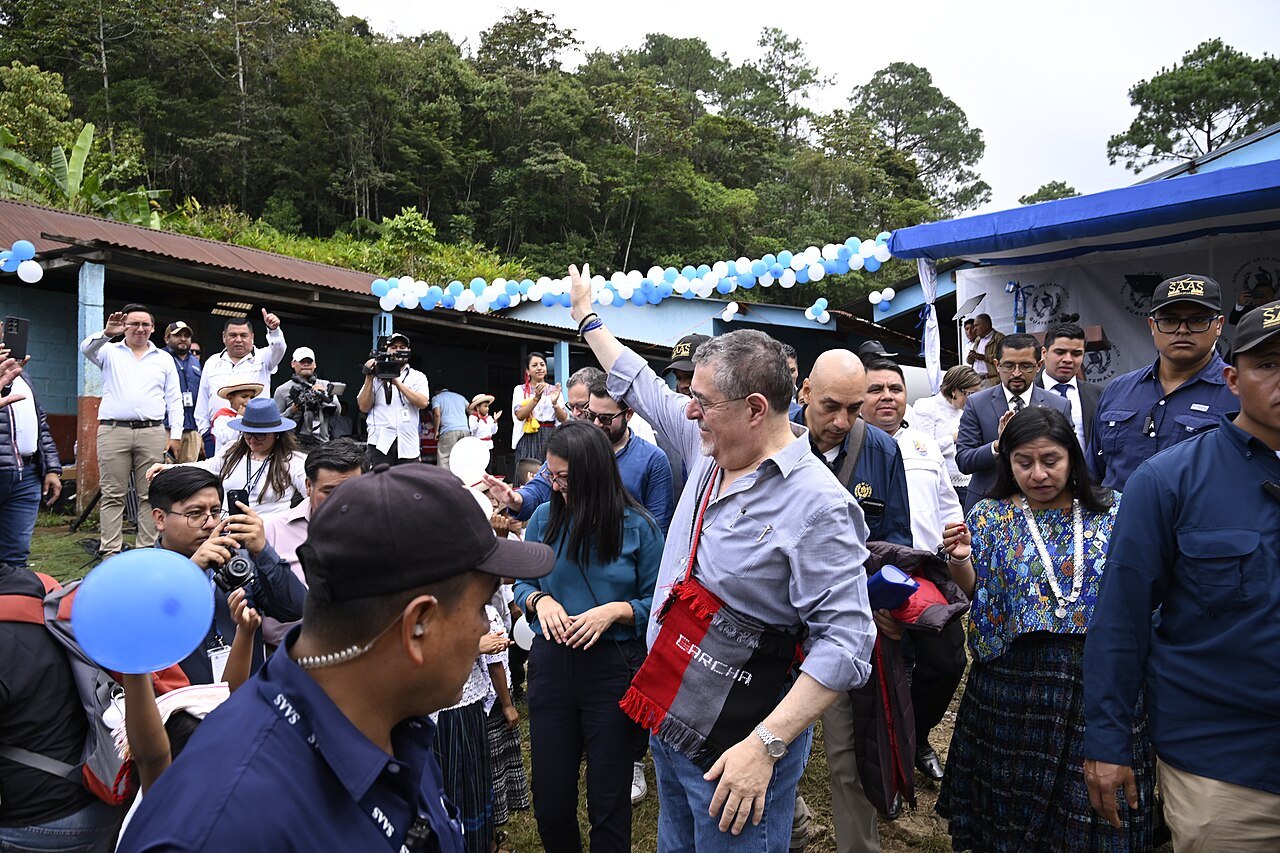
From Exile to the National Palace
Bernardo Arévalo de León was born on 7 October 1958 in Montevideo, Uruguay, while his family lived in exile. His father, Juan José Arévalo, won what AS/COA calls Guatemala’s first democratic election and governed from 1945 to 1951.
After the 1954 coup against President Jacobo Árbenz, backed by the CIA, the family moved through Venezuela, Mexico and Chile. The think tank CIDOB records that they returned to Guatemala in 1973, where the young Arévalo finished school.
He studied sociology at the Hebrew University of Jerusalem and earned a doctorate in philosophy and social anthropology at Utrecht University. He is married to Lucrecia Peinado, a surgeon, according to CIDOB.
A diplomat and peace-builder
Arévalo joined Guatemala’s foreign ministry in the 1980s and served at the embassy in Israel. He became deputy foreign minister in 1994 and ambassador to Spain in 1995.
From 1999 he advised Interpeace, an international peace-building organisation, on conflicts in Africa, Asia and Latin America. That work kept him out of party politics for nearly two decades.
After the mass anti-corruption protests of 2015, he co-founded the Semilla think tank. Semilla, meaning “seed”, became a political party, and Arévalo sat in Congress from 2020 to 2024.
How an Outsider Won in 2023
Arévalo entered the 2023 race polling below 3 percent, according to AS/COA. In the first round on 25 June 2023, he finished a surprise second with just over 11 percent.
In the run-off on 20 August 2023 he beat former first lady Sandra Torres by 58 percent to 37 percent. Yet Semilla won only 23 of 160 seats in Congress, which left him without a governing majority.
His victory triggered months of legal attacks led by the Public Ministry, the national prosecution service. Prosecutors moved to suspend Semilla over alleged falsified signatures in its founding paperwork.
Congress delayed the handover, and Arévalo was sworn in only on 15 January 2024, a day late. In his first days he removed the metal barriers around the National Palace and his official residence.
The Long Fight With the Prosecutors
For most of his term, Arévalo’s main rival was not an opposition leader but the attorney general, María Consuelo Porras. She had led the Public Ministry since 2018, and both the United States and the European Union sanctioned her over corruption allegations.
Arévalo publicly called for her removal in May 2024, but she stayed until her term ended in May 2026. On 5 May 2026 he named Gabriel Estuardo García Luna as her successor, chosen from a shortlist of six candidates.
The new chief prosecutor “does not serve the president or the government, but the nation,” Arévalo said, Prensa Libre reported. García Luna took office on 17 May for a four-year term.
Within days, the new attorney general removed Rafael Curruchiche, who had run the Special Prosecutor’s Office Against Impunity (FECI) since 2021. The broadcaster Canal Antigua reported that several high-profile corruption cases had stalled under Curruchiche’s leadership.
The party that brought him to power is gone
The change came too late to save Semilla. On 26 March 2026 the Constitutional Court, Guatemala’s highest court on constitutional matters, unanimously rejected the party’s final appeals against its cancellation.
The case began with a November 2024 order from Judge Fredy Orellana, who relied on organised-crime law over the 2017 signature dispute. Infobae reported that Semilla’s lawmakers called the ruling a grave precedent and moved to a new party, Raíces.
Arévalo also helped shape a new Constitutional Court, which took office for 2026 to 2031 in April. He appointed Gladys Morfín as a full magistrate and María Magdalena Jocholá, a Maya Kaqchikel lawyer, as an alternate.
Security: Gangs, Prisons and a State of Siege
Crime became the hardest test of his presidency. On 12 October 2025, twenty members of the Barrio 18 gang escaped from Fraijanes II, a maximum-security prison south of Guatemala City.
Arévalo replaced his security leadership and appointed Marco Antonio Villeda, a former high-risk court magistrate, as interior minister. Washington had designated Barrio 18 a terrorist organisation weeks earlier, in September 2025.
In January 2026 gangs staged prison riots and attacks that killed nine police officers, Prensa Comunitaria and the state agency AGN reported. Arévalo declared a 30-day state of siege, and Congress approved it with 149 votes.
A state of siege lets the authorities restrict gatherings and make some arrests without a court order. The government said homicides halved against a year earlier and 83 gang members were arrested, by its own count.
When the siege ended on 16 February, Arévalo replaced it with a narrower “state of prevention” lasting 15 days. Prensa Comunitaria noted that the siege decree promised respect for human rights while restricting several freedoms.
Business groups, by contrast, later pressed for firm police action against road blockades. That tension between rights and order runs through most security debates in Guatemala.
Washington, Migration and Tariffs
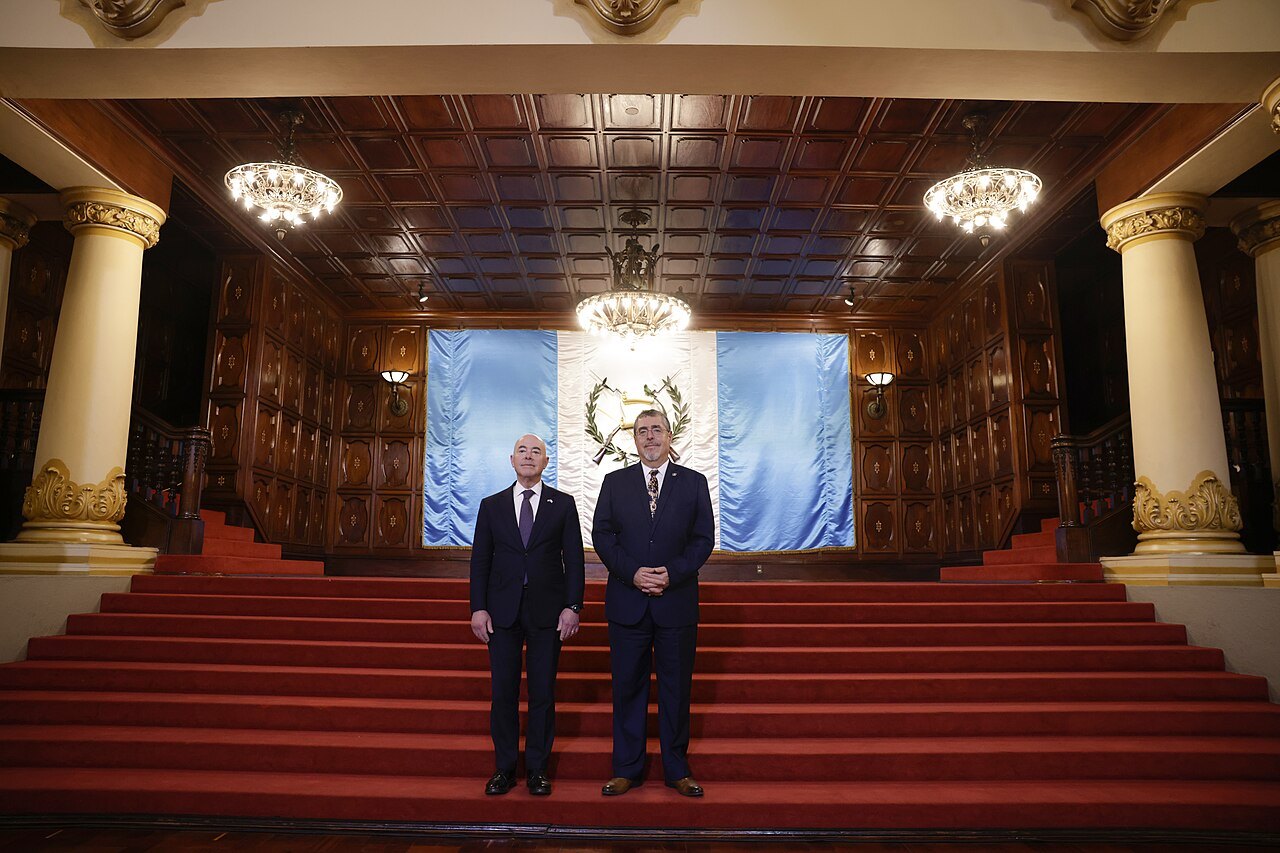
Arévalo has kept close to Washington and in February 2025 struck a migration deal with Secretary of State Marco Rubio. Guatemala agreed to accept deportees from other countries, and both sides agreed to raise deportation flights by 40 percent.
The Associated Press reported that those third-country deportees would then be flown home at US expense. El Salvador had announced a broader deal two days earlier, accepting deportees of any nationality.
On 30 January 2026 the two governments signed an Agreement on Reciprocal Trade covering goods such as coffee, bananas and cardamom. As of late September 2026 it was not yet in force, for reasons the Rio Times explained in July.
Since 24 July 2026, Guatemalan goods face an extra 10 percent US duty linked to forced-labour enforcement. The measure hit about 60 economies, though textiles under the CAFTA-DR trade pact and some farm products are exempt.
In March 2026 Guatemala announced that Washington had lifted curbs on arms sales to its army dating back to 1977. The first rifles bought under the new rules arrived in September for a jungle brigade in Petén, on the Mexican border.
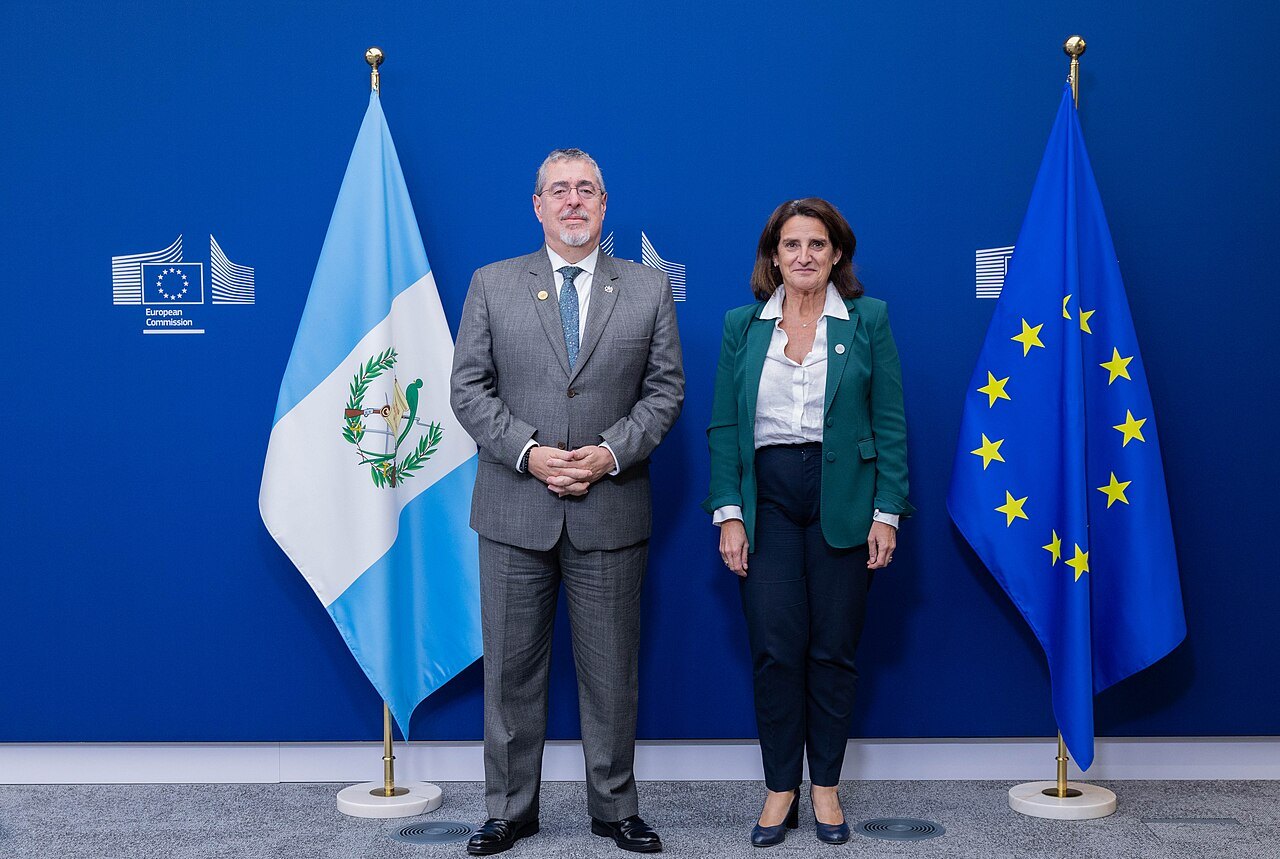
Arévalo has also kept Guatemala’s diplomatic ties with Taiwan, which he visited in June 2025. He has courted Europe too, visiting the European Commission in Brussels in October 2025.
The Economy, Fuel and the Street
Guatemala’s economy produced about US$123 billion in 2025, according to the World Bank. Remittances, money sent home by migrants, exceeded US$25 billion in 2025, a record, the central bank reported.
The Banco de Guatemala set the reference rate at 7.64 quetzales to the US dollar on 25 September 2026. Guatemala has 18.7 million people, according to the World Bank, the largest population of any Central American country.
Stability has not stopped anger over living costs. From 31 August to 12 September 2026, transport unions and Indigenous authorities blocked up to 24 highway points over fuel prices.
Arévalo claimed that local politicians and drug traffickers paid people to join, without naming anyone or bringing charges. As of mid-September 2026, nobody had been charged with financing the protests.
The business federation CACIF demanded that police enforce court orders to clear the roads. “A blocked road is not just a line of vehicles,” CACIF leaders said, according to the right-leaning outlet República.
In late September the government dropped its resistance to suspending fuel taxes, Prensa Libre reported. Francisco Quezada of CIEN, a business-backed think tank, said political wear and tear had outweighed warnings from the government’s own experts.
The 2027 budget, about Q181.6 billion (about US$23.8 billion), must pass Congress by 30 November 2026. Analysts quoted by Prensa Libre expect pre-election bargaining over regional development funds.
Who Supports Him and Who Opposes Him
A May 2026 CID Gallup survey for Fundación Libertad y Desarrollo, a pro-market group, found 41 percent approval. It found 54 percent disapproval, and 68 percent of respondents doubted the 2027 election would be clean.
Arévalo answered that polls are “photographs” of one moment, Infobae reported. He said the real test should come at the end of his term, when results can be set against his promises.
A regional survey by CB Global Data, taken from 7 to 11 September 2026, was harsher still. It ranked him last of 18 Latin American leaders, with 28.2 percent approval and 67.3 percent disapproval, Confidencial HN reported.
Congress is fragmented, and Semilla’s 23 seats were never enough to govern alone. In August 2026 lawmakers summoned 12 of his 14 ministers for interpellations, formal questioning on the floor of Congress.
The government asked the Constitutional Court to limit what it called an abusive use of interpellations, as we reported. Lawmakers from Sandra Torres’s UNE party defended the hearings as legitimate oversight.
Critics on the right and on the left
From the right, Allan Rodríguez of Vamos, former president Alejandro Giammattei’s party, called Arévalo “the only one responsible” for the fuel crisis. Infobae, which reported the remark, noted that the United States sanctioned Rodríguez in 2022 over corruption allegations.
From the left, journalist Juan Luis Font wrote in Con Criterio in 2024 that Arévalo had let his enemies frighten him. Font urged bolder action and a far stronger voice to explain the government’s work.
Defenders note that for most of his term he worked against an attorney general he did not choose. Gerardo Berthin of Freedom House, a US democracy watchdog, called him “a significant departure” from his predecessors.
What It Means for Foreigners and Investors
For investors, Guatemala under Arévalo offers a steady quetzal and record inflows of remittances. The main risks lie in gang crime, road blockades and a fragmented Congress bargaining over local spending.
Trade with the United States is the swing factor to watch. Exporters of coffee, bananas and textiles should check whether their products fall under the CAFTA-DR exemptions or the extra 10 percent duty.
For visitors and residents, the state of siege has ended, but road blockades can still close highways at short notice. Our country guide to Guatemala sets out the wider picture on safety, politics and the economy.
For anyone signing long contracts, the calendar matters more than the man. Arévalo leaves office in January 2028, and the next president could take a very different line on prosecutors, security and trade.
What to Watch Before He Leaves Office
The first round of the general election is set for 27 June 2027, the electoral tribunal announced. Arévalo cannot stand, and Raíces, the party built by former Semilla lawmakers, registered on 7 September 2026.
Watch whether García Luna’s Public Ministry revives the corruption cases that stalled under the previous leadership. A visible shift would strengthen Arévalo’s legacy, while slow progress would feed the charge that little has changed.
Watch the budget vote, the ministerial interpellations and any return of fuel protests in the coming months. Each will show whether a president without a party can still pass laws before the campaign begins.
Finally, watch the gangs and the prisons, where one escape or attack can reset the national mood overnight. With only one poll respondent in four trusting the government on their main worry, security and prices will define his final year.
Frequently Asked Questions
Who is Bernardo Arévalo?
Bernardo Arévalo is the president of Guatemala, in office since January 2024. He is a sociologist and former diplomat, and the son of Juan José Arévalo, president from 1945 to 1951.
Is Bernardo Arévalo left-wing?
He is usually described as centre-left or progressive, and he campaigned mainly against corruption. In office he has kept close ties with the United States and Taiwan.
Can Arévalo run for re-election?
No, Guatemala’s constitution limits presidents to a single four-year term. His term ends in January 2028, and the first round of the next election is set for 27 June 2027.
What happened to his party, Semilla?
Semilla was cancelled after the Constitutional Court rejected its final appeals in March 2026. Former Semilla lawmakers then founded a new party, Raíces, which was registered in September 2026.
Who is Guatemala’s attorney general now?
Gabriel Estuardo García Luna has been attorney general since 17 May 2026, for a four-year term. He replaced María Consuelo Porras, who had been sanctioned by the United States and the European Union.
This article was produced by The Rio Times’ automated newsroom system. How we use AI · Report an error
Read More from The Rio Times