Guatemala in Latin America, Its Role, Weight and Alliances

GUATEMALA · LATIN AMERICA
Key Facts
- —The basics Guatemala, a country of 18.7 million people on the Central American isthmus, lies in North America yet belongs to Latin America, bordering Mexico, Belize, Honduras and El Salvador as of October 2026.
- —Why it matters Guatemala is Latin America’s eighth most populous country and the largest on the isthmus, a Taiwan ally, a member of SICA, CELAC and the Organization of American States, and a claimant against Belize.
- —The numbers Guatemala produced about US$123.3 billion in 2025, or US$6,598 per person, grew 4.3%, and received US$25.53 billion in remittances, roughly one fifth of its output, as of October 2026.
- —Who is who President Bernardo Arévalo leads Guatemala, Albert Ramdin of Suriname is secretary-general of the Organization of American States, and Lina Ajoy of Costa Rica heads SICA, the Central American integration system, for 2026 to 2030.
- —What to watch The International Court of Justice is due to hear Guatemala’s claim against Belize from Monday, 22 to Friday, 26 February 2027, a schedule the court has not yet posted itself.
- —What it means for you As of October 2026, US firms sold Guatemala US$9.96 billion in goods in 2025, and the reciprocal trade agreement signed on 30 January 2026 is meant to widen that market.
The Guatemala continent answer is North America, yet this is the largest country on the Central American isthmus and a Taiwan ally. Here is its weight, its memberships and its disputes as of October 2026.
Guatemala sits in Central America, bordering Mexico, Belize, Honduras and El Salvador, which places it in North America. Politically, its 18.7 million people belong to Latin America, where Guatemala is the eighth most populous country.
For US readers, Guatemala matters as a remittance giant, a Taiwan ally and a US$9.96 billion market for American goods in 2025. This guide sets out its weight, its blocs and its disputes as of October 2026.
The Guatemala Continent Question, Answered
Guatemala covers 108,889 square kilometres, about 42,000 square miles, slightly less than Honduras and more than twice Costa Rica’s area. The World Bank listed those areas for 2024, and Mexico’s is about 18 times larger.
Under the usual seven-continent model, Guatemala belongs to North America, as does the rest of Central America. The United Nations statistics division files it under Central America, within Latin America and the Caribbean, within the Americas.
For a full profile of the country, its politics and its economy, see Guatemala Explained 2026. More Guatemala coverage is on the Guatemala hub.
Guatemala’s Weight in Population and Economy
The World Bank counted 18,687,881 people in Guatemala for 2025, about 2.8% of the 666.6 million in Latin America and the Caribbean. That makes Guatemala the eighth most populous of the 20 Latin American republics, ahead of Ecuador at 18.3 million.
About 35% of the 53.2 million people on the isthmus, from Belize to Panama, live in Guatemala. Honduras, the next largest, has 11.0 million, World Bank data for 2025 show.
The population grew 1.5% in 2025, and 56.3% of Guatemalans lived in towns and cities, the World Bank reports. Those are the latest figures in its database, which was updated on 8 October 2026.

Guatemala’s economy produced US$123.3 billion in 2025, about 1.7% of the region’s US$7.40 trillion, World Bank data show. That ranks ninth among the 19 Latin American countries with a 2025 figure, since the World Bank has none for Cuba.
Among the seven countries from Belize to Panama, it has the largest economy, ahead of Costa Rica at US$102.9 billion. The Dominican Republic, a Caribbean island state, is slightly larger at US$127.4 billion.
Output per person was US$6,598 in 2025, about 59% of the regional average of US$11,095, the World Bank reports. Only Haiti, Nicaragua, Venezuela, Honduras, Bolivia and El Salvador were poorer among countries with 2025 data.
Real growth reached 4.3% in 2025, against 2.3% for Latin America and the Caribbean as a whole. A report on the IMF’s review of Guatemala’s economy gives more detail.
Remittances loom large: the Bank of Guatemala, the central bank, said they reached US$25.53 billion in 2025, up 18.7%. Prensa Libre and Emisoras Unidas, Guatemalan outlets, published the 2025 total on Wednesday, 7 January 2026, against US$21.51 billion for 2024.
The World Bank puts remittances at 20.8% of output in 2025, behind Honduras at 30.1% and El Salvador at 27.5%. Nicaragua’s latest figure, for 2024, was 26.6%, while Mexico’s 2025 share was 3.6%.
The US Census Bureau counts US goods exports to Guatemala at US$9.96 billion in 2025, against imports of US$5.17 billion. That left a US goods surplus of US$4.79 billion.
SICA, Central America’s Own Club
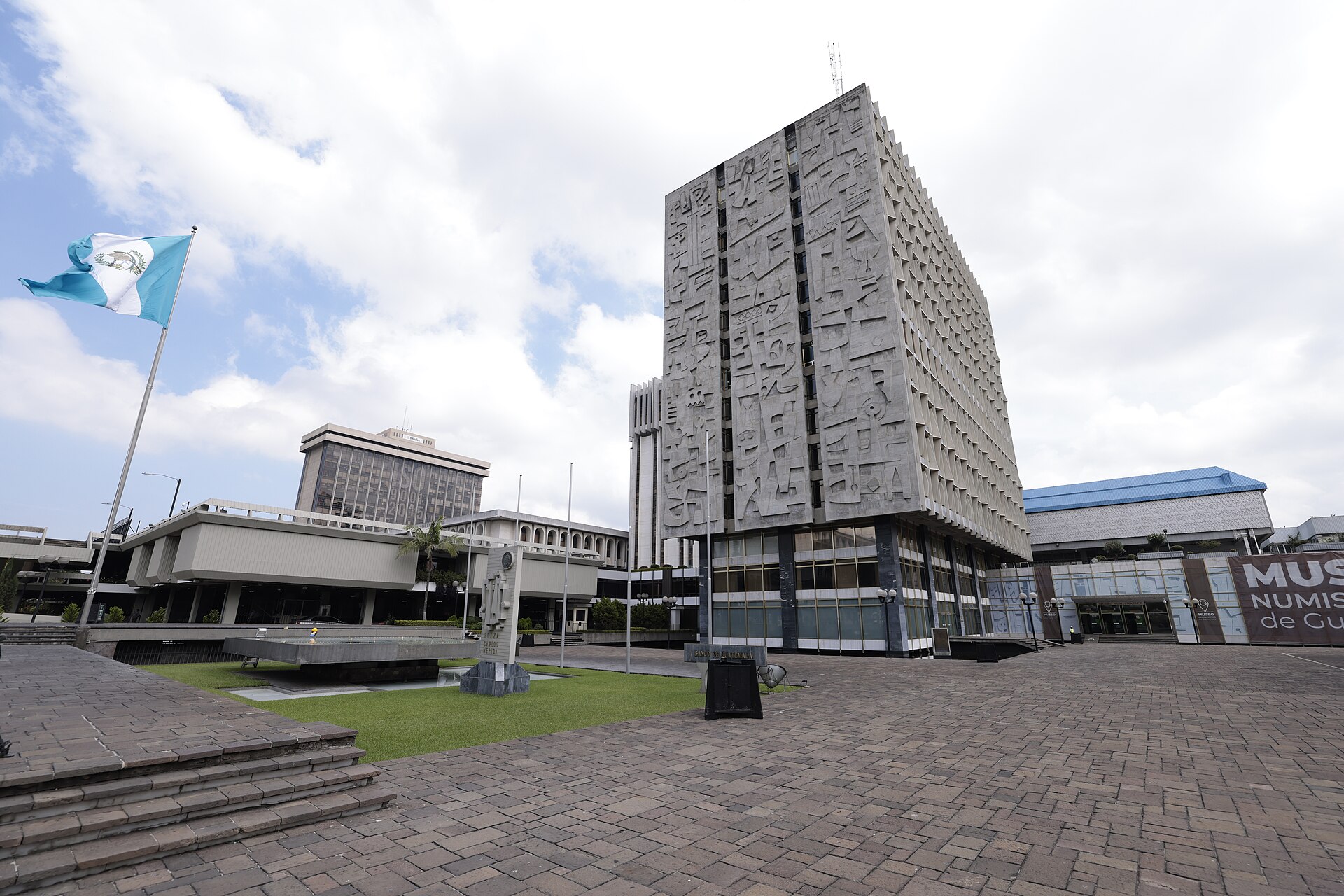
Guatemala belongs to the Central American Integration System (SICA), a bloc of eight states. Revista E&N listed them on 25 June 2026: Belize, Costa Rica, El Salvador, Guatemala, Honduras, Nicaragua, Panama and the Dominican Republic.
Guatemala has SICA’s largest population, and only the Dominican Republic has a bigger economy than Guatemala’s US$123.3 billion. The Dominican Republic held the rotating presidency in the first half of 2026, and Belize holds it in the second half.
SICA’s general secretariat sits near San Salvador, but the isthmus’s economic secretariat, SIECA, lists its address in Guatemala City’s Zone 14. The Central American Parliament, created by a treaty signed in October 1987, has its permanent seat in Guatemala under Article 7.
Guatemala, El Salvador and Honduras are building a single customs territory, a process SIECA calls deep integration. A report on a 420-metre bridge that El Salvador opened toward Guatemala covers one project on that border.
In June 2026, President Bernardo Arévalo joined a virtual SICA summit that chose Lina Ajoy as secretary-general for 2026 to 2030. AGN reported on 10 June 2026 that Guatemala’s foreign ministry called SICA the region’s main mechanism for political coordination, cooperation and integration.
CELAC, the OAS and the Blocs Guatemala Stays Out Of
Guatemala belongs to CELAC, the Community of Latin American and Caribbean States, which excludes the United States and Canada. Colombia held its rotating presidency before Uruguay, and Colombia’s foreign ministry marked Uruguay’s start on 15 April 2026.
Bogotá hosted the first CELAC-Africa forum and the tenth CELAC summit on 18 to 21 March 2026. Foreign Minister Carlos Ramiro Martínez represented Guatemala there, AGN reported on 20 March 2026.
In September 2026, Martínez also took part in a CELAC foreign ministers’ meeting in New York, AGN reported on 21 September 2026. That meeting was on the sidelines of the 81st session of the United Nations General Assembly.
The Organization of American States (OAS) lists 1889 as Guatemala’s date of entry into the inter-American system. Albert Ramdin of Suriname has led the OAS as secretary-general since 26 May 2025, the organisation says.
The OAS also anchors the Belize dispute, because the two governments signed their Special Agreement at OAS headquarters on 8 December 2008. The OAS has kept an office in the Belize-Guatemala Adjacency Zone since 1 July 2003.
Guatemala appears neither among Mercosur’s full members nor among its associated states, the bloc’s website shows as of 16 October 2026. Full members are Argentina, Bolivia, Brazil, Paraguay and Uruguay, with Venezuela suspended, and Panama is the only Central American associate.
The Andean Community groups Bolivia, Colombia, Ecuador and Peru, and Guatemala is not among them, the community’s website says. CARICOM lists 15 member states and eight associate members, and Guatemala is on neither list.
CARICOM still matters to Guatemala, because it backs Belize in the border dispute. In a statement on Tuesday, 16 September 2025, CARICOM said the incursions violated Belize’s sovereignty, the EFE news agency reported.
The Belize Claim at the World Court
Guatemala claims land, islands and sea areas that Belize governs, and the case is titled Guatemala’s Territorial, Insular and Maritime Claim. The two governments signed a Special Agreement on Monday, 8 December 2008, to take it to the International Court of Justice (ICJ).
Guatemalan voters backed going to the court in a referendum on Sunday, 15 April 2018. Belizean voters did so on Wednesday, 8 May 2019, and the ICJ announced the case on 12 June 2019.
The ICJ’s case page lists no hearing dates as of 16 October 2026; its latest entry is a 2022 order. Guatemala’s foreign ministry has announced oral hearings from Monday, 22 to Friday, 26 February 2027, AGN reported on 18 September 2026.
Belize’s prime minister, John Briceño, gave the same February dates in a national address, the Jamaica Observer reported on 23 September 2026. La Hora, a Guatemalan daily, wrote on 25 September 2026 that the ruling will bind both Guatemala and Belize.
In a separate case between Belize and Honduras, the ICJ let Guatemala intervene as a non-party on 19 March 2026. AGN and Honduras’s La Tribuna reported that its hearings run from Monday, 1 to Friday, 5 March 2027.
Both sides accused each other of incursions near the Sarstún River in September 2025. Guatemala’s foreign ministry said Belizean soldiers entered its territory on 10, 12 and 13 September 2025.
Belize’s foreign ministry said on 14 September 2026 that about 18 Guatemalan military and civilian vessels obstructed its volunteers near Sarstoon Island. It cited an 1859 treaty that places the border in the mid-channel of the Sarstoon River.
Guatemala’s own account of the 2026 incident was not found. The guide to Belize in Latin America covers the same case from the Belizean side.
Taiwan, the United States and Guatemala’s Partners
Taiwan’s foreign ministry lists 12 diplomatic allies as of 16 October 2026, seven of them in Latin America and the Caribbean. Guatemala is the most populous of the seven, followed by Haiti and Paraguay.
Taiwan’s presidential office recorded President Bernardo Arévalo’s first visit to Taiwan on Thursday, 5 June 2025. Arévalo said the trip aimed to widen trade and investment, and he reaffirmed Guatemala’s support for Taiwan.
The presidential office said the two governments marked 90 years of diplomatic ties in 2024. President Lai Ching-te named cooperation in medicine and public health, education and culture, technology and trade.
On Friday, 30 January 2026, the US trade representative and Guatemala’s economy minister signed the United States-Guatemala Agreement on Reciprocal Trade. The US trade office said the deal addresses trade barriers facing American producers and expands markets for US exports.
The older framework is CAFTA-DR, a free-trade pact the United States signed on 5 August 2004. Its Latin American members are Costa Rica, El Salvador, Guatemala, Honduras, Nicaragua and the Dominican Republic.
The European Commission says the EU’s Central America trade pillar has applied provisionally to Guatemala since 1 December 2013. A report on Guatemala’s remittance boom and growth covers the income side of that picture.
The Mexico Border and the Plan for 2027
Guatemala shares 956.33 kilometres, about 594 miles, of border with Mexico, the Mexican embassy in Guatemala says. The Herrera-Mariscal boundary treaty was signed in Mexico City on 27 September 1882.
Diplomatic relations began on 6 September 1848, and the joint boundary commission, CILA, was installed on 1 August 1962. The embassy says the two countries have signed more than 40 bilateral agreements.
On Tuesday, 18 August 2026, the two foreign ministers met in Mexico City and agreed a Binational Plan 2027. The Mexican embassy’s bulletin lists five pillars: security, border and connectivity, human mobility, development and scientific cooperation.
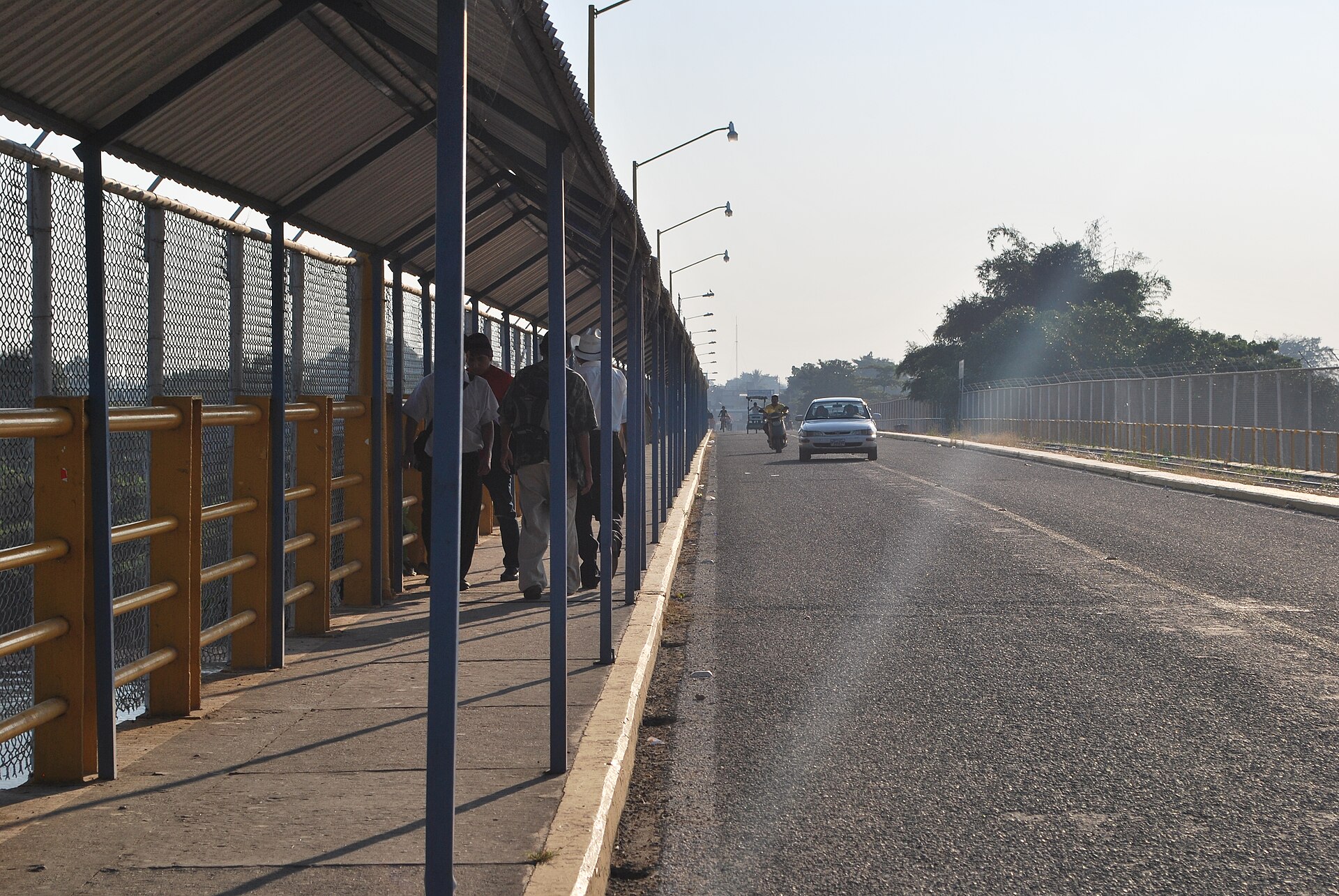
The ministers noted progress on a memorandum to update the High-Level Security Group, called GANSEG, the bulletin says. They also highlighted a future rail link via Line K of Mexico’s interoceanic corridor, with no completion date.
The two sides also agreed to advance a joint cargo programme between Ciudad Hidalgo in Mexico and Tecún Umán in Guatemala. The Suchiate River separates those two crossing towns, EFE reported on 19 August 2026.
Mexico’s foreign minister announced a visit to Guatemala in October 2026, the embassy bulletin says. A plenary of the Binational Commission is planned for Mexico City, with no date given.
The agenda follows an August 2025 meeting in Campeche of Mexico’s president, Claudia Sheinbaum, Guatemala’s Arévalo and Belize’s prime minister. That meeting led to the Gran Selva Maya biocultural corridor, EFE reported on 19 August 2026.
How Guatemala Compares With Its Peers
Among Guatemala’s SICA partners, its economy is about 3.1 times Honduras’s US$39.6 billion and 3.4 times El Salvador’s US$36.7 billion. It is 5.5 times Nicaragua’s US$22.2 billion, World Bank data for 2025 show.
Costa Rica has 5.2 million people against Guatemala’s 18.7 million, yet its economy of US$102.9 billion is only 17% smaller. Costa Rica’s output per person, US$19,970, is three times Guatemala’s US$6,598.
Panama, with 4.6 million people, produces US$19,790 per person, also about three times the Guatemalan level. Mexico’s economy of US$1.83 trillion is nearly 15 times Guatemala’s.
Chile and Ecuador are the closest peers in population. Chile has 19.9 million people and an economy 2.9 times Guatemala’s, while Ecuador has 18.3 million people and a US$130.3 billion economy.
Guatemala grew 4.3% in 2025, faster than Mexico at 0.6%, Brazil at 2.3% and Colombia at 2.6%. Costa Rica grew 4.6%, Nicaragua 4.9% and Paraguay 6.6%, so Guatemala was fast but not the fastest.
For a taste of the country beyond the statistics, see the Guatemalan food guide. It is another guide on Guatemala in this series.
What It Means for US Readers
Guatemalans abroad sent home US$25.53 billion in 2025, about one fifth of the country’s output. That makes Guatemala’s household finances sensitive to labour markets and migration rules in the countries where its migrants work.
US exporters sold Guatemala US$9.96 billion in goods in 2025, a US surplus of US$4.79 billion. The trade agreement signed on 30 January 2026 and CAFTA-DR frame that market.
The quetzal traded at about 7.64 per US$1 on 15 October 2026, the open.er-api.com rate used for conversions here. Guatemala is one of Taiwan’s seven allies in the region, so any change of recognition would be a diplomatic event.
The Belize case will be decided in court, with hearings due in February 2027. A ruling, according to La Hora, will bind both states.
What Is Not Known
The ICJ’s case pages list no 2027 hearing dates, so the schedules rest on announcements by the parties and regional press. Nobody knows when the court will rule after the hearings, or where it would draw the lines.
Guatemala’s own account of the 10 September 2026 Sarstoon incident was not found, so the Belizean version stands alone here. It is also unclear whether Mexico’s foreign minister has made his planned October visit to Guatemala.
No date was found for the Binational Commission plenary or for the rail link through the interoceanic corridor. The World Bank has no 2025 figure for Cuba, so Guatemala’s ninth place in the economic ranking excludes it.
The US share of the money sent home was not found in the reports used here. No Guatemalan application to join Mercosur, the Andean Community or CARICOM was found.
Frequently Asked Questions
What continent is Guatemala in?
Guatemala is in North America, on the Central American isthmus bordering Mexico, Belize, Honduras and El Salvador. Politically and statistically it is grouped with Latin America and the Caribbean.
Is Guatemala part of Latin America?
Yes, Guatemala is part of Latin America and the eighth most populous of its 20 republics, with 18.7 million people in 2025. Its economy of US$123.3 billion ranks ninth among the 19 countries with World Bank data.
Which regional blocs does Guatemala belong to?
Guatemala belongs to SICA, CELAC and the Organization of American States. It is not a member or associate of Mercosur, the Andean Community or CARICOM.
What is Guatemala’s dispute with Belize?
Guatemala claims land, islands and sea areas that Belize governs, and both sides sent the claim to the International Court of Justice. Guatemala’s foreign ministry says hearings run from 22 to 26 February 2027.
Does Guatemala recognise Taiwan or China?
Guatemala recognises Taiwan, one of 12 countries with formal ties to Taipei as of 16 October 2026. President Bernardo Arévalo visited Taiwan on 5 June 2025.
How much money do Guatemalans send home?
The Bank of Guatemala said remittances reached US$25.53 billion in 2025, up 18.7% from 2024. That equals about 21% of the country’s output, the World Bank estimates.
How long is Guatemala’s border with Mexico?
The Mexican embassy in Guatemala gives the shared border as 956.33 kilometres, about 594 miles. The Suchiate River separates the crossing towns of Tecún Umán and Ciudad Hidalgo.
Sources: World Bank, Guatemala and regional data; World Bank API, population, GDP, growth and remittance indicators (updated 8 October 2026); United Nations statistics division, M49 geographic regions; AGN, Bank of Guatemala remittance figures, 8 January 2026; Prensa Libre, Bank of Guatemala president on remittances, 7 January 2026; Emisoras Unidas, remittances in 2025, 7 January 2026; Bank of Guatemala; US Census Bureau, trade in goods with Guatemala; Revista E&N, SICA members and presidency, 25 June 2026; Acento, SICA members, 24 April 2026; AGN, SICA leaders’ meeting, 10 June 2026; El Observador, Lina Ajoy at SICA; SIECA, about; SIECA, deep integration; Constitutive treaty of the Central American Parliament, Article 7; CELAC; Colombian foreign ministry, Uruguay’s CELAC presidency, 15 April 2026; AGN, foreign minister in Bogotá, 20 March 2026; AGN, foreign minister at the UN, 21 September 2026; OAS, Guatemala member state page; OAS, Secretary General; OAS, Belize-Guatemala timeline; Mercosur, member and associated states; Andean Community; CARICOM, member states and associate members; Emisoras Unidas (EFE), CARICOM statement, 16 September 2025; Emisoras Unidas, Guatemalan foreign ministry statement, 16 September 2025; ICJ, Guatemala/Belize case; ICJ, Sapodilla Cayes case; AGN, hearing dates, 18 September 2026; Jamaica Observer, Belize prime minister on the hearing dates, 23 September 2026; La Tribuna, Sapodilla Cayes hearing dates, 18 September 2026; La Hora, hearing dates, 25 September 2026; Belize foreign ministry, Sarstoon statement, 14 September 2026; Taiwan foreign ministry, diplomatic allies; Taiwan Presidential Office, Arévalo visit, 5 June 2025; US Trade Representative, agreement with Guatemala, 30 January 2026; US Trade Representative, CAFTA-DR; European Commission, Central America; Mexican embassy in Guatemala, bilateral relationship; Mexican embassy in Guatemala, bulletin of July and August 2026; Revista Summa (EFE), Guatemala and Mexico agreement, 19 August 2026; exchange rate from open.er-api.com (all accessed 16 October 2026).
This article was produced by The Rio Times’ automated newsroom system. How we use AI · Report an error · Editorial responsibility: Matthias Camenzind, Editor-in-Chief
Expat Guide to Guatemala
What The Rio Times publishes for foreigners who live in or move to Guatemala.
Start here
- Guatemala’s Fuel Tax Cut Sits on the President’s Desk: What Expats Need to Know
- Moving to Guatemala 2026 — Residency, Costs and Your First Year Explained
- Investing in Guatemala as a Foreigner in 2026: Two Taxes Just Went
- Cost of Living Antigua Guatemala 2026: Rent Above the Local Wage
Coming up in Guatemala
- Giant Kite Festival in Sumpango and Santiago on 1 November 1 Nov
- Martin Garrix in Guatemala: Explanada 5 Show on 13 November, Tickets from Q790 13 Nov
Understand Guatemala