GUATEMALA · FOREIGN POWERS
Key Facts
- Foreign investment Guatemala’s central bank counts US$1.90 billion of foreign direct investment in 2025, and US$1.03 billion in early 2026.
- US trade deal A US trade deal signed on 30 January 2026 caps extra US tariffs on most Guatemalan goods at 10%.
- Lender The World Bank approved a US$250 million airport and aviation programme for Guatemala on 8 September 2026.
- Telecom money Telecom group Millicom earned US$1.67 billion in Guatemala in 2025, which was 26% of its worldwide revenue.
- Diaspora money Guatemalans abroad sent home about US$25.4 billion in 2025, roughly 21% of the national economy.
Guatemala foreign powers matter to Americans because a US trade deal signed in January 2026 ties Guatemalan rules to US ones. This guide shows who else brings money to the country and what each one wants.

Guatemala Foreign Money at a Glance
Guatemala is Central America’s most populous country, with 18,687,881 people and an economy of US$123.3 billion in 2025, the World Bank says. That makes it the region’s largest economy and a natural target for foreign firms and governments.
The Bank of Guatemala, the country’s central bank, counts US$1.90 billion of direct foreign investment in 2025, a preliminary figure. In the first half of 2026 it counted US$1.03 billion, so the pace is steady rather than surging.
Foreign owners also take money out, with net payments of US$2.23 billion in 2025 on income owed to them, such as profits. That is more than the new investment that came in.
The biggest foreign flow runs the other way. Guatemalans abroad sent home about US$25.4 billion in 2025, roughly 13 times the direct investment by our calculation.
The United States and Its Trade Deal
Washington’s best-known tie to Guatemala is a trade deal, which sets many of the terms between the two countries. On Friday, 30 January 2026, the two governments signed an Agreement on Reciprocal Trade in Washington.
The text, published by the US Trade Representative, the government’s trade negotiator, revises the tariff on Guatemalan goods. Goods outside its exemption lists face an extra US duty of no more than 10%.
Goods that qualify under the regional pact CAFTA-DR are exempt from that extra rate. CAFTA-DR is the free-trade pact that links the United States, Central America and the Dominican Republic.
The agreement also reaches into defence and finance, as Washington promises to streamline defence trade. It will also ask two US state financiers to consider funding key sectors.
The two are the Export-Import Bank, the government’s export lender, and the Development Finance Corporation, its overseas investment arm. The text promises consideration only, not a set amount.
How Far the US Presence Goes
The text covers trade, not troops, so it does not describe a US base in Guatemala. For a related US warning on drug ties, see US Warns Guatemala on Drug Ties Before Vote.
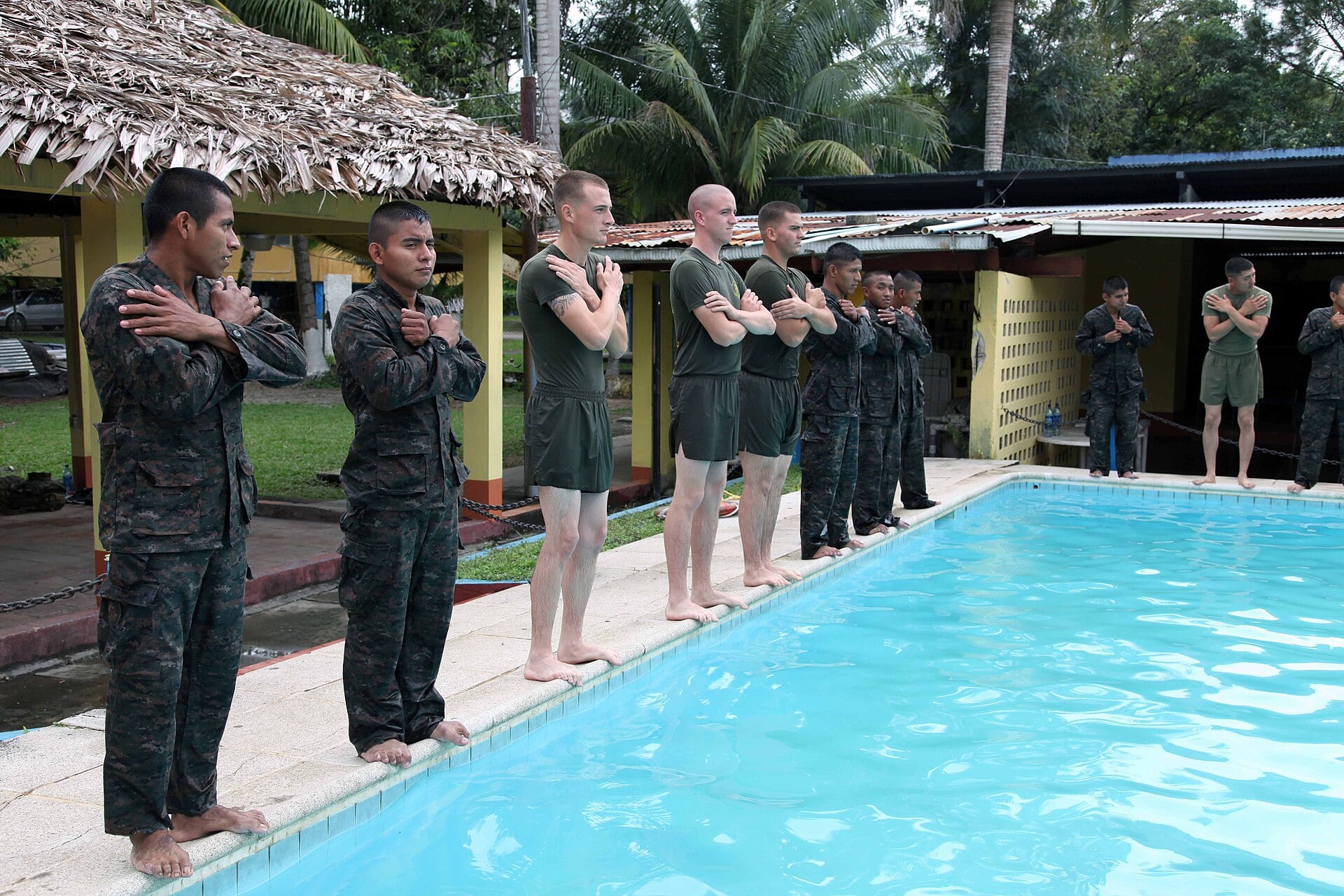
Joint training does take place, and the photo above shows US Marines drilling with Guatemalan naval infantry in 2011. A fuller map of security ties is in our guide to Guatemala geopolitics.
What the US Trade Agreement Asks of Guatemala
The deal is built on reciprocity, so Guatemala accepts duties and rules in return for a lower tariff. It must either drop import licensing or make it automatic for US goods, and accept US-standard products without extra testing.
It also bars digital services taxes that discriminate against US companies. Guatemala must protect labour rights and the environment, and recognise US decisions to block goods made with forced labour.
Rules on Third Countries
Article 5.1 says that when the United States restricts imports from a third country on security grounds, Guatemala must adopt equivalent measures. Article 5.2 asks Guatemala to cooperate on export controls and to restrict dealings with people on US sanctions and trade-blacklist lists.
Article 5.4 lets Washington end the deal and restore the full tariff if Guatemala signs a trade pact with a non-market economy. The text names no country, so its limits shape any offer from China.
Ports, Phones and Procurement
Guatemalan ports and logistics networks must use digital platforms that protect data from other foreign governments. The country must also buy communications and scanning equipment only from suppliers that do not compromise 5G, satellite or undersea-cable security.
Government buying is narrowed as well, because Guatemala must restrict suppliers from countries without a free-trade deal in central-level contracts, with exceptions. The deal takes effect 30 days after both sides notify each other in writing that their legal steps are complete.
The Lenders, the World Bank and Development Banks
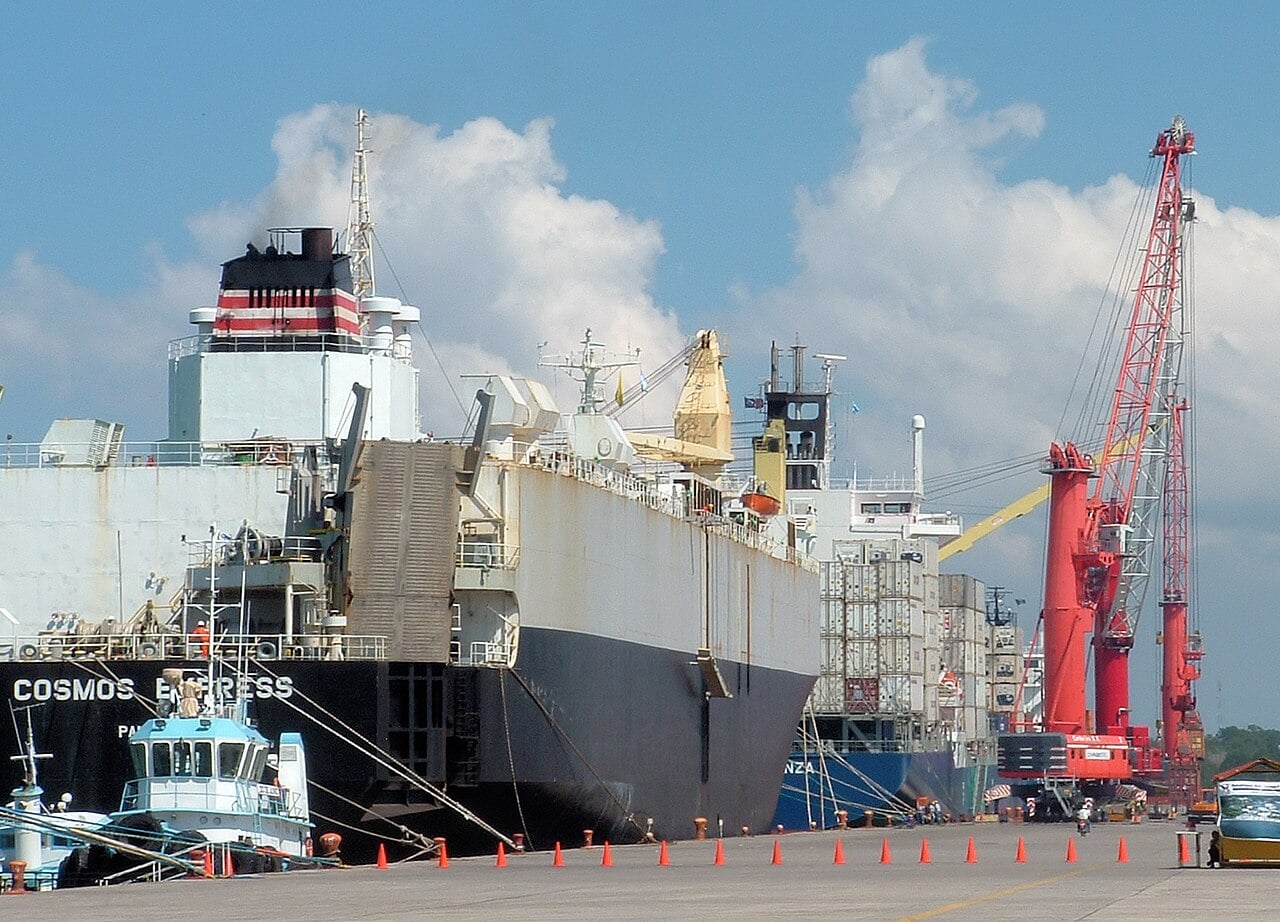
The World Bank is a major foreign lender, and its list of active Guatemala projects shows what it funds. On Tuesday, 8 September 2026 its board approved a US$250 million Civil Aviation Recovery Program through its lending arm for middle-income countries.
The money repairs runways, drainage and towers at La Aurora airport, Mundo Maya airport in Petén and three other airfields. The bank says tourism supplies about 5% of Guatemala’s output and supports more than 500,000 jobs.
Other Lenders in the Region
The Inter-American Development Bank and the Central American Bank for Economic Integration are regional lenders. The International Monetary Fund is the global crisis lender, and Guatemala is a member.
What Else the World Bank Is Funding
The bank’s active list is longer than the airport programme. On Tuesday, 28 July 2026 its board approved a US$250 million Energy Transition Support Project.
In September 2025 it approved a US$430 million disaster-risk policy loan with a catastrophe option for fast payouts. The list also holds a rural infrastructure and mobility programme from June 2025 and a US$50 million public-spending project.
Policy loans give budget money in return for reforms, while project loans pay for defined work. For how the state spends its money and who runs the central bank, see our guide to the Guatemala economy.
Foreign Companies and Investors in Guatemala
One large foreign company is Millicom, a telecom group that files its annual report with the US Securities and Exchange Commission. Its Guatemalan subsidiary, Comunicaciones Celulares or Comcel, runs the Tigo mobile and internet brand.
Guatemala brought Millicom US$1.67 billion of revenue in 2025, up 4.2% on 2024 and 26% of the group’s total. That is the largest share of any country in its report.
In November 2025 Comcel signed a two-year deferred prosecution agreement with the US Justice Department. Under such a deal, prosecutors hold back charges while the company meets set conditions.
The case concerned past improper payments to Guatemalan officials. Comcel paid a US$60 million fine and gave up US$58.2 million in benefits.
Visitors and Other Money
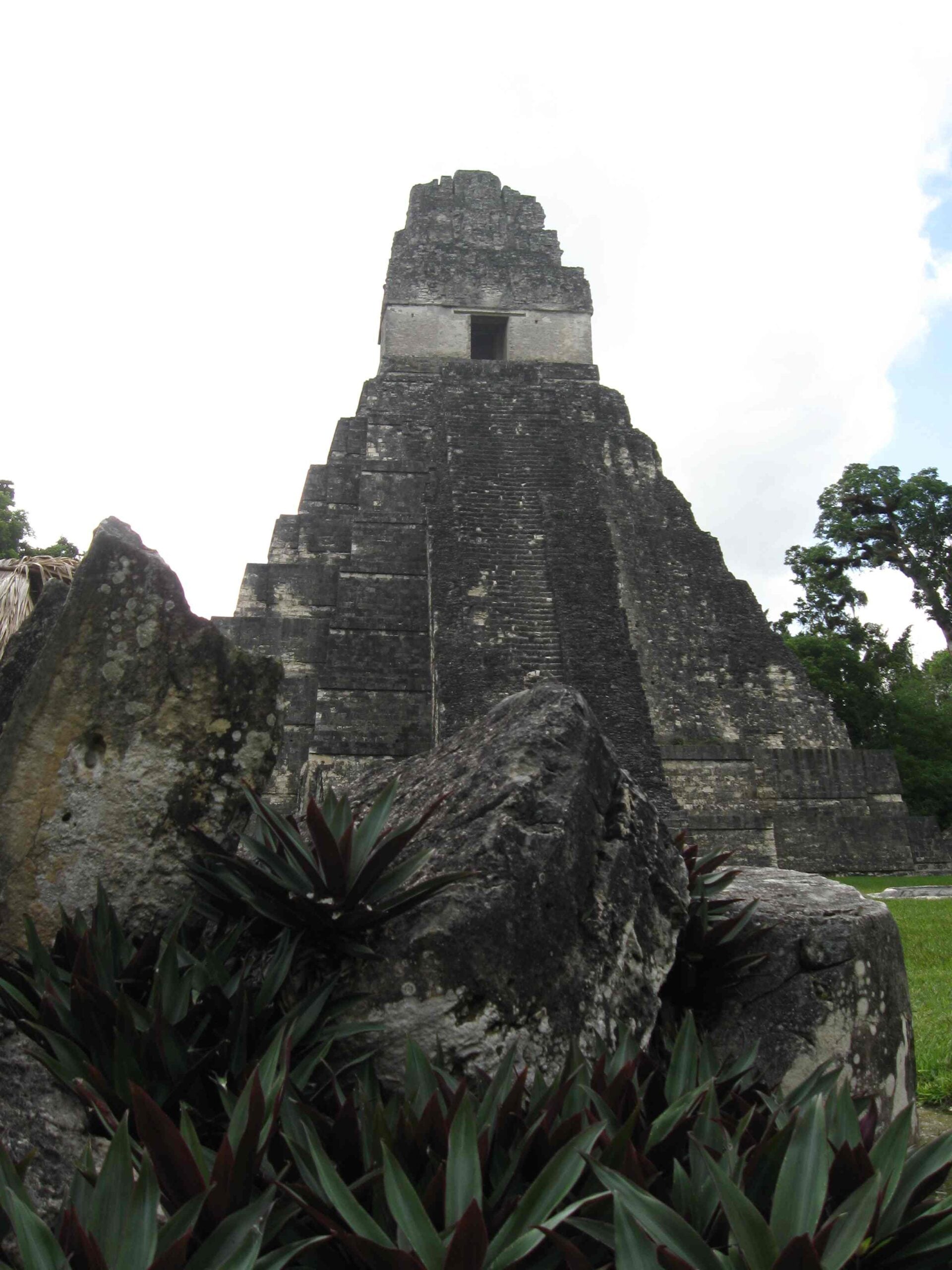
Tourists bring foreign dollars to places like the Maya site of Tikal in the north. The World Bank puts tourism at about 5% of the economy.
Taiwan, China and the Diplomatic Map
Guatemala keeps formal diplomatic ties with Taiwan, the self-governing island that Beijing claims as its own territory. Taiwan’s foreign ministry lists an embassy of the Republic of China (Taiwan) in Guatemala.
The US trade text names no country, but its limits on deals with non-market economies set the boundary for any Chinese offer. Article 5.4 lets Washington cancel the deal if Guatemala signs a new free-trade pact with such an economy.
Europe and the Aid Donors
The European Union keeps a delegation in Guatemala City, which acts as its embassy. It runs development grants and a project called CRECER, whose first-year progress report is on its website.
The delegation also lists a grant procedure for applicants. United Nations agencies and foreign charities work in the country too, but their budgets are not known.
The Diaspora, the Biggest Foreign Cheque
The largest foreign source of dollars is Guatemalans themselves, working abroad and sending money home. The central bank counts net personal remittances of US$25.43 billion in 2025 and US$12.90 billion in early 2026, both preliminary.
That is about 21% of the 2025 economy, by our calculation from the World Bank output figure. It exceeds new foreign investment many times over, so a change in US immigration rules reaches Guatemalan households quickly.
What It Means for US Readers
US exporters and importers should watch the date the trade agreement takes effect, and the 10% cap on extra tariffs. Guatemalan goods that qualify under CAFTA-DR are exempt from the extra rate.
Investors in telecom, ports and logistics should note the security clauses on 5G suppliers and port data. They should also note that Millicom’s Guatemalan unit is operating under a US Justice Department agreement until it ends.
Families with relatives in Guatemala should know that remittances, not loans or investment, are the biggest foreign link. Travellers and business visitors can find the wider picture in our Guatemala hub and our Guatemala explained guide.
What Is Not Known
It is not yet clear whether both governments have exchanged the written notices that start the trade agreement’s 30-day clock. The date it takes effect is therefore not known.
Lending in 2026 from the Inter-American Development Bank, the regional development bank and the International Monetary Fund is not known. How much US aid and charity money reaches the country this year is also unknown.
How the 2027 elections would change policy towards Taiwan or the US deal is not known; see our guide to Guatemala politics. Whether Guatemala will sign any trade pact that triggers Article 5.4 is also open.
Frequently Asked Questions
Who are the main foreign powers in Guatemala?
The United States leads through its trade deal and security ties. Taiwan, the European Union and the World Bank also play roles.
What does the US trade agreement with Guatemala do?
Signed on 30 January 2026, it caps the extra US tariff on most other Guatemalan goods at 10%. In return Guatemala accepts US standards, export-control cooperation and limits on dealings with non-market economies.
How much foreign investment does Guatemala get?
The central bank counts US$1.90 billion of direct foreign investment in 2025 and US$1.03 billion in the first half of 2026. Both are preliminary figures.
Does China invest in Guatemala?
Guatemala keeps diplomatic ties with Taiwan, not Beijing. The US trade text limits deals with non-market economies without naming China.
What does the World Bank fund in Guatemala?
Its board approved a US$250 million airport programme on 8 September 2026 and a US$250 million energy project on 28 July 2026. Its list also covers nutrition and disaster-risk work.
How much money do Guatemalans abroad send home?
Net personal remittances were US$25.43 billion in 2025, about 21% of the economy. They reached US$12.90 billion in the first half of 2026.
Sources: World Bank, Guatemala indicators (population, output, remittances), 2026-10-29; Bank of Guatemala, quarterly balance of payments 2008 onward, 2026-10-29; US Trade Representative, Agreement on Reciprocal Trade between the United States and Guatemala (signed 30 January 2026), 2026-01-30; US Trade Representative, agreements on reciprocal trade, 2026-10-29; World Bank, Civil Aviation Recovery Program for Guatemala, board approval, 2026-09-08; World Bank, projects database, active projects in Guatemala, 2026-10-29; Millicom International Cellular, annual report on Form 20-F for 2025, 2026-03-24; Taiwan Ministry of Foreign Affairs, diplomatic allies and missions, 2026-10-29; European Union Delegation to Guatemala, European External Action Service, 2026-10-29.
This article was produced by The Rio Times’ automated newsroom system. How we use AI · Report an error · Editorial responsibility: Matthias Camenzind, Editor-in-Chief
Expat Guide to Guatemala
What The Rio Times publishes for foreigners who live in or move to Guatemala.
Start here
- Best Places to Live in Guatemala for Expats
- Guatemala’s Fuel Tax Cut Sits on the President’s Desk: What Expats Need to Know
- Moving to Guatemala 2026 — Residency, Costs and Your First Year Explained
- Investing in Guatemala as a Foreigner in 2026: Two Taxes Just Went
Coming up in Guatemala
- Giant Kite Festival in Sumpango and Santiago on 1 November 1 Nov
- Martin Garrix in Guatemala: Explanada 5 Show on 13 November, Tickets from Q790 13 Nov
Understand Guatemala
Brazil runoff date: Sunday, October 25, poll closing times and when results start · Brazil runoff polls: Flávio 51%, Lula 49% · Kalshi and Polymarket odds
Rotate for Best Experience
This report is optimized for landscape viewing. Rotate your phone for the full experience.
You've reached your free article limit
Subscribe to The Rio Times for unlimited access to our news, expat and nomad guides and market intelligence on Latin America and Africa.
Keep reading for free
Your first article was on us. Register with your email address to read 6 free articles every month. You will also receive The LatAm Brief: what moved in Latin American markets, politics and expat life, every weekday morning.
Expat Guide to Guatemala
What The Rio Times publishes for foreigners who live in or move to Guatemala.
Start here
- Best Places to Live in Guatemala for Expats
- Guatemala’s Fuel Tax Cut Sits on the President’s Desk: What Expats Need to Know
- Moving to Guatemala 2026 — Residency, Costs and Your First Year Explained
- Investing in Guatemala as a Foreigner in 2026: Two Taxes Just Went
Coming up in Guatemala
- Giant Kite Festival in Sumpango and Santiago on 1 November 1 Nov
- Martin Garrix in Guatemala: Explanada 5 Show on 13 November, Tickets from Q790 13 Nov
Understand Guatemala