Who Runs Guatemala’s Economy, the Key Players in 2026

GUATEMALA · ECONOMY
Key Facts
- —What is happening Guatemala’s US$123.3 billion economy runs through a few banks, exporters and family firms, while the central bank is run by an acting president after a court suspended its new chair on 8 October 2026.
- —Why it matters Remittances of US$25.53 billion in 2025 exceeded all goods exports of US$15.59 billion, so workers abroad are the largest single source of dollars for the country.
- —The numbers Coffee, clothing, bananas, sugar and edible oils made up about 36% of 2025 goods exports, reserves stood at US$32.97 billion on 21 October 2026, and the policy rate is 3.50%.
- —Who is who Bernardo Arévalo is president, Gabriela García runs the Economy Ministry, Jonathan Menkos is finance minister again, José Alfredo Blanco Valdés is acting central bank head, and Banrural and Millicom’s Tigo are major firms.
- —What to watch Congress is reviewing the Q192 billion 2027 budget, a final court ruling on the central bank chair is awaited, and no start date was found for the January US trade agreement.
- —What it means for you US buyers took US$5.17 billion of Guatemalan goods in 2025 and US firms sold US$9.96 billion there, so tariffs matter for coffee, clothing and sugar prices.
The Guatemala economy answers to a handful of ministers, banks, exporters and family firms. Here is who they are as of October 2026.
The Guatemala economy, worth US$123.3 billion in 2025, depends on a few public officials, banks, exporters and family firms. Remittances, coffee, clothing and sugar earn most of its dollars as of October 2026.
For US readers, this guide names who holds the money, who sets the rules and who sells to the United States. It uses 2025 data and the latest 2026 releases.
The Guatemala Economy in Numbers as of October 2026
The World Bank counts 18,687,881 people and a US$123.3 billion economy for 2025, or US$6,598 per person. World Bank real growth was 4.3% in 2025, up from 3.7%; Banrural’s report cites the central bank at 4.1%.
Inflation ran at 4.69% in the year to September 2026, the Bank of Guatemala says. Its Monetary Board held the policy rate at 3.50% on 23 September 2026.
International reserves stood at US$32.97 billion on 21 October 2026, the central bank’s daily table shows. By Rio Times’ calculation that equals about 27% of 2025 output, a large buffer against a sudden fall in dollar inflows.
Remittances reached US$25.53 billion in 2025, about 21% of output on Rio Times’ calculation, and US$20.02 billion in January to September 2026. The nine-month total is 5.5% above the same months of 2025, the central bank’s monthly table shows.
By Rio Times’ calculation, those transfers exceed the US$15.59 billion of goods exported in 2025 by about 64%. Workers abroad therefore outearn every goods export combined.
Readers wanting a country profile can start with Guatemala Explained 2026. More coverage sits on the Guatemala hub and in an earlier piece on IMF growth data.

The State, the Ministries and the Central Bank
President Bernardo Arévalo, in office since January 2024, appoints the finance minister and the head of the central bank. Congress approves the budget, and the Constitutional Court suspended the 2026 budget law on 30 December 2025.
Finance Minister Jonathan Menkos was named central bank president on 29 September and sworn in on 1 October 2026. On 8 October the Constitutional Court granted a provisional amparo suspending it, after challenges including CACIF’s, Emisoras Unidas reported.
Menkos resigned from the bank and was sworn back as finance minister on 15 October, Emisoras Unidas reported. The bank’s website lists vice-president José Alfredo Blanco Valdés as acting president, on an undated page seen on 23 October.
The Monetary Board, which steers the Bank of Guatemala, held the policy rate under then-president Álvaro González Ricci on 23 September 2026. The government named Menkos his successor six days later.
Juan Carlos Catalán Herrera became head of the Superintendency of Banks, the bank regulator, on 1 October 2026. He was sworn in alongside the new central bank leadership.
Gabriela García leads the Economy Ministry, which negotiated the reciprocal trade agreement with the United States signed on 30 January 2026. She said 72.4% of Guatemalan exports would face zero US tariff under it.
Guatemala operated on the 2025 budget of Q154.8 billion (about US$20.2 billion) after the court suspended the 2026 law, Revista E&N reported. Congress added Q9.3 billion (about US$1.2 billion) on 28 January 2026, Forbes Centroamérica reported.
Rio Times’ own sum of those two figures is Q164.2 billion (about US$21.5 billion at Q7.65 per US$1). The 2027 plan, however, implies a larger 2026 base.
The government proposed a 2027 budget of Q192.0 billion (about US$25.1 billion) on 2 September 2026, Emisoras Unidas reported. Revista E&N says that is 13.8% above 2026, implying a base near Q168.8 billion by Rio Times’ arithmetic.
Congress opened public hearings on the 2027 proposal on 6 October 2026, AGN reported. The final 2026 spending total remains unconfirmed.
The Banks, Where the Money Sits
Banrural, a mixed public-private bank, held Q143.2 billion (about US$18.7 billion) in assets at the end of 2025, its annual report says. That made it the second-largest bank in the country, with 22.3% of system assets.
The State holds 30% of Banrural, cooperatives 20% and Indigenous and farmer groups 20%, with about 13,500 shareholders in all. Chairman Lizardo Sosa and general manager Juan Luis Fonseca Chour lead it.
Banrural earned Q3.36 billion (about US$439 million) in 2025, up 11.8%, and serves more than 4 million customers. It says it holds more than half of savings deposits and productive loans in the interior of the country.
Banco Industrial, the largest bank in Guatemala, held US$20.88 billion in assets at the end of 2024, Revista E&N’s regional ranking shows. That also made it the largest in Central America, ahead of Banrural’s US$15.78 billion.
Banco G&T Continental was the third Guatemalan bank in that ranking, with US$8.91 billion at the end of 2024. Banking-system assets grew 12.3% in 2025, Banrural’s report says.
The Export Sectors and Who Controls Them
Guatemala exported US$15.59 billion of goods in 2025, the Bank of Guatemala’s trade table shows. Clothing led at US$1.54 billion, ahead of coffee at US$1.31 billion.
Bananas earned US$1.06 billion, sugar US$937 million and edible fats and oils US$824 million in 2025. Those five lines made up about 36% of all goods exports.
In January to August 2026, coffee moved into first place with US$1.27 billion, up 8.0% on a year earlier. Clothing followed at US$1.11 billion, up 5.2%.
Coffee’s average export price rose 59% in 2025 to US$7.66 per kilogram. It eased 5.6% to US$7.17 in the first eight months of 2026.
Anacafé, the national coffee association, runs a coffee research centre, Cedicafé, and export paperwork services, its website shows. It also publishes coffee statistics for Guatemala.
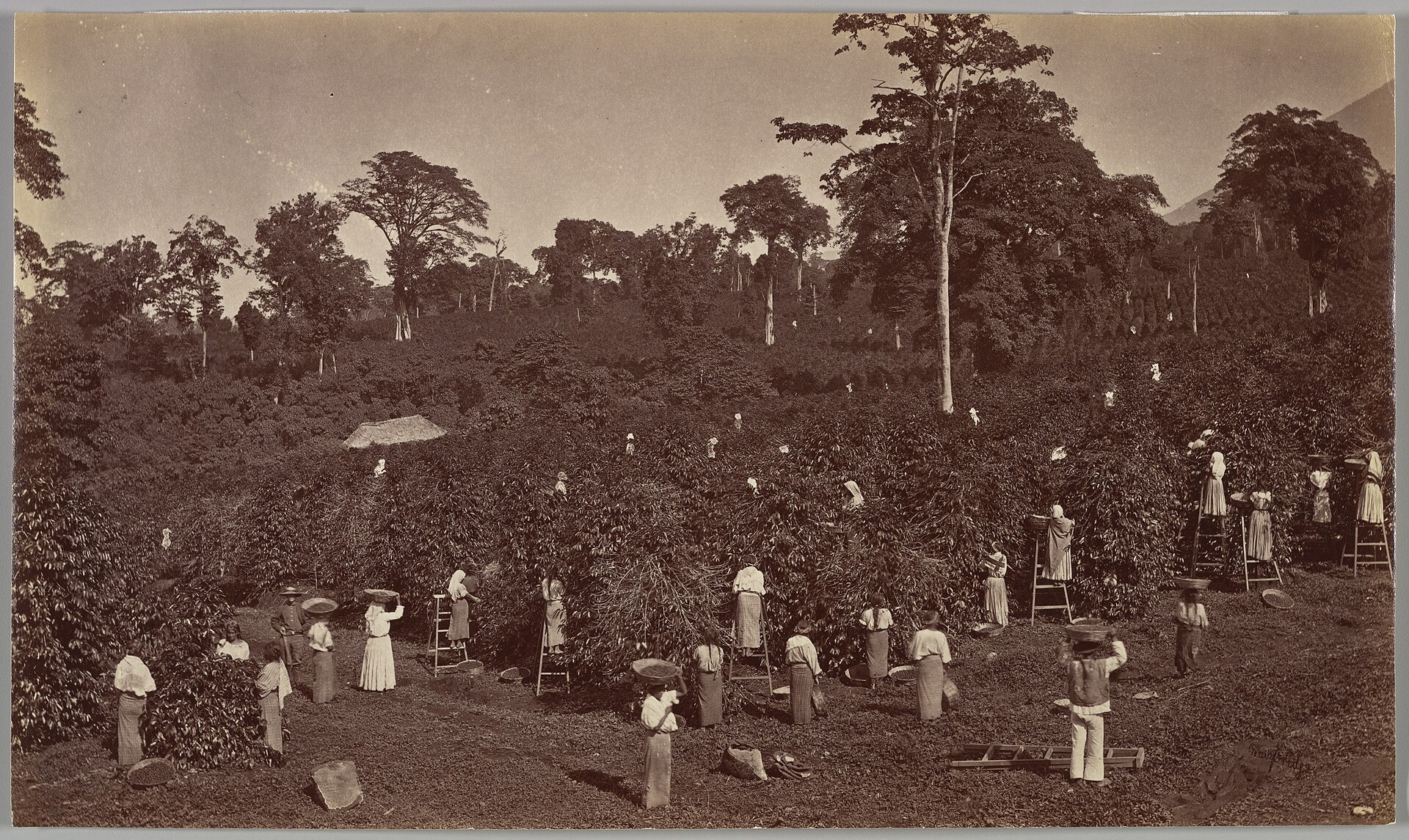
Over January to August 2026, edible fats and oils jumped 48.8% to US$700 million, while sugar fell 16.8% to US$622 million. Total goods exports rose 6.2% to US$11.41 billion.
Asazgua, the sugar mills’ association, says the 2025-26 harvest reached 61.2 million quintals (2.81 million tonnes), up 11%. Prensa Libre reported this on 5 August 2026.
Sugar earned US$937.2 million abroad in 2025, and about 12% of the tonnage went to the United States, Prensa Libre reported. Asazgua said two US quotas covered about half of its US sales in 2025.
Asazgua says the other half paid a 115% tariff, a 105% duty plus a new 10% Section 301 trade charge. It was still checking whether sugar under the CAFTA-DR quota owes the extra 10%.
The US sanctioned Solway Group’s two Guatemalan nickel units on 18 November 2022. Solway says they left the list on 17 January 2024.
Mongabay Latam reported in July 2026 that the Fénix nickel mine restarted. Rio Times could not open that page, so the restart is unconfirmed.
Big Companies, Families and Foreign Owners
Cementos Progreso was founded in 1899 by Carlos F. Novella. Revista E&N said in 2021 that the Novella family has stayed involved across several generations, though it gave no ownership shares.
Pantaleón, founded in 1849 on the south coast, was Guatemala’s second-largest sugar producer, IDB Invest said in January 2022. The group then operated in six countries and employed over 18,400 people at harvest.
Nasdaq-listed Millicom owns 100% of Comcel, which runs Tigo in Guatemala, after buying the remaining 45% on 12 November 2021. Guatemala brought Millicom US$1.67 billion in revenue in 2025, 26% of group revenue by segment.
Millicom says Tigo had 11.7 million mobile customers at the end of 2025 and leads mobile and broadband in the country. It also served 698,000 fixed customer relationships.
In November 2025 Comcel signed a two-year deferred prosecution agreement with the US Justice Department over past improper payments to Guatemalan officials. It paid a US$60 million fine and forfeited US$58.2 million, Millicom’s annual filing says.
CACIF, the Coordinating Committee of Agricultural, Commercial, Industrial and Financial Associations, first met on 16 January 1957, its history page says. Its homepage lists a new presidency on 13 April 2026.
What It Means for US Readers
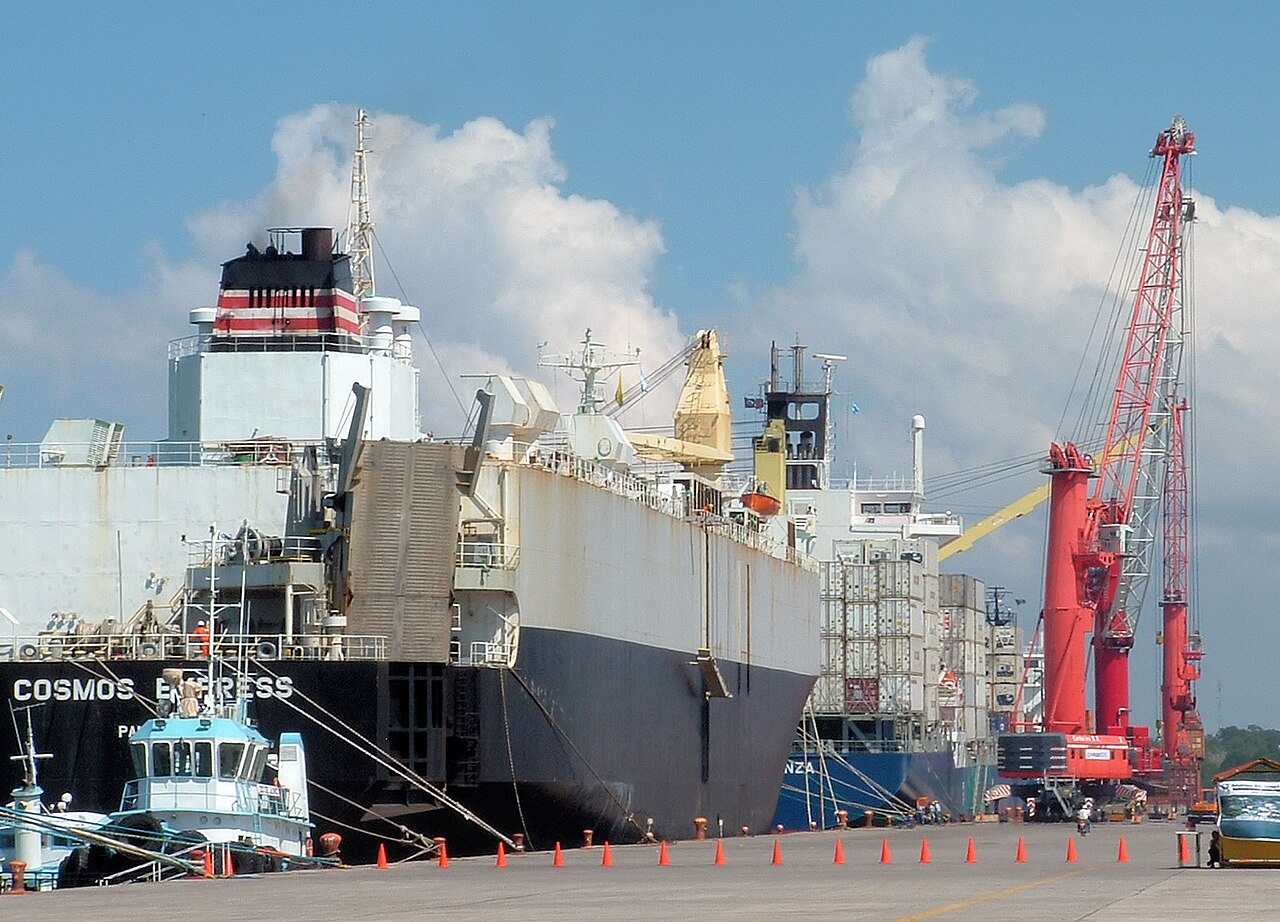
US customs data show US$5.17 billion of imports from Guatemala in 2025, while US exports to it were US$9.96 billion. That left a US surplus of US$4.79 billion, and US exports in January to August 2026 were US$7.27 billion.
Under the trade agreement signed on 30 January 2026, the Economy Ministry says 72.4% of exports face zero US tariff. The minister said on 2 February the rest, mainly farm goods, face 10%; the ministry repeated the 72.4% on 24 July.
Coffee drinkers and sugar users feel Guatemalan prices directly. Falling coffee prices in 2026 and quota rules on sugar can change what US importers pay.
Investors in Millicom hold a company whose Guatemalan unit signed a US deferred prosecution agreement over past improper payments. Money sent home from abroad equals about one fifth of Guatemalan output, as earlier remittance coverage shows.
What Is Not Known
It is not known who will permanently chair the Bank of Guatemala and its Monetary Board. No final ruling on the court’s 8 October provisional order was found.
The bank regulator’s website could not be opened, so no 2026 bank ranking was read. Who owns Banco Industrial and Banco G&T Continental was not confirmed.
No start date for the US trade agreement was confirmed, and the final 2026 spending total was not found. Whether any court challenge to the January 2026 budget expansion succeeded was not confirmed.
The national stock exchange site could not be reached, so listed companies were not checked. Ownership shares of Cementos Progreso and Pantaleón, and the Fénix nickel mine restart, are unconfirmed.
Frequently Asked Questions
How big is the Guatemala economy?
The World Bank puts Guatemala’s output at US$123.3 billion in 2025, or US$6,598 per person. The World Bank puts real growth at 4.3%.
What does Guatemala export?
Clothing, coffee, bananas, sugar and edible oils were the top five goods in 2025, together about 36% of US$15.59 billion. In January to August 2026 coffee led at US$1.27 billion.
Who is Guatemala’s finance minister?
Jonathan Menkos was sworn back as finance minister on 15 October 2026. He had briefly been named central bank president.
How important are remittances to Guatemala?
Remittances were US$25.53 billion in 2025, about 21% of output. They reached US$20.02 billion in January to September 2026.
What is Banrural?
Banrural is a mixed public-private bank, 30% State-owned, with Q143.2 billion (about US$18.7 billion) in assets at the end of 2025. It is the second-largest bank.
Who owns Tigo in Guatemala?
Millicom, a Nasdaq-listed group, owns 100% of Comcel, which operates Tigo in Guatemala. It bought the last 45% in November 2021.
What is Guatemala’s interest rate?
The Monetary Board held the policy rate at 3.50% on 23 September 2026. Inflation was 4.69% in the year to September 2026.
Sources: World Bank API, Guatemala indicators (updated 8 October 2026); Bank of Guatemala, inflation and policy rate; Bank of Guatemala, daily reserves; Bank of Guatemala, remittances; Bank of Guatemala, exports January to August 2026; Bank of Guatemala, exports 2025; Banrural, Annual Report 2025; Millicom, Form 20-F for 2025; US Census Bureau, trade with Guatemala; Guatemala Economy Ministry, authorities; Emisoras Unidas, court suspends Menkos appointment, 8 October 2026; Emisoras Unidas, Menkos sworn as finance minister, 15 October 2026; Bank of Guatemala, Monetary Board members; Emisoras Unidas, 2027 budget proposal, 2 September 2026; Revista E&N, 2027 budget, 3 September 2026; AGN, 2027 budget hearings, 6 October 2026; AGN, tariff conditions unchanged, 24 July 2026; AGN, Menkos returns to Finance, 15 October 2026; AGN, new Banguat and bank regulator authorities, 1 October 2026; AGN, 72.4% of exports at zero tariff, 2 February 2026; Revista E&N, budget suspension, 7 January 2026; Forbes Centroamérica, budget expansion, 28 January 2026; Prensa Libre, Asazgua sugar figures, 5 August 2026; Revista E&N, bank ranking, 7 May 2025; Revista E&N, Progreso, 4 January 2021; IDB Invest, Pantaleón, 12 January 2022; Solway Group statement, January 2024; Mongabay Latam, July 2026; CACIF; Anacafé; exchange rate GTQ 7.645 per US$1 from open.er-api.com, 23 October 2026 (all accessed 23 October 2026).
This article was produced by The Rio Times’ automated newsroom system. How we use AI · Report an error · Editorial responsibility: Matthias Camenzind, Editor-in-Chief
Expat Guide to Guatemala
What The Rio Times publishes for foreigners who live in or move to Guatemala.
Start here
- Best Places to Live in Guatemala for Expats
- Guatemala’s Fuel Tax Cut Sits on the President’s Desk: What Expats Need to Know
- Moving to Guatemala 2026 — Residency, Costs and Your First Year Explained
- Investing in Guatemala as a Foreigner in 2026: Two Taxes Just Went
Coming up in Guatemala
- Giant Kite Festival in Sumpango and Santiago on 1 November 1 Nov
- Martin Garrix in Guatemala: Explanada 5 Show on 13 November, Tickets from Q790 13 Nov
Understand Guatemala