
GUIDES · GUATEMALA
Key Facts
- —The country Guatemala is Central America’s most populous country, with 18.7 million people and a US$123.3 billion economy in 2025. President Bernardo Arévalo has governed since 14 January 2024, and general elections are due in 2027.
- —Main partners In 2025 the United States took 31% of Guatemala’s exports and supplied 28% of its imports. China supplied 21% of imports but bought only 0.3% of exports.
- —Taiwan Guatemala is one of 12 states with formal ties to Taiwan as of October 2026. It has no diplomatic relations with Beijing.
- —Trade deal The US-Guatemala Agreement on Reciprocal Trade was signed on 30 January 2026. About 72.4% of Guatemalan exports to the US enter duty-free as of February 2026.
- —Remittances Money sent home from abroad passed US$25 billion in 2025, equal to 20.8% of Guatemala’s economic output.
- —Belize claim The International Court of Justice has Guatemala’s territorial claim against Belize on its docket, and the court’s case page showed no hearing date as of 17 October 2026.
Guatemala geopolitics explained: where the United States, China, Taiwan, Europe and Russia meet in a country of 18.7 million people. It covers trade, migration, the Taiwan question and the border claim against Belize as of October 2026.
Guatemala geopolitics comes down to one fact: the United States dominates its trade, migration and security agenda. China is its second-largest supplier, and Taiwan is its diplomatic partner, so Washington faces a test of how close it can hold a small, strategic neighbour in 2026.
Where Guatemala Sits in the Contest
Guatemala lies between Mexico and the rest of Central America, with coasts on both the Pacific and the Caribbean. That position makes it a corridor for the goods and migrants moving north.
The World Bank counted 18,687,881 people in 2025 and an economy of about US$123.3 billion, which grew 4.3% that year. Remittances equalled 20.8% of output, so decisions abroad reach Guatemalan households quickly.
United Nations trade statistics show where the money flows. Guatemala reported US$34.6 billion of imports and US$15.6 billion of exports for 2025.
- The United States: US$9.7 billion of imports (28%) and US$4.9 billion of exports (31%) in 2025.
- China: US$7.4 billion of imports (21%) but only US$47 million of exports in 2025.
- Mexico: US$3.4 billion of imports (10%) and US$0.7 billion of exports in 2025.
- El Salvador and Honduras: US$2.1 billion and US$1.8 billion of Guatemalan exports in 2025.
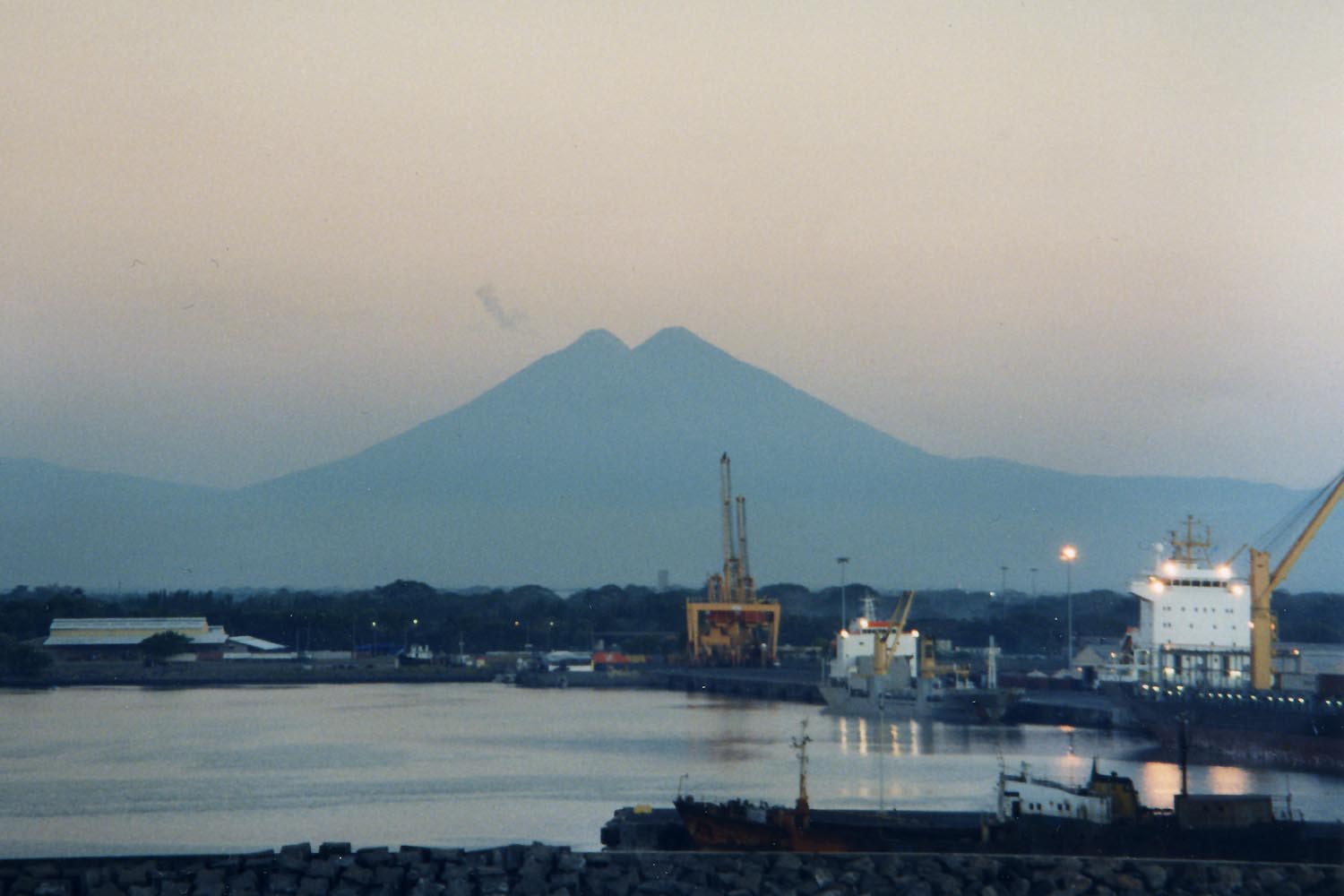
Those numbers explain the politics. Guatemala sells to the United States and its Central American neighbours, and it buys cheap manufactured goods from China.
The United States, Guatemala’s Anchor
Washington is Guatemala’s largest partner by a wide margin. The US Trade Representative said US goods and services exports to Guatemala reached US$12.3 billion in 2024, with two-way trade of almost US$18.7 billion.
The US ran a goods trade surplus of US$4.7 billion with Guatemala that year. Both figures are the US side’s own count for 2024.
The Reciprocal Trade Agreement
Economy Minister Adriana Gabriela García and US Trade Representative Jamieson Greer signed an Agreement on Reciprocal Trade on 30 January 2026. The Ministry of Economy said on 2 February 2026 that 72.4% of Guatemalan exports to the US would enter duty-free.
The text caps any extra US tariff at no more than 10% for goods outside its exemption lists. Listed goods that meet the origin rules of CAFTA-DR, the regional free-trade pact with the United States, are exempt from the extra rate.
The agreement goes beyond tariffs into economic security. Under Article 5.1, if the US restricts imports from a third country over non-market policies, Guatemala must adopt measures with equivalent effect.
Article 5.2 commits Guatemala to cooperate on aligning with US export controls and on restricting dealings with parties on US sanctions lists. Under Article 5.4, Washington may end the deal and reimpose the tariff if Guatemala signs certain new trade pacts with non-market economies.
Guatemala finished its internal approval in March 2026, with President Arévalo signing on 9 March and notification on 13 March. The text says the deal enters into force 30 days after both sides notify each other in writing.
On 23 July 2026 the US Trade Representative took final action on forced-labour tariffs against 60 economies. EY’s summary places Guatemala among 17 economies at the 10% rate rather than 12.5%.
Guatemala’s Ministry of Economy credited Ministerial Agreement 377-2026, which bans imports made with forced labour. The ministry said that rule helped it avoid the higher tier.
Migration and Deportations
On 5 February 2025 Secretary of State Marco Rubio and President Arévalo agreed that Guatemala would take deportees of other nationalities. Arévalo said flights would rise 40%, with the US paying to send third-country nationals home.
Guatemala’s migration institute counted 48,405 Guatemalans deported from the United States in 2025, down from 61,680 in 2024. It logged 532 deportation flights in 2025, of which 509 were commercial and 23 were extraordinary.
Security and Cuba
On 10 February 2026 Guatemala announced a gradual end to Cuba’s medical mission, which counted 412 workers including 333 doctors. Infobae’s Spanish edition linked the decision to US pressure and to visa restrictions on officials tied to such missions.
The US State Department rates Guatemala at Level 3, Reconsider Travel, in an advisory issued on 12 March 2026. It cites crime and, since that update, the risk of terrorism by cartels and gangs.

Taiwan and China, the Recognition Question
Guatemala recognises Taiwan, formally the Republic of China, and not the People’s Republic of China. The ties date to 1934, and Taiwan counted 12 diplomatic partners in October 2026, seven of them in Latin America and the Caribbean.
President Arévalo flew to Taipei on 4 June 2025, his first visit there since taking office. He signed three accords covering investment and supply chains, semiconductors, and a framework for political consultations.
Beijing answered on 6 June 2025. Foreign ministry spokesperson Lin Jian urged Guatemala to take the right decision soon and said 183 countries have relations with China.
Taiwan’s foreign minister, Lin Chia-lung, was received by his Guatemalan counterpart, Carlos Ramiro Martínez, on 1 October 2026. The two held the first round of the political consultations mechanism and marked 92 years of relations.
Lin said Taiwan and its public and private partners had worked on more than 70 projects in Guatemala over three years. They include a planned specialised cancer hospital and an emergency monitoring centre at La Aurora airport.
Guatemala and Taiwan have had a free-trade agreement since 2006, according to the Fundación Andrés Bello. United Nations statistics list Taiwan under Other Asia, where Guatemala reported US$276 million of imports and US$127 million of exports in 2025.
What China Does Instead
China is Guatemala’s second-largest supplier, selling US$7.4 billion of goods in 2025, or 21% of imports. It bought only US$47 million of Guatemalan goods, so the trade is lopsided.
In late May 2024 Chinese authorities held Guatemalan coffee and macadamia shipments without explanation, the Fundación Andrés Bello recorded. Experts read the hold as retaliation, and a business group put the losses at about US$30 million.
The same study says Arévalo rejected Huawei offers over security concerns. Some conservative opposition figures and business elites see China as a counterweight to US pressure, it adds.
EFE reported that on 5 October 2026 the US Embassy in Guatemala said China had pressured deputies of the Central American Parliament, or Parlacen, over meeting Lin. Parlacen is a regional assembly seated in Guatemala City, and the embassy called the pressure coercion and said China’s influence there was malign.
EFE’s report named no deputies and carried no Chinese reply. China maintains that Taiwan is an inalienable part of its territory.
The European Union and Spain
The EU-Central America Association Agreement has fully applied since 1 May 2024, and its trade pillar has applied to Guatemala since December 2013, according to the European Commission. The delegation says the EU is Guatemala’s fifth-largest export destination.
The EU and its member states are Guatemala’s largest development donor. They have given more than 1 billion euros (about US$1.1 billion at the European Central Bank rate of 1.1253 on 16 October 2026) in grants since the Peace Accords.
The EU’s Global Gateway investment offer is described in general terms, with no Guatemala-specific amount. Guatemala reported US$557 million of exports to the Netherlands and US$205 million to Spain in 2025.
Imports tell a similar story. Guatemala reported US$658 million of imports from Germany in 2025.
Russia, India, the Gulf, Turkey and Israel
Russia is a minor trading partner. Guatemala reported US$198 million of imports from Russia and US$2 million of exports in 2025.
On 2 March 2022 Guatemala voted for the United Nations General Assembly resolution condemning Russia’s invasion of Ukraine. The vote was 141 in favour, 5 against and 35 abstentions.
India sold Guatemala US$863 million of goods in 2025 and bought US$34 million. No strategic pact between the two countries appears in the official sources reviewed.
Saudi Arabia and the United Arab Emirates are BRICS members, while Guatemala is neither a member nor a partner, the group’s official list shows. Guatemala reported US$142 million of exports to Saudi Arabia and US$87 million to the UAE in 2025, against imports of US$23 million and US$19 million.
Qatar and Turkey are smaller still. Guatemala reported US$6 million of exports to Qatar and US$26 million to Turkey in 2025.
Israel is the one Middle East partner with political weight. Relations date from 15 May 1948, and Guatemala was the second country to move its embassy to Jerusalem, Guatemala’s news agency says.
Mexico, Belize and Honduras
Mexico is Guatemala’s northern gateway and a large supplier. It sold Guatemala US$3.4 billion of goods in 2025 and bought US$0.7 billion.
The Suchiate River marks the border at Ciudad Tecún Umán, where the bridge to Ciudad Hidalgo carries trade and migrants. Those flows tie Guatemala’s foreign policy to Mexican and US enforcement choices.
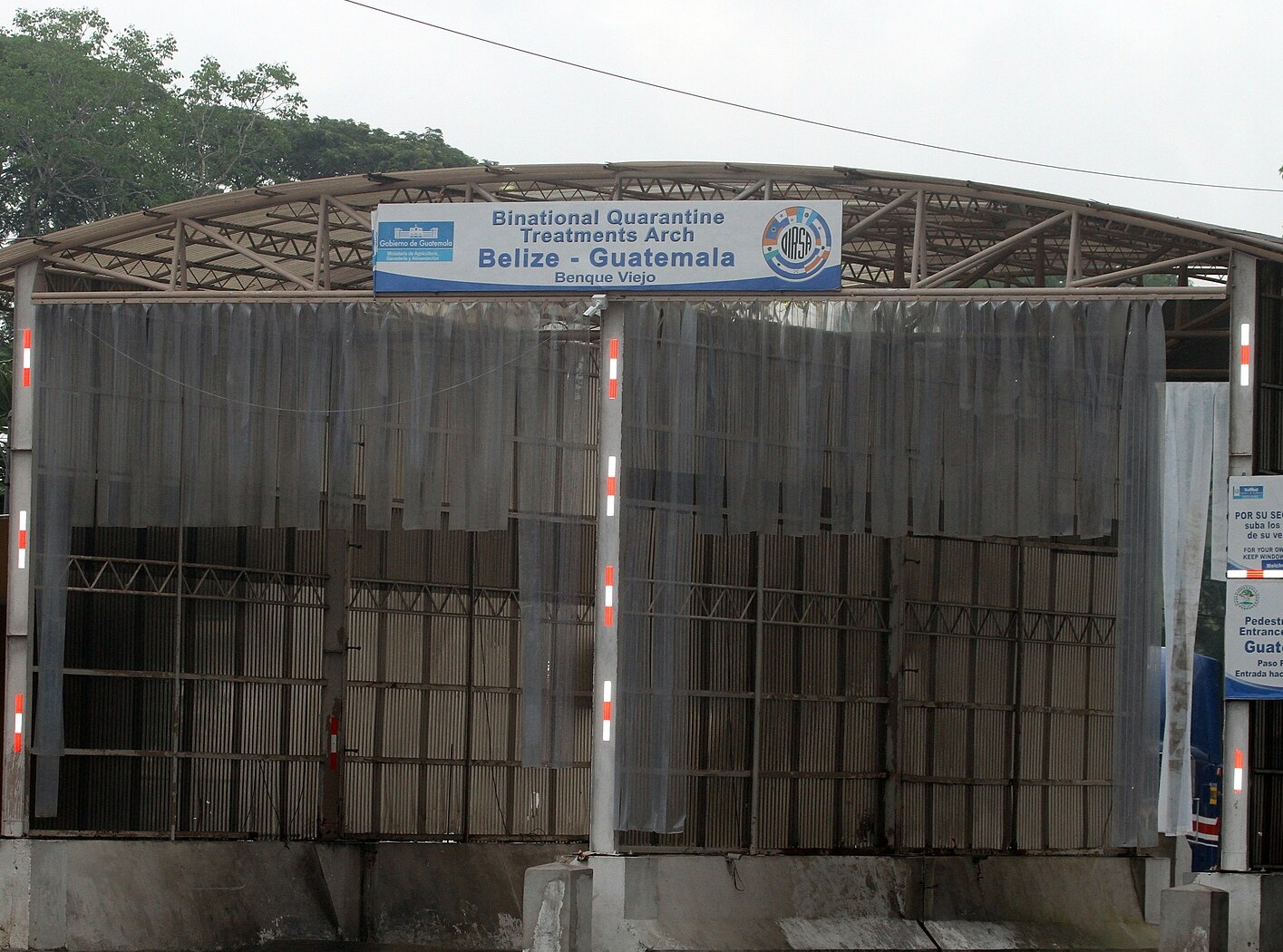
Guatemala’s claim to Belize territory is a long-running open question. The International Court of Justice was seised of it on 12 June 2019, under a Special Agreement signed on 8 December 2008.
The court’s own case page listed no hearing date on 17 October 2026, and its latest listed step is a June 2022 order fixing time-limits for written pleadings. The date of any oral hearings is therefore not confirmed.
A second case involves Honduras. On 19 March 2026 the court allowed Guatemala to join Belize’s dispute with Honduras over the Sapodilla Cayes as a non-party.
The San Pedro Sun reports the intervention is limited to sovereignty over the cayes and fishing rights in nearby waters. The court’s case page shows a time-limit for written statements, extended by an order of 16 April 2026.
What Each Power Wants
- United States: a reliable partner on migration, trade rules and security, and less Chinese influence in Central America.
- China: diplomatic recognition, market access for its goods and an end to Guatemala’s ties with Taiwan.
- Taiwan: to keep one of its few remaining partners, through projects, trade and visits.
- European Union: market access under the Association Agreement, development aid and stable institutions.
- Russia, India, the Gulf and Turkey: modest commercial ties, with no major strategic deal on record.
These aims overlap more than they clash for now. The sharpest contest is between Washington and Beijing over what the trade agreement and the Taiwan question mean in practice.
What It Means for US Readers
US exporters and importers should watch two dates: the agreement’s entry into force and any change to the forced-labour tariff tier. The text lets Washington end the deal if Guatemala signs certain trade pacts with non-market economies.
Travellers face a Level 3 advisory as of 12 March 2026, so the guidance is to reconsider travel and check conditions by region. Families with relatives in Guatemala should note that remittances and deportations both link directly to US policy.
Investors in ports, logistics and apparel should note the US push on economic security clauses and the 2027 elections. A Taiwanese business delegation accompanied the foreign minister in October 2026, which shows its investment push is active.
What Is Not Known
It is not confirmed whether the US has completed its notification, so the date the trade agreement enters into force is unclear. The sources reviewed gave no US-side date.
No official signal shows Guatemala moving toward Beijing, and both governments are on record backing Taiwan as of October 2026. The 2027 elections could change that stance, though no candidate has made it a platform in the sources reviewed.
The nature of the alleged Chinese pressure on Parlacen deputies is not public, and Beijing has not answered in the sources reviewed. The timing of an International Court of Justice judgment on Belize is also unknown, because the court has not published a hearing date.
Connected Coverage
Frequently Asked Questions
Which powers matter most to Guatemala?
The United States is first: it took 31% of Guatemalan exports and supplied 28% of imports in 2025. China is second as a supplier, with 21% of imports, and Taiwan is the diplomatic partner.
Does Guatemala recognise Taiwan or China?
Guatemala recognises Taiwan, with ties dating to 1934, and has no diplomatic relations with Beijing as of October 2026. President Arévalo reaffirmed the link in Taipei in June 2025, and Taiwan’s foreign minister visited on 1 October 2026.
What does the US-Guatemala trade agreement require?
Signed on 30 January 2026, it caps the extra US tariff at no more than 10% for goods outside its exemption lists. It also commits Guatemala to align with US export controls and to act against non-market trade practices.
How much does Guatemala trade with China?
In 2025 Guatemala reported US$7.4 billion of imports from China, or 21% of its total. It sold China only US$47 million of goods, about 0.3% of its exports.
Is Guatemala’s dispute with Belize going to court?
Yes: the International Court of Justice was seised of it on 12 June 2019, and the case remains on its docket. The court’s own case page listed no hearing date on 17 October 2026.
Is Guatemala a member of BRICS?
No: the group’s official list shows neither membership nor partner status for Guatemala. Saudi Arabia and the United Arab Emirates are members, and Guatemala’s trade with both is small.
Sources: USTR, framework fact sheet, November 2025; USTR, US-Guatemala Agreement on Reciprocal Trade, 30 January 2026; USTR, signing release; EY Tax News, USTR final Section 301 action, 24 July 2026; UN Comtrade, Guatemala reporter data 2024 and 2025; World Bank, Guatemala indicators; European Central Bank, euro reference rate 16 October 2026; ICJ, Guatemala/Belize case; ICJ, Sapodilla Cayes case, press release 2026/7; EU delegation to Guatemala; BRICS official site; US State Department, Guatemala travel advisory; AGN, Taiwan foreign minister visit, 1 October 2026; AGN, Guatemala and Israel. Also from Infobae (2 October, 24 July, 11 February 2026), EFE via Infobae (5 October 2026), Prensa Libre (27 September 2026), Emisoras Unidas (2 February 2026, 6 January 2026, 4 March 2022), Revista E&N (13 March 2026), News in America (16 March 2026), Fundación Andrés Bello (16 July 2024), CNA Taiwan (5 June 2025), República (6 June 2025), San Pedro Sun (20 March 2026) and Scripps News (5 February 2025). All accessed 17 October 2026.
This article was produced by The Rio Times’ automated newsroom system. How we use AI · Report an error · Editorial responsibility: Matthias Camenzind, Editor-in-Chief
Expat Guide to Guatemala
What The Rio Times publishes for foreigners who live in or move to Guatemala.
Start here
- Guatemala’s Fuel Tax Cut Sits on the President’s Desk: What Expats Need to Know
- Moving to Guatemala 2026 — Residency, Costs and Your First Year Explained
- Investing in Guatemala as a Foreigner in 2026: Two Taxes Just Went
- Cost of Living Antigua Guatemala 2026: Rent Above the Local Wage
Coming up in Guatemala
- Giant Kite Festival in Sumpango and Santiago on 1 November 1 Nov
- Martin Garrix in Guatemala: Explanada 5 Show on 13 November, Tickets from Q790 13 Nov
Understand Guatemala