EGYPT · GEOPOLITICS
Key Facts
- —The country Egypt, home to about 118 million people (World Bank, 2025), controls the Suez Canal where Africa, Asia and Europe meet.
- —Who decides President Abdel Fattah el-Sisi sets foreign policy. He began a third six-year term in April 2024, which runs until 2030.
- —Why it matters Washington gives Cairo about US$1.3 billion in military aid a year and relies on it as a go-between on Gaza.
- —The money Abu Dhabi’s state fund ADQ committed US$35 billion in 2024, mainly for Ras El Hekma. Qatari Diar plans US$29.7 billion at Alam El Roum.
- —The pressure points Suez Canal revenue reached US$4.67 billion in the year to June 2026, against US$10.2 billion in calendar 2023. The IMF programme ends on 15 December 2026.
- —What it means for you Egypt bought US$9.43 billion of American goods in 2025, and its canal is a shortcut for shipping between Asia and Europe.
- —Still open Whether Egypt seeks a new IMF deal, how long the Hormuz disruption lasts, and whether the Nile dam row with Ethiopia cools.
Egypt geopolitics matters to Americans because Cairo guards the Suez Canal, keeps the peace with Israel and helps broker Gaza ceasefires.
It takes money and partners from everywhere: US military aid, Gulf investment, Chinese factories, a Russian nuclear plant and European loans. This guide explains what each power wants from Cairo, and what Cairo wants back.

The United States: Aid, Gaza and a Trade Surplus
The relationship rests on the Camp David Accords of September 1978 and the Egypt-Israel peace treaty signed on 26 March 1979. A 2022 State Department fact sheet put US aid since 1978 at over US$50 billion military and US$30 billion economic.
Military aid has run at about US$1.3 billion a year since the late 1980s, reports Al-Monitor, a Middle East news site. Congress ties part of it to human rights conditions.
In September 2026 Secretary of State Marco Rubio waived those conditions on US$320 million of the 2025 allocation. An accompanying State Department memo cited Egypt’s “helpful role” since Operation Epic Fury.
Epic Fury is the US military campaign against Iran, launched with Israel in late February 2026.
In Egypt geopolitics, Gaza is where Cairo plays a central role as a mediator. Egypt, Qatar and Turkey co-signed the Trump Declaration backing the Gaza ceasefire with the United States on 13 October 2025.
That day Sisi and President Donald Trump co-chaired a peace summit in the Red Sea resort of Sharm El Sheikh. Ahram Online, Egypt’s state-owned English news site, said it built on a ceasefire signed on 9 October 2025.
During the Iran war, Cairo has also pressed for a return to US-Iran negotiations. Foreign Minister Badr Abdelatty made that case to Iran’s Abbas Araghchi in New York in September 2026, Ahram Online reported.
Trade, Gas and Market Access
Trade runs heavily in America’s favour. The United States sold Egypt US$9.43 billion of goods in 2025 and bought US$2.85 billion, US Census Bureau data show.
US exports reached US$7.26 billion in the first seven months of 2026. In April 2026 America’s Export-Import Bank approved over US$2 billion in insurance for US liquefied natural gas (LNG) sales to Egypt.
Egypt sits outside AGOA, the US trade-preference scheme for sub-Saharan Africa. Instead, goods from Qualifying Industrial Zones enter duty-free if 10.5% of their value is Israeli content, the 2022 fact sheet says.
Gas also ties Egypt to Israel, according to the Israeli business site Calcalist. A US$35 billion supply deal with Israel’s offshore Leviathan field, whose partners include US major Chevron, runs for about ten years.
The Gulf States: Cash, Coastline and Coordination
The Gulf monarchies supply Egypt with cash in large lump sums. In February 2024 ADQ, an Abu Dhabi state investor, agreed to invest US$35 billion, the Abu Dhabi Media Office announced.
Of that, US$24 billion bought development rights to Ras El Hekma, a stretch of Mediterranean coast about 350 kilometres northwest of Cairo. The other US$11 billion converted existing deposits into investments across Egypt, while Egypt keeps 35% of Ras El Hekma.
Qatar followed with Alam El Roum, a coastal development in Matrouh province on the same shore. Qatari Diar, property arm of the Qatar Investment Authority, plans to invest US$29.7 billion under a November 2025 deal, Ahram Online reported.
Saudi Arabia works through politics as much as money. In October 2024 Sisi and Crown Prince Mohammed bin Salman created a Supreme Coordination Council and signed an investment protection pact.
The crown prince returned to Cairo in September 2026, his first visit since the latest regional escalation, Ahram Online reported. Qatar, meanwhile, works beside Egypt as a fellow mediator on Gaza.
In Egypt geopolitics, the Gulf states want a stable Egypt that stays aligned with them. Cairo wants hard currency that arrives fast, on top of the reform-linked loans it takes from the IMF and the EU.
China and Russia: Factories, Towers and a Reactor
President Xi Jinping paid a state visit to Cairo on 2 September 2026, marking 70 years of diplomatic ties. Egypt was the first Arab and African country to establish diplomatic ties with the People’s Republic, China’s foreign ministry noted.
The two leaders agreed a third phase of the China-Egypt TEDA zone, a joint industrial park inside the Suez Canal Economic Zone. It will focus on renewable energy, cars, textiles and chemical fibres, Ahram Online reported.
Trade is lopsided: in the first half of 2026 Egypt imported US$10.4 billion of Chinese goods but exported only US$840.8 million. The figures come from CAPMAS, Egypt’s statistics agency, as reported by Ahram Online.
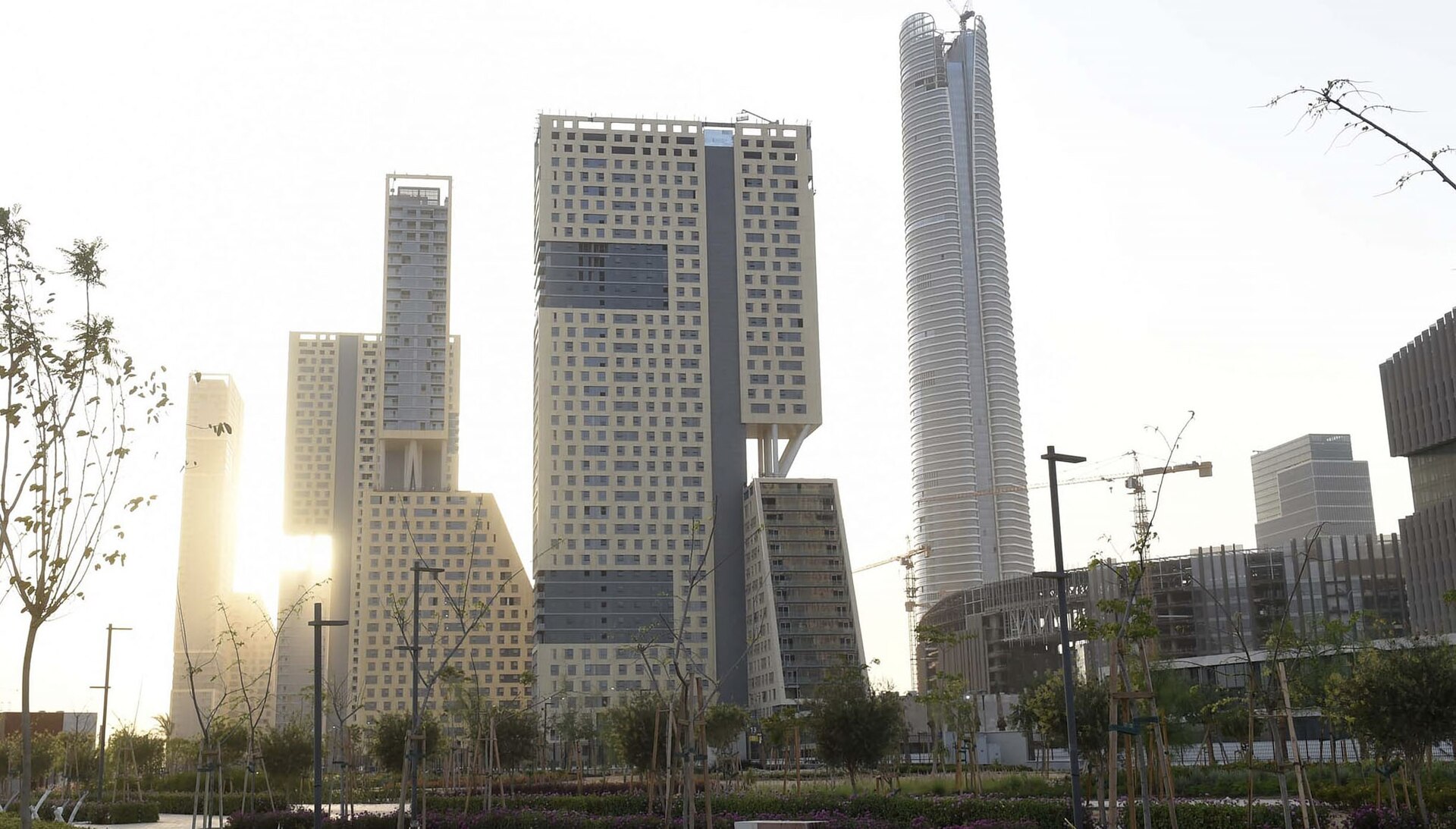
China State Construction Engineering Corporation built the 20-tower business district of Egypt’s New Administrative Capital, China’s state-run Global Times reported. The Xi visit also produced new Suez zone and currency deals.
Russia’s flagship project is El Dabaa, Egypt’s first nuclear power plant, under construction about 320 kilometres northwest of Cairo. Rosatom, Russia’s state nuclear company, is building four VVER-1200 reactors under contracts signed in 2017.
The second reactor vessel went in on 9 July 2026, and the project targets grid connection in 2028, World Nuclear News reported. Rosatom will also supply fuel for the plant’s whole working life.
For Moscow, El Dabaa is a showcase for nuclear exports and a long-term role in Egypt’s power sector. Cairo gains new generating capacity from a Russian-built plant on its coast.
Europe, Turkey and India: Loans, Defence and Trade Targets
The European Union signed a Strategic and Comprehensive Partnership with Egypt in March 2024. It brings €7.4 billion (US$8.3 billion) in grants, loans and guarantees for 2024 to 2027, the EU delegation in Cairo says.
Up to €5 billion (US$5.6 billion) of that is macro-financial assistance, meaning loans tied to reforms. By July 2026 Brussels had paid out €3.5 billion (US$3.9 billion), leaving a final €1.5 billion (US$1.7 billion).
Dollar figures use 0.89 euros to the US dollar on 4 October 2026. The first EU-Egypt summit, in Brussels on 22 October 2025, covered migration, maritime security and Gaza, the Council of the EU says.
Relations with Turkey have warmed into a formal partnership. President Recep Tayyip Erdoğan visited Cairo on 4 February 2026 and signed a military framework agreement.
The presidents agreed to lift yearly trade to US$15 billion from about US$9 billion, Egyptian media reported. Turkey also co-signed the October 2025 Gaza declaration alongside Egypt.
India raised ties with Egypt to a strategic partnership in 2023. In New Delhi on 13 September 2026, Sisi and Prime Minister Narendra Modi discussed lifting trade to US$12 billion, Ahram Online reported.
BRICS and the IMF: A Seat in Both Camps
Egypt joined BRICS, the bloc of emerging economies named after Brazil, Russia, India, China and South Africa, in January 2024. Ethiopia, Iran and the United Arab Emirates joined in the same expansion, India’s Press Information Bureau notes.
Sisi attended the 18th BRICS summit, held in New Delhi on 12 and 13 September 2026. In Egypt geopolitics, membership gives Cairo a forum with China and Russia without breaking security ties to Washington.
At the same time, Egypt leans on the International Monetary Fund (IMF), the Washington-based lender to countries in difficulty. Its loan programme, which dates from December 2022, now totals about US$8.3 billion (SDR 6.1 billion) and expires on 15 December 2026.
On 30 July 2026 the IMF board cleared its seventh review, releasing about US$1.5 billion plus US$272 million from a climate facility. Drawings under both arrangements total about US$7.3 billion.
The Fund wants faster sales of state companies, yet divestment proceeds were only about US$520 million by July 2026. Read more on the programme’s end date and on Egypt’s 2026 economy.
Suez Canal Revenue and the Red Sea and Hormuz Shocks
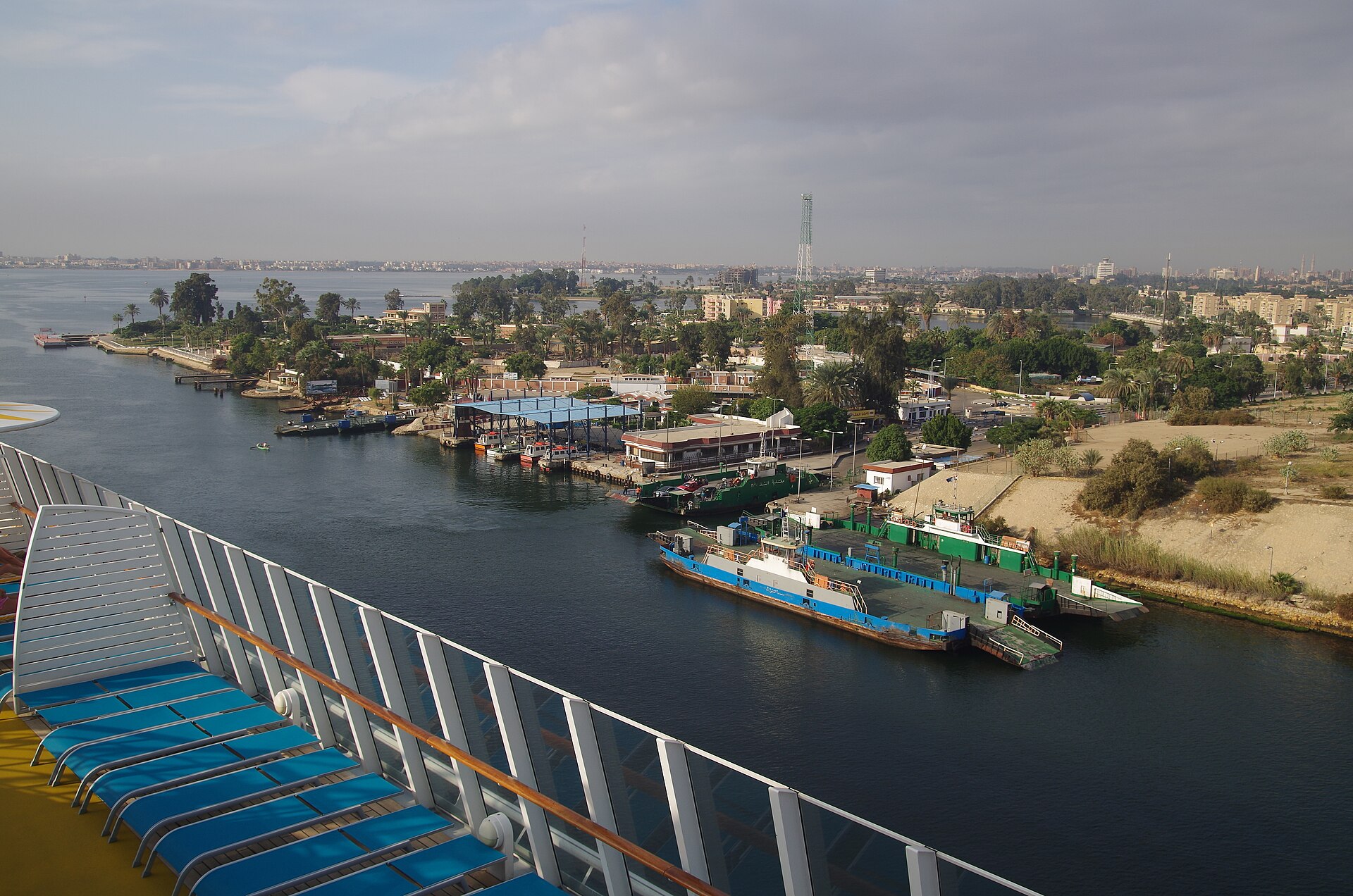
The Suez Canal links the Mediterranean to the Red Sea and pays Egypt in dollars. Revenue fell to about US$4 billion in 2024 from US$10.2 billion in 2023, Ahram Online reported.
Traffic plunged in early 2024 after the Houthis began attacking ships in the southern Red Sea, gCaptain, a shipping news site, reported. The Houthis, a Yemeni rebel movement aligned with Iran, pushed many lines to sail around Africa’s Cape of Good Hope.
Revenue recovered 23% to US$4.67 billion in the year to June 2026, said Osama Rabie, head of the state Suez Canal Authority. Falling insurance premiums drew ships back to the shorter route.
The Iran war then brought extra traffic. As the war disrupted the Strait of Hormuz, the Gulf’s main oil exit, more ships turned to Suez, gCaptain reported.
In August 2026, 1,358 vessels crossed the canal, up 27% on a year earlier, and revenue reached US$567.1 million, Ahram Online reported.
For Egypt geopolitics, the lesson is exposure. Wars far beyond Egypt’s borders can cut or lift a core dollar income within months.
The Nile Dam Dispute and the Horn of Africa
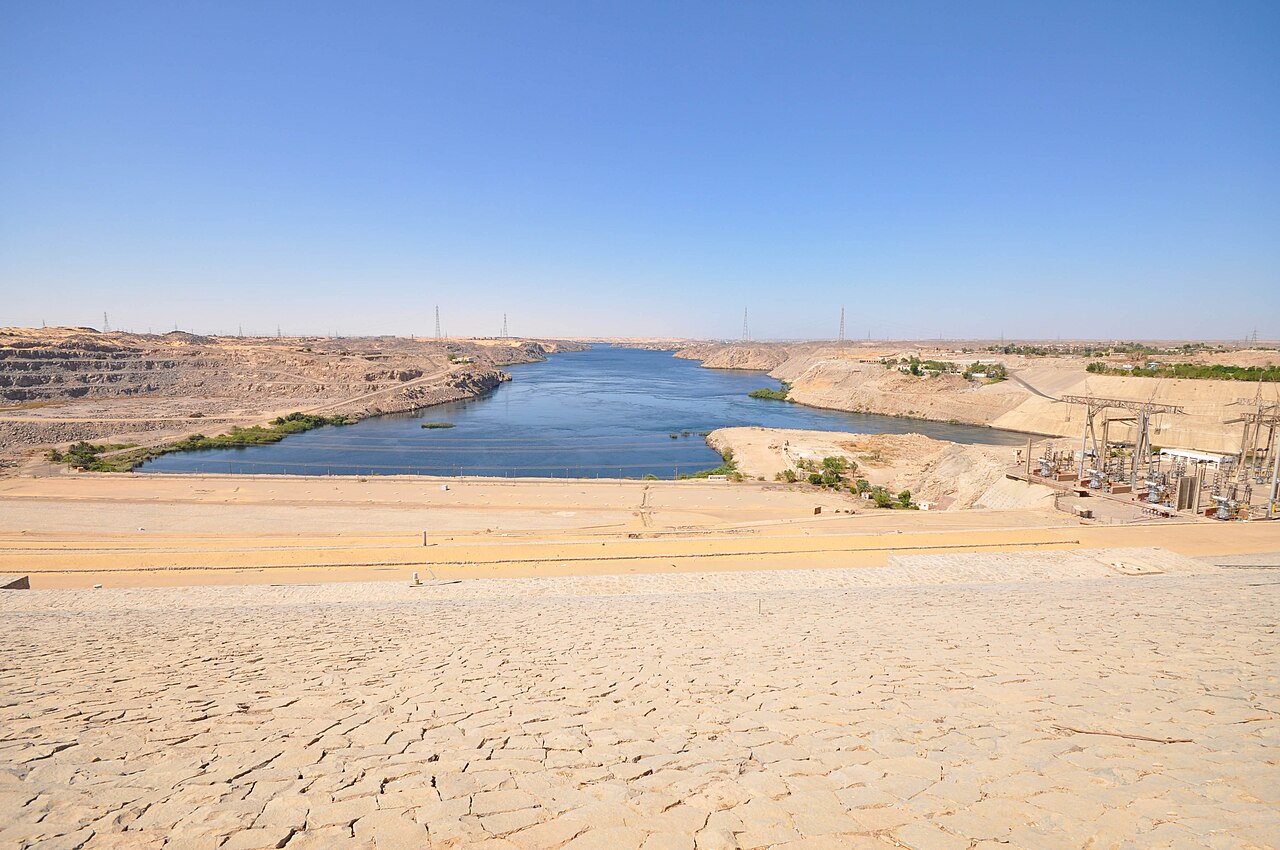
Egypt depends on the Nile for nearly all its fresh water, The National, an Abu Dhabi newspaper, reported. The Blue Nile, on which Ethiopia built its dam, supplies more than 80% of the water reaching Egypt.
Ethiopia inaugurated the Grand Ethiopian Renaissance Dam (GERD), a roughly 5,000-megawatt hydropower dam on the Blue Nile, on 9 September 2025. Egypt told the UN Security Council it would not allow Ethiopia to impose unilateral control over shared water.
Washington has tried before, notes the Washington Institute, a US think tank. Talks hosted by the US Treasury and the World Bank began in 2019, and Ethiopia withdrew in 2020.
The row has widened. In early October 2026 Egypt and Ethiopia each expelled a diplomat of the other, The National reported.
Ethiopia accuses Egypt, Eritrea and Sudan of backing an armed alliance led by the Tigray People’s Liberation Front, a northern Ethiopian party. All three deny it.
On 1 October 2026 the African Union Commission urged Ethiopia, Eritrea and Egypt to “exercise maximum restraint”, the AU said. The Rio Times covered the AU’s call for restraint.
On 4 October 2026 Sisi hosted an AU coordination meeting with Africa’s regional blocs in New Alamein, on Egypt’s Mediterranean coast. Shared water was among the issues raised.
For Egypt geopolitics in Africa, the Nile now weighs as heavily as trade.
What It Means for US Readers
American taxpayers provide about US$1.3 billion a year in military aid to Egypt. Whether that aid comes with rights conditions is decided in Washington, by Congress and the State Department.
Egypt bought US$9.43 billion of American goods in 2025 and US$7.26 billion from January to July 2026. The US Export-Import Bank is also insuring American LNG sales to Egypt.
When ships avoid the Red Sea, they take the longer route around Africa. That links Egypt geopolitics to delivery times and freight costs for goods that Americans buy from Asia and Europe.
Investors in Egyptian debt should watch the IMF calendar, since the current programme ends on 15 December 2026. The Egypt country guide, the neighbours explainer and the Egypt hub carry the wider picture.
What Is Not Known
It is not yet clear whether Egypt will seek a new IMF programme when the current one expires on 15 December 2026. Nor is it clear how fast Gulf pledges become finished projects; Alam El Roum’s first phase is due in 2030.
No one knows how long the Hormuz disruption will last, and therefore how long Suez Canal traffic will stay elevated. A renewed Houthi campaign in the Red Sea could reverse the recovery.
It is also unclear whether the Egypt-Ethiopia diplomatic row will ease or harden into a wider regional split. Nobody knows yet whether Washington will try again to mediate over the dam.
Frequently Asked Questions
What Is Egypt Geopolitics About in Simple Terms?
Egypt geopolitics is about a large, cash-hungry country trading on its location. Cairo controls the Suez Canal, borders Israel and Gaza, and draws aid and investment from Washington, the Gulf, China, Russia and Europe.
How Much Military Aid Does the United States Give Egypt?
About US$1.3 billion a year since the late 1980s, according to Al-Monitor. In September 2026 Secretary of State Marco Rubio waived human rights conditions on US$320 million of the 2025 allocation.
Is Egypt a Member of BRICS?
Yes. Egypt joined BRICS in January 2024, and President Sisi attended the 18th BRICS summit in New Delhi in September 2026. It remains a close security partner of the United States at the same time.
Why Does the Suez Canal Matter So Much?
It is a major source of dollars and of influence in Egypt geopolitics. Revenue fell from about US$10.2 billion in 2023 to US$4 billion in 2024 after Red Sea attacks. It recovered to US$4.67 billion in the year to June 2026.
What Is the Nile Dam Dispute?
Ethiopia’s Grand Ethiopian Renaissance Dam, inaugurated in September 2025, sits on the Blue Nile, which supplies most of Egypt’s water. Egypt rejects unilateral Ethiopian control of the river, and talks have produced no agreement.
Who Runs Egypt’s Foreign Policy?
President Abdel Fattah el-Sisi, whose third term runs until 2030, sets the line. Foreign Minister Badr Abdelatty handles daily diplomacy, including talks with Iran, Turkey and the Gulf states.
Sources: US State Department, US relations with Egypt fact sheet (archived), 29 April 2022; US State Department Office of the Historian, Camp David Accords, accessed 5 October 2026; Al-Monitor, 1 October 2026; The White House, Trump Declaration for Enduring Peace and Prosperity, 13 October 2025; US Census Bureau, trade in goods with Egypt, data to July 2026; USTR, AGOA, accessed 5 October 2026; Abu Dhabi Media Office, 23 February 2024; Ministry of Foreign Affairs of China, 2 September 2026; World Nuclear News, 9 July 2026; EU Delegation to Egypt, 29 July 2026; Council of the EU, EU-Egypt summit, 22 October 2025; Anadolu Agency, 4 February 2026; Press Information Bureau, Government of India, 10 September 2026; IMF press release, 30 July 2026; IMF, Egypt financial position in the Fund, 31 August 2026; Ahram Online, Suez Canal revenue, 28 June 2026; Ahram Online, Suez Canal traffic in August, 20 September 2026; African Union Commission, 1 October 2026; African Union, 8th Mid-Year Coordination Meeting, 4 October 2026; World Bank, Egypt data, 2025 data.
This article was produced by The Rio Times’ automated newsroom system. How we use AI · Report an error · Editorial responsibility: Matthias Camenzind, Editor-in-Chief
Rotate for Best Experience
This report is optimized for landscape viewing. Rotate your phone for the full experience.
You've reached your free article limit
Subscribe to The Rio Times for unlimited access to our reporting from across Africa.