AU Urges Ethiopia, Eritrea and Egypt to Show Restraint

Key Facts
- —What happened The African Union Commission asked Ethiopia, Eritrea and Egypt on 1 October 2026 for “maximum restraint” and offered to support dialogue.
- —The trigger Ethiopia closed its embassy in Asmara and expelled 10 Eritrean diplomats; Eritrea cut ties. Ethiopia and Egypt each expelled a diplomat of the other.
- —The pushback On 3 October an Egyptian source said the AU statement drew Egypt into an internal Ethiopian crisis. Separately, Foreign Minister Badr Abdelatty said Ethiopian statements aim to divert attention from domestic crises.
- —Why it matters to the US The dispute touches the Red Sea trade route and a recent US policy shift: Washington announced on 19 September that it had let sanctions on Eritrea lapse, citing US regional interests.
- —What is not known Whether any mediator will be accepted. IGAD, the regional bloc, called for an end to hostilities on 24 September; we found no IGAD statement on the diplomatic break since 1 October.
The African Union has asked three of its own members to step back. An Egyptian source has already questioned the appeal.
The African Union Commission urged Ethiopia, Eritrea and Egypt on 1 October 2026 to show “maximum restraint” after a week of expulsions and a broken diplomatic relationship. The African Union (AU) is the 55-nation continental body based in Addis Ababa. Its appeal comes as Ethiopia fights the Tigray People’s Liberation Front (TPLF), and an Egyptian source has pushed back on Egypt being named. For American readers, the diplomacy matters because it sits on the Red Sea route and follows a recent US decision to lift sanctions on Eritrea.
What the African Union said
The AU Commission issued its statement on 1 October 2026. It called on all three member states to “exercise maximum restraint and refrain from actions or statements that could further escalate tensions.” It urged them to settle their differences through established diplomatic channels and peaceful dialogue.
The Commission also said it was ready to support de-escalation and help facilitate dialogue, in consultation with the countries involved. The statement names no mediator, venue or timetable.
Critics want more. Amnesty International’s Tigere Chagutah said the AU must urgently activate its response mechanisms. The statement is a call, not a process, and it relies on all three governments agreeing to take part.
How the diplomatic break unfolded
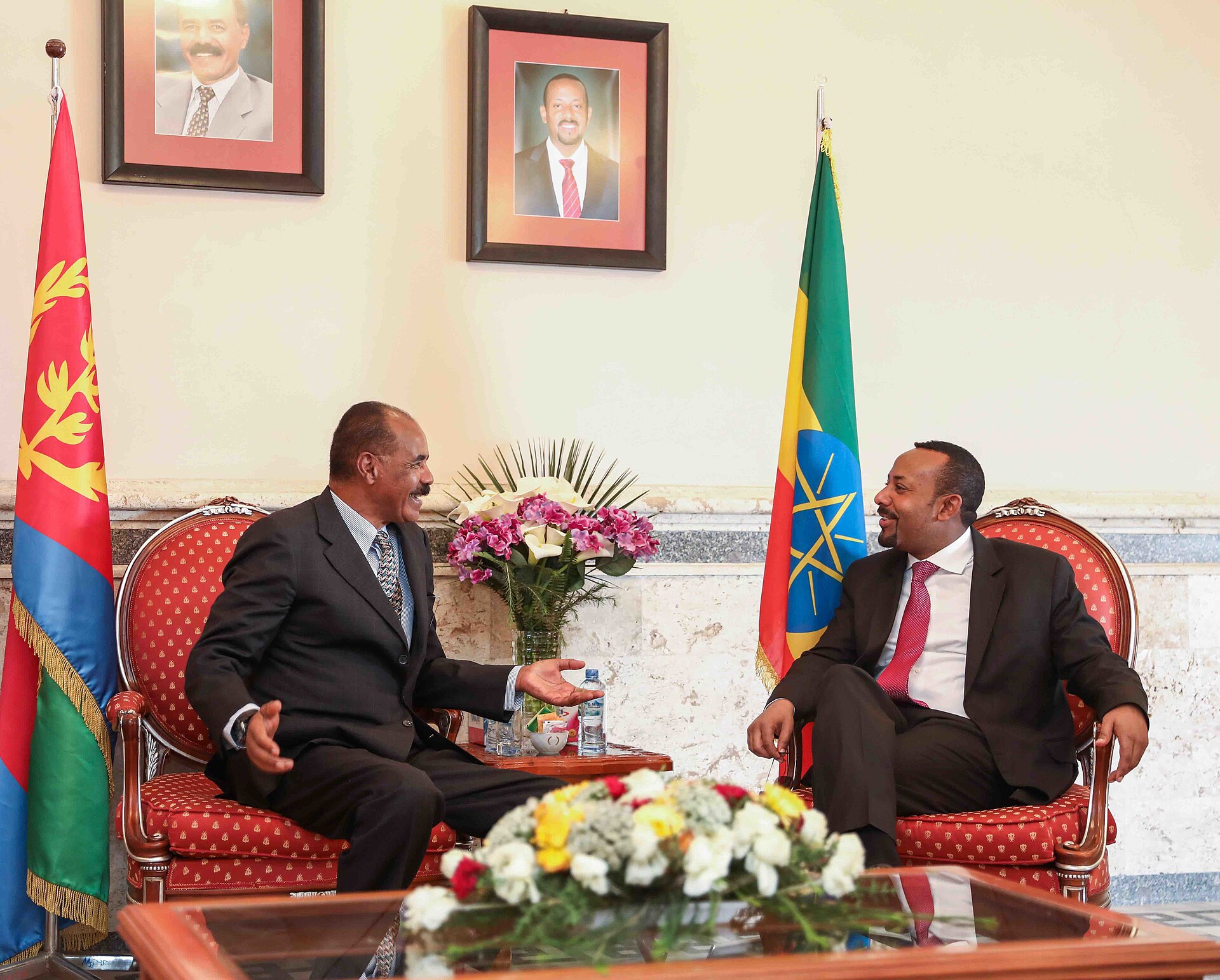
On Thursday 1 October Ethiopia closed its embassy in Asmara and expelled 10 Eritrean diplomats, giving them 48 hours to leave. Eritrea then cut all diplomatic ties; its Foreign Ministry said it had “no option but to reciprocate,” according to TBS News. Ethiopia accuses Eritrea of arming and backing the armed opposition in northern Ethiopia. Eritrea rejects that. Our first report has the detail.
The same day, Ethiopia’s Foreign Ministry declared an Egyptian diplomat, Ahmed Moharam Ahmed Soliman, persona non grata (an unwelcome person) and gave him 48 hours to leave, Ahram Online reported. Ethiopia cited the Vienna Convention, the treaty that governs diplomatic relations, and gave no reason.
On Friday 2 October Egypt told an Ethiopian embassy counsellor in Cairo to leave within 48 hours. An Egyptian source called Ethiopia’s first move “unfortunate and unjustified” and said Cairo was applying reciprocity. We covered it here.
Egypt pushes back on the AU
On Saturday 3 October an Egyptian source questioned the AU statement, saying it drew Egypt into an internal Ethiopian crisis, Ahram Online reported. Separately, Foreign Minister Badr Abdelatty said recent Ethiopian statements mainly seek to divert attention from domestic crises. He did not address the AU statement in those remarks.
An official Egyptian source also told the state news agency MENA that Cairo has no role in Ethiopia’s northern conflict. We explain that denial in a separate report.
The disagreement shows the AU’s difficulty. Ethiopia says Egypt, Eritrea and Sudan back its armed opponents, and all three deny it. In our reading, naming the three together treats them as equal parties in one dispute. An Egyptian source rejects that framing.
Three disputes in one corridor
The first dispute is Red Sea access. Prime Minister Abiy Ahmed wants direct sea access for landlocked Ethiopia. Ethiopia lost its coastline when Eritrea became independent in 1993, and Addis Ababa’s sea-access push is at the centre of the quarrel with Asmara.
The second is the Nile. Ethiopia inaugurated the Grand Ethiopian Renaissance Dam (GERD) in September 2025. Reports put its cost at about US$5 billion and its capacity at 5,150 megawatts. Egypt wants a binding agreement on drought-year releases and data sharing. Ethiopia presents the dam as an electricity and development project.
The third is the war in the north. Ethiopian forces took back Mekelle airport on 3 October, as we report in our companion article on the fighting. The fighting is the reason each capital accuses the others of meddling.
Who else is moving
The neighbours are talking. The presidents of Somalia and Djibouti met in Djibouti City on 30 September to discuss the war. Djibouti currently holds the rotating chair of the Intergovernmental Authority on Development (IGAD), the regional bloc for the Horn of Africa. IGAD called on the parties to cease hostilities and exercise maximum restraint on 24 September, according to The Reporter Ethiopia. We found no IGAD statement on the diplomatic break since 1 October. See our report on that meeting.
Washington is a quieter player. The US announced on 19 September that it had let the 2021 sanctions on Eritrea lapse. A State Department spokesperson said it was “time to adapt our foreign policy to current realities and collaboratively engage with both countries,” meaning Ethiopia and Eritrea, to advance US regional interests. Al Jazeera tied the move to Red Sea shipping security. Eritrea’s information minister welcomed the step. On 28 September, six Democratic US senators asked Secretary of State Marco Rubio to act to de-escalate the crisis in Tigray, according to a statement from the Senate Foreign Relations Committee Democrats.
The Red Sea matters because Ethiopia, with a large population and no coast, sends most of its trade through Djibouti. Any instability on that corridor, or near the Bab el-Mandeb strait between Djibouti and Yemen, affects shipping and insurance.
What it means for you
For US investors and shippers, the lesson is the corridor risk. Ports, rail and fuel lines linking Ethiopia to the Red Sea depend on peace among neighbours, as our explainer on Ethiopia’s neighbours shows. A diplomatic break between Addis Ababa and Asmara closes one possible route and adds risk to others.
For US policy watchers, the Eritrea decision now looks different. Washington moved toward Asmara less than two weeks before Asmara and Addis Ababa broke relations. For travellers and expatriates, check the State Department advisory before booking, and expect further expulsions or visa friction between Cairo and Addis Ababa.
Our profile Who Is Abiy Ahmed? and our Ethiopia coverage give the wider context.
What is not known
We do not know whether Ethiopia, Eritrea or Egypt will accept AU help. The 48-hour deadlines for the expelled diplomats run out around 3 and 4 October, and we have no confirmed report of further expulsions. No mediation timetable exists.
Ethiopia has given no detailed public reason for expelling the Egyptian diplomat. The accusations that Eritrea, Egypt and Sudan back armed groups come from Addis Ababa and are denied. Calm depends on whether the three capitals keep their channels open. The coming days will show whether the expulsions end with the current exchange.
Frequently Asked Questions
What did the African Union say on 1 October 2026?
The AU Commission urged Ethiopia, Eritrea and Egypt to exercise maximum restraint and avoid actions or statements that could escalate tensions. It asked them to use diplomatic channels and said it was ready to support de-escalation and dialogue.
Why did Ethiopia and Eritrea cut ties?
On 1 October Ethiopia closed its embassy in Asmara and expelled 10 Eritrean diplomats, accusing Eritrea of backing armed opponents. Eritrea then severed relations. Eritrea rejects the accusation, and the Red Sea access dispute lies behind the quarrel.
Why did Egypt and Ethiopia expel each other’s diplomats?
Ethiopia expelled an Egyptian diplomat on 1 October without stating a reason. Egypt expelled an Ethiopian embassy counsellor on 2 October, calling it reciprocity. The two countries are already at odds over the Nile dam.
What is the Grand Ethiopian Renaissance Dam?
GERD is a hydropower dam on the Blue Nile in Ethiopia, inaugurated in September 2025. Reports put its capacity at 5,150 megawatts. Egypt fears for its Nile water and wants a binding agreement on how the dam is run in dry years.
Why does this matter to Americans?
The dispute touches the Red Sea shipping corridor and recent US policy. The US announced on 19 September that it had let sanctions on Eritrea lapse, citing US regional interests, and six Democratic senators have asked Secretary of State Marco Rubio to act to de-escalate the crisis in Tigray.
Sources
- African Union Commission statement, 1 October 2026
- Ahram Online: Egypt gives Ethiopian embassy counsellor 48 hours
- Ahram Online: Abdelatty on Ethiopian statements
- Ahram Online: Ethiopia declares Egyptian diplomat persona non grata
- TBS News: Why Ethiopia and Eritrea severed ties
- Al Jazeera: US lifts sanctions on Eritrea
- The Reporter Ethiopia: IGAD calls for cessation of hostilities
- US Senate Foreign Relations Committee Democrats, 28 September
This article was produced by The Rio Times’ automated newsroom system. How we use AI · Report an error · Editorial responsibility: Matthias Camenzind, Editor-in-Chief