Egypt Explained 2026: The Country, Sisi’s Egypt and What to Watch
GUIDES · EGYPT
Key Facts
- —Capital Cairo remains the capital. The purpose-built New Capital, 45 kilometres east, has been the seat of government since 2023 and 2024 and had passed 30,000 residents by mid-2026.
- —Population Around 107 million, the largest in the Arab world, concentrated almost entirely along the Nile and its delta.
- —Currency The Egyptian pound. It floated on 6 March 2024, moved from about 30.9 to roughly 50 to the US dollar, and traded near 51 to 52 in September 2026.
- —Language Arabic is the official language. Egyptian Arabic is the most widely understood dialect in the region, and English is common in business and tourism.
- —Economy The Suez Canal, tourism, natural gas and, above all, remittances, which reached a record US$47.3 billion in the year to June 2026.
- —Government A republic under the 2014 constitution as amended in 2019. Six-year presidential terms, with power concentrated in the presidency and the security establishment.
Egypt explained for newcomers: what the 2024 float actually did, why remittances now matter more than exports, and how a war next door reaches the Suez Canal.
Egypt explained in 2026 means following the dollars rather than the politics. The country earns its foreign currency from four sources, and in the year to June 2026 the largest of them was not the Suez Canal or tourism but money sent home by Egyptians abroad: US$47.3 billion, more than the country’s entire merchandise exports.
What kind of country is this?
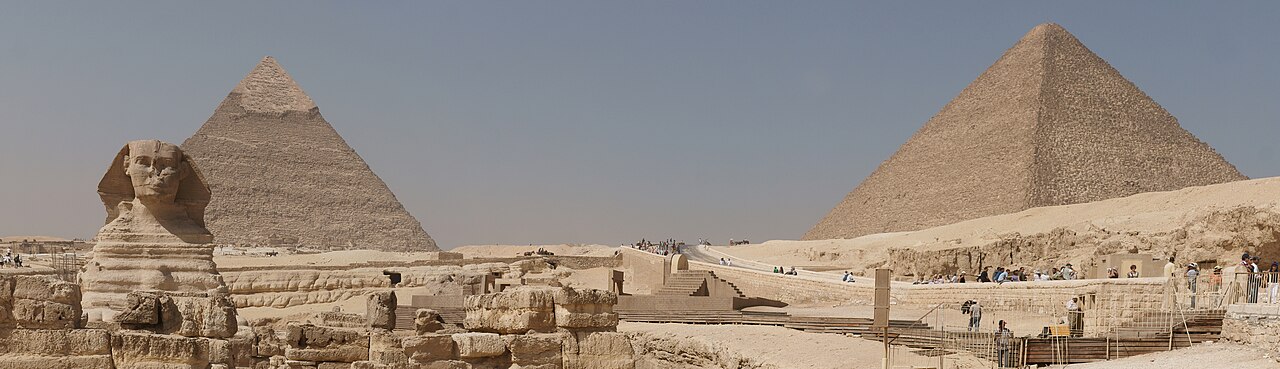
Egypt is a river with a country attached. Almost the entire population lives on the Nile and in its delta, on a strip that is a small fraction of the national territory. Everything else is desert. That single fact explains the density of Cairo, the politics of water, and why Egypt has spent a decade building new cities outside the valley. Any Egypt explained guide that starts anywhere else starts in the wrong place.
The Suez Canal cuts the northeast, connecting the Mediterranean to the Red Sea and carrying a significant share of world trade. It is a strategic asset and a fiscal one: canal receipts are hard currency arriving directly at the state.
Modern Egypt runs from the officers’ movement of 1952 that ended the monarchy, through the Camp David accords with Israel in 1978 and 1979, to the uprising of 2011 and the removal of the elected government in 2013. A newcomer who knows that sequence will recognise the argument behind almost every Egyptian political conversation.
Who runs Egypt and how
Abdel Fattah el-Sisi has been president since 2014, having resigned as defence minister and army chief to run. He was re-elected in 2018 and again in December 2023, and took the oath for a third term on 2 April 2024, in a ceremony that also formally inaugurated the New Capital as the seat of government. Under the constitution as it stands, that term runs to April 2030 and is his last.
The constitutional amendments of 2019 extended presidential terms from four years to six and permitted him an additional term. Power in practice is concentrated in the presidency and the security establishment, and the legislature operates as a supportive institution rather than a checking one. That is a description of how the system works, not a contested claim.
The state is also an economic actor in a way that has no close parallel in Latin America. Military-linked companies hold positions across construction, food and infrastructure; the developer of the New Capital is 51 percent military-owned and 49 percent held by the housing ministry. Anyone assessing a business opportunity in Egypt has to understand who the counterparty actually is.
How the economy works
Four external inflows carry Egypt, and their order has changed. Remittances are now the largest by a distance: a record US$47.3 billion in the financial year to 30 June 2026, up 29.6 percent on the year before. Over the first nine months of that year, remittances of US$34.9 billion exceeded total merchandise exports of US$31.49 billion.
The Suez Canal is recovering from the Red Sea disruption but has not recovered. In August 2026, 1,358 vessels transited, up 27 percent on the year, and revenue reached US$567.1 million, up 56.7 percent. Full-year receipts for the year to June 2026 were US$4.67 billion, up 23 percent, and still below pre-disruption levels. The canal authority expects calendar 2026 revenue of US$5.8 to US$6.0 billion against about US$4.1 billion in 2025.
Tourism is growing steadily rather than dramatically. Arrivals reached 12.7 million in the first eight months of 2026 against 12.2 million a year earlier, with receipts rising from US$11.8 billion to US$12.0 billion. Arrivals are growing faster than dollar receipts, which is the detail worth noticing.
The pound floated on 6 March 2024, moving from about 30.9 to roughly 50 to the dollar, alongside a large Gulf investment inflow and an upsized International Monetary Fund programme. It then traded in a broad band into early 2026, reaching about 48 in late February, before depreciating around 13 percent to nearly 55 in April as the regional war began. It recovered to roughly 51 to 52 and is about 9 percent weaker across the year.
Inflation has eased and is not comfortable. Annual urban inflation was 14.5 percent in August 2026, down from 14.9 percent in July, and materially below what analysts had forecast. But core inflation moved the other way, rising to 14.9 percent, now above the headline rate. The policy rate has been unchanged since a single cut in February 2026, with deposit and lending rates at 19.00 and 20.00 percent.
What is happening right now
As of 24 September 2026 Egypt is mediating between Washington and Tehran in the regional war that began in late February. The president met the director of the American Central Intelligence Agency in Cairo on 20 September. Two days later, United States and Iranian officials held talks at the United Nations, mediated by Qatar, Pakistan and Egypt. Iran proposed a regionwide ceasefire of up to sixty days and a phased reopening of the Strait of Hormuz.
That war reaches Egypt through the canal. Houthi forces seized Yemen’s Red Sea coast in mid-September 2026, gaining significant control of the Bab al-Mandeb strait, the southern gateway to Suez. Egypt and Saudi Arabia have been converging on Red Sea security, and Egypt is party to a Saudi-led maritime security coalition launched in August.
The third story is monetary. The central bank’s committee met on 24 September 2026, its sixth scheduled meeting of the year. Eleven of twelve analysts polled expected a hold at 19 and 20 percent. One dissenter forecast a 100 basis point rise, citing fourth-quarter inflation pressure and tightening by the Federal Reserve and the European Central Bank. The decision had not been published when this guide was written.
Underneath sits the Fund programme. The seventh review was approved on 30 July 2026, releasing about US$1.77 billion. One review remains, in December 2026, and the arrangement itself expires on 15 December 2026 with roughly US$2.3 billion still undrawn across the two facilities. Whether a successor arrangement follows is the question hanging over Egyptian asset prices.
What to watch
The remaining monetary policy meetings of 2026 fall on 29 October and 17 December. The October reading of consumer prices, published around 10 October, is the one analysts flag: some expect a monthly jump above 2 percent if fuel prices rise around 10 percent, which would change the tone of the December meeting.
The final Fund review is due in December 2026, and the arrangement expires on 15 December. One reform measure under the resilience facility carries an availability date of 15 November 2026. As of August no formal talks on a successor programme had begun, which is itself worth watching.
For the canal, the variable is not Egyptian. It is whether Red Sea transit normalises, which depends on the war and on Bab al-Mandeb rather than on anything Cairo controls. Canal receipts are the cleanest single indicator of that, and the authority publishes them monthly.
What this means for foreigners
Egypt is inexpensive in dollars and has become more so. The float of March 2024 and the subsequent depreciation mean that dollar earners have seen their purchasing power rise substantially against local costs. That is the single largest practical fact for a foreigner, and it cuts both ways: anyone earning pounds has experienced the same move in reverse.
Entry for most visitors is straightforward, through a visa on arrival or an electronic visa depending on nationality, and tourism infrastructure is extensive and well established. For longer stays, residence is typically tied to work, study, family or property, and the property route in particular has drawn foreign buyers into the new cities and the Red Sea resorts.
The property market is where most foreign money actually goes, and it is worth approaching carefully. Prices quoted in dollars and prices quoted in pounds have diverged sharply since the float, developers sell off-plan on long payment plans, and the counterparty behind a large project is often state or military linked. None of that is a reason to stay away; all of it is a reason to take local legal advice rather than a brochure.
The honest summary for a newcomer is that Egypt offers scale, history and low dollar costs alongside a currency that has moved 70 percent in two years and a political system that does not invite scrutiny. Egypt explained means holding those together rather than picking the half that suits the pitch.
Sources: Canal traffic and revenue from the Suez Canal Authority, inflation from CAPMAS, remittances and the policy rate from the Central Bank of Egypt, programme status from the International Monetary Fund’s own releases, and tourism figures from the cabinet’s information centre.
- International Monetary Fund — country report on Egypt, July 2026
- International Monetary Fund — press release on the fifth and sixth reviews
- The National — Cairo’s mediation between Washington and Tehran
- The National — the Iranian road map presented at the United Nations
- EnterpriseAM — analyst expectations before the September rate decision
- Asharq Al-Awsat — occupancy and status of the New Capital
- NASA Earth Observatory — construction of the New Capital
- Reuters — results of the 2025 parliamentary election
What Is Not Known
The central bank’s September 2026 rate decision. The committee met on the day this guide was written and the outcome had not been published. Eleven of twelve analysts polled expected a hold at 19 and 20 percent, but the consensus cracked for the first time in months, with one house forecasting a rise. Check the bank’s own site for the current rate.
How many people have visited the Grand Egyptian Museum. The museum’s chief executive said more than three million in the seven months to June 2026. The government’s own development plan, reported in September 2026, says more than 6.5 million since opening. Other reports give about 6.5 million in April and about seven million in July. These are irreconcilable and no audited series exists.
Egypt’s growth rate for the financial year to June 2026. Egyptian official data reported 5.1 percent, the International Monetary Fund expected about 4.6 percent, the central bank said around 5.0 percent and the World Bank forecast 4.3 percent. Some of these are forecasts rather than outturns, but the spread is wide enough that no single figure should be presented as the number.
Turnout in the 2025 parliamentary election. The national elections authority announced 32.41 percent. An independent analysis argues the authority’s own first-round disclosures imply about 20.48 percent. The discrepancy has not been resolved publicly.
Whether Cairo remains the legal capital. Cairo is the capital on every available reading, and the New Capital is the seat of government rather than a replacement. A draft law submitted in February 2026 would make it a province with special status under a new name, but the status of that bill could not be confirmed.
Frequently Asked Questions
What is the capital of Egypt?
Cairo. The purpose-built New Capital, about 45 kilometres east, has been the seat of government since 2023 and 2024 and had passed 30,000 residents by mid-2026, but Cairo remains the capital on every available reading of the law.
What is Egypt’s biggest source of foreign currency?
Remittances from Egyptians abroad, which reached a record US$47.3 billion in the financial year to 30 June 2026. Over the first nine months of that year they exceeded the country’s entire merchandise exports.
Has the Suez Canal recovered from the Red Sea disruption?
Partly. August 2026 saw 1,358 transits and US$567.1 million of revenue, both sharply up on the year, and receipts for the year to June 2026 were US$4.67 billion, up 23 percent. All of those figures remain below pre-disruption levels.
What happened to the Egyptian pound?
It was floated on 6 March 2024 and moved from about 30.9 to roughly 50 to the US dollar. It traded in a broad band until early 2026, then fell about 13 percent to nearly 55 as the regional war began in the spring, recovering to roughly 51 to 52 by September.
Is Egypt still in an IMF programme?
Yes, but not for much longer. The extended arrangement, approved in December 2022 and upsized in March 2024, expires on 15 December 2026. The seventh review was approved on 30 July 2026 and one final review remains in December, with roughly US$2.3 billion still undrawn.
Is Egypt cheap for someone earning dollars?
Yes, and more so than before. The float of March 2024 and the depreciation since have raised dollar purchasing power substantially against local costs. The same move went the other way for anyone earning pounds, which is worth remembering when reading local commentary.
This article was produced by The Rio Times’ automated newsroom system. How we use AI · Report an error
Read More from The Rio Times